
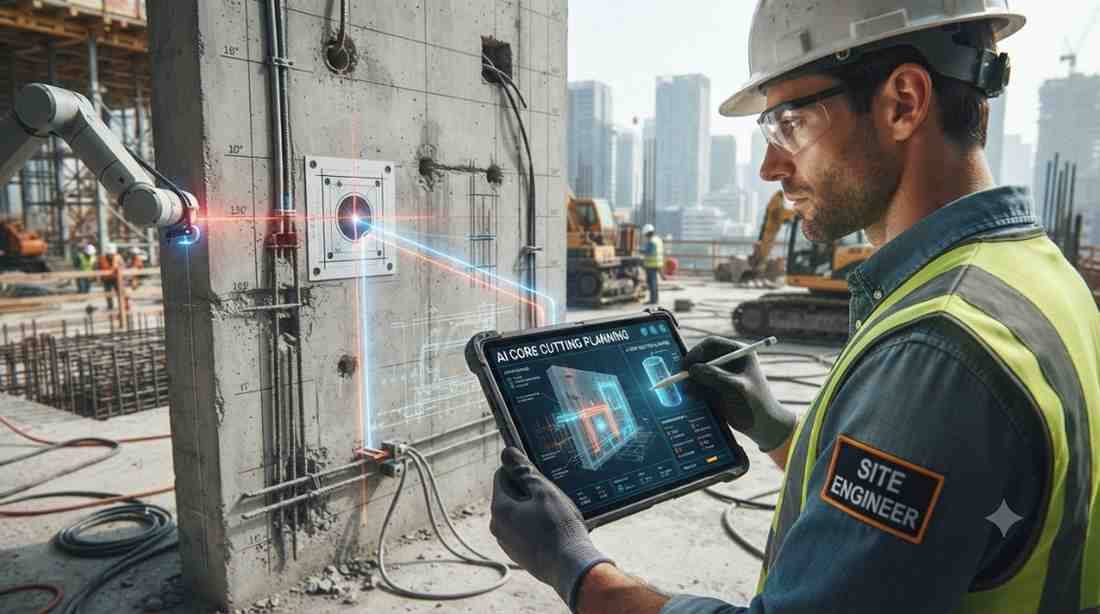
The construction industry has always been about precision, safety, and timing. Whether it's laying a foundation, installing plumbing lines, or creating openings for electrical conduits, every step demands accuracy. One process that has quietly become the backbone of modern infrastructure work is core cutting — the technique of drilling clean, precise holes through concrete, brick, or masonry structures for pipes, cables, ducts, and other utilities.
For decades, core cutting planning relied heavily on manual measurements, site experience, and a fair amount of trial and error. But as construction technology evolves, a new question is emerging across the industry: can Artificial Intelligence (AI) improve core cutting planning?
At Core Cutting India ([email protected]), we believe the answer is a resounding yes — and in this article, we'll explore exactly how AI is reshaping the way core cutting projects are planned, executed, and optimized.
What Is Core Cutting and Why Does Planning Matter?
Core cutting is a specialized construction process that involves cutting circular holes through concrete slabs, walls, or beams using diamond-tipped core drilling machines. It's commonly used for:
- Installing plumbing and drainage pipes
- Running electrical cables and conduits
- Creating HVAC ductwork openings
- Fixing anchor bolts for structural elements
- Retrofitting older buildings with new utility lines
Unlike casual drilling, core cutting requires extreme precision. A single miscalculated cut can compromise a structural beam, damage embedded rebar, or create costly rework. This is why planning is arguably more important than the cutting itself. Poor planning leads to:
- Structural damage from cutting through load-bearing elements
- Wasted time correcting misaligned holes
- Increased material and labor costs
- Safety hazards for workers and building occupants
- Project delays that ripple across the entire construction timeline
Traditionally, planning has depended on site engineers manually reviewing structural drawings, physically marking locations, and using tools like rebar scanners or ground-penetrating radar (GPR) to check for obstructions before drilling. While effective, this process is time-consuming and still leaves room for human error.
Where AI Enters the Picture
Artificial Intelligence is already transforming several corners of the construction industry — from predictive maintenance of heavy machinery to automated safety monitoring on job sites. Core cutting planning is a natural next step, given how data-driven and repetitive the underlying decision-making process actually is.
Here's how AI is beginning to reshape core cutting planning:
1. AI-Powered Structural Analysis
One of the biggest risks in core cutting is accidentally drilling through a structural element like a main rebar, post-tension cable, or load-bearing beam. AI algorithms trained on Building Information Modeling (BIM) data can automatically analyze a structure's digital blueprint and flag safe versus unsafe cutting zones.
Instead of an engineer manually cross-referencing drawings, an AI system can scan the entire building model in seconds and highlight:
- Safe zones for cutting
- High-risk zones near structural reinforcements
- Optimal hole placement based on utility routing requirements
This drastically reduces the chances of structural damage and speeds up the planning phase from days to hours.
2. Predictive Risk Modeling
AI models can be trained on historical project data — including past core cutting jobs, structural failures, and near-miss incidents — to predict where risks are most likely to occur in a new project. This predictive approach allows planners to proactively reinforce or avoid specific areas before a single drill bit touches the concrete.
For a company like Core Cutting India, this means being able to walk into a new site with a data-backed risk map rather than relying purely on visual inspection and experience.
3. Automated Layout and Route Optimization
When multiple cores need to be cut for pipes, cables, or ducts, the sequence and placement matter. AI-based optimization algorithms can calculate the most efficient layout — minimizing the number of cuts, reducing material waste, and ensuring utilities don't clash with each other inside walls or slabs.
This is similar to how logistics companies use AI to optimize delivery routes — except here, the "routes" are utility pathways running through a building's skeleton.
4. Integration with Robotic and Semi-Automated Drilling
AI planning becomes even more powerful when paired with semi-automated or robotic core drilling equipment. Once an AI system determines the optimal cutting points, that data can be fed directly into robotic drilling arms or laser-guided positioning tools, reducing manual marking errors and speeding up execution.
While fully autonomous core cutting robots are still emerging technology, AI-assisted planning combined with laser-guided manual drilling is already achievable and being adopted by forward-thinking contractors.
5. Real-Time Site Data Analysis
Modern job sites increasingly use IoT sensors, drones, and 3D scanning tools to capture real-time structural data. AI can process this incoming data instantly, comparing it against the original building plans to detect any discrepancies — such as unexpected rebar placement or concrete density variations — before cutting begins.
This real-time feedback loop means planners aren't just relying on outdated blueprints; they're working with a living, constantly updated picture of the structure.
Real Benefits AI Brings to Core Cutting Planning
Bringing AI into core cutting planning isn't just a technological novelty — it delivers measurable, practical benefits for construction companies, contractors, and building owners.
Improved Safety By identifying structural risks before drilling starts, AI significantly reduces the chances of accidents, structural compromise, or damage to critical utilities like electrical lines and gas pipes.
Reduced Rework and Waste Precise planning means fewer mistakes, which translates directly into less wasted concrete, fewer patch-up jobs, and lower material costs.
Faster Project Timelines What used to take engineers days to manually assess can now be processed by AI systems in a fraction of the time, allowing projects to move from planning to execution much faster.
Cost Efficiency Fewer errors and faster turnaround times naturally lead to lower overall project costs — a major advantage for both contractors and clients.
Better Documentation and Compliance AI systems can automatically generate detailed reports of planned cutting zones, structural assessments, and risk analyses — useful for regulatory compliance and future maintenance records.
Challenges to Consider
Of course, no technology shift comes without its challenges, and it's worth being realistic about where AI in core cutting planning currently stands.
- Data Quality Dependency: AI is only as good as the data it's trained on. Outdated or inaccurate building plans can lead to flawed AI recommendations.
- Initial Investment: Implementing AI-driven planning tools requires upfront investment in software, training, and sometimes hardware like 3D scanners or sensors.
- Skill Gap: Construction teams need training to interpret and trust AI-generated insights alongside traditional engineering judgment.
- Not a Full Replacement: AI should be viewed as a powerful assistant to experienced engineers and core cutting professionals — not a replacement for their expertise and on-ground judgment.
The Human Expertise Behind the Technology
Even as AI tools become more sophisticated, the core cutting industry will always depend on skilled professionals who understand concrete behavior, structural nuances, and real-world site conditions. AI enhances decision-making — it doesn't eliminate the need for trained core cutting specialists who can adapt to unexpected on-site realities.
At Core Cutting India, our approach has always combined technical precision with hands-on expertise. As AI tools mature and become more accessible, we see them as a natural extension of the meticulous planning process we already follow — helping us serve clients with even greater accuracy, safety, and efficiency.
The Future of AI in Core Cutting Planning
Looking ahead, the construction industry is likely to see:
- Wider adoption of AI-integrated BIM software for automatic cutting zone detection
- Increased use of drones and 3D laser scanning combined with AI analysis for large-scale projects
- Growth of semi-autonomous drilling equipment guided by AI-generated cutting plans
- AI-powered mobile apps allowing site engineers to instantly verify safe cutting zones using their smartphones
As these tools become more affordable and user-friendly, even mid-sized contractors and specialized service providers will be able to integrate AI into their daily planning workflows — not just large construction conglomerates.
Conclusion
So, can AI improve core cutting planning? The evidence strongly suggests yes. From structural risk analysis and predictive modeling to layout optimization and real-time site data integration, AI offers construction professionals powerful new tools to plan smarter, safer, and faster core cutting projects.
That said, technology works best when paired with experience. The most successful core cutting projects will continue to be those where AI-driven insights are combined with the judgment and craftsmanship of skilled professionals on the ground.
If you're planning a construction, renovation, or retrofitting project that requires precise core cutting and drilling services, Core Cutting India combines industry expertise with the latest planning approaches to deliver safe, efficient, and accurate results.
📩 Get in touch with us at [email protected] to discuss your next core cutting project.
Core Cutting India — Precision Core Cutting & Drilling Services