
Introduction
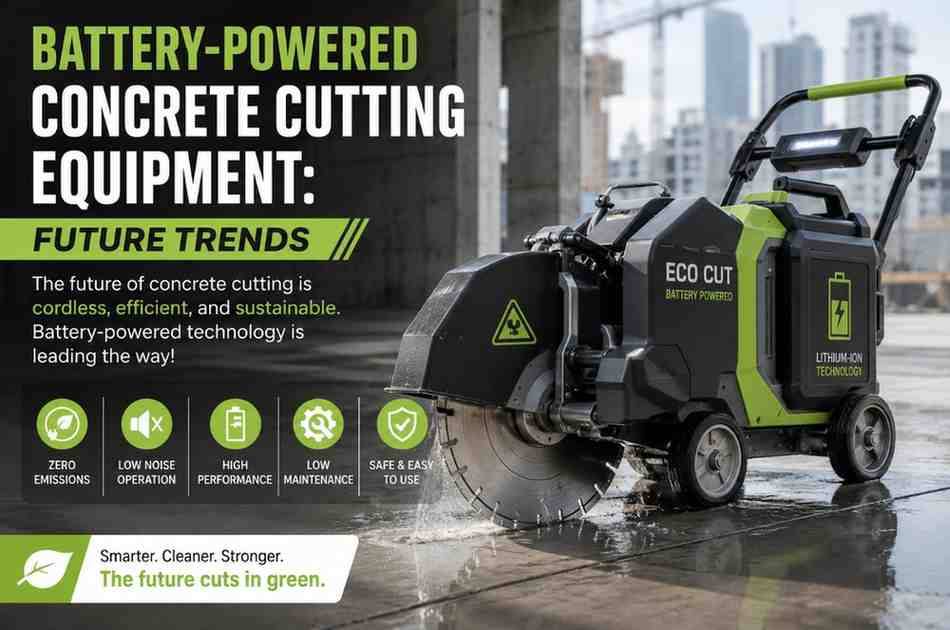
The construction and demolition industry is undergoing a quiet but powerful revolution, and it's happening at the tool level. For decades, concrete cutting relied on heavy hydraulic systems, noisy petrol-powered saws, and cumbersome electric machines tethered to generators or power outlets. Today, battery-powered concrete cutting equipment is rewriting the rulebook, offering contractors, demolition crews, and infrastructure companies a cleaner, quieter, and more flexible way to cut through concrete, masonry, and reinforced structures.
At Core Cutting India ([email protected]), we work closely with contractors across residential, commercial, and infrastructure projects, and we've watched this shift accelerate over the past few years. What was once considered a niche innovation is now becoming mainstream, driven by advances in battery chemistry, stricter environmental regulations, and a construction industry that increasingly values efficiency and sustainability in equal measure.
In this article, we'll explore where battery-powered concrete cutting equipment stands today, the technological trends shaping its future, and what contractors should watch for as they plan their next equipment investment.
Why Battery-Powered Concrete Cutting Is Gaining Ground
Traditional concrete cutting tools come with well-known drawbacks. Petrol-powered saws emit exhaust fumes that make them unsuitable for enclosed or poorly ventilated spaces. Hydraulic systems require power packs, hoses, and significant setup time. Corded electric tools restrict mobility and depend on a stable power source, which isn't always available on active job sites.
Battery-powered equipment solves many of these problems at once. It eliminates exhaust emissions, reduces noise pollution, cuts down on setup and teardown time, and gives operators the freedom to move across a site without dragging cables or hoses behind them. For urban construction projects, renovation work in occupied buildings, and jobs with strict noise or air quality restrictions, battery tools have quickly become the practical choice.
Beyond convenience, there's a strong business case. Lower maintenance requirements, reduced fuel costs, and fewer moving parts mean lower total cost of ownership over the life of the equipment. As battery technology matures, the performance gap between cordless and corded or petrol equipment continues to shrink, making the switch easier to justify.
Key Trends Shaping the Future of Battery-Powered Concrete Cutting Equipment
1. Next-Generation Lithium-Ion Battery Technology
The single biggest factor driving the growth of battery-powered concrete cutting tools is the rapid evolution of lithium-ion battery technology. Early cordless concrete saws struggled with limited runtime and long charging cycles, which made them impractical for heavy-duty cutting tasks. That's changing fast.
Modern battery packs now offer higher energy density, meaning more cutting power packed into a lighter, more compact battery. Fast-charging technology has also improved dramatically, with some systems capable of reaching significant charge levels in under 30 minutes. Manufacturers are also standardizing battery platforms, allowing a single battery to power multiple tools — saws, drills, grinders, and core drills — which reduces the number of chargers and spare batteries a crew needs to carry.
Looking ahead, we expect to see solid-state battery technology enter the professional tool market within the next several years. Solid-state batteries promise even higher energy density, faster charging, and improved safety by reducing the risk of overheating, which could push battery-powered concrete saws closer to matching the raw cutting power of petrol equivalents.
2. Brushless Motor Technology
Brushless motors are becoming the standard in battery-powered concrete cutting tools, and for good reason. Unlike traditional brushed motors, brushless motors generate less friction and heat, resulting in longer tool life, less maintenance, and more efficient power transfer from the battery to the blade.
This efficiency translates directly into longer runtime per charge and more consistent cutting performance, even under sustained heavy loads like cutting through reinforced concrete slabs. As brushless motor technology continues to improve, expect future battery-powered wall saws, floor saws, and core drills to close the performance gap with hydraulic and petrol alternatives even further.
3. Smart and Connected Tools
The rise of the Internet of Things (IoT) is making its way into concrete cutting equipment. Smart battery-powered tools are increasingly equipped with digital displays, Bluetooth connectivity, and companion apps that let operators and site managers track battery health, monitor tool usage, and receive maintenance alerts before a breakdown occurs.
For fleet operators and rental companies, this connectivity is a game-changer. It allows for predictive maintenance scheduling, theft prevention through GPS tracking, and detailed usage analytics that help optimize equipment allocation across job sites. As construction companies embrace digital project management more broadly, expect smart features to become a standard expectation rather than a premium add-on.
4. Improved Runtime and Cutting Depth
One of the historical limitations of battery-powered concrete cutting equipment has been cutting depth and sustained runtime compared to hydraulic or petrol systems. Manufacturers are actively closing this gap. New battery-powered wall saws and floor saws are now capable of cutting depths that rival mid-range hydraulic systems, making them viable for a broader range of structural cutting applications, including reinforced concrete walls, bridge decks, and industrial flooring.
As battery capacity and motor efficiency continue to improve together, the range of applications suitable for cordless equipment will keep expanding, gradually reducing the scenarios where hydraulic or petrol tools remain the only option.
5. Sustainability and Regulatory Pressure
Environmental regulations are tightening across construction industries worldwide, and India is no exception. Urban development projects increasingly face restrictions on emissions and noise, particularly in residential zones and city centers. Battery-powered concrete cutting equipment produces zero on-site emissions and operates at significantly lower noise levels, making it easier for contractors to comply with local regulations without sacrificing productivity.
Beyond regulatory compliance, sustainability is becoming a genuine business differentiator. Construction companies bidding on government infrastructure projects, green building certifications, and corporate contracts are increasingly expected to demonstrate environmentally responsible practices. Battery-powered equipment supports these goals directly, and we expect sustainability credentials to play a growing role in equipment procurement decisions over the coming years.
6. Hybrid and Modular Power Systems
While fully battery-powered equipment continues to improve, manufacturers are also exploring hybrid systems that combine battery power with backup options such as swappable battery packs or auxiliary power sources for extended operations. These hybrid and modular designs give contractors flexibility — allowing them to run tools continuously by swapping depleted batteries for charged ones without pausing work.
This modular approach is particularly valuable for large-scale demolition and infrastructure projects where continuous operation is critical. Expect to see more manufacturers offering multi-battery systems and quick-swap designs as standard features on professional-grade equipment.
7. Lighter, More Ergonomic Designs
As battery and motor technology becomes more compact and efficient, manufacturers are using the extra design space to focus on ergonomics. Lighter tool bodies, better weight distribution, reduced vibration, and improved grip designs are reducing operator fatigue and the risk of repetitive strain injuries — an important consideration for crews operating equipment for extended shifts.
This focus on operator comfort and safety is likely to continue, with future models incorporating vibration-dampening technology and ergonomic improvements borrowed from other power tool categories.
8. Cost Trends and Market Accessibility
As adoption increases and battery production scales up globally, the cost of battery-powered concrete cutting equipment is gradually becoming more competitive with traditional alternatives. While the upfront cost of high-capacity battery systems can still be higher than petrol or basic electric tools, the total cost of ownership — factoring in fuel savings, reduced maintenance, and longer tool life — often works out favorably over time.
In the Indian market specifically, growing demand from urban construction, infrastructure development, and renovation sectors is encouraging more manufacturers and distributors to expand their battery-powered product lines, which should continue driving prices toward greater accessibility for small and mid-sized contractors.
Applications Driving Demand
Battery-powered concrete cutting equipment is proving especially valuable in:
- Urban renovation and interior demolition, where noise and emissions restrictions are strict
- Occupied building retrofits, where minimizing disruption to residents or tenants matters
- Remote or off-grid job sites, where access to stable power or fuel supply is limited
- Utility and infrastructure maintenance, where quick, mobile cutting solutions are needed for trenching, pipe access, and repairs
- Small to mid-scale demolition projects, where mobility and reduced setup time improve overall job efficiency
What Contractors Should Consider When Choosing Battery-Powered Equipment
For contractors evaluating a switch to battery-powered concrete cutting tools, a few practical factors are worth weighing:
- Battery platform compatibility — Choosing a system where one battery type powers multiple tools reduces cost and complexity.
- Runtime versus job requirements — Match battery capacity to the scale and duration of typical cutting tasks.
- Charging infrastructure on site — Ensure adequate access to charging stations, especially for multi-day or large-scale projects.
- Blade and accessory compatibility — Confirm the equipment supports the diamond blades and cutting accessories your projects require.
- After-sales support and servicing — Partnering with a reliable supplier ensures access to spare parts, maintenance, and technical support when needed.
The Road Ahead
The future of battery-powered concrete cutting equipment looks increasingly competitive with, and in many cases superior to, traditional cutting methods. As battery chemistry advances, motors become more efficient, and smart features become standard, the practical limitations that once kept battery tools on the sidelines are steadily disappearing.
For contractors and construction companies in India, staying ahead of this shift means more than just following a trend — it means positioning your operations for lower long-term costs, easier regulatory compliance, and greater flexibility on increasingly complex job sites.
Frequently Asked Questions (People Also Ask)
Is battery-powered concrete cutting equipment as powerful as petrol or hydraulic tools? Modern battery-powered saws have closed much of the performance gap, especially for light to medium cutting tasks. For very heavy, continuous, deep cutting on large industrial projects, hydraulic systems can still offer an edge, but the difference is narrowing quickly as battery and motor technology improves.
How long does a battery-powered concrete saw run on a single charge? Runtime varies by battery capacity and cutting conditions, but many modern systems offer enough charge for continuous cutting sessions, with fast-charging options allowing quick turnaround between batteries during long shifts.
Are battery-powered concrete cutters more expensive than petrol models? Upfront costs can be comparable or slightly higher, but battery-powered tools typically cost less to operate over time due to lower fuel and maintenance expenses, often resulting in a lower total cost of ownership.
Can battery-powered concrete cutting tools be used indoors? Yes. Since they produce no exhaust emissions and operate at lower noise levels than petrol equipment, battery-powered tools are well suited for indoor and enclosed-space cutting tasks.
What safety features should I look for in battery-powered concrete cutting equipment? Look for tools with overload protection, thermal management systems, ergonomic vibration-reducing designs, and battery management systems that prevent overheating or overcharging.
Which industries benefit most from battery-powered concrete cutting equipment? Urban construction, renovation and retrofit projects, utility maintenance, and demolition contractors working in noise- or emission-sensitive environments see some of the greatest benefits.
Get Expert Guidance from Core Cutting India
Choosing the right concrete cutting equipment — battery-powered or otherwise — depends on your project scale, site conditions, and long-term operational goals. Core Cutting India works with contractors and construction firms to identify the right cutting solutions for their specific needs.
For expert advice, equipment recommendations, or to discuss battery-powered concrete cutting solutions for your next project, reach out to us at [email protected].