
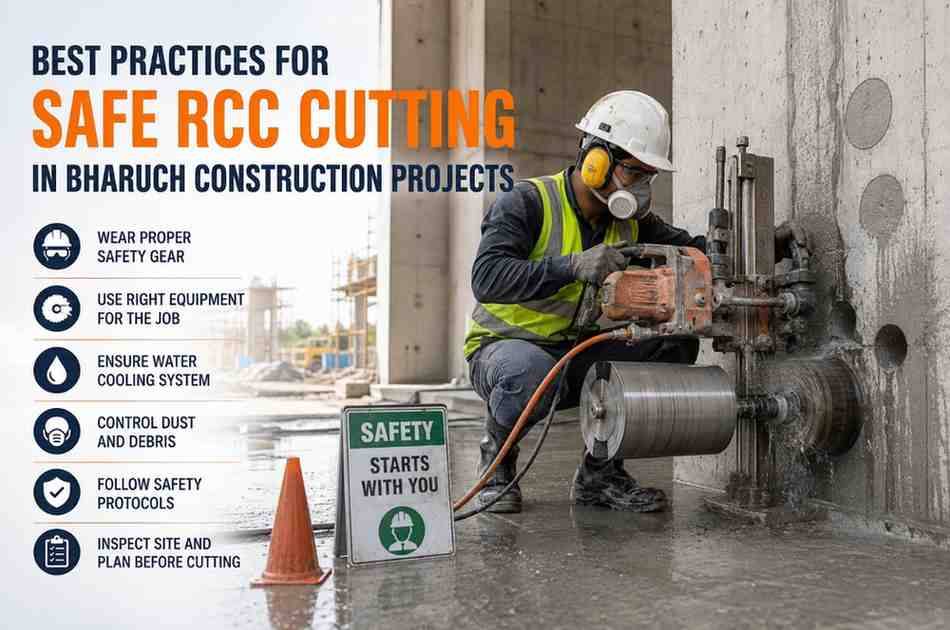
RCC (Reinforced Cement Concrete) cutting is one of the most important processes in modern construction projects. Whether it is a residential building, commercial complex, industrial plant, or infrastructure project, safe RCC cutting ensures structural integrity and worker safety. In a rapidly developing city like Bharuch, construction companies rely heavily on professional RCC cutting services to create openings for electrical wiring, plumbing systems, HVAC installations, elevators, doors, and windows.
However, RCC cutting is not a simple task. It requires specialized machinery, experienced operators, and strict safety protocols. Improper cutting can damage the structure, cause accidents, and lead to expensive repairs.
In this comprehensive guide, we will discuss the best practices for safe RCC cutting in Bharuch construction projects, including equipment, safety procedures, planning, risk management, and maintenance tips.
For professional RCC cutting services, contact: [email protected]
https://corecuttingindia.com/gujarat/bharuch/core-cutting-service/
What Is RCC Cutting?
RCC cutting refers to the process of cutting reinforced cement concrete using specialized equipment such as diamond saws, wall cutters, wire saws, and core drilling machines. These machines can cut through concrete and steel reinforcement without damaging the surrounding structure.
RCC cutting is commonly used for:
- Creating openings in walls and slabs
- HVAC duct installation
- Plumbing and drainage systems
- Electrical conduit installation
- Elevator shaft construction
- Bridge modifications
- Industrial renovations
- Road and highway projects
Importance of Safe RCC Cutting in Bharuch
Bharuch is experiencing rapid industrial and infrastructure development. Construction projects involve large concrete structures that require precise cutting operations.
Safe RCC cutting offers several advantages:
- Protects workers from accidents
- Prevents structural damage
- Ensures project quality
- Reduces downtime
- Minimizes repair costs
- Improves productivity
- Ensures compliance with safety regulations
Without proper safety measures, RCC cutting can become hazardous due to dust, noise, vibration, and flying debris.
Understanding Potential Risks in RCC Cutting
Before starting any RCC cutting work, it is essential to identify potential hazards.
Structural Risks
Incorrect cutting methods may weaken beams, slabs, or columns, affecting the building's stability.
Electrical Hazards
Hidden electrical cables inside concrete structures can cause severe accidents.
Dust Exposure
Concrete cutting generates silica dust, which can lead to respiratory diseases.
Equipment Hazards
Improper handling of heavy cutting equipment can cause injuries.
Noise Pollution
Diamond cutting machines generate high levels of noise that can affect workers' hearing.
Water Hazards
Wet cutting methods may create slippery surfaces and electrical risks.
Best Practices for Safe RCC Cutting in Bharuch Construction Projects
1. Conduct a Detailed Site Inspection
The first step before RCC cutting is a comprehensive site inspection.
Inspect:
- Structural drawings
- Reinforcement locations
- Electrical lines
- Plumbing systems
- Gas pipelines
- Water pipes
Advanced scanning tools help detect hidden utilities and avoid accidental damage.
2. Prepare a Risk Assessment Report
Every construction project should have a risk assessment plan.
The report should include:
- Potential hazards
- Safety measures
- Emergency procedures
- Equipment requirements
- Worker responsibilities
A proper risk assessment minimizes accidents and ensures smooth operations.
3. Use Diamond Cutting Technology
Diamond cutting technology is considered one of the safest and most accurate methods for RCC cutting.
Benefits include:
- Minimal vibration
- Reduced noise
- High precision
- Faster cutting
- Clean finish
- Lower risk of structural damage
Common diamond cutting methods:
- Wall sawing
- Floor sawing
- Wire sawing
- Core drilling
4. Employ Skilled and Trained Operators
RCC cutting equipment should only be operated by trained professionals.
Operators must understand:
- Machine controls
- Safety procedures
- Emergency protocols
- Structural behavior
- Load distribution
Regular training sessions improve efficiency and reduce accidents.
5. Wear Proper Personal Protective Equipment (PPE)
PPE is mandatory at every RCC cutting site.
Essential PPE includes:
- Safety helmets
- Protective gloves
- Safety goggles
- Ear protection
- Dust masks
- Steel-toe shoes
- Reflective jackets
Workers should inspect their protective equipment before every shift.
6. Use Concrete Scanning Technology
Concrete scanning technology identifies hidden utilities and reinforcement bars before cutting.
Scanning helps locate:
- Steel reinforcement
- Electrical cables
- Water pipelines
- Gas pipes
- Voids
Benefits:
- Improved safety
- Reduced damage
- Faster work completion
7. Control Dust Generation
Concrete dust contains silica particles that are harmful to health.
Dust control methods:
- Wet cutting techniques
- Dust extraction systems
- Vacuum attachments
- Protective masks
- Site ventilation
Proper dust management ensures worker safety and environmental protection.
8. Ensure Machine Maintenance
Regular maintenance is essential for safe RCC cutting operations.
Maintenance checklist:
- Inspect blades
- Check motors
- Lubricate components
- Examine electrical systems
- Replace worn-out parts
Poorly maintained equipment increases accident risks.
9. Secure the Cutting Area
The cutting area should be isolated from unauthorized personnel.
Safety measures include:
- Warning signs
- Barricades
- Safety tape
- Restricted entry points
Proper site management reduces the chances of injuries.
10. Follow Structural Engineering Guidelines
Always consult structural engineers before cutting load-bearing elements.
Engineers determine:
- Safe cutting locations
- Structural impact
- Reinforcement requirements
- Support systems
Ignoring engineering advice can compromise the entire structure.
Essential RCC Cutting Equipment Used in Bharuch Projects
Modern construction projects use specialized equipment for different applications.
Wall Saw Machines
Wall saws are used for vertical concrete cutting in walls and columns.
Applications:
- Door openings
- Window openings
- Staircase modifications
Core Drilling Machines
Core drills create circular holes in concrete.
Applications:
- Plumbing installation
- Electrical conduits
- AC ducts
Wire Saw Machines
Wire saws are ideal for cutting large structures.
Applications:
- Bridges
- Industrial plants
- Thick concrete sections
Floor Saw Machines
Floor saws are used for horizontal cutting.
Applications:
- Roads
- Pavements
- Factory floors
Safety Checklist Before RCC Cutting
Before starting work, ensure the following:
✓ Site inspection completed
✓ Structural approval obtained
✓ Utilities identified
✓ PPE available
✓ Machines inspected
✓ Cutting area secured
✓ Emergency plan prepared
✓ Dust control system ready
✓ Operators trained
✓ Safety supervisor assigned
Common Mistakes to Avoid During RCC Cutting
Avoiding these mistakes improves safety and efficiency.
Ignoring structural drawings
Always study drawings before cutting.
Using damaged equipment
Faulty machines increase risks.
Skipping safety gear
Protective equipment is mandatory.
Incorrect blade selection
Choose the right blade for the material.
Poor communication
Ensure coordination between engineers and workers.
No risk assessment
Every project requires a safety plan.
Environmental Considerations in RCC Cutting
Construction companies in Bharuch should minimize environmental impact.
Best practices:
- Proper slurry disposal
- Dust suppression
- Noise reduction measures
- Recycling concrete waste
- Water conservation
Environmentally responsible construction improves sustainability.
Why Professional RCC Cutting Services Matter
Professional RCC cutting companies provide:
- Advanced machinery
- Skilled operators
- Faster completion
- Safety compliance
- Precision cutting
- Minimal structural damage
Hiring experienced professionals saves time and money while ensuring worker safety.
For expert assistance and project consultation, contact:
Website: [email protected]
Future of RCC Cutting in Bharuch
The construction industry in Bharuch is evolving rapidly. New technologies are making RCC cutting safer and more efficient.
Future trends include:
- Robotic cutting systems
- AI-based concrete scanning
- Automated wall saws
- Smart safety monitoring
- Dust-free cutting solutions
- Remote-controlled equipment
These innovations will improve productivity and workplace safety.
Conclusion
Safe RCC cutting is essential for the success of any construction project in Bharuch. Proper planning, skilled professionals, modern equipment, and strict safety measures can significantly reduce risks and improve project quality.
By following the best practices discussed in this guide—such as site inspections, concrete scanning, PPE usage, dust control, and regular equipment maintenance—construction companies can ensure safe and efficient RCC cutting operations.
Whether you are working on residential, commercial, or industrial projects, investing in safety is always the right decision.
For professional RCC cutting, wall sawing, core drilling, and concrete cutting services, contact:
Target-Related Searches
- RCC cutting services in Bharuch
- Concrete cutting contractors in Bharuch
- Core cutting services near me
- Diamond cutting services Bharuch
- Wall cutting contractors Bharuch
- Slab cutting services Bharuch
- Core drilling services Gujarat
- Concrete cutting machine services
- Safe RCC cutting methods
- Reinforced concrete cutting experts
- Industrial concrete cutting Bharuch
- Construction cutting services Gujarat
People Also Ask (PAA)
1. What is RCC cutting in construction projects?
RCC cutting is the process of cutting reinforced concrete structures using specialized machines and diamond tools.
2. Is diamond cutting safe for RCC structures?
Yes, diamond cutting is one of the safest and most precise methods for RCC cutting.
3. Why is concrete scanning necessary before RCC cutting?
Concrete scanning helps detect hidden utilities and reinforcement bars to prevent damage.
4. Which safety equipment is required for RCC cutting?
Workers should use helmets, gloves, goggles, masks, safety shoes, and ear protection.
5. What machines are used for RCC cutting?
Wall saws, wire saws, floor saws, and core drilling machines are commonly used.
6. How can dust be controlled during RCC cutting?
Wet cutting methods, vacuum systems, and dust extraction equipment help control dust.
7. Can RCC cutting weaken a building?
Improper cutting can weaken a structure; therefore, engineering approval is essential.
8. How do professionals ensure safe RCC cutting?
They follow risk assessments, use modern equipment, wear PPE, and consult structural engineers.