
Introduction: The Foundation of Safe Infrastructure
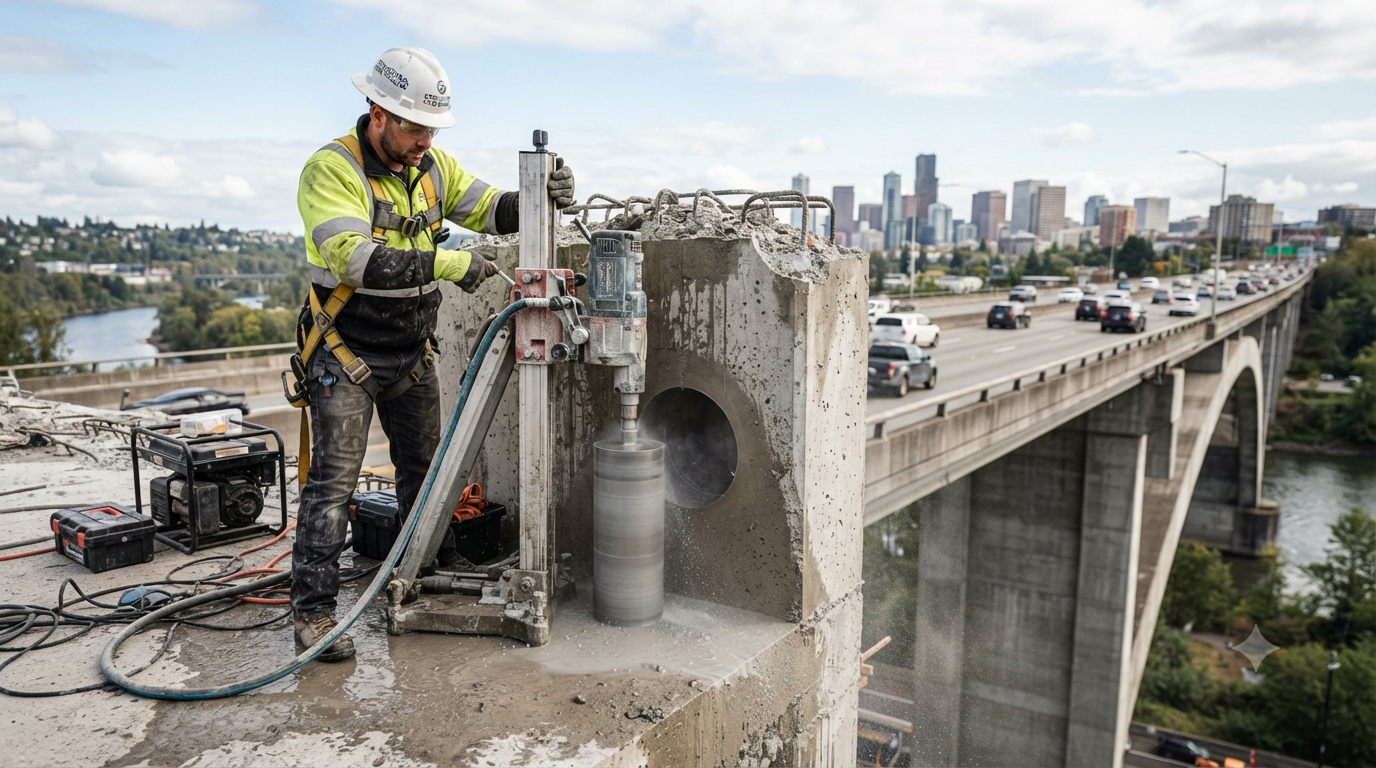
Bridges are the lifelines of our transportation networks, enduring constant stress, environmental wear, and heavy traffic loads. Ensuring their longevity and safety is a monumental task that requires high-precision engineering. Among the most vital techniques in modern bridge maintenance and construction is bridge core drilling.
Whether you are looking to verify the strength of concrete, install new utility lines, or perform deep structural assessments, professional core drilling is the industry standard. At [email protected], we specialize in providing high-precision drilling solutions that keep critical infrastructure safe and functional.
What are Bridge Core Drilling Services?
Bridge core drilling is a specialized construction technique used to create perfectly cylindrical openings in hardened concrete, reinforced concrete, stone, or asphalt [1.1.1, 1.2.2]. By utilizing diamond-impregnated drill bits, contractors can cut through even the most resilient materials with extreme accuracy [1.1.1, 1.2.2].
Unlike outdated, destructive methods like jackhammering, which can cause micro-fractures and structural instability, core drilling is a non-impact, vibration-free process [1.2.1, 1.3.2]. It preserves the integrity of the surrounding structure while delivering a clean, precise hole [1.3.2, 1.3.3].
Why Core Drilling is Essential for Bridge Maintenance
Bridges exist in harsh environments. Over time, concrete may suffer from carbonation, chloride intrusion, or general structural degradation. Core drilling provides the essential data needed to manage these aging assets [1.1.2].
1. Structural Health Assessment
To understand the true condition of a bridge, engineers need more than visual inspections. By extracting "core samples"—cylindrical plugs of concrete—professionals can send them to a laboratory for destructive testing [1.1.2, 1.2.3]. This reveals:
-
Compressive Strength: Confirming if the concrete meets design specifications [1.1.1, 1.1.2].
-
Composition & Density: Identifying potential internal voids or material fatigue [1.1.1, 1.2.2].
-
Rebar Corrosion Status: Assessing the state of embedded steel reinforcement [1.3.2].
2. Precision Utility Installations
Bridges are not just concrete slabs; they are complex structures housing electrical conduits, drainage pipes, and fiber-optic cables. Core drilling allows for the precise placement of these penetrations without compromising the structural load-bearing capacity of the bridge [1.1.1, 1.3.3].
3. Anchoring and Retrofitting
As traffic demands increase, older bridges often require reinforcement. Core drilling is the go-to method for creating anchor holes for seismic retrofitting, new guardrails, or structural steel plate reinforcement [1.1.1, 1.3.1].
The Technology Behind the Cut: Diamond Core Drilling
The reason professionals trust diamond-tipped bits is simple: durability and precision [1.2.2]. As the bit rotates, industrial diamond segments grind away the concrete at a microscopic level [1.3.2].
-
Wet Drilling: Water is used to cool the bit, suppress dust, and flush out slurry, ensuring a clean and efficient cut [1.1.1, 1.3.2].
-
Low Vibration: Because the process is rotational rather than percussive, it prevents the development of micro-cracks that could compromise the bridge's lifespan [1.3.2, 1.3.3].
The Importance of Concrete Scanning Before Drilling
Before a single hole is drilled, safety is paramount. At [email protected], we emphasize the importance of Ground Penetrating Radar (GPR) or X-ray scanning [1.1.1, 1.3.2].
Drilling into a post-tension cable or an electrical conduit can be catastrophic. Scanning identifies these hazards hidden deep within the concrete, saving time, money, and preventing dangerous onsite accidents [1.1.1].
Targeting Related Searches
-
Concrete cutting for bridge rehabilitation
-
Diamond core drilling for civil infrastructure
-
Professional concrete coring services near me
-
Structural concrete testing methods
-
Non-destructive bridge evaluation techniques
People Also Ask (PAA)
Q: How deep can core drilling go in bridge structures? A: With advanced heavy-duty rigs and extension rods, core drilling can penetrate structures over 100 feet deep, making it suitable for both deck maintenance and deep pier inspections [1.3.2].
Q: Does core drilling weaken the bridge? A: When performed correctly by professionals, core drilling is designed to preserve structural integrity [1.3.2]. By avoiding the vibrations associated with hammers, we keep the surrounding concrete intact [1.2.1, 1.3.3].
Q: Can you drill through steel reinforcement inside the concrete? A: Yes. Diamond core bits are specifically designed to cut through both concrete aggregate and the embedded steel rebar [1.1.1, 1.3.2].
Why Choose [email protected]?
In the world of infrastructure, there is no room for error. Choosing the right partner for your bridge core drilling needs is a decision that impacts the safety of thousands of commuters.
-
Expertise: Decades of experience in large-scale infrastructure and civil engineering.
-
Precision Technology: We utilize the latest diamond-cutting and GPR scanning equipment [1.1.1].
-
Safety Compliance: We adhere to strict safety standards, ensuring that every project is completed without incident or disruption [1.1.1].
-
Efficiency: We understand the pressure of construction timelines and deliver rapid, high-quality results [1.1.1, 1.2.3].
Conclusion
Bridge core drilling is more than just making a hole—it is about gaining the insights needed to maintain the longevity and safety of our nation's infrastructure. Whether for critical testing or vital utility installations, ensure your project is in the hands of professionals.
Ready to get started? Contact our team today at [email protected] to discuss your project requirements. Let us bring precision, safety, and expertise to your next infrastructure endeavor.