
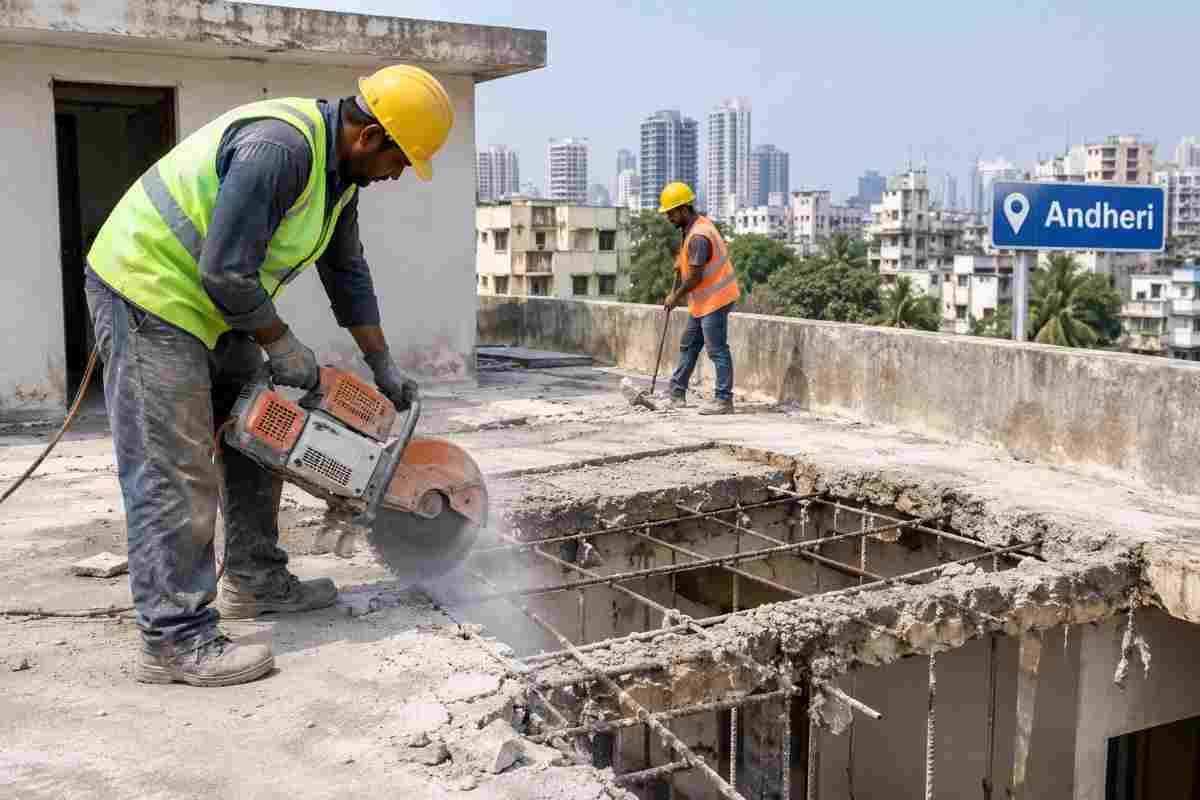
If you own or manage a building in Andheri, you have probably thought about reworking your terrace at some point. Maybe you want a staircase opening to a new open-to-sky deck, a skylight, a duct or lift shaft, or a damaged portion replaced. All of these involve one specialised job: chhat cutting, or RCC slab cutting.
In a dense, vibration-sensitive suburb like Andheri, this is not a job for a hammer and chisel. Done wrong, it can crack beams, damage neighbouring flats and put workers at risk. Done right, with modern diamond cutting equipment, it is clean, quiet, accurate and safe.
This guide covers how chhat cutting works, why it suits RCC terrace renovation, what to check before you start, and how to choose the right contractor. It is published by Core Cutting India, which specialises in precision concrete cutting across Mumbai.
What Is Chhat Cutting?
“Chhat” is the Hindi word for roof or slab. Chhat cutting means cutting through a reinforced cement concrete (RCC) roof or terrace slab to create a precise opening, remove a section, or modify the structure. It uses diamond-tipped tools instead of breaking the concrete with impact.
The main techniques are:
- Slab sawing (floor/slab saw): A circular diamond blade cuts straight lines across a flat slab.
- Wall saw cutting: A track-mounted saw handles vertical or large openings and deep cuts.
- Wire saw cutting: A diamond-impregnated wire cuts very thick or awkwardly placed sections.
- Core drilling: Circular holes are drilled for pipes, ducts, cables and corner relief points before the main cut.
Diamond cutting slices through both concrete and steel reinforcement cleanly. Because it avoids heavy impact, it produces very little vibration, noise and dust compared with traditional demolition.
Why Chhat Cutting Matters for Andheri Terrace Renovation
Andheri is one of Mumbai’s busiest and most densely built areas. Old residential societies in Andheri West and East, chawl-style buildings, commercial complexes near the metro, and industrial premises in Marol, Sakinaka and MIDC all stand close together. Several factors make precision cutting especially important here.
1. Close neighbours. Buildings often share walls or sit only metres apart. Heavy breaker vibration can send cracks through adjoining structures and cause disputes.
2. Ageing buildings. Many Andheri structures are 30 to 50 years old, and their concrete may already be weathered. Uncontrolled impact can weaken the surrounding structure.
3. Society rules. Most housing societies restrict noise and working hours and ask for dust control. Diamond cutting is far easier to run within those limits.
4. Monsoon damage. Mumbai’s heavy rain causes seepage, leakage and corrosion of steel in terrace slabs. Renovating a damaged terrace often means cutting out and rebuilding sections.
5. Space pressure. With property rates so high, owners want to use every square foot, so terraces become decks, gyms, gardens, extra rooms or solar spaces. These changes need accurate openings.
Common Reasons for Cutting an RCC Terrace Slab
Typical projects include:
- Staircase or head-room openings to reach the terrace from the floor below.
- Skylights and ventilation shafts to bring natural light into dark top-floor rooms.
- Lift shaft openings when adding a lift to an older building.
- Duct and pipe passages for HVAC, plumbing, drainage and cabling.
- Removing damaged slab sections that are leaking or have exposed, corroded rebar.
- Terrace garden or deck conversion where the layout changes and some slab portions are removed.
- Water tank installation or relocation that needs openings or cut-outs.
- Solar panel mounting and cable routing through the slab.
- Structural alterations such as removing a portion of a slab to reconfigure floors.
Why Diamond Cutting Beats Traditional Breaking
Contractors still sometimes use pneumatic breakers and sledgehammers because they look cheaper upfront. For RCC terrace renovation, the comparison looks different.
| Factor | Diamond Cutting | Hammer/Breaker |
|---|---|---|
| Accuracy | Clean, straight edges to the marked line | Rough, uneven edges |
| Vibration | Very low | High; risk of micro-cracks |
| Noise | Moderate and controlled | Loud, disturbing |
| Dust | Low with water cooling | Heavy |
| Structural safety | Surrounding concrete stays intact | Adjacent beams and slabs can be damaged |
| Finishing work | Minimal | Extensive patching and plastering |
| Society approval | Easier | Often refused |
The cost of repairing cracks, redoing finishes and settling neighbour complaints often exceeds the extra cost of proper cutting. Clean edges also make waterproofing, shuttering and re-casting simpler, which matters in Mumbai’s wet climate.
How the Chhat Cutting Process Works
A professional job follows a clear sequence.
Step 1: Site inspection and assessment
The team visits the terrace to check slab thickness, reinforcement, the load path, nearby beams and columns, and access for equipment. Slab thickness commonly ranges from about 125 mm to 200 mm or more, depending on the building.
Step 2: Structural review
Cutting should never be done blindly. A structural engineer should confirm that the opening will not compromise beams, columns or load transfer. Where needed, temporary props or additional supports are planned.
Step 3: Marking and layout
The cutting lines are marked on the slab based on the approved drawing. Openings are measured precisely so the finished edge matches the design.
Step 4: Scanning and core drilling
Corner holes are drilled with core cutters. Scanning for embedded conduits, pipes or cables helps avoid hitting them during the cut.
Step 5: Slab sawing
Diamond saws cut along the marked lines. Water is used for cooling and dust suppression, and slurry is collected so it does not run into the building or drains.
Step 6: Sectioning and removal
Large cut portions are divided into manageable blocks and lifted or lowered in a controlled manner, using hoists or cranes where necessary.
Step 7: Cleaning and handover
Slurry and debris are cleared, edges are inspected, and the area is ready for the next stage: reinforcement, shuttering, casting, waterproofing or finishing.
Safety and Structural Considerations
Chhat cutting changes how a building carries load, so safety planning is not optional.
- Get an engineer’s approval. Written structural advice protects you legally and physically.
- Check society and authority requirements. Housing societies commonly need an NOC, and certain alterations may need municipal permission. Confirm requirements for your building before work begins.
- Prop and support where needed. Cut sections can shift load to other elements, so temporary supports may be required.
- Protect workers and occupants. Use barricading, proper fall protection on the terrace edge, and keep people clear of the area below.
- Control water and slurry. Seal drains and protect flats below from runoff.
- Check utilities. Electrical conduits, water lines and rainwater pipes in the slab should be identified before cutting.
- Follow monsoon timing. Avoid leaving an open slab exposed during heavy rain. Plan the cut and the waterproofing close together.
What Affects the Cost of Chhat Cutting in Andheri?
Pricing varies by project, so be wary of anyone who quotes a flat figure without seeing the site. The main factors are:
- Slab thickness and area to be cut
- Amount and density of reinforcement
- Method required (slab saw, wall saw, wire saw or core drilling)
- Access and height, since upper terraces and tight stairwells need extra effort and equipment
- Debris handling, including lowering, removal and disposal
- Working hours restrictions set by the society
- Number of openings and complexity of the layout
Most reliable contractors charge by cutting length or area, with core drilling priced per hole based on diameter and depth. Ask for an itemised quote that states what is and is not included.
How to Choose the Right Chhat Cutting Contractor in Andheri
Not every contractor with a saw is equipped for terrace work. When comparing options, look for:
- Experience with RCC slabs in occupied buildings, not just open demolition sites.
- Modern diamond equipment, including slab saws, wall saws, wire saws and core drilling machines.
- Trained operators who understand reinforcement, structural behaviour and site safety.
- Willingness to inspect the site first and give a written quotation.
- Clear coordination with your engineer or architect.
- Dust and slurry management practices.
- References or past projects in Andheri and nearby areas such as Jogeshwari, Vile Parle, Goregaon and Santacruz.
- Transparent timelines and a realistic plan for debris removal.
Why Choose Core Cutting India for Your Terrace Project
Core Cutting India focuses on precision concrete cutting for residential, commercial and industrial clients across Mumbai, including Andheri. The approach is built around what terrace renovation actually demands:
- Diamond-based cutting that keeps vibration, noise and dust under control
- Accurate openings that match your drawings and reduce finishing work
- Services under one roof, including slab cutting, wall cutting, core drilling, wire sawing and opening creation
- Site-specific planning so your building, neighbours and schedule are respected
- Clear communication, with a site visit and quotation before work starts
Whether you need a single staircase opening or a multi-section terrace conversion, a team that plans the job properly will save you time, repair costs and stress.
Frequently Asked Questions
What is chhat cutting?
Chhat cutting is the process of cutting an RCC roof or terrace slab with diamond tools to create openings or remove sections. It is used for staircases, skylights, ducts, lift shafts, repairs and renovations.
Is it safe to cut an RCC terrace slab?
Yes, when it is planned and executed properly. A structural engineer should approve the opening, and trained operators should use suitable equipment and supports. Unplanned or careless cutting is what creates risk.
How is RCC slab cutting different from breaking the slab?
Cutting uses diamond blades or wire to slice cleanly along marked lines, causing little vibration. Breaking uses impact tools that shake the whole structure and leave rough edges.
Does chhat cutting create a lot of dust and noise?
Water-cooled diamond cutting greatly reduces dust compared with breaking. Noise is lower and more consistent, which usually makes it easier to carry out within society rules.
Do I need permission for cutting a terrace slab in Andheri?
Often, yes. Most housing societies require approval, and structural alterations may need engineer sign-off and possibly municipal permission, depending on the building and scope. Check with your society and a qualified professional before starting.
How long does terrace slab cutting take?
A single opening can often be completed in a day or two, while larger or multi-section projects take longer. Time depends on slab thickness, reinforcement, access and the number of cuts.
Can an old building’s terrace slab be cut?
Often it can, but older slabs need extra care. An engineer should assess the condition of the concrete and steel first, and supports may be required.
Can I cut a slab myself or use a local labourer with a hammer?
It is strongly discouraged. Impact-based breaking can damage the structure and endanger people below. Professional diamond cutting is the safer and more reliable route.
What happens after the slab is cut?
The opening is cleaned, and depending on the project you proceed with reinforcement, framing, shuttering and casting, staircase construction, waterproofing or finishing.
How do I get a quote for chhat cutting in Andheri?
Contact a specialist like Core Cutting India for a site visit. Share the location, approximate dimensions and purpose of the opening, and ask for an itemised written quotation.
Final Thoughts
An RCC terrace is one of the most valuable and most vulnerable parts of any building in Mumbai. Renovating it, whether to add access, light, space or repairs, calls for care as well as speed. Chhat cutting with modern diamond equipment gives you clean openings, safer working conditions, less disturbance to neighbours and a better foundation for the rest of your renovation.
Before starting any terrace project in Andheri, get your engineer’s approval, confirm society requirements, and work with a specialist who treats the slab as a structure rather than just a surface. To discuss your project and arrange a site visit, get in touch with Core Cutting India.