
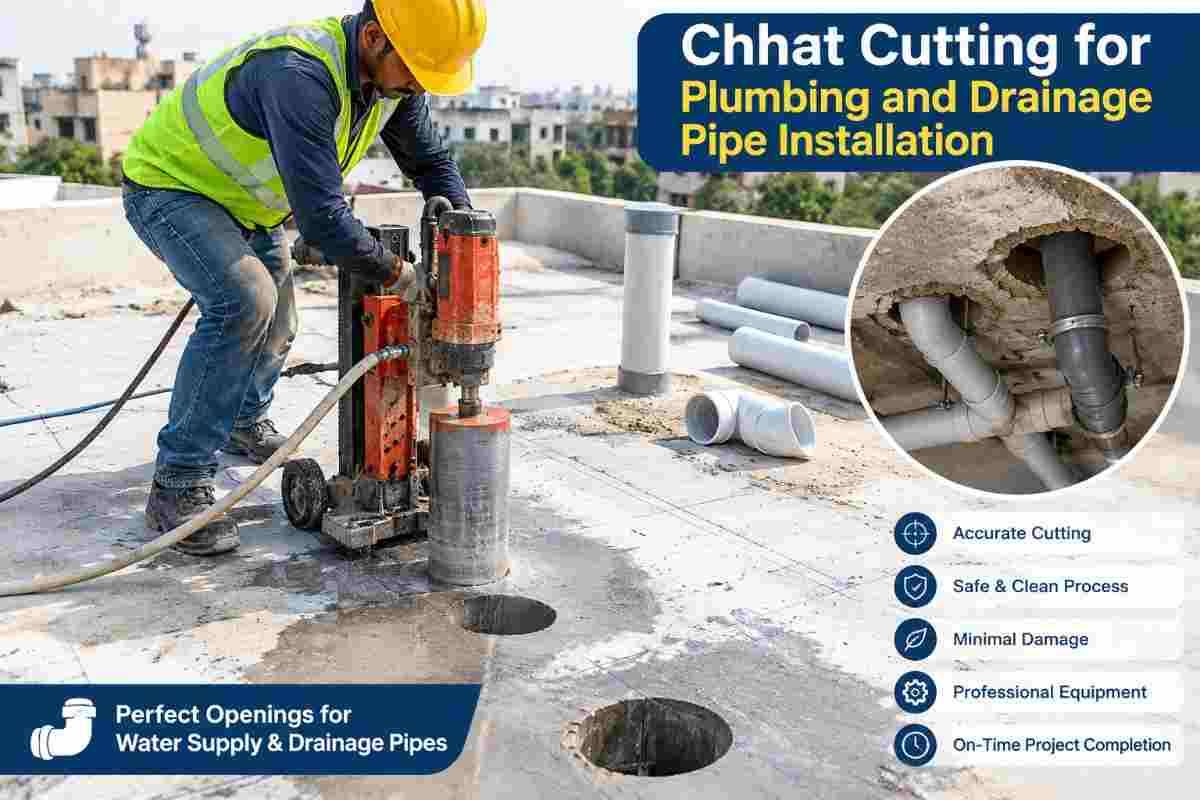
Every building, whether a house, apartment block, office, hospital or factory, depends on a hidden network of pipes. Water supply lines, soil pipes, waste pipes and rainwater drains must travel from one floor to another, and in most Indian buildings that means passing through a thick reinforced concrete (RCC) slab. If this opening is not planned or made properly, the result can be leakage, cracks, seepage on the ceiling below and expensive repair work later.
This is where chhat cutting, also called roof cutting or slab cutting, becomes essential. Chhat cutting is the process of making a precise opening in a concrete roof or floor slab so that plumbing and drainage pipes can be installed safely. At Core Cutting India (https://corecuttingindia.com/), we specialise in modern diamond core cutting that creates clean, accurate holes without damaging the structure around them.
In this guide, we explain what chhat cutting is, why traditional methods fall short, how the core cutting process works, what it costs, and how to choose the right service provider for your plumbing and drainage project.
What Is Chhat Cutting?
Chhat cutting refers to cutting through a concrete slab, roof or floor to create openings of a required size. For plumbing and drainage work, these openings are usually circular holes through which pipes pass vertically from one level to another.
The work can be done in two broad ways:
- Manual or hammer breaking: Labourers use a hammer, chisel or electric breaker to chip away the concrete.
- Diamond core cutting: A machine fitted with a diamond-tipped hollow bit drills through the concrete and steel, removing a neat cylindrical core.
Today, professional contractors and engineers strongly prefer the second method because it is cleaner, faster, more accurate and far safer for the building.
Why Plumbing and Drainage Pipes Need Proper Slab Openings
Pipes that carry water and sewage are not like electrical wires. They are heavy, they carry liquid under pressure or by gravity, and they must be aligned correctly. A poorly cut opening can cause several problems.
1. Gradient and flow issues. Drainage pipes depend on correct alignment and slope. If the hole is off-centre or irregular, the pipe may sit at an angle, leading to blockages and slow drainage.
2. Water leakage. Rough, oversized holes are difficult to seal. Water can seep around the pipe into the slab and appear as damp patches or dripping on the ceiling below.
3. Structural damage. Hammering a slab sends vibrations through the structure. This can create hairline cracks, loosen the bond between concrete and steel, and weaken beams and columns nearby.
4. Higher repair cost. Broken edges require extra concrete, grouting and finishing, which adds time and money.
A clean, precisely sized opening solves all of these issues from the start.
The Problem with Traditional Hammer and Chisel Methods
Many property owners still ask labourers to break the slab by hand because it appears cheaper. In reality, the traditional approach has serious drawbacks:
- Uncontrolled cracks: Breaking concrete with impact force can spread cracks well beyond the intended hole.
- Irregular shapes: Holes are rough and uneven, making pipe fitting and waterproofing difficult.
- Noise and dust: Hammering is extremely noisy and creates heavy dust, which is a problem in occupied homes, offices and hospitals.
- Damage to reinforcement: Cutting steel bars with a chisel is slow and can bend or distort rebar unpredictably.
- Safety risk: Falling debris, vibration and fatigue increase the chance of injury.
- More time: What a core cutting machine does in minutes can take hours by hand.
For any modern plumbing or drainage installation, these disadvantages far outweigh the apparent savings.
How Diamond Core Cutting Works for Chhat Cutting
Diamond core cutting uses a rotating cylindrical bit whose edge is embedded with industrial diamond segments. Diamond is the hardest known material, so it grinds through concrete and reinforcement steel smoothly instead of smashing it.
Here is the typical process followed by the team at Core Cutting India:
Step 1: Site inspection and marking. Our technicians visit the site, study the slab thickness and check the exact location where the pipe must pass. The centre point and diameter are marked clearly. We also check for hidden electrical conduits or other services using available drawings and scanning methods where needed.
Step 2: Selecting the correct bit size. Core bits are available in many diameters, commonly from around 25 mm to 600 mm or more. For plumbing, typical sizes include 75 mm, 100 mm, 110 mm, 150 mm and 200 mm, depending on the pipe diameter plus a small clearance for sleeves and sealing.
Step 3: Machine setup. The drilling machine is fixed firmly using an anchor bolt or vacuum base so it does not shift. Stability is the key to a straight, perfectly vertical cut.
Step 4: Water cooling. Water is supplied to the bit while drilling. This cools the diamond segments, reduces friction and keeps dust down, making the process far cleaner than breaking by hand.
Step 5: Drilling through the slab. The bit rotates and cuts steadily through concrete and steel. The slab core is removed as a solid cylinder once drilling is complete.
Step 6: Cleaning and handover. The slurry is cleaned, the opening is checked for size and straightness, and the site is left tidy so plumbers can begin pipe installation immediately.
Key Benefits of Core Cutting for Plumbing and Drainage Pipe Installation
Precision and Accuracy
The hole is exactly as large as required, with smooth walls. This allows pipes and sleeves to fit snugly, which improves alignment and drainage performance.
No Vibration, No Structural Damage
Because diamond core drilling cuts rather than impacts, it does not shake the structure. Beams, columns and neighbouring slabs remain undisturbed.
Less Noise and Dust
Water-cooled cutting is quieter and much cleaner. This is especially valuable in apartments, offices, schools and hospitals where normal activity continues during the work.
Speed and Efficiency
A standard hole through a typical slab can be completed in a matter of minutes. Multiple openings across several floors can be finished in a single day, which keeps your project on schedule.
Better Waterproofing
Smooth, round openings are easier to seal with sleeves, non-shrink grout and waterproofing compound. This greatly lowers the risk of seepage.
Cleaner Finish and Lower Repair Costs
Since there is no broken edge or spalling, you need little to no patchwork afterwards. That saves material, labour and time.
Ideal for Retrofitting
If you are renovating an existing building, adding a bathroom, relocating a kitchen or upgrading old drainage lines, core cutting lets you make new openings without disturbing the rest of the structure.
Where Chhat Cutting Is Commonly Used
Chhat cutting for pipe installation is needed across many types of projects:
- Residential buildings: New bathrooms, kitchen sinks, floor drains and soil stacks.
- High-rise apartments: Vertical shafts for water supply, sewage and rainwater lines.
- Commercial complexes: Toilet blocks, pantry areas and mechanical shafts.
- Hospitals and laboratories: Special drainage and plumbing lines where low dust and low vibration are mandatory.
- Industrial buildings: Process drains, floor trenches and heavy-duty pipelines.
- Basements and parking areas: Stormwater drains and sump connections.
- Terrace and roof slabs: Rainwater downpipes and overflow outlets.
Pipe Types That Need Slab Openings
The hole size depends on the pipe being installed. Common examples include:
- PVC and UPVC soil pipes: Usually 110 mm, used for toilet waste.
- Waste water pipes: Typically 75 mm for basins, sinks and showers.
- Rainwater pipes: Often 75 mm to 110 mm for terrace drainage.
- CPVC and PPR water supply lines: Smaller openings for hot and cold water risers.
- Cast iron and HDPE drainage pipes: Larger diameters for heavy-duty or commercial use.
Always allow a small clearance around the pipe so that a sleeve and sealing material can be installed. Our engineers will advise you on the right diameter after checking your plumbing layout.
Factors That Affect the Cost of Chhat Cutting
People often search for the cost of roof cutting or core cutting rate per hole. The final price depends on several factors:
- Hole diameter: Larger holes need bigger bits and more time.
- Slab thickness: A thicker slab takes longer to drill through.
- Reinforcement density: More steel bars mean greater cutting effort and bit wear.
- Number of holes: Bulk work is usually more economical per hole.
- Height and accessibility: Work on upper floors, terraces or tight spaces may need extra setup.
- Water and power availability: Core cutting needs a steady supply of both.
- Location: Travel distance and local conditions can influence the quote.
Because every site is different, the most reliable way to know the exact cost is to request a site-specific quotation. Core Cutting India offers transparent pricing with no hidden charges.
Safety Precautions During Slab Cutting
Safety is never optional in construction. A professional chhat cutting team follows these practices:
- Verifying the location of electrical conduits, gas lines and existing pipes before drilling.
- Securing the machine firmly to prevent movement.
- Using water cooling and proper drainage of slurry to avoid slips and electrical hazards.
- Wearing helmets, gloves, safety glasses, ear protection and non-slip footwear.
- Cordoning off the area below the slab so nobody stands under the cutting zone.
- Supporting or controlling the falling concrete core, especially for large holes.
Hiring trained operators greatly reduces the chance of accidents and costly mistakes.
Tips to Prepare Your Site Before Chhat Cutting
A little preparation makes the job faster and smoother:
- Finalise the plumbing layout and confirm pipe sizes and positions with your plumber or architect.
- Mark the centre points clearly so there is no confusion on the day.
- Arrange water and electricity at or near the work area.
- Clear the area below and around the slab of furniture, valuables and people.
- Inform neighbours or occupants if work will occur in a shared building.
- Share drawings of existing services, if available.
After the Cut: Pipe Installation and Sealing
Once the opening is made, the plumbing team can install the pipe or sleeve. For best results:
- Fit a sleeve slightly larger than the pipe where required.
- Align the pipe vertically and check the slope of connected horizontal lines.
- Fill the gap with non-shrink grout or approved sealant.
- Apply waterproofing compound around the pipe, especially in wet areas like bathrooms and terraces.
- Allow proper curing time before testing.
- Perform a water test to confirm there are no leaks before the final finishing.
The smooth, accurate hole created by core cutting makes each of these steps easier and more reliable.
Choosing the Right Chhat Cutting Service Provider
Not every contractor offers the same quality. When selecting a service, look for:
- Experience: A proven record on residential, commercial and industrial projects.
- Modern equipment: Diamond core drilling machines and quality bits in all required sizes.
- Trained operators: Skilled technicians who understand slabs, rebar and safety.
- Transparent quotation: Clear pricing based on diameter, depth and quantity.
- Timely service: Ability to complete the work within the promised schedule.
- Clean working method: Dust and noise control and proper cleanup.
Core Cutting India brings all of these together, offering dependable concrete core cutting, slab cutting and wall cutting services designed to support smooth plumbing and drainage installations.
Frequently Asked Questions (People Also Ask)
What is chhat cutting?
Chhat cutting is the process of cutting an opening in a concrete roof or floor slab, usually with a diamond core cutting machine, so that pipes, ducts or other services can pass through.
Is core cutting better than breaking the slab with a hammer?
Yes. Core cutting is precise, low-vibration, quieter and cleaner. Hammer breaking can cause cracks, uneven holes and damage to the surrounding structure.
Does core cutting weaken the slab?
When done correctly by trained professionals at the right location, a small core hole does not significantly weaken a slab. For large openings or cuts near beams and columns, a structural engineer should be consulted.
How long does it take to cut a hole in a concrete slab?
A typical plumbing-size hole can be drilled in about 10 to 30 minutes, depending on diameter, thickness and the amount of reinforcement.
What size hole is needed for a 110 mm drainage pipe?
Usually a 125 mm to 150 mm core is used to leave room for a sleeve and sealing, but the exact size depends on your design and fittings.
Can chhat cutting be done in an occupied building?
Yes. Because core cutting is relatively low in noise and dust, it is well suited to occupied homes, offices and hospitals, provided basic precautions are followed.
How much does chhat cutting cost in India?
The cost depends on hole diameter, slab thickness, number of holes and site conditions. Contact Core Cutting India for an accurate quotation based on your requirement.
Can core cutting cut through reinforcement steel?
Yes. Diamond core bits can cut through concrete and steel bars together, though heavily reinforced sections will take more time and cause more bit wear.
Do I need to seal the hole after the pipe is installed?
Absolutely. Sealing with sleeves, non-shrink grout and waterproofing prevents leakage and water seepage to lower floors.
Why Choose Core Cutting India?
At Core Cutting India, our focus is on precision, safety and customer satisfaction. We understand that a plumbing or drainage project depends on getting the very first step right, which is the opening in the slab. Our team uses advanced diamond core cutting equipment, follows safe working practices and delivers clean results that let your plumbers and contractors continue without delay.
Whether you need a single opening for a new bathroom or dozens of holes across a multi-storey project, we can handle the job efficiently and professionally.
Conclusion
Chhat cutting for plumbing and drainage pipe installation is not just about making a hole; it is about protecting the strength of your building, ensuring proper pipe alignment and preventing leakage for years to come. Traditional hammering methods may seem inexpensive at first, but they often lead to cracks, mess and costly repairs. Modern diamond core cutting offers a faster, cleaner, safer and more accurate alternative.
If you are planning a new construction, renovation or plumbing upgrade, choose a trusted specialist. Visit https://corecuttingindia.com/ to learn more about our services and request a free quotation today. Let Core Cutting India help you build it right, from the very first cut.
Call to Action: Need chhat cutting or core cutting for your plumbing and drainage pipes? Contact Core Cutting India at https://corecuttingindia.com/ for fast service and a free site-specific quote.