
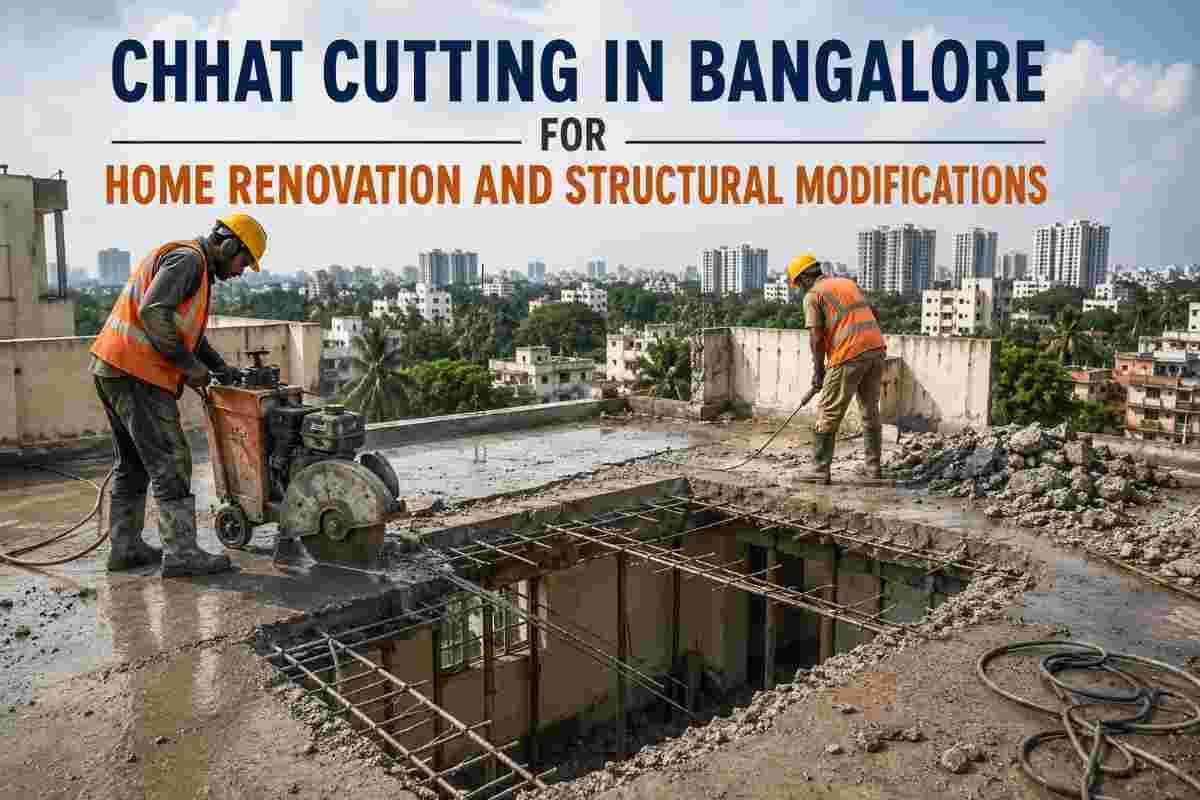
Bangalore’s homes are changing. Families are outgrowing their floor plans, old independent houses are being modernised, and apartment owners want open, airy layouts. Many of these upgrades involve the same step: opening up an existing concrete roof or floor slab. In local terms, this is chhat cutting.
Whether you want a new staircase to a terrace, a skylight, a lift shaft, a duct opening or a full extension, cutting through a reinforced concrete (RCC) slab is rarely something to attempt with a hammer and chisel. Done wrongly, it can crack the structure, damage neighbouring rooms and put your family at risk.
This guide explains what chhat cutting is, why homeowners in Bangalore choose it, how the process works, what affects the cost, and how to pick the right service provider. It draws on the standard practices followed by professional concrete cutting teams such as Core Cutting India.
What Is Chhat Cutting?
Chhat cutting is the controlled removal of a section of a concrete roof or floor slab using specialised diamond-tipped machinery. Instead of breaking concrete with brute force, the equipment slices through it along precise lines, leaving clean edges and minimal vibration.
Most Bangalore homes are built with RCC slabs: concrete reinforced with steel bars. This combination is strong, which is why a slab cannot simply be “broken open”. Professional cutting uses diamond blades and bits that grind through both concrete and steel cleanly.
Common methods include:
- Slab sawing (floor or flat sawing): A circular diamond blade cuts straight lines across the slab surface. This is ideal for rectangular openings such as stair or lift cut-outs.
- Wall sawing: A track-mounted saw cuts vertical openings in walls for doors, windows or connecting two rooms.
- Wire sawing: A diamond wire loops around the section and cuts through thick or hard-to-reach concrete.
- Core drilling: A hollow diamond drill bit creates round holes for pipes, ducts, cables and anchor points.
- Hand-held ring saw cutting: Used in tight corners and for finishing where larger machines cannot reach.
Why Homeowners in Bangalore Choose Chhat Cutting
1. Adding a staircase to the terrace
One of the most frequent requests is an internal staircase to the roof. Many older homes have only an external staircase, or none at all. Cutting an opening in the slab allows a safe, weather-protected staircase and turns an unused terrace into a usable space.
2. Vertical expansion and extra floors
With land prices high, families often build upward. A planned slab opening can connect the existing floor to the new one for stairs, a utility shaft or a double-height section.
3. Lift shafts for ageing family members
Installing a home elevator is increasingly common. It needs a clean, accurately sized vertical opening through each slab, which makes precision critical.
4. Skylights and natural light
Bangalore’s pleasant climate makes daylight a real asset. A skylight cut into the slab brightens dark central rooms, cuts electricity use and improves ventilation.
5. Plumbing, HVAC and electrical routing
Modern homes need openings for pipes, air-conditioning ducts, solar water heater lines and cables. Core drilling handles these without disturbing the surrounding structure.
6. Interior remodelling
Open kitchens, merged living rooms and double-height lounges all involve removing portions of slabs or walls. Cutting allows these changes in a controlled way.
Why Not Just Break the Slab?
Many people ask why they cannot use a jackhammer, which looks cheaper at first glance. The risks usually outweigh the savings.
Structural damage: Heavy hammering sends shock waves through the whole structure. Hairline cracks may appear in beams, columns and neighbouring slabs, which weakens the building over time.
Uncontrolled edges: Breaking leaves ragged, uneven edges that need extensive repair and patching.
Noise and dust: Hammering is loud and creates heavy dust, which disturbs families and neighbours. In apartments, it can violate society rules.
Safety hazards: Falling debris, exposed rebar and unstable edges are real dangers on a residential site.
Higher hidden cost: Debris removal, repairs and re-plastering often cost more than the initial saving.
Diamond cutting avoids most of these problems. It is quicker, quieter, cleaner and far more precise.
Step-by-Step: How Professional Chhat Cutting Works
Step 1: Site inspection and assessment
A qualified team visits the property to examine the slab thickness, reinforcement pattern, nearby beams and columns, and the age of the building. They also check access for equipment, water and power supply.
Step 2: Structural consultation
This step is vital. Before any cutting begins, a structural engineer should confirm that the opening will not compromise load paths. Beams and columns are generally not cut, and openings are placed away from critical load-bearing zones. If the opening is large, the engineer may recommend adding supporting beams or lintels.
Step 3: Marking the cut lines
The team marks the exact outline of the opening on the slab, measured against the architect’s or engineer’s drawing. Accurate marking prevents costly mistakes.
Step 4: Safety setup
Debris zones are cordoned off, temporary props or supports are installed where needed, and the floor below is protected. Cut sections can weigh hundreds of kilograms, so planning how to lower or lift them is essential.
Step 5: Cutting
Using diamond saws, wire saws or core drills, the crew cuts along the marked lines. Water is used to cool the blade and suppress dust, so the process is far cleaner than breaking.
Step 6: Removal of the cut section
The loose slab section is secured with lifting equipment and removed safely. Large pieces can be cut into smaller blocks for easier handling.
Step 7: Finishing and cleanup
Edges are checked, slurry is cleaned up and debris is taken away. The opening is then ready for the next phase of construction, such as staircase fixing, waterproofing or framing.
Key Benefits of Professional Concrete Cutting
- Precision: Straight, clean cuts that match your drawings.
- Minimal vibration: Surrounding walls, beams and tiles stay protected.
- Lower noise: Much quieter than demolition hammers, so it is better for families and neighbours.
- Speed: Many openings can be completed in a day or two, depending on size.
- Less dust: Water-cooled cutting keeps the work area cleaner.
- Safety: Trained operators and proper equipment lower the risk of accidents.
- Better final finish: Clean edges mean less patching and a neater end result.
Factors That Affect Chhat Cutting Cost in Bangalore
There is no single fixed price, because every project is different. These are the main factors that shape a quote:
Slab thickness: A thicker slab needs more cutting depth, time and blade wear.
Reinforcement density: Heavily reinforced concrete takes longer and consumes more diamond tooling.
Size and shape of the opening: Larger or more complex openings mean more linear metres of cutting.
Location and access: Cutting on an upper floor, in a narrow lane or in a cramped interior can need extra equipment and labour.
Method used: Floor saws, wall saws, wire saws and core drills are priced differently.
Debris handling: Lowering and transporting heavy cut sections to disposal sites adds cost.
Urgency and scheduling: Weekend, rush or night-time work may be priced differently.
Most professional providers price by running metre or by the job. Ask for a written, itemised quote so you can compare fairly. Be cautious of quotes that are dramatically lower than the others, because they often cut corners on safety or equipment.
Safety Precautions Every Homeowner Should Insist On
- Get structural approval first. Never let anyone cut a slab without an engineer’s opinion, especially in older buildings.
- Check the contractor’s equipment. Diamond saws, proper cooling systems and lifting gear are signs of a serious operator.
- Confirm trained operators. Skilled machine handlers make a major difference to quality and safety.
- Protect the interiors. Ask how the floor below and nearby furniture will be covered.
- Plan debris removal. Know in advance how and where the concrete will be disposed of.
- Follow society and BBMP rules. Apartment owners should take permission from their association, and some modifications may need municipal approval. Check the current requirements for your property before you begin.
- Keep children and pets away. The work area should be restricted until the job is finished and cleaned.
Common Mistakes to Avoid
Skipping the structural check. The most dangerous mistake is cutting without proper analysis. A slab may be carrying loads you cannot see.
Choosing purely on price. A very cheap quote often means older tools, untrained labour or no insurance.
Poor planning of the opening. Changing the size mid-job wastes time and money. Finalise drawings beforehand.
Ignoring waterproofing. A new opening in a terrace slab must be sealed and waterproofed properly, or Bangalore’s monsoon rains will find the gap.
Forgetting the support work. Large openings may need new beams, lintels or edge strengthening. Budget for this from the start.
How to Choose the Right Chhat Cutting Service in Bangalore
When comparing providers, look beyond the quotation. Ask these questions:
- Do they use modern diamond cutting equipment rather than hammers?
- Can they show previous projects similar to yours?
- Do they work with structural engineers or coordinate with yours?
- Is the quote clear about what is and is not included?
- How do they manage dust, noise and debris?
- Are their operators trained, and do they follow safety protocols?
- Will they commit to a realistic timeline?
A reliable partner will answer these confidently and willingly, and will be honest if a particular cut is not advisable. Core Cutting India offers concrete cutting solutions such as slab cutting, wall cutting and core drilling, and homeowners can contact the team to discuss their project requirements and request an inspection.
Planning Your Renovation: A Quick Checklist
Before you book any chhat cutting work, run through this list:
- Define exactly what you want: staircase, skylight, lift shaft or duct.
- Consult an architect or structural engineer for the opening size and position.
- Obtain any required permissions from your society or local authority.
- Collect two or three written quotes and compare scope, not just price.
- Schedule the work when the family can stay clear of the area.
- Arrange for waterproofing and finishing right after cutting.
- Keep all drawings, approvals and invoices for future reference.
Frequently Asked Questions
1. What is chhat cutting?
It is the precise cutting of a concrete roof or floor slab using diamond equipment, to create openings for stairs, skylights, lifts, ducts and similar needs.
2. Is it safe to cut a concrete slab in an existing house?
Yes, when it is planned by a structural engineer and carried out by trained professionals with proper equipment. Unplanned or careless cutting can be dangerous.
3. How long does slab cutting take?
A typical residential opening can often be completed in one to two days. Larger or more complex jobs take longer, and the time depends on slab thickness and access.
4. How much does roof slab cutting cost in Bangalore?
Cost depends on slab thickness, opening size, reinforcement, access and method. Request an itemised quote after a site visit for an accurate figure.
5. Do I need permission before cutting the slab?
It depends on your property type and the extent of modification. Apartment owners usually need association approval, and structural changes may need municipal clearance. Confirm local rules beforehand.
6. Will cutting cause cracks in my house?
Diamond cutting produces far less vibration than hammering, so the risk of cracks is low when the work is done correctly.
7. Can the cut section be reused?
Usually not. The removed concrete is treated as debris, though it can sometimes be recycled as construction fill.
8. What is the difference between core cutting and slab cutting?
Core cutting makes round holes, typically for pipes and cables, while slab cutting removes larger rectangular or custom-shaped sections.
9. Is it noisy or messy?
It is significantly quieter and cleaner than breaking with hammers, especially as water is used to control dust.
10. Can I add a staircase to my terrace in an old building?
Often yes, but the building must be assessed first. Older structures may need strengthening around the opening.
Conclusion
Chhat cutting is one of the most useful tools for modern home renovation in Bangalore. It lets you add a staircase, bring in natural light, install a lift or route essential services without tearing apart your home. The method matters as much as the plan: precise diamond cutting, backed by structural advice and careful safety practices, protects both your investment and your family.
If you are thinking about a slab opening or any structural modification, start with a proper site assessment, insist on engineer-approved drawings and choose a provider who values precision over shortcuts. To discuss your project and get expert guidance, visit Core Cutting India and request a consultation.