
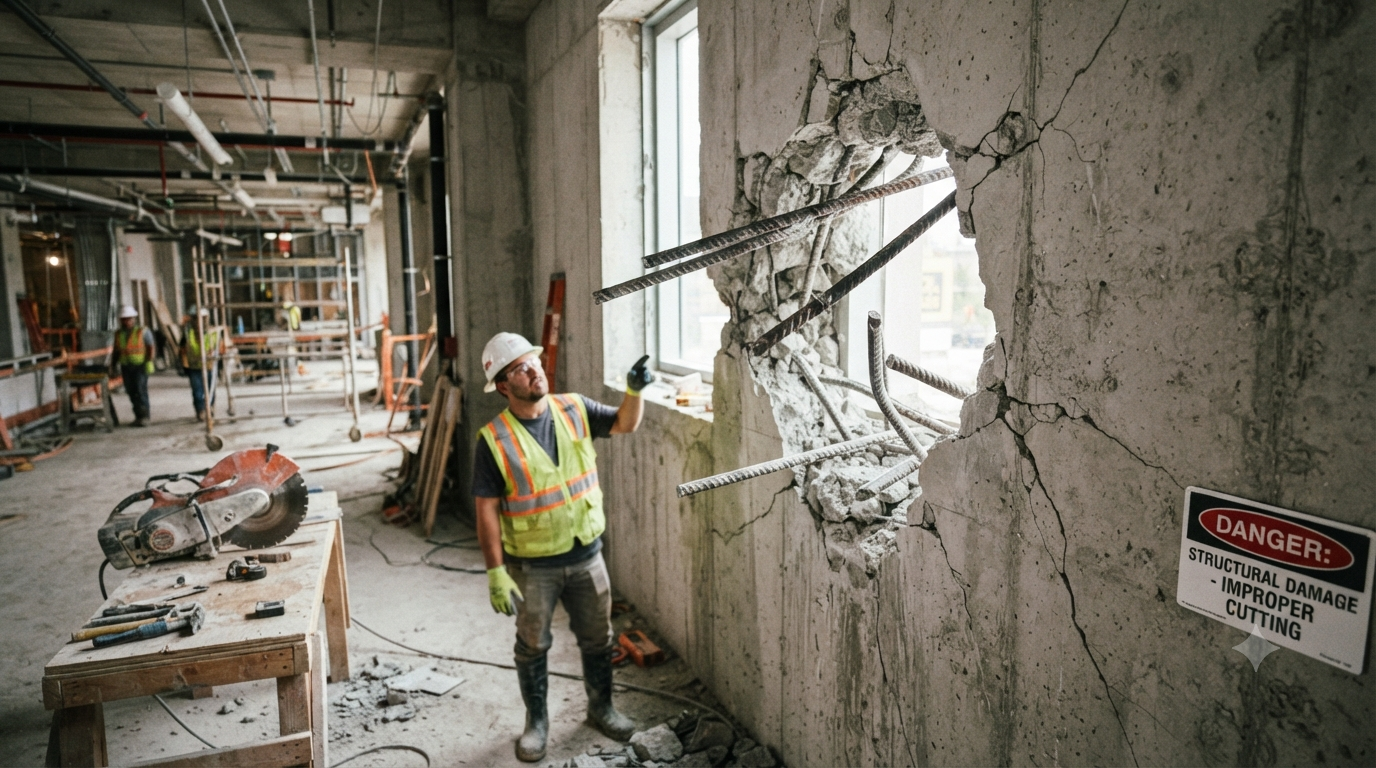
Core cutting is an essential procedure in modern construction and renovation, allowing for the precise installation of HVAC systems, plumbing, electrical conduits, and structural testing [1.2.1, 1.5.2]. However, because it involves removing sections of hardened concrete—the very skeleton of your building—it is a task that leaves zero room for error. When performed incorrectly, core cutting doesn’t just result in a botched hole; it can compromise the structural integrity, safety, and longevity of the entire building [1.1.1, 1.2.2].
At [email protected], we emphasize that structural precision is the difference between a successful renovation and a costly, dangerous structural failure [1.5.1]. In this guide, we explore the most common core cutting mistakes and how to avoid them to protect your property.
1. Failing to Locate Reinforcements and Utilities
The most catastrophic mistake in core cutting is "blind drilling"—cutting into a slab without knowing what lies beneath the surface [1.1.1, 1.2.2]. Modern concrete structures are reinforced with rebar, steel mesh, and sometimes post-tension cables [1.1.1, 1.2.2]. Furthermore, they are often laced with electrical conduits, gas lines, and water pipes [1.1.1, 1.3.2].
The Damage:
-
Structural Weakening: Cutting through load-bearing rebar or post-tension cables can cause immediate or progressive structural failure [1.1.1, 1.2.2].
-
Utility Hazards: Striking electrical lines poses a severe electrocution risk, while hitting water or gas pipes leads to immediate, expensive property damage and site shutdowns [1.1.1, 1.3.2].
How to Prevent It: Always use Ground Penetrating Radar (GPR) or professional-grade metal scanners to map the area before the first cut is made [1.1.1, 1.3.2]. Never assume you know where the lines are based on blueprints alone; site conditions often vary from initial designs [1.2.1, 1.2.2].
2. Using the Incorrect Tools for the Job
Many contractors attempt to cut costs by using standard masonry drills or underpowered equipment for high-density, reinforced concrete [1.1.1, 1.2.2].
The Damage:
-
Equipment Failure: Forcing an inadequate drill through hard concrete will overheat the motor, glaze the diamond bit, and lead to equipment burnout [1.2.1, 1.4.1].
-
Poor Hole Quality: Using the wrong bit often leads to jagged edges, "walking" of the drill (where the bit drifts from the mark), and incomplete penetrations that require expensive rework [1.2.1, 1.2.2].
How to Prevent It: Use professional-grade diamond-tipped core bits specifically rated for the aggregate and reinforcement density of your concrete [1.2.2, 1.4.1]. A specialized team will assess the concrete strength and choose the right equipment to ensure a clean, precise, and efficient cut [1.2.1, 1.5.2].
3. Ignoring Structural Integrity and Load-Bearing Zones
Drilling into a structural column, beam, or high-tension zone without an engineer’s approval is a recipe for disaster [1.2.2, 1.3.1].
The Damage:
-
Load Distribution Issues: Every structural element is designed to carry a specific load. Removing concrete from these areas disrupts the distribution of weight, potentially leading to cracks, sagging, or total collapse over time [1.1.1, 1.2.2].
How to Prevent It: Always consult structural drawings before drilling [1.2.2]. If there is any doubt about whether a wall or floor slab is load-bearing, engage a structural engineer to perform a structural audit or core strength test before proceeding [1.3.1, 1.3.2].
4. Neglecting Proper Cooling and Water Management
Core cutting is a heat-intensive process. The friction generated between the diamond bit and the concrete can reach extreme temperatures [1.2.1].
The Damage:
-
Thermal Damage: Without consistent water flow for cooling and lubrication, the bit can overheat, causing it to lose its cutting ability (glazing) [1.2.1, 1.4.1]. This heat can also cause micro-cracking in the surrounding concrete, weakening the structure [1.2.1].
-
Slurry Accumulation: Poor water management creates a thick, messy slurry that obscures the cutting path, reduces operator visibility, and can lead to dangerous slip hazards or environmental issues [1.2.1, 1.4.1].
How to Prevent It: Ensure a continuous, regulated water supply to the drill face [1.4.1]. The consistency of the slurry should be managed to prevent "clogging," and the RPM of the drill must be adjusted to match the material density [1.4.1].
5. Improper Anchoring of the Drill Stand
Precision starts with stability. A core drill must be securely anchored to the surface to prevent movement [1.4.1, 1.4.2].
The Damage:
-
Inaccuracy and Damage: If the drill base shifts or vibrates, the hole will be distorted, elliptical, or angled, which can ruin expensive custom fittings [1.4.1, 1.4.2].
-
Safety Risk: A drill rig that is not properly anchored can jump or "grab" when hitting reinforcement, potentially injuring the operator [1.4.1].
How to Prevent It: Use mechanical anchors, vacuum pads, or dedicated jack screws to ensure the drill rig is rock-solid before starting the motor [1.4.1]. Always verify the level of the drill base to ensure the hole is cut at the correct, intended angle [1.4.1].
Conclusion
Core cutting is not just about making a hole; it is a specialized engineering task that requires the right equipment, planning, and expertise [1.2.2, 1.5.2]. By avoiding these common mistakes—failing to scan, using the wrong tools, ignoring structural loads, skipping cooling, and neglecting proper anchoring—you can ensure the safety and longevity of your building [1.1.1, 1.2.2].
For professional, safe, and precise core cutting services, contact us at [email protected]. Let our experts handle the technical details so you can focus on the success of your project.
Related Keywords
-
Concrete core cutting services
-
Structural concrete drilling safety
-
Diamond core drilling best practices
-
RCC slab core cutting risks
-
Professional concrete cutting in India
People Also Ask (PAA)
-
Can core cutting weaken a concrete slab? Yes, if done without structural assessment or if reinforcement is damaged [1.1.1, 1.2.2].
-
What is the best way to avoid hitting rebar during core cutting? Use GPR scanning to map the rebar layout before starting [1.1.1, 1.3.2].
-
Why is water necessary for core cutting? It cools the diamond bit, flushes out debris, and prevents overheating that can crack the concrete [1.2.1, 1.4.1].
-
What happens if you cut into a post-tension cable? It can result in a sudden and dangerous release of energy and potentially cause catastrophic structural failure [1.1.1].
For a visual demonstration of the proper techniques used by professionals, watch this guide: Concrete Core Cutting Best Practices. This video provides a clear overview of how avoiding simple mistakes can save equipment and maintain structural safety.