
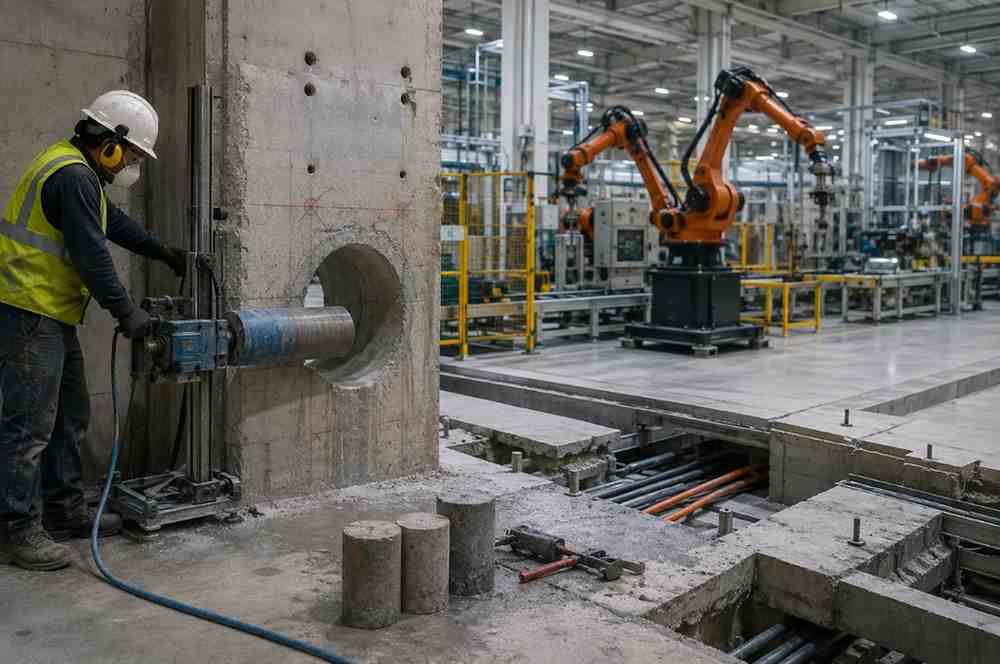
Modern manufacturing is undergoing a massive paradigm shift. Driven by Industry 4.0, the Internet of Things (IoT), artificial intelligence, and advanced robotics, industrial facilities are constantly upgrading. Factory automation projects are at the heart of this revolution, promising unprecedented efficiency, precision, and safety. However, transitioning a legacy manufacturing plant into a high-tech automated hub is rarely a simple plug-and-play process.
Beneath the sleek exterior of robotic arms, automated guided vehicles (AGVs), conveyor networks, and high-speed processing machinery lies a fundamental, unglamorous requirement: concrete alteration.
Whether it involves carving trenches for subterranean wiring, coring deep holes for heavy anchor bolts, or modifying reinforced concrete foundations to absorb dynamic loads, structural concrete alteration is a critical bottleneck in automation installation. Partnering with experts like [email protected] ensures that these heavy structural modifications are executed safely, accurately, and without delaying critical deployment timelines.
1. The Intersection of Factory Automation and Structural Civil Work
When plant managers envision a factory automation overhaul, they typically focus on software integration, electrical schematics, and mechanical layouts. Yet, every piece of automated hardware must interface physically with the factory floor—which is almost universally built from reinforced cement concrete (RCC).
Automation introduces strict physical tolerances. Unlike human workers who can navigate uneven floors or adapt to minor spatial irregularities, industrial robots and high-speed automated machinery require absolute spatial precision. A deviation of even a few millimeters can cause mechanical binding, sensor misalignment, or premature wear on expensive automated components. Consequently, precise concrete alteration becomes the foundational prerequisite for successful automation.
2. Key Types of Concrete Alterations Required in Automation Projects
Factory automation upgrades demand various forms of specialized concrete modification. Understanding these requirements helps project managers plan downtime effectively.
A. Core Drilling for Anchoring and Utility Routing
Automated machinery vibrates intensely and operates under high loads. To keep heavy robotic cells secured, engineers use high-tensile anchor bolts that must be embedded deep into sound structural concrete.
-
Precision Coring: Diamond core drilling creates clean, perfectly cylindrical holes through thick RCC floors to accommodate heavy-duty chemical or mechanical anchors.
-
Utility Penetrations: Automation relies on dense webs of pneumatic lines, fiber optics, and power cables. Core drilling allows these lines to pass seamlessly through vertical and horizontal concrete barriers.
B. Trenching and Channel Cutting for Subsurface Cabling
Surface-mounted cables are safety hazards in automated plants, prone to damage from forklifts, AGVs, and heavy foot traffic.
-
Floor Sawing and Chasing: Specialized wall saws and floor saws cut straight, neat channels into the concrete slab.
-
Subfloor Raceways: These trenches house power conduits and data cables safely beneath heavy-duty steel trench covers, maintaining a clean, obstruction-free factory floor layout.
C. Machine Foundation Modification and Pits
Many automated systems—such as automated storage and retrieval systems (ASRS), large stamping presses, or heavy-duty conveyors—require specialized sub-grade pits or lowered foundations.
-
Controlled Demolition: Hydrodemolition or diamond wire sawing is used to carve out exact volumes of existing concrete without fracturing the surrounding structural integrity.
-
Mass Pour Preparation: Alterations must often prepare tie-ins between old concrete structures and new, vibration-dampened inertial blocks designed to absorb high-frequency robotic movements.
3. Engineering Challenges in Industrial Concrete Modification
Executing concrete alteration in an active or transitioning factory environment is fraught with engineering hurdles.
[Legacy Factory Floor] ──> [Precision Diamond Cutting] ──> [Vibration Control] ──> [Seamless Automation Integration]
Structural Integrity Risks
Industrial floors are engineered to bear specific load limits. Unplanned or poorly executed cutting can compromise the load path of the building or sever hidden post-tension cables and rebar networks. Non-destructive evaluation (NDE) techniques, such as Ground Penetrating Radar (GPR), are frequently deployed prior to cutting to map embedded utilities and reinforcement.
Dust, Slurry, and Contamination Control
Traditional demolition methods generate massive amounts of silica dust and debris, which can instantly ruin sensitive electronics, optical sensors, and unsealed machinery already staged on the floor. Modern automated plant projects require wet-cutting techniques, industrial dust extraction units, and strict containment barriers to maintain cleanroom-standard environments.
Minimizing Plant Downtime
In modern manufacturing, time translates directly to revenue loss. Factory automation projects operate under punishing deadlines. Concrete alteration must often be executed during tight scheduled windows—such as weekend shutdowns or overnight shifts—requiring rapid-setting materials and highly efficient execution teams.
4. Advanced Technologies Driving Modern Concrete Alteration
To meet the rigorous demands of Industry 4.0, concrete alteration techniques have evolved far beyond jackhammers and sledgehammers.
-
Diamond Wire Sawing: Ideal for massive concrete structures, thick machine bases, and heavily reinforced columns. It allows smooth, vibration-free cuts with minimal noise.
-
Wall Sawing and Track Systems: Mounted track saws deliver laser-straight vertical and horizontal cuts for doorway expansions, large machinery bays, and wall penetrations.
-
Robotic Demolition Units: Remote-controlled electric demolition machines allow operators to clear concrete safely in tight, hazardous, or hard-to-reach zones without exposing personnel to vibration injuries or structural collapse risks.
For specialized industrial execution, coordinating these advanced technologies through trusted professionals via [email protected] guarantees adherence to international safety and engineering standards.
5. Best Practices for Project Managers
To ensure that concrete alteration steps run smoothly during a factory automation rollout, project managers should incorporate the following strategies:
-
Early Integration in Planning: Involve concrete alteration specialists during the preliminary layout phase. Identifying clash detections and structural requirements early prevents costly mid-project redesigns.
-
Comprehensive Site Scanning: Always map the slab using GPR or X-ray imaging before cutting or coring to avoid striking live electrical conduits, gas lines, or structural rebar.
-
Choose Specialized Contractors: Standard civil contractors may lack the specialized diamond-cutting tools or dust-containment systems required for modern electronics-heavy manufacturing environments. Work with dedicated industrial concrete service providers.
-
Strict Environmental and Safety Protocols: Ensure compliance with OSHA or local occupational health guidelines regarding silica dust mitigation, ear protection, and structural shoring.
Conclusion
Factory automation represents the future of manufacturing, but its physical reality is anchored in concrete. Without precise, clean, and structurally sound concrete alterations, even the most advanced robotics and control software cannot perform at their peak. By addressing structural modifications proactively—utilizing advanced diamond cutting, rigorous planning, and expert execution channels like [email protected]—manufacturers can bridge the gap between legacy infrastructure and futuristic automation seamlessly, ensuring long-term operational success.