
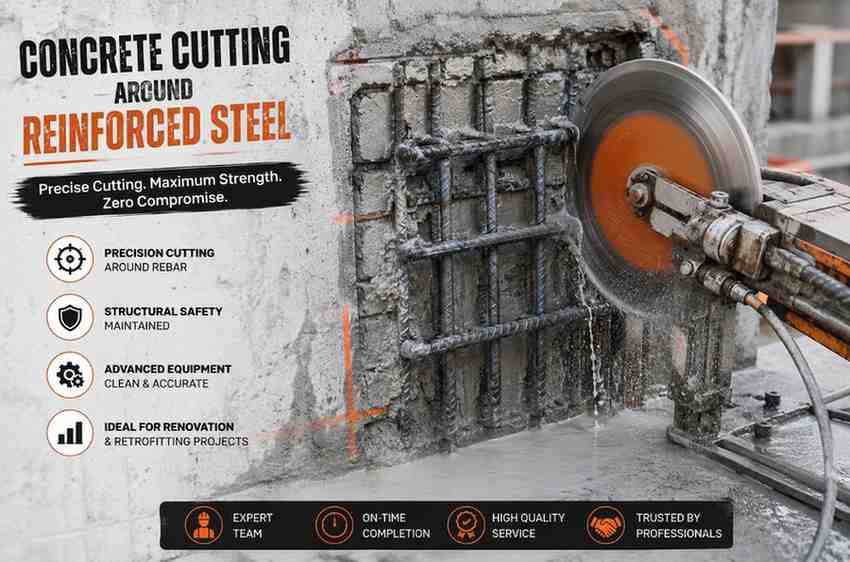
Introduction
Reinforced concrete is the backbone of modern construction. It combines the compressive strength of concrete with the tensile strength of embedded steel bars, or rebar, to create structures that can withstand enormous loads. But this very combination makes cutting reinforced concrete one of the most technically demanding tasks in the construction and demolition industry. When steel and concrete intersect, ordinary cutting methods fall short, and improvised approaches can compromise structural integrity, damage equipment, or endanger workers.
At Core Cutting India ([email protected]), we specialize in precision concrete cutting around reinforced steel for renovation projects, infrastructure upgrades, utility installations, and controlled demolition. In this guide, we walk you through everything you need to know about cutting reinforced concrete safely, efficiently, and without compromising the structure around it.
Why Cutting Reinforced Concrete Is Different
Plain concrete is a rigid, brittle material that can be cut relatively easily with diamond blades or saws designed for masonry. Reinforced concrete, however, contains a lattice of steel rebar embedded throughout the slab, wall, or column. This steel serves a structural purpose: it resists tension forces that concrete alone cannot handle.
When a blade or drill bit meets this steel mid-cut, several things can go wrong if the operator isn't using the right equipment and technique:
- The blade can dull rapidly or shatter if it isn't rated for combination cutting.
- Excess heat can build up, warping the blade or damaging the surrounding concrete.
- Improper cutting can compromise the remaining structural steel, weakening load-bearing capacity.
- Vibration and kickback risks increase, creating safety hazards for the operator.
This is why concrete cutting around reinforced steel requires specialized diamond blades, controlled techniques, and a clear understanding of the structure's design before any cutting begins.
Understanding Reinforced Concrete Structures
Before any cutting project starts, it's essential to understand what lies beneath the surface. Reinforced concrete structures typically include:
Rebar grids: Horizontal and vertical steel bars arranged in a grid pattern, common in slabs, walls, and foundations.
Mesh reinforcement: Welded wire mesh used in thinner slabs, driveways, and pathways.
Post-tensioned cables: High-strength steel cables under tension, often found in bridges, parking structures, and high-rise buildings. These require extreme caution, as cutting into a tensioned cable can cause sudden, forceful release of energy.
Structural columns and beams: Heavily reinforced with thick rebar cages to support vertical and lateral loads.
Identifying which type of reinforcement is present, and where exactly it runs, is the single most important step before cutting begins.
Pre-Cutting Assessment: The Critical First Step
Professional concrete cutting contractors never cut blind. Before any blade touches the surface, a thorough assessment is carried out to map the internal structure. This typically involves:
1. Reviewing Structural Drawings
If available, original construction drawings or as-built plans reveal the layout of rebar, mesh, and post-tensioned cables. This gives cutters a starting reference point.
2. Ground-Penetrating Radar (GPR) Scanning
GPR is the industry-standard method for locating rebar, conduits, and post-tension cables non-destructively. It sends radar pulses into the concrete and interprets the reflected signals to create a real-time image of what's inside, without damaging the surface.
3. Rebar Locators and Cover Meters
For simpler applications, electromagnetic rebar locators (cover meters) can detect the depth and position of steel bars close to the surface. These are faster and more affordable than GPR but less effective for deep or complex reinforcement.
4. X-Ray Imaging
For extremely sensitive projects, such as those involving post-tensioned cables, X-ray radiography offers the most detailed internal view. This method requires specialized safety protocols since it involves radiation, but it delivers unmatched accuracy.
Skipping this assessment phase is one of the most common and costly mistakes in concrete cutting projects. A single miscalculated cut into a post-tensioned cable can cause catastrophic failure.
Tools and Equipment for Cutting Through Reinforced Concrete
Once the internal layout is mapped, the right equipment makes all the difference. Common tools used by professional concrete cutting teams include:
Diamond Blade Saws
Diamond blades embedded with industrial-grade diamond segments are the go-to choice for cutting both concrete and steel simultaneously. Blades designed specifically for combination cutting (concrete plus rebar) have a different bond hardness and segment design than blades meant purely for plain concrete.
Wall Saws
Track-mounted wall saws are used for precise, controlled vertical or horizontal cuts in walls, especially where openings for doors, windows, or ductwork are needed. These saws can smoothly cut through moderate rebar density.
Wire Saws
For large-scale or heavily reinforced structures like bridge piers, thick foundations, or massive columns, diamond wire saws are used. A looped diamond-embedded wire is threaded through pre-drilled holes and pulled through the concrete and steel using a hydraulic or electric motor, allowing controlled cutting of very thick sections.
Core Drills
When circular openings are needed, such as for pipes, cables, or HVAC systems, diamond core drills bore through concrete and reinforcement with minimal disturbance to the surrounding area.
Hydraulic Splitters and Crushers
In demolition scenarios where cutting isn't feasible, hydraulic splitters can be used to break concrete apart in sections, after which rebar is cut separately using specialized shears or torches.
Step-by-Step Process for Cutting Around Reinforced Steel
Step 1: Site Assessment and Scanning
As detailed above, this phase identifies rebar location, depth, and density.
Step 2: Marking the Cut Line
Once the internal structure is mapped, cut lines are marked on the surface, adjusted where necessary to avoid critical structural steel or post-tensioned cables.
Step 3: Selecting the Right Blade
Blade selection depends on rebar density. Light reinforcement may only need a standard combination blade, while heavily reinforced sections require blades with reinforced steel-core segments designed to handle continuous steel contact.
Step 4: Controlled Cutting with Water Suppression
Wet cutting is standard practice for reinforced concrete. Water cools the blade, reduces dust, and minimizes the risk of the blade overheating when it contacts steel. It also extends blade life significantly.
Step 5: Managing Cutting Speed
Cutting speed must be reduced when the blade meets rebar to prevent excessive wear and blade deflection. Skilled operators can often feel the resistance change and adjust the feed rate accordingly.
Step 6: Structural Support During Cutting
For load-bearing cuts, such as creating a new doorway in a wall or an opening in a slab, temporary shoring or support structures are installed before cutting to prevent unexpected shifting or collapse once the reinforced section is severed.
Step 7: Post-Cut Inspection
After the cut is complete, the exposed rebar ends are inspected. Depending on the project, exposed steel may need to be capped, treated for corrosion resistance, or reinforced with additional bracing if the structural design requires it.
Safety Considerations
Cutting reinforced concrete carries risks beyond standard concrete work. Key safety measures include:
- Personal Protective Equipment (PPE): Safety glasses, hearing protection, steel-toed boots, gloves, and respiratory protection against silica dust.
- Silica Dust Control: Wet cutting methods and dust extraction systems are essential to reduce exposure to respirable crystalline silica, a known health hazard.
- Electrical Safety: Since rebar can conduct electricity, cutting near live electrical systems requires extra caution and isolation procedures.
- Structural Stability Checks: Engineers should be consulted for any cut that affects load-bearing elements to ensure the remaining structure can safely bear the load.
- Post-Tension Cable Protocols: Specialized training and clearance procedures are mandatory when cutting near post-tensioned structures due to the risk of sudden cable release.
Common Applications
Concrete cutting around reinforced steel is used across many project types:
- Door and window openings in existing reinforced concrete walls
- Utility penetrations for plumbing, electrical conduits, and HVAC ducts
- Expansion joints in bridges, parking structures, and industrial floors
- Renovation and remodeling of commercial and residential buildings
- Demolition and selective removal of damaged or outdated structural sections
- Road and bridge repair, including reinforced pavement and deck sections
Why Professional Expertise Matters
Attempting to cut reinforced concrete without proper scanning, equipment, and technique can lead to serious consequences: compromised structural integrity, damaged utilities, blade failure, and safety incidents. Professional concrete cutting companies bring the specialized tools, trained personnel, and engineering knowledge required to execute these cuts precisely and safely.
At Core Cutting India, our teams combine advanced scanning technology with industry-leading diamond cutting equipment to deliver clean, accurate cuts, even in heavily reinforced structures. Whether the project involves a small utility opening or a large-scale structural modification, our approach prioritizes safety, precision, and minimal disruption to the surrounding structure.
Frequently Asked Questions
Can concrete be cut through rebar without damaging the blade? Yes, with the correct combination diamond blade designed for cutting both concrete and steel, along with proper water cooling and controlled feed rates, blades can cut through moderate rebar densities without premature failure.
How do professionals know where rebar is located before cutting? Techniques such as Ground-Penetrating Radar (GPR), electromagnetic rebar locators, and X-ray imaging are used to map the internal steel layout before any cutting begins.
Is it safe to cut near post-tensioned cables? Cutting near post-tensioned cables requires extreme caution and specialized detection methods, as cutting into a tensioned cable can cause a dangerous, sudden release of stored energy. This work should only be performed by trained professionals.
Does cutting through rebar weaken the structure? It can, if not planned properly. Structural engineers should be consulted for any cut affecting load-bearing rebar to determine whether reinforcement, shoring, or design modifications are needed.
What is the difference between core drilling and wall sawing for reinforced concrete? Core drilling creates circular openings, ideal for pipes and cables, while wall sawing produces straight, precise cuts for openings like doors, windows, or larger structural modifications.
Conclusion
Concrete cutting around reinforced steel is a specialized discipline that blends engineering knowledge, precise technique, and the right equipment. From initial scanning to final inspection, every step matters when steel and concrete are cut together. Skipping proper assessment or using the wrong tools can lead to structural damage, safety hazards, or costly rework.
For projects that demand precision, safety, and reliability, trust the experts. Core Cutting India offers professional concrete cutting services tailored to reinforced structures of all types and sizes. Reach out to us at [email protected] to discuss your next concrete cutting project.
Target-Related Searches: concrete cutting around reinforced steel, reinforced concrete cutting services, rebar cutting techniques, diamond blade concrete cutting, core drilling reinforced concrete, wall sawing services India, concrete cutting company near me, post-tension cable cutting safety, GPR scanning before concrete cutting, structural concrete demolition
People Also Ask:
- Can you cut through rebar with a concrete saw?
- How do you locate rebar before cutting concrete?
- What blade is used to cut reinforced concrete?
- Is it dangerous to cut post-tensioned concrete?
- Does cutting rebar affect structural strength?
- What is the difference between core drilling and wall sawing?
- How much does concrete cutting around rebar cost?