
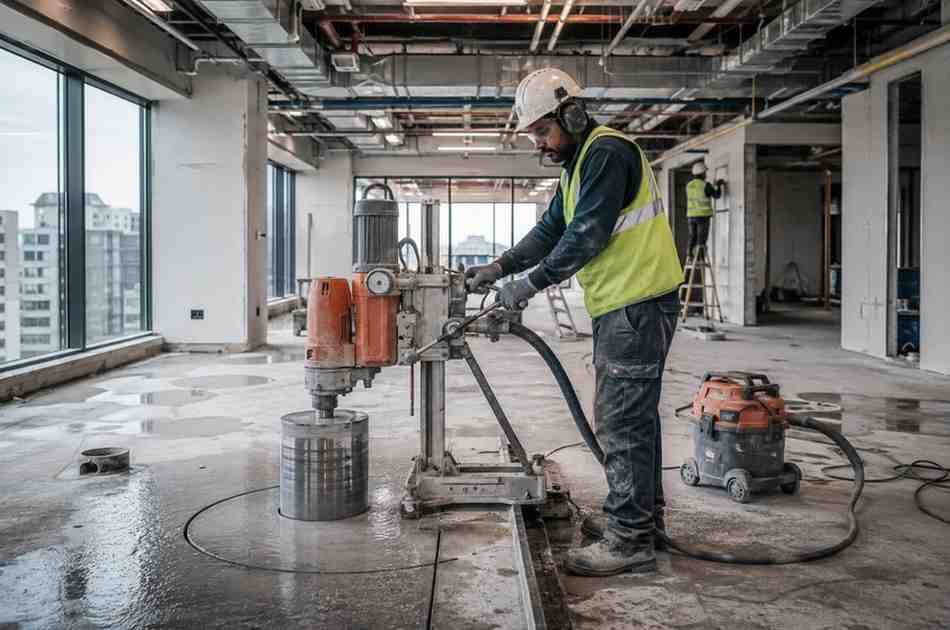
Surat's skyline is changing fast. Textile hubs are turning into retail complexes, old office blocks are being reimagined as co-working spaces, and ageing commercial plazas along Ring Road, VIP Road, and Adajan are getting complete makeovers to meet modern business standards. Behind almost every successful commercial refit, there's a less glamorous but essential process at work: concrete cutting.
Whether it's opening a new doorway in a load-bearing wall, creating space for an escalator shaft, routing new plumbing and electrical conduits through a concrete slab, or demolishing an outdated structure to make way for a fresh layout, concrete cutting is the foundation of every refit project. Done right, it's precise, safe, and barely disruptive to the surrounding business environment. Done wrong, it can compromise structural safety, generate excessive dust and noise, and derail project timelines.
In this guide, Core Cutting India ([email protected]) breaks down everything property owners, architects, and contractors in Surat need to know about concrete cutting for commercial refit projects — the methods, the benefits, the process, and how to choose the right partner for the job.
Why Concrete Cutting Matters in Commercial Refits
A commercial property refit is rarely a cosmetic exercise. It usually involves reworking the building's core layout — knocking down walls, resizing rooms, adding new entry and exit points, upgrading utility lines, or reinforcing structural elements to comply with updated building codes. Almost all of this work touches concrete in some form.
Unlike a simple hammer-and-chisel demolition, professional concrete cutting uses diamond-tipped tools to make clean, controlled cuts. This precision matters enormously in a commercial setting for a few reasons:
- Structural safety: Commercial buildings often have load-bearing walls, columns, and slabs. Cutting into these without engineering assessment and precision tools risks compromising the entire structure.
- Minimal disruption: Most refits happen while neighboring units, tenants, or even parts of the same building remain operational. Precision cutting reduces vibration, noise, and dust compared to traditional breaking methods.
- Faster turnaround: Time is money in commercial real estate. Every day a property sits under renovation is lost rental income or delayed business opening. Professional concrete cutting speeds up the demolition and modification phase significantly.
- Clean, code-compliant results: Municipal authorities and building inspectors expect finished openings, cuts, and modifications to meet safety and aesthetic standards — something only achievable with controlled, professional cutting methods.
Common Concrete Cutting Applications in Commercial Refits
1. Wall Sawing for New Openings
When a retail space needs a new storefront entrance, or an office floor needs a doorway connecting two units, wall sawing is the go-to method. It uses a track-mounted circular diamond blade to cut straight, precise lines through concrete or masonry walls — even load-bearing ones, when properly assessed and supported.
2. Core Drilling for Utility Routing
Modern commercial spaces need extensive plumbing, electrical, HVAC ducting, and fiber-optic cabling. Core drilling creates clean, round holes through concrete slabs and walls to route these utilities without cracking or weakening the surrounding structure. This is especially common when refitting older Surat buildings that weren't originally designed for today's utility loads.
3. Floor Sawing and Slab Removal
Refit projects often require removing sections of a concrete floor slab — for new staircases, elevator shafts, floor drains, or sunken flooring for aesthetic design. Floor sawing allows contractors to cut precise sections that can be lifted out cleanly, without damaging the surrounding slab.
4. Slab Sawing for Expansion Joints and Renovations
When expanding a commercial unit or reconfiguring interior partitions, slab sawing creates clean separation lines in flooring, useful for expansion joints, new partition walls, or removing damaged sections of flooring before resurfacing.
5. Selective Demolition
Not every refit needs full demolition. Selective, controlled cutting allows specific sections — a single wall, a staircase, a mezzanine floor — to be removed while preserving the rest of the structure intact. This is far more cost-effective and less disruptive than full teardown.
The Concrete Cutting Process: What to Expect
For commercial property owners in Surat planning a refit, understanding the process helps set realistic expectations for timelines and coordination with tenants or ongoing operations.
Step 1: Site Assessment and Structural Review Before any cutting begins, a professional team inspects the site, reviews architectural drawings, and — where load-bearing elements are involved — coordinates with a structural engineer to confirm what can be cut safely and whether temporary shoring or reinforcement is needed.
Step 2: Utility Scanning Concrete conceals electrical wiring, plumbing, and rebar. Ground-penetrating radar (GPR) or rebar scanning is used to map what lies beneath the surface before any cut is made, avoiding dangerous or costly accidents.
Step 3: Method Selection Based on the type of cut needed — a doorway, a utility hole, a full slab section — the team selects the appropriate equipment: wall saws, floor saws, core drills, or wire saws for thicker structural elements.
Step 4: Dust and Debris Control Reputable concrete cutting companies use wet-cutting techniques or vacuum-based dust extraction systems to keep the worksite clean and minimize airborne dust — critical for commercial environments where nearby businesses or occupants are present.
Step 5: Cutting and Removal The actual cutting is carried out with diamond-tipped blades or core bits, engineered for concrete and reinforced concrete. Cut sections are then safely removed, often using lifting equipment for larger slabs.
Step 6: Site Cleanup and Handover Once cutting is complete, the site is cleared of debris and handed over to the renovation or construction team for the next phase — framing, finishing, or utility installation.
Why Commercial Refit Projects in Surat Need Specialized Concrete Cutting Partners
Surat's commercial landscape is diverse — from textile market complexes in Ring Road to modern IT parks in Vesu and corporate offices near Athwalines. Each building type comes with its own structural quirks, and refit projects often operate under tight deadlines because businesses want to minimize downtime.
A specialized concrete cutting partner brings:
- Experience with local building types: Older commercial structures in Surat's textile and market districts often use different construction techniques than newer IT and corporate buildings, requiring adaptable cutting approaches.
- Compliance with local safety norms: Working around occupied premises, narrow lanes, and dense commercial zones requires cutting methods that meet safety regulations without disturbing neighboring establishments.
- Modern, low-disruption equipment: Diamond cutting technology with dust suppression and reduced vibration is essential for refits happening in occupied or semi-occupied buildings.
- Fast mobilization: Commercial timelines are tight. A reliable partner can mobilize quickly and complete cutting work within scheduled windows — sometimes even overnight or on weekends to avoid disrupting business hours.
Cost Factors in Commercial Concrete Cutting
Every refit project is different, but a few factors consistently influence cost:
- Thickness and reinforcement of the concrete: Thicker slabs or heavily reinforced concrete (with more rebar) take longer to cut and require sturdier equipment.
- Accessibility of the site: Ground floor units are generally easier and cheaper to work in than upper floors requiring equipment transport via lifts or stairs.
- Type of cut required: Simple core drilling for a utility hole costs far less than large-scale wall sawing or slab removal.
- Working hours: Cutting during off-business hours or weekends to avoid disrupting tenants may involve premium scheduling costs.
- Dust and noise control requirements: Projects in occupied commercial buildings often need additional containment measures, which adds to the overall service cost.
It's always advisable to get a site visit and written quotation rather than relying on rough estimates, since commercial refit sites vary significantly in complexity.
Safety Considerations for Commercial Concrete Cutting
Because commercial refits often happen in occupied or partially occupied buildings, safety planning is critical:
- Structural assessment before any load-bearing cuts, ideally signed off by a structural engineer.
- Dust and silica control, since cutting concrete releases fine silica dust that poses respiratory risks if not properly managed with wet-cutting or vacuum extraction.
- Noise management, particularly in mixed-use buildings with offices, retail, or residential units nearby.
- Clear signage and access control to keep employees, customers, and visitors away from active cutting zones.
- Trained operators using calibrated, well-maintained equipment — an inexperienced operator working with diamond blades poses serious injury risk.
Choosing the Right Concrete Cutting Company for Your Surat Refit Project
When evaluating concrete cutting contractors for a commercial refit, property owners and project managers should look for:
- Proven commercial project experience — not just residential or small-scale jobs.
- Proper equipment for the scope — wall saws, floor saws, core drills, and wire saws, rather than relying only on handheld cutters.
- Dust and debris control systems in place for occupied buildings.
- Transparent quotations with clear scope, timelines, and safety measures outlined.
- Flexibility with scheduling to work around business hours where required.
- Insurance and liability coverage for work in commercial and occupied premises.
Partnering with Core Cutting India
Commercial property refits move fast, and every phase — from initial demolition to final finishing — depends on the previous one being done right. Concrete cutting sits right at the start of that chain, which makes precision, safety, and reliability non-negotiable.
At Core Cutting India, we work with architects, contractors, and commercial property owners across Surat to deliver clean, controlled, and code-compliant concrete cutting for refit and renovation projects of every scale — from a single doorway opening in a retail unit to full-floor reconfigurations in multi-story commercial complexes.
If you're planning a commercial property refit in Surat and need a concrete cutting partner who understands both the technical and operational demands of working in active business environments, reach out to us at [email protected]. We're happy to visit your site, assess the scope, and provide a clear plan and quotation tailored to your project timeline.
Frequently Asked Questions
What is concrete cutting used for in commercial renovation? Concrete cutting is used to create new openings for doors and windows, route utilities like plumbing and electrical conduits through walls and slabs, remove sections of flooring for structural changes, and carry out selective demolition without affecting the rest of the building.
How much does concrete cutting cost in Surat? Costs vary based on concrete thickness, reinforcement, site accessibility, and the type of cut required. A site visit and written quotation is the most reliable way to get an accurate estimate for a specific commercial project.
Is concrete cutting noisy or disruptive to nearby businesses? Professional diamond cutting equipment, combined with wet-cutting or vacuum dust extraction, significantly reduces noise and dust compared to traditional demolition methods, making it suitable for occupied commercial buildings.
How long does concrete cutting take for a commercial refit? Timelines depend on the scope — a single core drill hole may take under an hour, while wall sawing or slab removal for a full refit can take several days. Experienced contractors typically provide a project timeline after the initial site assessment.
What safety precautions are followed during concrete cutting? Reputable contractors conduct structural assessments before cutting load-bearing elements, use utility scanning to avoid hidden wiring or pipes, implement dust and silica control measures, and restrict site access during active cutting.
Can concrete cutting be done without damaging structural integrity? Yes, when carried out by trained professionals following a proper structural assessment. Precision diamond cutting tools allow for controlled, targeted cuts that avoid unnecessary stress on surrounding structural elements.
Core Cutting India | [email protected]