
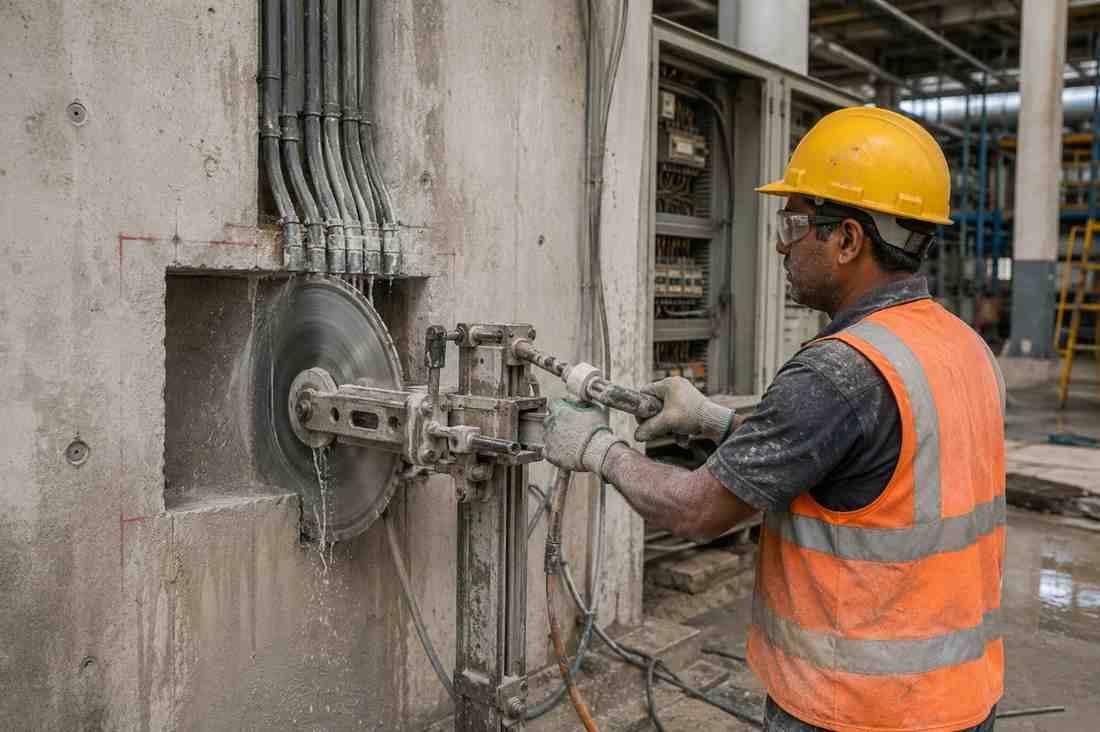
Surat's industrial landscape is expanding at a remarkable pace. From textile processing units and diamond manufacturing plants to chemical facilities and power distribution centers, the city's factories are constantly upgrading their infrastructure to keep up with rising energy demands and modern automation. One of the most overlooked yet absolutely critical parts of any industrial electrical upgrade is concrete cutting.
Whether you're installing new cable trenches, routing conduits through load-bearing walls, upgrading transformer rooms, or laying foundations for new switchgear, precision concrete cutting is the foundation (quite literally) of a successful electrical retrofit. In this guide, we'll walk through why concrete cutting matters for industrial electrical projects, the techniques involved, safety considerations, and how choosing the right concrete cutting partner in Surat can save your project time, money, and compliance headaches.
Why Concrete Cutting Matters in Industrial Electrical Upgrades
Industrial facilities are rarely built with future electrical expansion in mind. Walls, floors, and slabs are typically poured thick and reinforced with steel to support heavy machinery and structural loads. When a facility needs to add new circuits, route high-voltage cabling, install additional transformers, or upgrade its power distribution system, engineers often find that the only path forward runs straight through solid concrete.
This is where professional concrete cutting comes in. Unlike ordinary demolition, which can crack surrounding structures and damage embedded utilities, controlled concrete cutting allows electrical contractors to create precise openings, trenches, and channels without compromising the structural integrity of the building. For an industrial electrical upgrade, this precision isn't optional. A poorly executed cut can sever existing wiring, damage plumbing, weaken load-bearing elements, or create safety hazards that shut down production for days.
In cities like Surat, where many industrial units operate around the clock, minimizing downtime is just as important as safety and structural accuracy. Professional concrete cutting services are designed to work efficiently, often in phases, so ongoing operations are disrupted as little as possible.
Common Applications of Concrete Cutting in Electrical Upgrades
1. Cable Trenching
New electrical upgrades often require laying additional power and data cables underground or through concrete floors. Concrete sawing is used to cut clean trenches at the required depth and width, allowing cables to be laid, protected, and then covered without disturbing the surrounding slab.
2. Core Drilling for Conduit Routing
Core drilling creates precise circular holes through walls, floors, and ceilings, allowing electrical conduits to pass through cleanly. This is especially important when routing cables between floors in multi-story industrial buildings or when connecting outdoor transformers to indoor distribution panels.
3. Wall Sawing for Panel and Switchgear Openings
When a facility needs to install new electrical panels, switchgear, or distribution boards, wall sawing is used to create precisely sized openings in concrete or masonry walls. This method produces clean, straight edges that make fitting new equipment far easier than traditional demolition methods.
4. Floor Slab Cutting for Transformer and Generator Foundations
Heavy electrical equipment like transformers, generators, and UPS systems often require new concrete foundations or modifications to existing slabs. Controlled slab cutting allows contractors to remove sections of flooring cleanly, install new foundations or vaults, and reinstate the surface with minimal disruption.
5. Expansion Joint and Control Joint Cutting
As facilities grow, new sections of flooring or additional structural elements may need expansion joints to accommodate thermal movement, especially in areas housing heat-generating electrical equipment.
Techniques Used in Industrial Concrete Cutting
Different electrical upgrade scenarios call for different cutting methods. Here are the most common techniques used across Surat's industrial sector:
Diamond Blade Sawing — This is the most widely used method for straight-line cuts in floors and walls. Diamond blades can cut through reinforced concrete with minimal dust and vibration, making it ideal for occupied industrial environments.
Core Drilling — Used for circular openings needed for conduit and cable pass-throughs. Core drilling machines can bore through concrete of varying thickness with high accuracy, and are especially useful when working around existing rebar or embedded utilities.
Wall Sawing — A track-mounted saw is used to make precise vertical or horizontal cuts in walls, often for creating openings for new electrical rooms or equipment access points.
Wire Sawing — For particularly thick or heavily reinforced concrete sections, such as those found in transformer vaults or heavy machinery foundations, wire sawing uses a diamond-embedded cable to cut through material that would be difficult for standard blades to handle.
Slab Sawing — Ideal for cutting large floor sections, slab saws are used when creating trenches for underground cabling or removing sections of flooring for foundation work.
Each of these methods requires trained operators and specialized equipment. Attempting to use general-purpose demolition tools for these tasks often results in uneven cuts, excessive dust, structural cracking, or damage to nearby utilities, all of which can add significant cost and delay to an electrical upgrade project.
Safety Considerations for Concrete Cutting in Live Industrial Facilities
Industrial electrical upgrades often take place in facilities that remain partially or fully operational during construction. This adds layers of complexity to concrete cutting work that don't exist on a typical construction site.
Utility Mapping Before Cutting — Before any cutting begins, it's essential to scan the area using ground-penetrating radar or similar detection methods to identify existing electrical conduits, plumbing lines, and structural rebar. This prevents accidental damage to live utilities, which can be dangerous and costly.
Dust and Slurry Management — Diamond cutting generates concrete dust and, when wet-cutting methods are used, slurry runoff. In industrial settings, especially those with sensitive machinery or clean-room requirements, proper dust extraction and containment systems are essential to prevent contamination.
Noise and Vibration Control — Many industrial facilities operate sensitive equipment that can be affected by vibration. Professional concrete cutting teams use controlled techniques and equipment calibrated to minimize vibration transfer to surrounding structures.
Coordination with Electrical Shutdowns — Since concrete cutting for electrical upgrades often happens near or around existing live circuits, close coordination between the cutting crew and the facility's electrical engineers is critical. Scheduled shutdowns, lockout-tagout procedures, and clear communication protocols help prevent accidents.
Structural Assessment — Before cutting into load-bearing walls or slabs, a structural engineer should assess whether temporary supports or reinforcement will be needed during and after the cutting process.
Why Precision Matters for Electrical Compliance
Electrical installations in industrial settings must comply with national and local electrical codes, which often specify minimum clearances, conduit routing requirements, and fire-rated wall penetration standards. Precision concrete cutting plays a direct role in meeting these requirements.
For example, when core drilling through fire-rated walls for conduit pass-throughs, the resulting opening must be properly sized and later sealed with fire-rated materials to maintain the wall's fire resistance rating. Sloppy or oversized cuts can compromise this rating and create compliance issues during inspection.
Similarly, cable trenches must be cut to consistent depths to ensure proper cable burial standards are met, protecting cables from mechanical damage and maintaining safe separation from other utilities.
The Surat Industrial Context
Surat is home to a dense concentration of textile mills, diamond processing units, chemical plants, and increasingly, modern manufacturing facilities that require robust electrical infrastructure. As these facilities scale up production or transition to more energy-intensive processes, their electrical systems often need significant upgrades: higher-capacity transformers, additional distribution panels, backup power systems, and expanded cabling networks.
Because many of these facilities are located in dense industrial zones with limited space, concrete cutting work often needs to be executed with extra care to avoid disrupting neighboring units or shared infrastructure. Experienced local concrete cutting contractors who understand Surat's industrial layout, building codes, and common construction practices are better equipped to navigate these challenges efficiently.
Choosing the Right Concrete Cutting Partner for Your Electrical Upgrade
Not all concrete cutting providers are equipped to handle the demands of industrial electrical projects. When evaluating a contractor for this type of work, consider the following:
Experience with Industrial Sites — Look for a provider with a track record of working in active industrial facilities, not just residential or light commercial projects.
Range of Equipment — A good contractor should offer multiple cutting methods (diamond sawing, core drilling, wall sawing, wire sawing) so they can select the right tool for each specific task rather than forcing every job into one technique.
Safety Protocols — Ask about their utility detection process, dust control measures, and coordination procedures for working near live electrical systems.
Turnaround Time — Industrial downtime is expensive. A contractor who can work efficiently, often in phases or during scheduled shutdown windows, adds real value to your project timeline.
Local Knowledge — A contractor familiar with Surat's industrial zones, common building materials, and local regulatory requirements can anticipate challenges before they become costly delays.
Final Thoughts
Concrete cutting is a small but essential piece of any industrial electrical upgrade. Done correctly, it enables clean, code-compliant installation of cabling, conduits, and equipment while protecting the structural integrity of the facility and minimizing operational disruption. Done poorly, it can lead to damaged utilities, compliance failures, and costly rework.
For industrial facilities in Surat planning an electrical upgrade, partnering with an experienced concrete cutting team ensures the physical groundwork supports the electrical work above it, safely, precisely, and on schedule.
Core Cutting India specializes in precision concrete cutting services for industrial electrical projects across Surat, including cable trenching, core drilling, wall sawing, and slab cutting. To discuss your project requirements, reach out at [email protected].
Target-Related Searches
- concrete cutting services Surat
- industrial concrete cutting company
- core drilling for electrical conduits
- diamond concrete cutting near me
- concrete cutting for cable trenching
- wall sawing services Surat
- concrete cutting cost Surat
- industrial electrical contractors Surat
- concrete sawing and drilling services
- transformer foundation concrete cutting
People Also Ask
1. What is the difference between concrete cutting and concrete demolition? Concrete cutting is a precise, controlled process using diamond-tipped tools to create clean openings, trenches, or channels without disturbing surrounding structures. Demolition typically involves breaking apart larger sections of concrete using impact tools, which is faster but far less precise and more likely to cause collateral damage to nearby utilities or structural elements.
2. How much does industrial concrete cutting cost in Surat? Costs vary based on the thickness of the concrete, the type of cut required (core drilling, wall sawing, slab sawing), the presence of reinforcement, and site accessibility. Industrial projects typically require a site assessment for an accurate quote, as factors like live utility detection and after-hours scheduling can affect pricing.
3. Can concrete cutting be done without disrupting factory operations? Yes. Professional concrete cutting contractors often use low-vibration, low-dust diamond cutting techniques and can schedule work in phases or during planned shutdown windows to minimize disruption to ongoing operations.
4. How do contractors avoid cutting into existing electrical wiring or pipes? Before cutting begins, contractors typically use ground-penetrating radar or electromagnetic detection tools to scan the area and map out existing utilities, rebar, and embedded services, ensuring cuts are made safely around them.
5. What safety certifications should an industrial concrete cutting company have? Look for contractors who follow standard occupational safety practices, including proper dust control, utility detection protocols, and coordination procedures for working near live electrical systems. Asking for references from past industrial projects is also a good way to verify their safety track record.
6. How long does concrete cutting take for a typical electrical upgrade project? Timelines depend on the scope of work, ranging from a few hours for a single core-drilled opening to several days for extensive cable trenching or multiple wall openings across a large facility.