
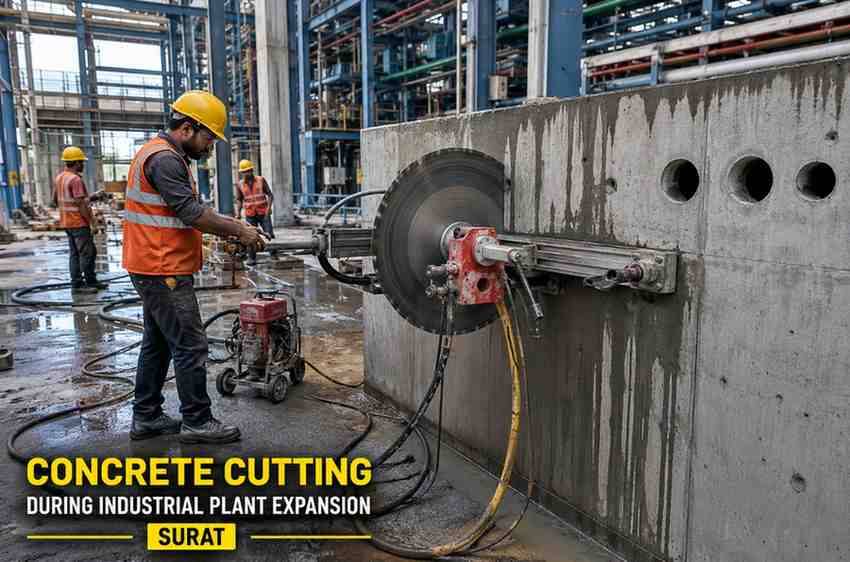
Surat has grown into one of Gujarat's most important industrial hubs, home to textile mills, diamond processing units, chemical plants, and a fast-expanding manufacturing base. As businesses in the city scale up their operations, industrial plant expansion has become a routine part of doing business here. But behind every successful expansion lies a critical, often underestimated process: concrete cutting.
Whether it's creating openings for new machinery, extending a production floor, laying fresh utility lines, or modifying an RCC structure to accommodate new equipment, concrete cutting is the foundation on which safe and efficient industrial expansion is built. At Core Cutting India ([email protected]), we specialise in precision concrete cutting solutions tailored to the needs of Surat's industrial sector. In this blog, we'll walk you through everything you need to know about concrete cutting during plant expansion — the methods, the benefits, the challenges, and how to choose the right contractor.
Why Industrial Plant Expansion in Surat Requires Specialised Concrete Cutting
Surat's industrial landscape is unique. Many plants operate on tight production schedules, house sensitive machinery, and are located in dense industrial estates such as Sachin, Pandesara, Udhna, and Hazira. Expanding a plant here isn't as simple as knocking down a wall with a hammer. It requires precision, minimal disruption, and strict adherence to safety codes.
Traditional demolition methods — jackhammers, breakers, and manual chiselling — generate excessive noise, vibration, dust, and structural stress. These methods can damage adjoining walls, weaken load-bearing structures, and even halt nearby production lines due to vibration sensitivity, especially in facilities running precision equipment like diamond polishing machines or textile looms.
This is where modern, diamond-based concrete cutting technology becomes essential. It allows contractors to make clean, accurate cuts in concrete, RCC, and masonry structures without compromising the integrity of the surrounding structure or disrupting ongoing operations.
Common Applications of Concrete Cutting in Plant Expansion Projects
Industrial plant expansion typically involves multiple structural modifications. Here are the most common scenarios where professional concrete cutting services are required:
1. Creating Openings for New Machinery
As plants add new production lines, they often need floor openings, wall penetrations, or foundation modifications to install heavy machinery, conveyor systems, or overhead cranes. Precision cutting ensures these openings are exactly the right size, avoiding costly rework.
2. Utility and Pipeline Installation
Expansion often means new electrical conduits, water lines, drainage systems, and HVAC ductwork. Concrete cutting is used to create trenches, core holes, and wall penetrations for routing these utilities through existing structures.
3. Structural Modifications
Sometimes expansion requires modifying existing columns, beams, or slabs — widening doorways, adding mezzanine floors, or connecting an old building to a new one. This demands controlled, engineered cutting to maintain structural safety.
4. Floor Extensions and Joints
When extending a production floor, contractors need to cut control joints, remove damaged slab sections, or prepare edges for new concrete pours. Clean-cut edges ensure better bonding between old and new concrete.
5. Demolition of Redundant Structures
Old walls, unused foundations, or obsolete equipment bases often need to be removed to make way for new layouts. Controlled cutting and removal prevent damage to structures that will remain in use.
Concrete Cutting Techniques Used in Industrial Expansion
Professional concrete cutting companies use a range of techniques depending on the thickness of concrete, location, and project requirements.
Wall Sawing Wall saws use diamond-tipped circular blades mounted on a track system to cut precise openings in vertical concrete or masonry walls. This method is ideal for creating doorways, windows, or large equipment access points with clean, straight edges.
Core Drilling Core drilling uses a diamond-tipped hollow bit to bore circular holes through concrete, ideal for pipe penetrations, cable routing, HVAC ducts, and anchor bolt installations. It's fast, precise, and creates minimal vibration.
Floor Sawing (Flat Sawing) Used to cut horizontal surfaces like floors and slabs, floor sawing is essential for creating expansion joints, removing damaged concrete sections, or preparing floors for new equipment foundations.
Wire Sawing For thick or heavily reinforced concrete structures, wire sawing uses a diamond-embedded wire loop that can cut through massive sections, including columns and thick foundations, where other methods aren't practical.
Hand Sawing and Chain Sawing For smaller, more accessible areas or tight corners where larger machinery can't reach, handheld diamond saws and chain saws provide flexibility without sacrificing precision.
Benefits of Professional Concrete Cutting During Plant Expansion
Minimal Disruption to Operations Diamond cutting techniques produce significantly less vibration and noise compared to traditional breaking methods, allowing nearby production lines to continue operating with minimal interference.
Structural Integrity Precision cutting avoids the micro-fractures and stress damage caused by jackhammering, protecting the long-term structural health of the building.
Dust and Debris Control Modern concrete cutting is typically done with water-cooled blades, which suppress dust significantly — an important factor for plants that need to maintain clean environments, such as food processing or electronics manufacturing units.
Faster Project Timelines Because cuts are accurate the first time, there's less rework, which keeps expansion projects on schedule — critical for plants racing to meet production deadlines.
Cost Efficiency While specialised equipment may have a higher upfront service cost than manual demolition, the reduction in rework, faster turnaround, and lower risk of structural damage makes professional concrete cutting more cost-effective in the long run.
Compliance and Safety Reputable concrete cutting contractors follow safety protocols and structural guidelines, reducing the risk of accidents, structural failure, or non-compliance with local building regulations.
Challenges Specific to Surat's Industrial Sector
Surat's industrial zones present a few unique challenges that contractors must account for:
- High-density industrial estates mean limited working space and the need for compact, manoeuvrable equipment.
- Textile and chemical plants often have strict rules around dust and airborne particles, requiring wet-cutting methods with proper containment.
- Diamond processing units are highly sensitive to vibration, so contractors must use low-vibration cutting techniques near active work areas.
- Continuous operations: many plants in Surat run multiple shifts, so cutting work often needs to be scheduled during low-activity windows or planned in phases to avoid disrupting production.
- Older structures: some industrial buildings in areas like Udhna and Pandesara are decades old, requiring careful structural assessment before any cutting begins.
An experienced local contractor who understands these regional nuances can make the difference between a smooth expansion and a costly, disruptive one.
Planning Your Concrete Cutting Project: What to Expect
A well-executed concrete cutting project for plant expansion generally follows these stages:
- Site Assessment and Survey: Engineers inspect the structure, check for embedded utilities or rebar, and assess load-bearing elements before finalising the cutting plan.
- Method Selection: Based on the survey, the right combination of wall sawing, core drilling, floor sawing, or wire sawing is chosen.
- Utility Scanning: Ground-penetrating radar or electromagnetic scanning is used to detect hidden electrical, water, or gas lines before cutting begins, preventing accidental damage.
- Cutting Execution: Work is carried out with appropriate dust and noise control measures, often scheduled around plant operating hours.
- Debris Removal and Cleanup: Cut concrete sections are removed safely, and the site is cleaned for the next phase of construction.
- Quality Check and Handover: Final measurements and structural checks ensure the cuts meet design specifications before handover to the construction or installation team.
How to Choose the Right Concrete Cutting Contractor in Surat
When selecting a partner for your plant expansion project, consider the following:
- Experience with industrial projects: Cutting for a factory or plant is different from residential or commercial work. Look for a contractor with a proven industrial track record.
- Equipment and technology: Ensure the company uses modern diamond cutting equipment suited for heavy-duty, high-precision work.
- Safety certifications and compliance: Verify that the contractor follows safety standards and has trained, certified operators.
- Ability to work around live operations: Ask how they minimise disruption to ongoing production.
- Transparent pricing: Get a detailed quote that accounts for site conditions, cutting method, and project scope.
- Local knowledge: A contractor familiar with Surat's industrial zones will better anticipate site-specific challenges.
Why Choose Core Cutting India
At Core Cutting India, we bring years of experience delivering precision concrete cutting, core drilling, and wall sawing services to industrial clients across Surat and Gujarat. Our team understands the pace and pressure of industrial expansion projects — production can't stop for long, deadlines are tight, and precision matters.
We combine modern diamond cutting technology with a deep understanding of local industrial requirements to deliver clean, safe, and efficient cutting solutions — whether you're creating openings for new machinery, installing utility lines, or modifying structural elements for a larger production floor.
If your business is planning a plant expansion in Surat, reach out to our team to discuss your project requirements.
Conclusion
Industrial plant expansion is a significant investment, and concrete cutting plays a foundational role in making that expansion safe, efficient, and structurally sound. From core drilling for utility installation to wall sawing for new machinery access, choosing the right cutting method — and the right contractor — can save time, reduce costs, and prevent costly structural issues down the line.
As Surat's industrial sector continues to grow, partnering with an experienced, technically capable concrete cutting company ensures your expansion project stays on track without compromising safety or operational continuity. Whether you're modifying an existing structure or building out new production capacity, professional concrete cutting is an investment that pays for itself in precision, speed, and peace of mind.
For expert concrete cutting services tailored to industrial plant expansion in Surat, connect with Core Cutting India at [email protected].