
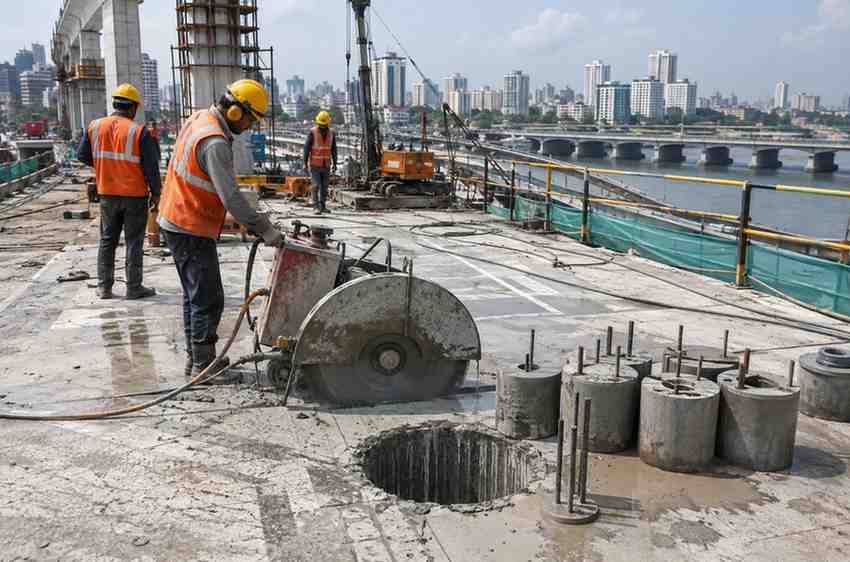
Surat, one of India's fastest-growing cities and a major hub for textiles, diamonds, and manufacturing, is undergoing a dramatic transformation in its urban landscape. From the Surat Metro Rail project to flyovers, elevated corridors, smart city initiatives, and industrial expansions, the city's skyline and underground infrastructure are being reshaped at a rapid pace. Behind every successful infrastructure project — whether it's a metro pillar, a drainage tunnel, a bridge widening, or a utility duct — lies a critical, often overlooked process: concrete cutting.
Concrete cutting is far more than just "breaking concrete." It is a precise, engineered process that determines the structural integrity, safety, and timeline of large-scale construction. As Surat continues to expand vertically and horizontally, understanding the requirements, regulations, and best practices for concrete cutting has become essential for contractors, engineers, and project planners alike.
This blog, brought to you by Core Cutting India ([email protected]), explores everything you need to know about concrete cutting requirements for large urban infrastructure projects in Surat.
Why Concrete Cutting Matters in Urban Infrastructure
Urban infrastructure projects in a densely populated city like Surat present unique challenges. Unlike greenfield construction sites, urban projects often involve working around existing structures, live utilities, heavy traffic, and residential neighborhoods. Concrete cutting plays a pivotal role in several stages of these projects:
- Retrofitting and structural modifications of existing bridges, flyovers, and buildings
- Creating openings for utility lines, HVAC ducts, plumbing, and electrical conduits
- Demolition of specific sections without disturbing the surrounding structure
- Expansion joint cutting to prevent cracking due to thermal expansion
- Road and pavement cutting for underground utility installation
- Precision trenching for metro rail tunnels and cable ducting
Given Surat's ongoing metro rail construction, smart road development, and stormwater drainage upgrades, concrete cutting has become an indispensable part of the city's growth story.
Understanding the Scale of Surat's Infrastructure Boom
Surat's rapid urbanization is driven by several large-scale projects that require extensive concrete work:
Surat Metro Rail Project: As one of India's newer metro systems, the Surat Metro involves elevated corridors, underground stretches, and multiple stations. Each of these requires meticulous concrete cutting for pillar foundations, station entrances, ventilation shafts, and track-bed preparation.
Smart City Initiatives: Surat was among the first cities selected under India's Smart Cities Mission. This has led to extensive upgrades in road infrastructure, water supply networks, and underground utility corridors — all of which require controlled concrete cutting.
Industrial and Commercial Expansion: With Surat's textile and diamond industries continuing to grow, new industrial parks, warehouses, and commercial complexes are being constructed, often requiring modifications to existing concrete structures.
Flyovers and Road Widening Projects: To ease traffic congestion, the Surat Municipal Corporation (SMC) has been actively widening roads and constructing flyovers, many of which require cutting into existing pavement and structural elements.
Given this scale, concrete cutting companies operating in Surat must be equipped with advanced machinery, trained personnel, and a thorough understanding of local regulations.
Key Concrete Cutting Techniques Used in Large Projects
Different infrastructure projects call for different concrete cutting methods. Here are the primary techniques used across Surat's major construction sites:
1. Diamond Wall Sawing
Wall sawing uses diamond-tipped circular blades mounted on a track system to make precise, straight cuts through walls, floors, and slabs. This method is commonly used for creating door and window openings, as well as for cutting sections of bridges and retaining walls during retrofitting work.
2. Core Drilling
Core drilling involves using a diamond-tipped hollow drill bit to create circular holes through concrete, often for utility penetrations, plumbing, electrical conduits, or structural testing. This technique is essential in metro station construction, where ventilation shafts and cable routing require clean, round openings.
3. Wire Sawing
For extremely thick or heavily reinforced concrete structures — such as bridge piers or large foundation blocks — wire sawing is often the preferred method. A diamond-embedded wire loop is used to cut through massive concrete sections with minimal vibration, making it ideal for sensitive urban environments.
4. Flat Sawing (Slab Sawing)
Flat sawing is used for horizontal surfaces like roads, pavements, and bridge decks. This technique is heavily used during road widening and utility trenching projects across Surat, where existing pavement needs to be cut cleanly before excavation.
5. Hand Sawing
For smaller, more accessible areas, hand-held saws provide flexibility for cutting in tight spaces where larger equipment cannot maneuver, such as around existing utility lines or in confined basement areas.
6. Chain Sawing
Chain saws with diamond-segmented chains are used for creating corner cuts and openings with sharp angles, often needed in structural modification projects.
Regulatory and Permit Requirements in Surat
Before any concrete cutting activity begins on a large infrastructure project, contractors must comply with several regulatory requirements set by local authorities:
Surat Municipal Corporation (SMC) Approvals
Any cutting activity on public roads, pavements, or municipal infrastructure requires prior approval from the SMC. This includes obtaining road-cutting permits, especially for utility installation projects that involve trenching through existing roadways.
Traffic Management Plans
Given Surat's dense traffic, especially in commercial zones like Ring Road, Adajan, and Varachha, contractors must submit traffic diversion and management plans before commencing cutting work on or near roads.
Utility Mapping and Clearance
Before any cutting begins, it is mandatory to verify the location of underground utilities — including water pipelines, sewer lines, electrical cables, and telecom ducts — to avoid accidental damage. This typically involves coordination with utility providers and use of ground-penetrating radar (GPR) surveys.
Environmental Clearances
For large-scale projects, especially those involving dust and noise generation, contractors may need environmental clearances in line with Gujarat Pollution Control Board (GPCB) norms.
Structural Safety Certification
For cutting work near or within existing structures (such as flyovers or bridges undergoing retrofitting), a structural engineer's certification is often required to ensure that cutting will not compromise the load-bearing capacity of the structure.
Safety Requirements for Concrete Cutting on Urban Sites
Safety is paramount when cutting concrete in densely populated urban areas. Key safety requirements include:
- Dust suppression systems: Wet cutting methods or vacuum dust extraction systems must be used to minimize airborne silica dust, which poses serious health risks to workers and nearby residents.
- Noise control measures: Given proximity to residential and commercial zones, noise levels must be monitored and cutting schedules adjusted to comply with local noise pollution norms, particularly during nighttime hours.
- Vibration monitoring: For projects near sensitive structures, vibration sensors are used to ensure that cutting activities do not cause structural damage to adjacent buildings.
- Personal protective equipment (PPE): Workers must be equipped with safety goggles, hearing protection, respiratory masks, and cut-resistant gloves.
- Barricading and signage: Cutting zones must be clearly cordoned off with barricades and warning signage to protect pedestrians and vehicles.
- Water management: Wet cutting generates slurry runoff, which must be properly contained and disposed of to prevent contamination of stormwater drains — a particularly important consideration given Surat's history of flooding challenges.
Equipment and Technology Requirements
Large infrastructure projects demand industrial-grade concrete cutting equipment capable of handling reinforced concrete, thick slabs, and high-volume cutting schedules. Essential equipment includes:
- High-horsepower wall saws and track-mounted cutting rigs
- Hydraulic and electric core drilling rigs
- Wire saw systems for heavy structural cutting
- Walk-behind and ride-on flat saws for road and pavement work
- Dust extraction and slurry management systems
- Vibration and noise monitoring equipment
Choosing a contractor with access to modern, well-maintained equipment ensures precision, reduces project delays, and minimizes safety risks.
Choosing the Right Concrete Cutting Partner in Surat
Given the complexity and scale of Surat's infrastructure projects, selecting an experienced concrete cutting contractor is critical. When evaluating potential partners, project managers should consider:
- Experience with large-scale urban projects, particularly metro, flyover, and utility installation work
- Compliance track record with SMC and GPCB regulations
- Availability of modern equipment suited to the specific cutting technique required
- Trained and certified personnel familiar with safety protocols
- Proven ability to work within tight urban timelines without disrupting traffic or nearby communities
Core Cutting India specializes in providing precision concrete cutting, core drilling, and demolition services tailored to the unique demands of urban infrastructure projects in Surat and across Gujarat. With a focus on safety, regulatory compliance, and cutting-edge equipment, the team ensures minimal disruption while maintaining structural integrity.
The Future of Concrete Cutting in Surat's Infrastructure Landscape
As Surat continues its journey toward becoming a fully realized smart city, the demand for specialized concrete cutting services will only increase. Upcoming projects — including further metro line expansions, additional flyovers, and continued smart infrastructure upgrades — will require contractors to adopt increasingly sophisticated techniques, including robotic cutting systems, advanced dust and noise control technologies, and real-time structural monitoring.
Sustainability will also play a growing role, with greater emphasis on slurry recycling, reduced water usage, and low-emission equipment to align with Surat's environmental goals.
Conclusion
Concrete cutting is a foundational, yet often underappreciated, component of Surat's rapid infrastructure development. From metro rail construction to road widening and utility installation, precise and compliant concrete cutting ensures that projects are completed safely, efficiently, and without compromising the surrounding urban environment.
For infrastructure developers, contractors, and project managers working in Surat, partnering with an experienced and compliant concrete cutting service provider is not just a convenience — it's a necessity. Core Cutting India brings the expertise, equipment, and regulatory knowledge needed to support Surat's largest and most demanding infrastructure projects.
For inquiries or project consultations, reach out to Core Cutting India at [email protected].
People Also Ask
1. What is concrete cutting used for in infrastructure projects? Concrete cutting is used for creating openings for utilities, demolishing specific structural sections, installing expansion joints, trenching roads for underground services, and modifying existing structures during retrofitting or expansion work.
2. How much does concrete cutting cost in Surat? Costs vary depending on the cutting method (core drilling, wall sawing, wire sawing, flat sawing), the thickness and reinforcement of the concrete, project scale, and site accessibility. Large infrastructure projects typically require custom quotes based on a detailed site assessment.
3. What permits are required for road and concrete cutting in Surat? Contractors generally need approval from the Surat Municipal Corporation for road cutting, along with utility clearance, traffic management plans, and, for larger projects, environmental compliance under Gujarat Pollution Control Board norms.
4. What is the difference between core drilling and wall sawing? Core drilling creates circular holes using a hollow diamond bit, typically for utility penetrations, while wall sawing uses a diamond blade to make straight, precise cuts through walls, floors, or slabs.
5. Is concrete cutting safe for nearby buildings? Yes, when performed by experienced professionals using vibration monitoring, wet cutting for dust control, and proper structural assessments, concrete cutting can be carried out safely without damaging adjacent structures.
6. How long does it take to cut concrete for a large project? Timelines depend on the scope of work, concrete thickness, reinforcement density, and site conditions. Large infrastructure projects may require phased cutting schedules coordinated with overall construction timelines.