
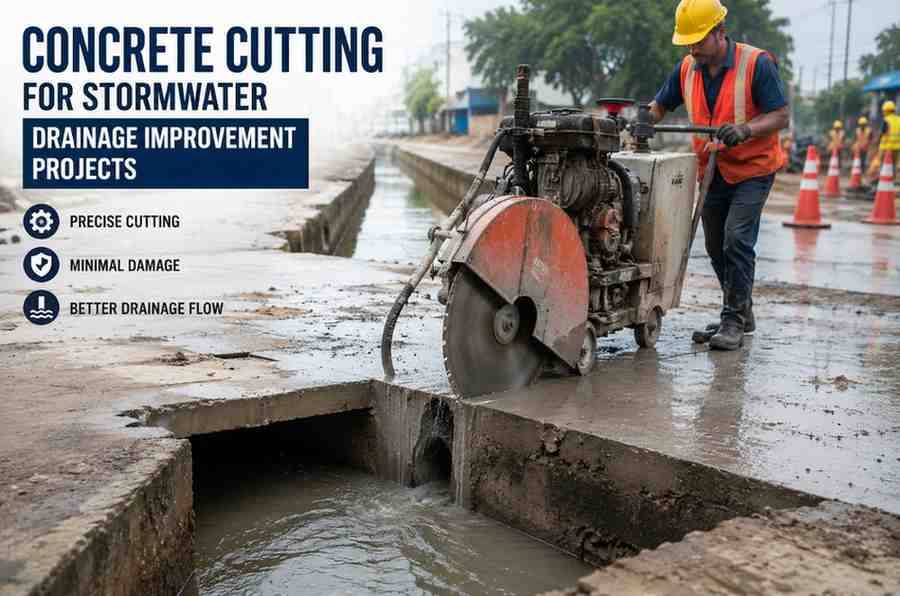
Stormwater management has become one of the most pressing infrastructure priorities for cities, industrial parks, housing societies, and commercial developments across India. As urban areas expand and impervious surfaces multiply, the need for efficient, well-designed drainage systems grows just as fast. At the center of nearly every stormwater drainage improvement project sits a task that is often overlooked but essential: concrete cutting.
Whether it's installing new stormwater pipes, retrofitting outdated drainage channels, creating catch basin openings, or repairing damaged culverts, concrete cutting is the foundational step that makes the rest of the project possible. At Core Cutting India ([email protected]), we specialize in precision concrete cutting services tailored specifically for drainage and stormwater infrastructure work. In this article, we'll explore why concrete cutting matters so much for these projects, the methods involved, and what to expect when you hire a professional concrete cutting contractor.
Why Concrete Cutting Matters in Stormwater Drainage Projects
Stormwater drainage improvement projects almost always involve working with existing concrete structures — roads, sidewalks, parking lots, building foundations, or old drainage infrastructure. Before a single new pipe can be laid or a channel widened, that existing concrete has to be removed cleanly, accurately, and without compromising the structural integrity of the surrounding area.
This is where professional concrete cutting becomes indispensable. Unlike demolition with jackhammers or heavy breaking equipment, controlled concrete cutting allows contractors to:
- Create precise openings for pipe entry and exit points
- Cut clean trench lines for laying new drainage pipes
- Remove sections of slab without disturbing surrounding pavement
- Access underground drainage systems for inspection or repair
- Minimize vibration and noise near occupied buildings or sensitive utilities
- Reduce dust and debris compared to traditional demolition
Poorly executed cutting can lead to cracked pavement beyond the work zone, damaged rebar, unstable trench walls, or even harm to nearby underground utilities like electrical conduits and water lines. That's why stormwater drainage projects require experienced concrete cutting professionals who understand both the cutting techniques and the broader civil engineering context of the work.
Common Applications of Concrete Cutting in Stormwater Projects
1. Trenching for New Drainage Pipes
One of the most frequent applications is cutting long, straight trench lines through existing concrete or asphalt surfaces to lay new stormwater pipes. This requires flat sawing equipment capable of cutting consistent depths over long distances, often running through roadways, parking areas, or industrial yards.
2. Catch Basin and Manhole Openings
Stormwater systems rely on catch basins and manholes to collect and redirect runoff. Installing or expanding these structures often means cutting precise rectangular or circular openings in existing concrete slabs — work that demands accuracy since these openings must align perfectly with underground structures.
3. Culvert and Channel Widening
Older drainage culverts and channels are frequently undersized for today's rainfall intensity and urban runoff volumes. Widening or reshaping these channels requires cutting away sections of aged concrete to make room for larger capacity structures.
4. Core Drilling for Pipe Penetrations
When a new drainage pipe needs to pass through an existing wall, foundation, or slab, core drilling creates a clean, round penetration sized exactly to the pipe diameter. This method is far more controlled than breaking a hole with impact tools and reduces the risk of structural cracking around the penetration point.
5. Slab Removal for Retention and Detention Systems
Many stormwater improvement projects involve constructing underground retention or detention systems to manage peak runoff. Building these systems typically requires removing large sections of existing concrete slab, which is best done through systematic saw cutting to control the size and shape of removed sections.
6. Utility Access and Repair
Drainage systems often need to be inspected, cleaned, or repaired after years of service. Concrete cutting provides controlled access points to underground pipes and structures without excessive demolition of surrounding pavement.
Concrete Cutting Methods Used in Drainage Projects
Different phases of a stormwater drainage project call for different cutting techniques. A professional concrete cutting company will typically use a combination of the following methods depending on the site conditions and project requirements.
Flat Sawing: Used for cutting horizontal surfaces such as roads, sidewalks, and slabs. Flat saws are ideal for creating trench lines and removing large sections of pavement for pipe installation.
Wall Sawing: Applied when cutting vertical concrete surfaces, such as retaining walls or culvert walls that need openings for pipe connections.
Core Drilling: Used to create round openings for pipe penetrations through slabs, walls, or foundations. This method is precise and produces minimal collateral damage to surrounding concrete.
Wire Sawing: Employed for cutting thick or heavily reinforced concrete structures, particularly useful in large-scale drainage channel modifications where conventional saws may not reach the required depth.
Slab Sawing: Used for cutting and removing sections of concrete slab for access to underground utilities or for creating new structural openings.
Hand Sawing: Applied in tight spaces or smaller-scale cuts where larger machinery cannot maneuver, often used for detail work around existing infrastructure.
Each of these methods requires trained operators, well-maintained diamond blade equipment, and a clear understanding of the underlying soil and utility conditions. A reputable concrete cutting contractor will assess the site, review project drawings, and select the appropriate combination of techniques before work begins.
The Concrete Cutting Process for Drainage Improvement Projects
Step 1: Site Assessment and Utility Location
Before any cutting begins, the project team conducts a thorough site survey to identify existing utilities, underground structures, and soil conditions. This step is critical to avoid damaging electrical lines, water mains, or telecommunications infrastructure that may run near the planned drainage route.
Step 2: Marking and Layout
Once utilities are located, the cutting lines are marked according to the engineering drawings. Precise layout ensures the new drainage system aligns correctly with existing infrastructure and meets the specified grades for proper water flow.
Step 3: Cutting Execution
Using the appropriate equipment — flat saws, wall saws, core drills, or wire saws — the concrete cutting team executes the cuts according to the marked layout. Water-cooled diamond blades are typically used to reduce dust, control heat, and produce cleaner cuts.
Step 4: Debris Removal
After cutting, concrete sections are removed and hauled away. Efficient debris management keeps the job site safe and allows excavation and pipe-laying crews to move in without delay.
Step 5: Coordination with Excavation and Installation Teams
Concrete cutting is rarely a standalone task — it's typically the first phase in a larger drainage improvement sequence involving excavation, pipe-laying, backfilling, and surface restoration. Clear communication between the cutting crew and the broader project team keeps the schedule on track.
Step 6: Surface Restoration
Once the drainage work is complete, the cut areas are restored with new concrete, asphalt, or paving to match the surrounding surface, ensuring a smooth and durable finish.
Benefits of Hiring a Professional Concrete Cutting Contractor
Attempting drainage-related concrete removal with general demolition equipment can create more problems than it solves. Here's why working with a specialized concrete cutting company like Core Cutting India makes a measurable difference on stormwater projects:
- Precision: Cuts are made to exact specifications, reducing material waste and rework.
- Reduced Vibration: Controlled sawing minimizes vibration that could damage nearby structures or underground utilities.
- Faster Turnaround: Specialized equipment completes cuts more quickly than manual breaking methods.
- Lower Dust and Noise: Water-cooled cutting techniques significantly reduce airborne dust and noise pollution, which matters for projects near occupied buildings or public roads.
- Safety Compliance: Professional crews follow safety protocols for utility clearance, traffic control, and site management.
- Clean, Reusable Edges: Precise cuts leave clean edges that simplify the installation of new pipes, joints, and structures.
Key Considerations Before Starting a Drainage-Related Concrete Cutting Project
If you're planning a stormwater drainage improvement project, keep the following factors in mind when selecting a concrete cutting partner:
Experience with Civil and Municipal Projects: Drainage work often involves coordination with municipal standards and engineering specifications. Choose a contractor familiar with these requirements.
Equipment Range: Confirm the contractor has access to a full range of cutting equipment — flat saws, wall saws, core drills, and wire saws — to handle varying site conditions.
Utility Locating Capability: Ensure the contractor conducts or coordinates proper utility locating before cutting begins.
Environmental Compliance: Ask about dust control, water management, and debris disposal practices, especially for projects near water bodies or sensitive environments.
Project Timeline: Drainage improvements are often time-sensitive, particularly ahead of monsoon season. Confirm the contractor can meet your schedule.
Why Choose Core Cutting India
Core Cutting India brings specialized expertise to concrete cutting for stormwater drainage improvement projects, offering a full suite of services including flat sawing, wall sawing, core drilling, and slab removal. Our team understands the technical demands of drainage infrastructure work — from precise trench cutting for pipe installation to clean openings for catch basins and culverts.
We work closely with civil contractors, municipal bodies, and private developers to ensure every cut supports the broader goals of the drainage project: efficient water flow, structural integrity, and long-term durability. Our approach combines modern diamond blade equipment with experienced operators who prioritize safety, precision, and minimal disruption to surrounding areas.
If your project involves stormwater drainage improvements, culvert upgrades, catch basin installation, or any work requiring controlled concrete removal, Core Cutting India is ready to help.
Conclusion
Concrete cutting may not be the most visible part of a stormwater drainage improvement project, but it's one of the most critical. From trenching for new pipes to creating precise openings for catch basins and culverts, professional concrete cutting sets the foundation for a drainage system that performs reliably for years to come. Choosing an experienced concrete cutting contractor ensures the work is done safely, accurately, and efficiently — protecting both the project timeline and the surrounding infrastructure.
For expert concrete cutting services tailored to stormwater drainage and civil infrastructure projects, reach out to Core Cutting India at [email protected].