
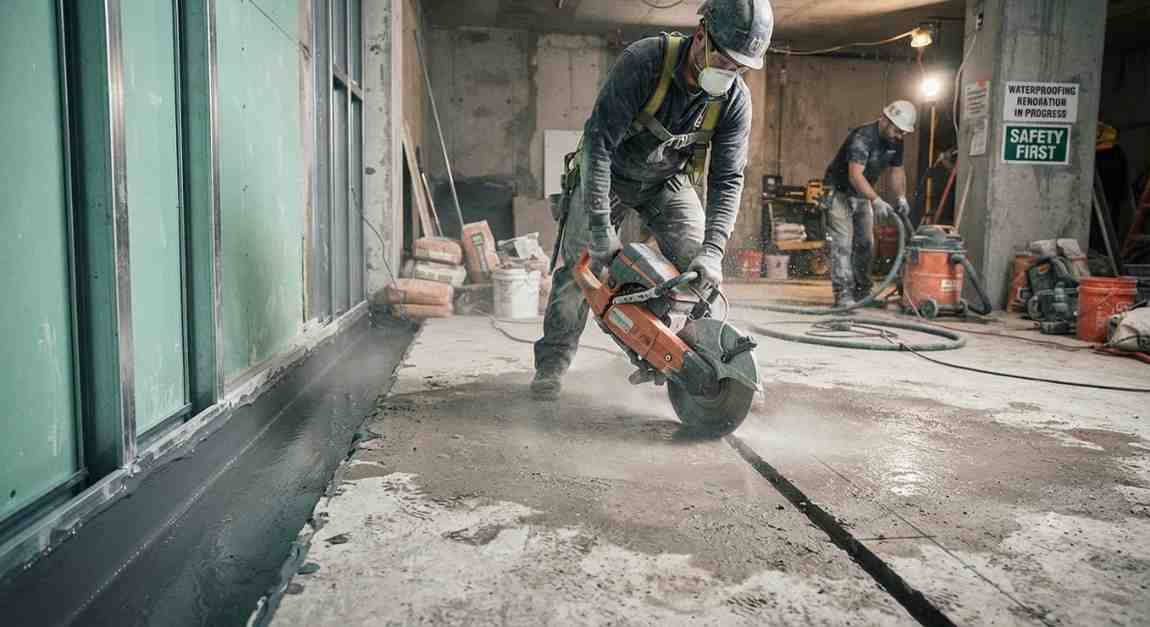
When homeowners and structural engineers in bustling Indian metropolises like Delhi, Mumbai, or Bengaluru think of waterproofing renovation, their minds instantly race to polymer coatings, bitumen membranes, damp-proof courses, and epoxy grouts. However, a critically important structural phase is frequently overlooked: precision concrete cutting.
Whether you are revamping a leaking residential terrace in South Delhi, fixing persistent bathroom seepage in a high-rise Mumbai apartment, or upgrading the basement damp-proofing of a commercial complex in Gurugram, cutting through reinforced cement concrete (RCC) is almost always unavoidable.
From carving out channels for concealed drainage pipes to executing core drilling for pressure-grouting chemical injection ports, modern waterproofing cannot succeed without surgical-grade concrete cutting. Brought to you by [email protected], this comprehensive guide explores the intersection of concrete cutting and waterproofing renovation, highlighting Indian context, techniques, challenges, and best practices.
The Core Connection: Understanding the Synergy
Waterproofing a structure is essentially about breaking or intercepting water pathways. Water is relentless; it exploits capillary action, hairline structural cracks, honeycombed concrete, and poorly sealed pipe penetrations.
During a major renovation, simply applying a fresh coat of waterproofing paint over old, damaged surfaces is a recipe for failure. To achieve a long-lasting, watertight seal, technicians must often reach the root cause of the dampness buried deep within the RCC matrix. This is where specialized concrete cutting services become indispensable.
1. Re-routing and Upgrading Drainage Systems
Old Indian homes and apartments often suffer from outdated, corroded, or undersized drainage lines embedded within RCC slabs and walls. During a bathroom or terrace renovation, expanding or re-routing these drainage pipes requires accurate cutting through thick concrete floors without destabilizing the surrounding structural grid.
2. Creating Access for Chemical Pressure Grouting
In severe cases of dampness and negative-side water seepage (common in basements and underground water tanks), surface membranes fail. Engineers rely on polyurethane (PU) or epoxy pressure grouting. To inject these chemicals deep into the voids of the concrete, workers must drill precise, uniform holes using diamond core cutting machines.
3. Eliminating Pocket Failures and Honeycombs
Faulty concreting from original construction often leaves porous pockets or honeycombs that act as water channels. Cutting away these compromised sections allows structural repair mortars and high-performance waterproofing layers to bond directly with healthy, sound concrete.
Key Concrete Cutting Techniques Used in Waterproofing Renovations
Modern construction renovation has moved far beyond heavy sledgehammers and hand chisels, which induce micro-cracks and weaken surrounding structures. Today, professional contractors utilize advanced, vibration-free technologies:
Diamond Core Cutting / Drilling
-
What it is: Using diamond-tipped cylindrical core drill bits powered by electric or hydraulic motors to create clean, circular openings through RCC slabs, beams, and walls.
-
Waterproofing Application: Essential for installing new vent pipes, down-take water lines, and creating anchor ports for chemical injection grouting. It leaves smooth edges that are easy to seal with water-stop grouts and sealants.
Wall Sawing and Wire Sawing
-
What it is: Utilizing high-speed diamond blades mounted on tracks or continuous diamond wire ropes looped around massive concrete sections.
-
Waterproofing Application: Used when entire sections of damaged, water-logged parapet walls, sunken slab segments, or structural retaining walls need to be cleanly excised and replaced.
Chase Cutting (Groove Cutting)
-
What it is: Making shallow, precise parallel cuts in concrete floors or walls to sink concealed electrical conduits or water supply lines.
-
Waterproofing Application: Allows plumbers to embed leaking pipes properly within chases so they can be completely sealed over with waterproof polymer mortars, preventing future surface leakage.
Unique Challenges of Waterproofing Renovations in Indian Buildings
Renovating Indian structures presents a unique set of architectural and logistical hurdles:
-
Aging Infrastructure: Many residential colonies and commercial hubs feature buildings aged 20 to 50 years. Their concrete mixes can be erratic, sometimes comprising hand-mixed concrete with variable aggregate strengths.
-
Dense Reinforcement (RCC): Indian construction heavily relies on high-yield steel reinforcement bars (TMT bars). Cutting blindly can sever structural rebar, compromising the load-bearing capacity of the building. Utilizing rebar scanners before cutting is a non-negotiable safety step.
-
Concealed Utilities: Older properties rarely have accurate, up-to-date MEP (Mechanical, Electrical, Plumbing) drawings. Precision core cutting must be handled carefully to avoid striking live electrical lines or hidden water mains.
-
Spatial Constraints: High-density urban settings (such as tight stairwells in Delhi residential floors or congested lane layouts in Mumbai chawls) demand compact, portable electric or hydraulic cutting equipment that produces minimal noise, dust, and structural vibration.
Step-by-Step Integration: Cutting and Waterproofing Workflow
A successful waterproofing renovation that incorporates concrete cutting follows a structured, engineering-led workflow:
[Phase 1: Structural Assessment & Scanning]
       │
       ▼
[Phase 2: Precision Concrete/Core Cutting]
       │
       ▼
[Phase 3: Surface Preparation & Repair]
       │
       ▼
[Phase 4: Waterproofing Application]
       │
       ▼
[Phase 5: Quality Testing & Ponding]
Step 1: Structural Audit and Non-Destructive Testing (NDT)
Before a single blade touches the concrete, experts inspect the site. Rebar scanners (Ground Penetrating Radar) map out steel locations to ensure cutting does not weaken the structural frame.
Step 2: Execution of Cutting and Coring
Professional technicians execute core drilling or wall cutting for new drainage layouts, expansion joints, or grouting holes. Wet-cutting methods are typically preferred to keep dust levels down and cool the diamond blades efficiently.
Step 3: Mechanical Cleaning and Repair
Edges around the cut zones are chipped, cleaned, and primed. Any exposed, rusted steel rebar is treated with anti-corrosive coatings, and cavities are packed with non-shrink, polymer-modified repair mortars.
Step 4: Application of Waterproofing Systems
With all penetrations cleanly cut and sealed with water-stopping plugs or swelling bentonite strips, the main waterproofing layers—such as crystalline coatings, polyurethane liquid membranes, or APP-modified bituminous membranes—are applied seamlessly across the surface.
Step 5: Ponding Test
A mandatory 24-to-72-hour water ponding test is conducted on terraces and sunken bathroom slabs to verify that the newly cut, sealed, and waterproofed junctions are completely leak-proof.
Cost Dynamics of Concrete Cutting and Waterproofing in India
Budgeting for a renovation project requires a clear understanding of market rates. While pricing varies depending on the depth, grade of concrete, and accessibility, typical industry benchmarks across major Indian urban centers include:
Note: For customized industrial or residential requirements, consulting directly via [email protected] ensures an accurate site evaluation and transparent quotation.
Best Practices to Ensure Safety and Quality
-
Hire Certified Professionals: Never use unorganized local labor with crude tools for RCC cutting. Precision diamond cutting tools require trained operators to prevent accidents and structural destabilization.
-
Prioritize Dust and Water Management: Wet cutting minimizes airborne silica dust, protecting workers and residents. Proper drainage management ensures slurry doesn't damage finished lower floors.
-
Use Compatible Materials: Ensure that the grouts, sealants, and waterproofing membranes used around cut joints are chemically compatible (e.g., matching epoxy or polyurethane systems with concrete substrates).
-
Adhere to Codes: Follow relevant Indian Standards (such as IS codes for plain and reinforced concrete and structural safety guidelines) during building alterations.
Conclusion
Waterproofing renovation is a high-stakes engineering task. When structural layouts need modification, plumbing lines require upgrading, or deep-seated seepage demands chemical injection, concrete cutting becomes the foundation upon which effective waterproofing is built. By blending state-of-the-art diamond cutting technologies with meticulous waterproofing protocols, property owners can secure their buildings against India's harsh monsoons and long-term moisture degradation.
For expert advice, professional consultation, and reliable execution on your next project, reach out to industry specialists at [email protected] and safeguard your investment from the ground up.