
Introduction
Industrial air handling systems are the lungs of any manufacturing plant, warehouse, data center, or large commercial facility. They regulate temperature, control humidity, remove contaminants, and keep air quality within safe operating limits for both machinery and workers. But before a single duct, vent, or exhaust unit can be installed, one critical step almost always comes first: concrete drilling.
Whether it's creating a precise opening for a rooftop air handling unit (AHU), cutting a duct penetration through a load-bearing wall, or coring a shaft for vertical ventilation risers, concrete drilling is the foundation — quite literally — of a functional industrial HVAC installation. Done poorly, it can compromise structural integrity, cause airflow inefficiencies, and lead to costly rework. Done correctly, it ensures a clean, accurate, and long-lasting installation.
In this guide, we'll walk through everything facility managers, contractors, and project engineers need to know about concrete drilling for industrial air handling systems — from the tools and techniques used to safety standards, cost factors, and how to choose the right drilling partner. At Core Cutting India, we specialize in precision concrete cutting and drilling for exactly these kinds of demanding industrial applications, and you can reach our team directly at info@corecuttingindia.com for project consultations.
Why Concrete Drilling Matters for Air Handling Systems
Industrial air handling systems rely on a network of ducts, vents, exhaust shafts, and intake points that must pass through concrete floors, walls, and slabs. Unlike residential HVAC work, industrial systems typically involve:
- Larger duct diameters requiring wider, more precise openings
- Reinforced concrete structures with embedded rebar
- Multi-story penetrations for vertical air distribution
- Strict fire-rating and structural compliance requirements
- Tight tolerances to accommodate heavy-duty ductwork, dampers, and fan housings
A poorly executed drilling job can lead to air leakage, misaligned ductwork, weakened structural elements, and even damage to embedded utilities like electrical conduits or plumbing lines. This is why concrete drilling for industrial applications is a specialized trade, not a generic construction task.
Types of Concrete Drilling Used in Air Handling Installations
1. Diamond Core Drilling
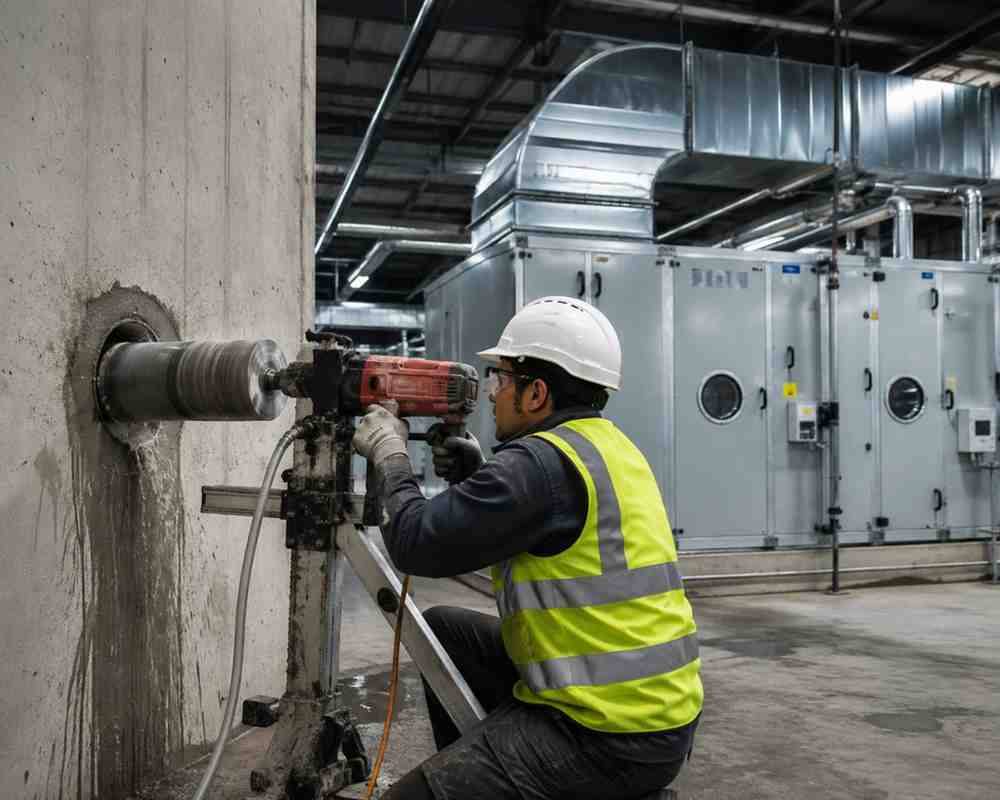
Diamond core drilling is the industry standard for creating clean, circular openings in concrete for ductwork, pipe penetrations, and vent shafts. A diamond-tipped core bit rotates at high speed, cutting through concrete (and even reinforced steel) with minimal vibration and virtually no cracking. This method is ideal for:
- Round duct penetrations
- Exhaust and intake vent openings
- Cable and conduit routing alongside air handling equipment
- Coring through post-tensioned or reinforced slabs
Diamond core drilling can cut through concrete ranging from a few inches to several feet thick, depending on the bit size and rig used, making it suitable for both single-story facilities and multi-level industrial complexes.
2. Wall Sawing and Cutting for Rectangular Openings
While core drilling produces round holes, many industrial air handling systems require rectangular or square openings — for example, to accommodate large rectangular ductwork or AHU housings. In these cases, wall sawing (using diamond blade saws) is combined with core drilling at the corners to create clean, structurally sound rectangular penetrations without over-cutting the surrounding concrete.
3. Slab Drilling for Vertical Risers
In multi-story industrial buildings, air handling systems often need vertical shafts running through several concrete floor slabs. Slab drilling uses core rigs mounted vertically to bore straight, aligned holes through each floor, ensuring the ventilation riser runs true from the mechanical room to the rooftop or upper floors.
4. Anchor and Fixing Hole Drilling
Beyond the main duct openings, air handling units, fan housings, and support brackets need to be securely anchored to concrete floors, walls, or ceilings. This requires precise, smaller-diameter drilling for anchor bolts and mounting hardware — work that demands the same attention to accuracy as the larger core holes.
The Concrete Drilling Process for Industrial Air Handling Systems
A professional concrete drilling project for an industrial air handling system typically follows these stages:
1. Site Survey and Utility Scanning Before any drilling begins, the area is scanned using ground-penetrating radar (GPR) or rebar detectors to identify embedded electrical cables, plumbing lines, post-tension cables, and structural reinforcement. This step is non-negotiable — drilling blind into a live electrical conduit or a post-tension cable can cause serious safety incidents and structural failure.
2. Engineering Review and Layout Marking Drilling locations are cross-checked against mechanical (HVAC) drawings and structural engineering plans. The exact size, position, and angle of each penetration is marked out, accounting for duct dimensions, insulation clearances, and fire-stopping requirements.
3. Selecting the Right Equipment Depending on the concrete thickness, reinforcement density, and hole diameter, the drilling team selects the appropriate core bit size, drilling rig (handheld, rig-mounted, or track-mounted), and water-cooling or dust-extraction system.
4. Drilling and Coring The actual drilling is carried out with continuous monitoring for alignment, depth, and cooling water flow (wet drilling reduces dust and prolongs bit life, while dry drilling with vacuum extraction is used where water isn't practical).
5. Debris Removal and Edge Finishing Once drilled, the core is removed, and edges are cleaned and smoothed to prevent damage to duct insulation or gaskets during installation.
6. Fire-Stopping and Sealing Because these penetrations often pass through fire-rated walls or floors, approved fire-stop sealants and collars are installed around the ductwork after installation to maintain the building's fire safety rating.
Key Challenges in Industrial Concrete Drilling for Air Handling Systems
Reinforced and Post-Tensioned Concrete Industrial buildings often use reinforced or post-tensioned concrete for structural strength. Drilling through these materials requires specialized diamond bits and extreme caution to avoid cutting live post-tension cables, which can release under tension and cause serious injury.
Precision Alignment Across Multiple Floors For vertical ductwork risers spanning several floors, even a small misalignment at one level can cascade into major installation problems higher up. Laser alignment tools and rig-mounted drills help maintain accuracy.
Noise, Dust, and Vibration Control Industrial facilities are often operational during drilling work. Wet drilling techniques, dust extraction systems, and vibration-dampening equipment help minimize disruption to ongoing operations and nearby sensitive machinery.
Working Around Existing Infrastructure Retrofitting air handling systems into existing industrial buildings means drilling around live electrical systems, existing pipework, and structural elements — requiring detailed pre-drilling surveys and experienced crews.
Safety Standards for Concrete Drilling Near Air Handling Equipment
Safety is paramount in any concrete drilling operation, especially in active industrial environments. Key safety practices include:
- Mandatory GPR/rebar scanning before drilling begins
- Use of personal protective equipment (PPE) including eye, ear, and respiratory protection
- Dust suppression through wet drilling or HEPA vacuum extraction to protect worker respiratory health
- Secure rig anchoring to prevent equipment movement during operation
- Isolation of the work area from other facility operations
- Compliance with local occupational safety regulations and structural engineering approvals
Reputable drilling contractors will always provide method statements and risk assessments before beginning work on an industrial site.
Cost Factors in Industrial Concrete Drilling
Several variables influence the cost of concrete drilling for air handling system installation:
- Concrete thickness and reinforcement density — thicker, heavily reinforced slabs take longer and require larger, more expensive core bits
- Hole diameter and quantity — larger and more numerous penetrations increase both material and labor costs
- Accessibility — rooftop, basement, or hard-to-reach locations may require special rigging or equipment transport
- Working conditions — drilling in an operational facility may require off-hours scheduling, adding to project timelines and costs
- Fire-stopping and finishing requirements — code-compliant sealing adds to the overall scope
Getting a detailed site assessment from an experienced contractor is the best way to receive an accurate, project-specific quote.
Why Choose a Specialized Concrete Drilling Contractor
Industrial air handling installations are not the place for trial and error. A specialized concrete cutting and drilling contractor brings:
- Experience with reinforced, post-tensioned, and high-strength industrial concrete
- Access to professional-grade diamond core drilling and wall sawing equipment
- Utility scanning and safety protocols to prevent damage to embedded services
- Precision that keeps ductwork properly aligned and airtight
- Knowledge of fire-rating and building code compliance for penetrations
At Core Cutting India, our team has extensive experience delivering precision concrete drilling and cutting services for industrial HVAC and air handling projects — from single duct penetrations to full multi-floor ventilation shaft installations. We work closely with mechanical contractors and facility engineers to ensure every cut and core is accurate, safe, and code-compliant.
Frequently Asked Questions
What is concrete core drilling used for in air handling systems? Concrete core drilling creates precise circular openings in walls, floors, and slabs to allow ductwork, exhaust vents, intake shafts, and piping for air handling units to pass through structural concrete cleanly and safely.
How thick can a diamond core drill cut through concrete? With the right rig and bit size, diamond core drilling can cut through concrete ranging from a few inches up to several feet thick, including reinforced and post-tensioned slabs, though thicker sections require more time and specialized equipment.
Is core drilling better than jackhammering for HVAC installations? Yes, in most industrial applications. Core drilling produces clean, precise, vibration-free openings without damaging surrounding structure, whereas jackhammering is imprecise, generates excessive vibration and dust, and can weaken adjacent concrete.
How much does concrete drilling cost for industrial ducting? Costs vary widely based on concrete thickness, hole size, reinforcement, accessibility, and site conditions. A professional site survey is the best way to get an accurate cost estimate for a specific project.
What safety precautions are required for concrete drilling near air handling units? Key precautions include pre-drilling utility scans, proper PPE, dust and noise control, secure equipment anchoring, and coordination with facility operations to avoid disrupting active air handling systems or nearby personnel.
How long does it take to drill a hole for an industrial duct system? Timeframes depend on concrete thickness, reinforcement, and hole diameter — a single penetration can take anywhere from thirty minutes to a few hours, while larger multi-floor riser projects may span several days.
Conclusion
Concrete drilling is a foundational step in installing reliable, code-compliant industrial air handling systems. From diamond core drilling for duct penetrations to precision slab coring for multi-floor ventilation risers, the quality of this work directly impacts the performance, safety, and longevity of the entire HVAC installation.
Partnering with an experienced concrete cutting and drilling specialist ensures your project stays on schedule, meets structural and fire-safety requirements, and avoids costly rework down the line.
If you're planning an industrial air handling system installation and need expert concrete drilling and coring services, get in touch with Core Cutting India at info@corecuttingindia.com. Our team is ready to assess your project requirements and deliver precise, safe, and efficient drilling solutions tailored to your facility's needs.