
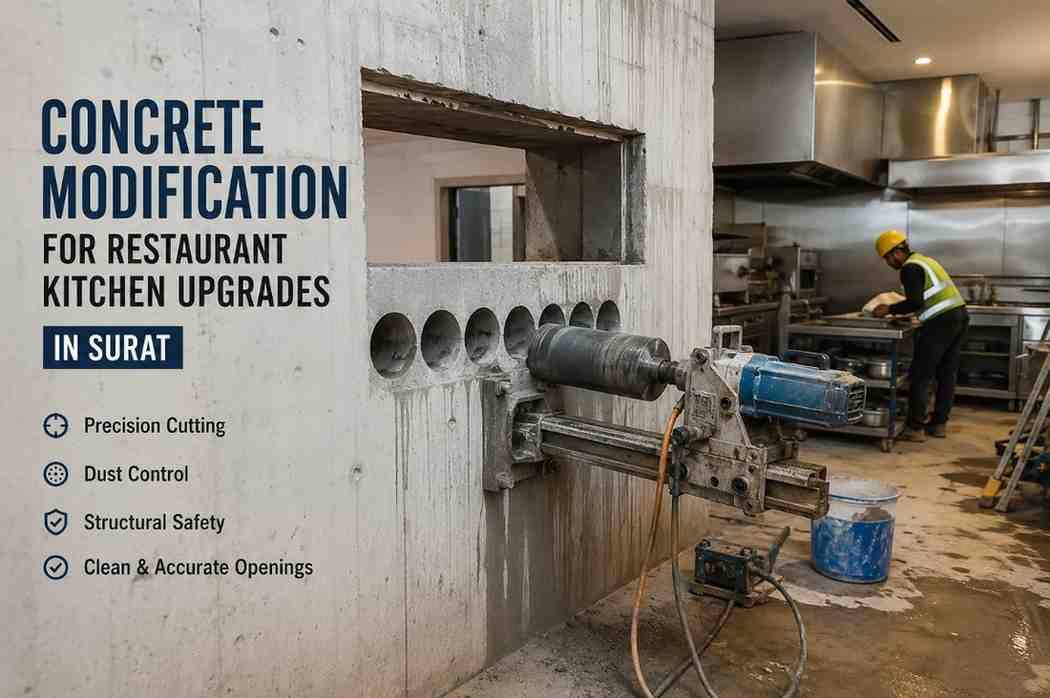
Surat's restaurant industry is growing at a remarkable pace. From bustling street-food corners in Varachha to fine-dining establishments near VIP Road and Vesu, food businesses across the city are constantly renovating their kitchens to meet rising customer expectations, stricter hygiene norms, and the operational demands of modern commercial cooking. But behind every sleek, functional restaurant kitchen lies a less glamorous — yet absolutely essential — process: concrete modification.
Whether it's cutting a new drainage channel, core drilling for plumbing lines, or reinforcing a floor to support heavy-duty equipment, concrete modification is the foundation (quite literally) of any successful kitchen upgrade. At Core Cutting India ([email protected]), we specialize in precision concrete cutting, core drilling, and structural modification services tailored specifically for restaurant and commercial kitchen renovations in Surat.
In this blog, we'll explore why concrete modification matters, the techniques involved, common challenges restaurant owners face, and how choosing the right contractor can save you time, money, and future headaches.
Why Concrete Modification Matters in Restaurant Kitchen Renovations
A restaurant kitchen isn't just a cooking space — it's a complex system of plumbing, drainage, electrical wiring, gas lines, ventilation ducts, and heavy equipment, all working together under one roof. When you're upgrading an existing kitchen or converting a commercial space into a food establishment, the original concrete structure rarely accommodates these needs out of the box.
This is where concrete modification comes in. It involves precisely cutting, drilling, or reshaping concrete slabs, walls, and floors to install or reroute utilities without compromising the structural integrity of the building. For restaurant owners in Surat, this process is critical for several reasons:
- Hygiene and Compliance: Food safety regulations require proper drainage slopes, grease traps, and washable flooring. Achieving these often means cutting into existing concrete to create channels and install trenches.
- Equipment Installation: Heavy kitchen equipment like walk-in freezers, tandoors, and industrial dishwashers often require reinforced flooring or new anchor points that demand precise concrete work.
- Utility Access: Running new plumbing, gas lines, or electrical conduits through existing concrete floors and walls requires clean, accurate cuts — not haphazard demolition that weakens the structure.
- Space Optimization: Many restaurants in Surat operate in older buildings not originally designed for commercial kitchens. Concrete modification allows these spaces to be reshaped for modern kitchen layouts.
Common Concrete Modification Techniques Used in Kitchen Upgrades
1. Concrete Floor Cutting for Drainage Systems
One of the most frequent requests we receive from restaurant owners is floor cutting for drainage. Commercial kitchens generate significant wastewater from dishwashing stations, food prep areas, and cleaning routines. Without a properly sloped drainage system, water pooling becomes a serious hygiene and safety hazard.
Using diamond blade concrete saws, our team cuts precise channels into the existing floor slab to install trench drains, floor traps, and sloped drainage lines. This process requires careful measurement and depth control to ensure water flows correctly toward the drainage point without damaging underlying rebar or utility lines.
2. Core Drilling for Plumbing and Electrical Lines
Core drilling is essential when new pipes, cables, or conduits need to pass through concrete floors, walls, or ceilings. Unlike traditional demolition, core drilling creates clean, circular holes of precise diameter — ideal for running plumbing risers, gas lines, or electrical conduits between floors or through walls.
For multi-story restaurant buildings common in Surat's commercial districts, core drilling allows kitchen exhaust systems, water supply lines, and drainage pipes to be routed efficiently between floors without large-scale structural disruption.
3. Wall Cutting and Chasing for Ducting and Conduits
Modern commercial kitchens rely heavily on ventilation systems to manage heat, smoke, and grease-laden air. Installing or upgrading exhaust ducting often requires wall cutting to create openings for duct runs, while wall chasing creates recessed channels for electrical wiring and conduit concealment.
Our team uses controlled cutting techniques that minimize dust, vibration, and structural stress — an important consideration for restaurants operating in shared commercial buildings or heritage structures in older parts of Surat.
4. Slab Reinforcement and Structural Modification
When installing heavy equipment such as commercial ovens, walk-in cold storage units, or bulk food processing machinery, the existing floor slab may need reinforcement. This can involve selective concrete removal followed by rebar addition and re-pouring, ensuring the floor can bear significant load without cracking or settling over time.
5. Precision Demolition for Layout Changes
Restaurant renovations frequently involve reconfiguring the kitchen layout entirely — moving cooking stations, expanding prep areas, or creating new service counters. This often requires selective concrete demolition of non-load-bearing walls or partial floor sections, done with precision to avoid damaging surrounding structural elements or utility lines.
Challenges Restaurant Owners Face During Kitchen Concrete Work
Renovating a working or soon-to-open restaurant kitchen comes with unique pressures. Based on our experience working with restaurant owners across Surat, here are the most common challenges:
Minimizing Downtime: Every day a kitchen is out of operation is lost revenue. Restaurant owners need concrete modification work completed quickly and efficiently, without compromising quality.
Dust and Noise Control: Concrete cutting traditionally generates significant dust and noise, which can be disruptive in commercial buildings with neighboring businesses or residential units above. Modern wet-cutting and vacuum-assisted techniques help minimize this disruption considerably.
Structural Safety: Not all concrete can simply be cut or drilled without assessment. Load-bearing walls, embedded utility lines, and rebar placement must be carefully evaluated before any cutting begins to avoid compromising the building's structural integrity.
Compliance with Local Regulations: Surat Municipal Corporation and food safety authorities have specific requirements around drainage, ventilation, and fire safety in commercial kitchens. Concrete modification work must align with these standards from the outset to avoid costly rework.
Coordinating with Other Trades: Kitchen renovations typically involve plumbers, electricians, HVAC technicians, and equipment installers all working in sequence. Concrete cutting and drilling need to be scheduled precisely to keep the overall renovation timeline on track.
Why Professional Concrete Cutting Services Are Essential
Attempting concrete modification without specialized equipment and expertise often leads to uneven cuts, structural damage, or missed utility lines — all of which can delay a restaurant opening or result in expensive repairs. Professional concrete cutting services bring several advantages:
- Precision Equipment: Diamond blade saws, core drilling rigs, and wall saws allow for millimeter-accurate cuts that traditional demolition tools simply cannot match.
- Reduced Structural Risk: Trained technicians assess load-bearing elements and rebar placement before cutting, reducing the risk of structural compromise.
- Faster Turnaround: Specialized equipment completes cutting and drilling tasks significantly faster than manual methods, helping restaurants stick to renovation deadlines.
- Cleaner Work Sites: Modern wet-cutting techniques control dust, making the process safer for workers and less disruptive to surrounding businesses.
- Code Compliance: Experienced contractors understand local building and food safety codes, ensuring modifications meet regulatory requirements the first time.
What to Look for in a Concrete Modification Contractor in Surat
If you're planning a restaurant kitchen upgrade, choosing the right concrete cutting partner is just as important as choosing your kitchen equipment supplier. Here's what to consider:
- Experience with Commercial Kitchens: Look for a contractor familiar with the specific demands of restaurant environments — drainage slopes, grease trap installation, and equipment anchoring.
- Range of Services: A good contractor should offer floor cutting, core drilling, wall chasing, and demolition services under one roof, reducing coordination headaches.
- Modern Equipment: Ask about the cutting technology used. Diamond blade and wet-cutting methods produce cleaner, more precise results with less dust and disruption.
- Local Knowledge: A contractor familiar with Surat's building codes and municipal requirements can help you avoid compliance issues down the line.
- Track Record: Request references or examples of previous restaurant or commercial kitchen projects completed in the city.
How Core Cutting India Supports Restaurant Kitchen Upgrades in Surat
At Core Cutting India, we understand that every restaurant renovation is time-sensitive and detail-critical. Our team provides comprehensive concrete cutting and modification services tailored to the unique needs of commercial kitchens, including:
- Precision floor cutting for drainage and trench installation
- Core drilling for plumbing, gas, and electrical routing
- Wall cutting and chasing for ventilation ducts and conduits
- Structural assessment and reinforcement for heavy equipment zones
- Controlled demolition for kitchen layout reconfiguration
We work closely with restaurant owners, architects, and other renovation contractors to ensure concrete modification work integrates seamlessly with the broader renovation timeline. Our goal is always to deliver clean, accurate, and code-compliant results with minimal disruption to your business operations.
If you're planning a restaurant kitchen upgrade anywhere in Surat — from the commercial hubs of Ring Road to the emerging food scenes in Adajan and Piplod — reach out to our team to discuss your project requirements.
Final Thoughts
Concrete modification may not be the most visible part of a restaurant renovation, but it's undeniably one of the most important. Proper drainage, secure utility routing, and reinforced flooring form the backbone of a kitchen that's safe, efficient, and built to last. Cutting corners here — literally or figuratively — can lead to costly problems down the road, from drainage failures to structural issues that disrupt operations long after opening day.
By partnering with an experienced concrete cutting specialist, restaurant owners in Surat can ensure their kitchen upgrades are completed accurately, efficiently, and in full compliance with local regulations. Whether you're opening a new restaurant or renovating an existing space, professional concrete modification sets the stage for a kitchen that performs as good as it looks.
For expert concrete cutting, core drilling, and modification services for your restaurant kitchen upgrade in Surat, contact Core Cutting India at [email protected].
People Also Ask
1. How long does concrete cutting take for a restaurant kitchen renovation? Timelines vary depending on the scope of work, but most floor cutting and core drilling tasks for a standard commercial kitchen can be completed within a few days, minimizing disruption to your renovation schedule.
2. Is concrete cutting safe for occupied commercial buildings? Yes, when performed by trained professionals using controlled techniques like wet-cutting and dust extraction, concrete cutting can be done safely even in occupied or shared commercial buildings.
3. Do I need permission from Surat Municipal Corporation for concrete modification in my restaurant? Depending on the scale of structural changes, permits may be required, especially for load-bearing modifications or changes affecting building drainage and ventilation systems. It's best to consult local authorities and your contractor before beginning work.
4. What is the difference between concrete cutting and core drilling? Concrete cutting typically refers to creating straight-line cuts or channels using saws, while core drilling creates precise circular holes, commonly used for pipes, cables, and conduits passing through floors or walls.
5. Can concrete cutting damage the structural integrity of my building? When performed by experienced professionals who assess load-bearing elements and rebar placement beforehand, concrete cutting does not compromise structural integrity. This is why hiring a qualified contractor is essential.
6. How much does concrete modification cost for a restaurant kitchen upgrade in Surat? Costs depend on factors like the extent of cutting or drilling required, concrete thickness, and site accessibility. Contact Core Cutting India for a customized quote based on your specific project needs.