
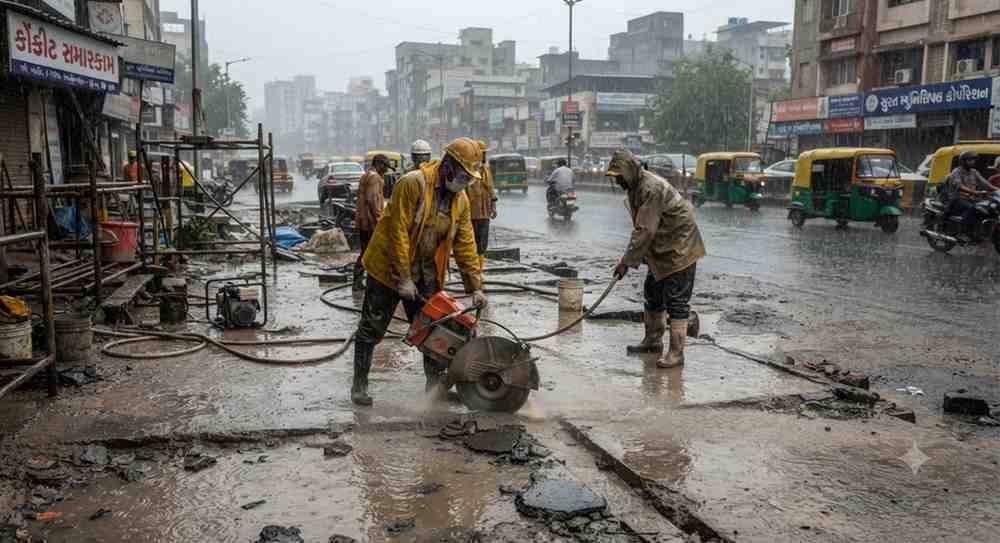
Surat, one of Gujarat's fastest-growing industrial and textile hubs, sees heavy monsoon rainfall between June and September. While the rains bring relief from the city's punishing summer heat, they also create a unique set of problems for anyone dealing with concrete structures — whether it's a residential building, a textile mill, a commercial complex, or an industrial plant. Concrete repair and cutting work, which is routine during the dry months, becomes considerably more complicated once the skies open up.
At Core Cutting India, we've spent years handling concrete cutting, core drilling, and repair projects across Surat in every season. Monsoon jobs are, without question, the trickiest. In this blog, we break down exactly why the rainy season complicates concrete work, the risks involved, and how property owners and contractors in Surat can plan around them. If you're facing a concrete issue this monsoon, you can always reach out to us directly at [email protected].
Why Monsoon Season Is Different for Concrete Work
Concrete is a porous material. It absorbs moisture from its surroundings, and its behavior — strength gain, curing, bonding, and even cutting resistance — changes significantly with humidity and water exposure. Surat's monsoon isn't just occasional showers; it's sustained high humidity, waterlogging in low-lying areas, and days of continuous rain, especially given the city's proximity to the Tapi River, which has a history of flooding during heavy monsoon spells.
This combination of humidity, standing water, and unpredictable rainfall creates specific technical and safety hurdles for concrete cutting and repair contractors that simply don't exist during Surat's dry, dusty summer months.
Major Concrete Repair Challenges During Surat's Monsoon
1. Delayed and Inconsistent Curing
Freshly poured or repaired concrete needs a controlled curing environment to reach its designed strength. During the monsoon, excess moisture can interfere with the hydration process. While some moisture is actually beneficial for curing, uncontrolled rainwater washing over fresh concrete can wash out cement paste from the surface, leading to a weak, dusty top layer known as surface scaling. This is a common issue we encounter in Surat's residential and industrial repair projects during July and August.
2. Water Seepage Into Cracks and Joints
Existing cracks, expansion joints, and construction joints act like sponges during the monsoon. Water seeps in, and if there's any embedded reinforcement nearby, prolonged moisture exposure accelerates corrosion of the rebar. Rusting steel expands, which then causes the surrounding concrete to crack further — a vicious cycle known as concrete spalling. In older buildings across Surat's Varachha, Katargam, and Adajan areas, this is one of the most frequent monsoon-related repair calls we receive.
3. Reduced Bond Strength for Repair Materials
Whether you're using epoxy-based repair mortars, polymer-modified cementitious repair compounds, or standard patch concrete, bond strength depends heavily on a clean, dry substrate. Applying repair material to a damp or actively wet surface drastically reduces adhesion, which means patches and repairs done hastily during the rains often fail within months. This is why timing and substrate preparation matter more in Surat's monsoon than at any other time of year.
4. Efflorescence and Surface Staining
High humidity combined with water movement through concrete pulls soluble salts to the surface, leaving behind the white, powdery deposits known as efflorescence. While mostly a cosmetic issue, it's often a visible warning sign of ongoing moisture infiltration that needs to be addressed before it leads to deeper structural problems.
5. Site Accessibility and Waterlogging
Surat's monsoon frequently causes localized waterlogging, particularly in low-lying pockets and older parts of the city. This directly affects our ability to mobilize equipment, set up cutting rigs, and safely access basements, ground floors, or underground utility areas — all common locations for core cutting and drilling work.
Major Concrete Cutting Challenges During Surat's Monsoon
Concrete cutting — including wall cutting, floor cutting, core drilling, and diamond blade sawing — is a precision job that depends on stable conditions. Monsoon weather introduces several complications.
1. Increased Slip and Safety Hazards
Wet concrete surfaces, combined with water runoff from cutting operations (most core cutting and wall sawing uses water-cooled diamond blades), create genuinely hazardous working conditions. The risk of slips, equipment instability, and electrical hazards from water near power tools rises sharply. Contractors need stricter safety protocols, non-slip footwear, insulated equipment, and careful site management during monsoon cutting jobs.
2. Electrical Safety Concerns
Diamond cutting equipment, core drilling machines, and wall saws typically run on electric or hydraulic power. Rainwater intrusion near power connections, extension cables, and control panels is a serious safety risk. At Core Cutting India, our monsoon protocol includes weatherproof covering for all electrical connections, elevated cable routing, and regular equipment insulation checks before every job.
3. Blade and Equipment Performance
Humidity and water exposure affect diamond blade performance and equipment longevity. Rust can form more quickly on metal components, and the constant wet-dry cycling can affect the segments on diamond blades over time. Proper equipment maintenance, drying, and storage become far more critical during Surat's monsoon months than in the dry season.
4. Dust Control Becomes Less of an Issue — But Water Management Becomes Critical
Interestingly, one advantage of wet-weather cutting is reduced airborne dust, since water-cooled cutting naturally suppresses dust anyway. However, this shifts the challenge entirely to water management — controlling slurry runoff, preventing it from entering drains improperly, and managing wastewater disposal responsibly, which is especially important given Surat Municipal Corporation's environmental regulations around construction runoff.
5. Structural Assessment Difficulties
Before any cutting job — particularly core drilling for utilities, HVAC ducts, or structural openings — an accurate assessment of the existing structure is essential. Wet surfaces can obscure hairline cracks, previous repairs, or areas of concrete deterioration, making pre-cutting inspections more difficult and increasing the risk of unexpected complications mid-job.
How Core Cutting India Manages Monsoon Projects
Given these challenges, we've developed a monsoon-specific approach for concrete repair and cutting projects across Surat:
- Weather-window scheduling: We track short-term forecasts closely and schedule critical cutting and repair phases during breaks in rainfall whenever possible.
- Temporary weatherproofing: For active repair sites, we use tarpaulins, temporary shelters, and moisture barriers to protect fresh repairs and exposed rebar from direct rain exposure.
- Faster-setting repair materials: In situations where waiting for a dry spell isn't practical, we use rapid-set, moisture-tolerant repair compounds specifically designed to bond even in humid conditions.
- Enhanced site safety measures: Non-slip mats, insulated equipment, grounded power supplies, and trained crews familiar with monsoon-specific hazards.
- Post-monsoon inspection services: Once the rains subside, we recommend a full structural inspection to catch any moisture-related damage — cracking, spalling, efflorescence, or reinforcement corrosion — before it worsens.
- Proper water and slurry management: Controlled containment and disposal of cutting slurry in line with local environmental guidelines.
Should You Wait Until After Monsoon for Repairs?
Not always. Some issues — like active leaks, exposed rebar, or safety-critical cracks — cannot wait for October or November. Delaying urgent repairs risks further deterioration and higher costs down the line. However, for non-urgent cosmetic work or large-scale cutting projects, it's often more cost-effective and produces better long-term results to schedule the work for Surat's dry season (roughly October through May), when curing conditions are stable and site access is easier.
The right approach depends on the severity of the issue, structural risk, and project timeline — something our team at Core Cutting India can help assess with an on-site evaluation.
Tips for Property Owners and Contractors in Surat This Monsoon
- Inspect regularly. Walk your property after heavy rain spells and look for new cracks, water stains, or bulging plaster — early signs of concrete distress.
- Don't ignore small cracks. What looks minor now can become a major structural repair once monsoon water works its way in repeatedly over a season.
- Use qualified contractors. Monsoon concrete work requires specialized knowledge of materials and safety practices — this isn't the season for a DIY patch job.
- Plan non-urgent cutting work for the dry season. If a project isn't time-critical, scheduling it for November through May will almost always yield better results.
- Prioritize drainage. Many monsoon-related concrete problems trace back to poor site drainage. Fixing drainage issues often prevents future repair costs.
People Also Ask
1. Can concrete be cut or repaired during the monsoon season? Yes, but it requires additional precautions — weatherproofing, moisture-tolerant materials, and strict safety protocols. Urgent repairs should never be delayed, while non-critical work is often better scheduled for drier months.
2. Why does concrete crack more in the rainy season? Water seeps into existing micro-cracks and joints, and if reinforcement steel is nearby, moisture accelerates corrosion. The rusting steel expands and pushes against the surrounding concrete, widening cracks over time.
3. How long should you wait after rain to repair concrete? Ideally, the surface should be visibly dry and free of standing water before applying repair material, since bond strength depends on a clean, dry substrate. In Surat's humid conditions, this may mean waiting several hours to a day after rainfall, depending on ventilation and exposure.
4. What is the best waterproofing solution after monsoon damage in Surat? This depends on the extent of damage, but options range from crack injection and polymer-modified coatings to full waterproofing membrane systems for roofs, terraces, and basements. A site inspection is the best way to determine the right solution.
5. Is core cutting safe in wet or humid conditions? It can be, provided the contractor follows proper safety measures — insulated equipment, controlled water runoff, non-slip precautions, and experienced operators. This is exactly the kind of monsoon-specific expertise Core Cutting India brings to every project.
Get Expert Help This Monsoon
Surat's monsoon season doesn't have to mean putting your concrete repair or cutting project on hold — but it does mean working with a team that understands how to handle the added risks properly. Core Cutting India has extensive experience managing concrete cutting, core drilling, and repair projects across Surat throughout every season, including the challenging monsoon months.
If you're dealing with a concrete issue right now, or you're planning ahead for post-monsoon repairs, reach out to us at [email protected] for a professional assessment and reliable service you can count on, rain or shine.