
Introduction
In the fast-paced world of construction and renovation, the ability to modify concrete structures—whether for plumbing, electrical, or structural upgrades—is a fundamental requirement. However, "blind" drilling or cutting into reinforced concrete is a recipe for disaster. Beneath the surface of every slab, wall, or column lies a complex network of rebar, post-tension cables, electrical conduits, and water lines.
At [email protected], we believe that precision and safety are not optional; they are the foundation of every successful project. This guide explores the critical importance of concrete scanning and why it should be the first step before any core cutting begins.
What is Concrete Scanning?
Concrete scanning is a non-destructive evaluation (NDE) method, typically utilizing Ground Penetrating Radar (GPR), to create a detailed, real-time image of the internal composition of a concrete structure. Unlike invasive exploratory drilling, scanning allows professionals to "see" inside the concrete without damaging it.
By transmitting electromagnetic pulses into the slab, the GPR equipment records reflections from embedded objects. These reflections are then analyzed to map out exactly where reinforcement and utilities are located, allowing contractors to plan their cutting path with surgical precision.
Why You Should Never Skip Concrete Scanning
The consequences of cutting into concrete without prior scanning are often severe, ranging from immediate safety hazards to long-term structural failures.
1. Preventing Structural Damage
Reinforced concrete relies on steel rebar and, in many cases, high-tension steel cables (post-tension cables) to bear loads. Severing these components can compromise the building's structural integrity, potentially leading to cracks, slab sag, or, in extreme cases, partial collapse.
2. Avoiding Utility Strikes
Modern concrete structures are riddled with electrical lines, data cables, and plumbing. Hitting a live electrical conduit can cause electrocution, while striking a water or gas line can result in immediate, costly flooding or hazardous leaks that lead to building-wide shutdowns.
3. Ensuring Worker Safety
Safety is the priority on any job site. According to construction safety data, thousands of injuries occur annually due to contact with objects and equipment. By identifying hazards beforehand, you provide your team with a clear "safe zone" for their work, preventing accidents and ensuring everyone goes home safely.
4. Significant Cost and Time Savings
The "hidden" costs of striking a pipe or rebar are staggering. Beyond the immediate repair of the utility, you may face emergency remediation, project delays, insurance claims, and potential legal liabilities. Scanning is an upfront investment that pays for itself by preventing these catastrophic "surprises."
How Does GPR Scanning Work?
GPR technology is the industry standard for non-destructive subsurface mapping. Here is how it functions:
-
Electromagnetic Pulses: The scanner emits pulses that travel through the concrete.
-
Reflection & Detection: When a pulse hits an object—like a piece of steel rebar, a PVC conduit, or a void—part of the signal reflects back to the sensor.
-
Real-Time Data: The system processes these reflections and displays them on a monitor. To a trained technician, these images reveal the depth, size, and orientation of the buried items.
-
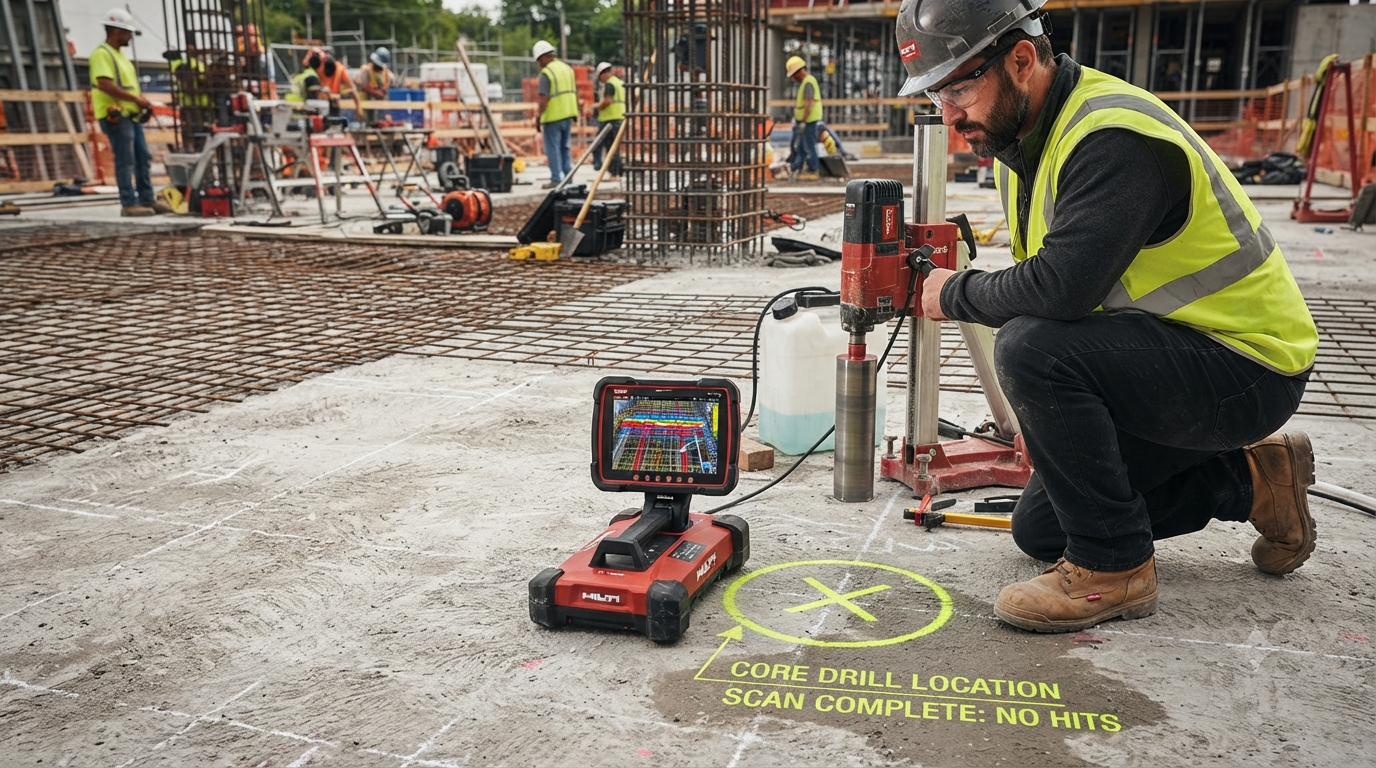
Mapping: The technician marks the safe spots directly on the surface, allowing the core cutting team to drill with confidence.
People Also Ask (PAA)
Q: Is concrete scanning 100% accurate? A: While GPR is highly accurate, its effectiveness depends on the technician's experience, the moisture content of the concrete, and the presence of dense rebar mesh. At [[email protected]], we combine advanced technology with expert analysis to maximize precision.
Q: Can GPR detect plastic pipes? A: Yes, GPR can detect non-metallic conduits, including plastic or PVC, provided there is a sufficient dielectric contrast between the pipe and the surrounding concrete.
Q: What is the difference between X-ray and GPR for concrete? A: X-ray provides high-resolution images but requires access to both sides of the concrete and poses radiation risks. GPR is non-invasive, radiation-free, and requires access to only one side of the slab, making it the preferred choice for most construction sites.
Q: How much does it cost to scan concrete? A: The cost varies based on the size of the area, the depth of the scan, and the site location. However, it is always a fraction of the cost required to fix a severed utility or compromised structural beam. Contact us at [[email protected]] for a professional quote.
Best Practices for Core Cutting Projects
To ensure your project runs smoothly, follow these industry-standard steps:
-
Consult with Experts: Before scheduling your drilling crew, reach out to a professional scanning service.
-
Mark the Site: Clearly delineate the areas where cutting will occur.
-
Perform the Scan: Have a certified technician perform the GPR sweep.
-
Review the Findings: Look for "hyperbolic arcs" or linear patterns that indicate potential obstructions.
-
Execute the Cut: Only proceed with drilling once the path has been cleared and verified by the scanning team.
Conclusion
Concrete scanning is not just a regulatory box to check; it is a critical operational safeguard. Whether you are performing a small home renovation or managing a large-scale commercial structural modification, the risks of hitting an unseen obstacle are too high to ignore.
By choosing professional services, you ensure that your project remains on schedule, on budget, and—most importantly—safe. For reliable, expert-backed services, reach out to the professionals at [email protected]. Don’t drill in the dark—let us help you see the unseen.
Disclaimer: This blog is for informational purposes. Always hire certified professionals for structural assessments and construction work.
Follow-up Question: Are you planning a specific renovation project that requires core cutting, and would you like more information on the types of concrete scanning tools that would best suit your slab thickness?