
Introduction
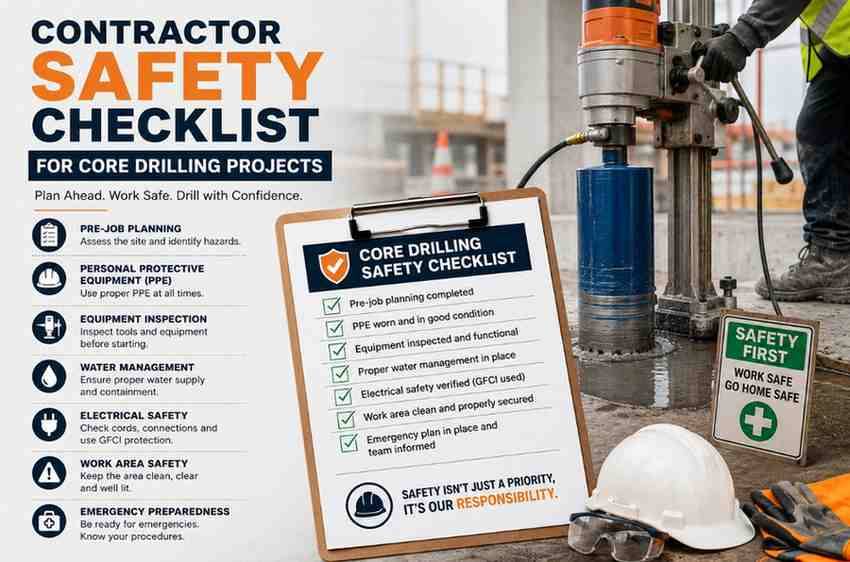
Core drilling is an indispensable operation in modern construction, infrastructure development, and civil engineering. Whether creating openings for utility pipes, electrical conduits, HVAC systems, or extracting material samples for structural analysis, precision diamond core drilling delivers clean, accurate results. However, beneath the precision of diamond-impregnated bits and powerful rotary motors lies a high-risk environment. Heavy machinery, high-voltage electrical lines, structural loads, crystalline silica dust, and high-pressure water utilities create a complex hazard matrix.
For contractors and project managers, ensuring zero accidents is not merely an ethical obligation—it is a business imperative that prevents costly project delays, equipment damage, regulatory fines, and worker injuries. This comprehensive guide provides an exhaustive contractor safety checklist tailored specifically for core drilling projects, helping you safeguard your workforce from pre-planning to project closeout.
Phase 1: Pre-Planning and Risk Assessment
Safety begins long before the drilling rig arrives on site. A proactive pre-planning phase sets the foundation for a hazard-free operation.
1.1 Comprehensive Site Inspection and Utility Locating
Striking an underground or in-wall utility during a core drilling operation can lead to catastrophic consequences, including electrocution, gas explosions, flooding, and structural collapse.
-
Ground Penetrating Radar (GPR): Utilize GPR and electromagnetic locators to scan concrete slabs, walls, and sub-surfaces before marking drill locations.
-
Utility Mapping: Cross-reference physical scans with architectural, electrical, and plumbing blueprints.
-
Permit to Work: Secure all necessary internal and municipal permits, specifically hot work permits and penetration permits.
1.2 Job Safety Analysis (JSA) and Risk Assessment
Every core drilling project possesses unique site-specific challenges.
-
Hazard Identification: Identify potential structural weak points, confined spaces, overhead obstructions, and pedestrian traffic zones.
-
Mitigation Strategies: Formulate clear, written mitigation steps for every identified hazard.
-
Toolbox Talks: Conduct a mandatory pre-shift meeting with all operators, laborers, and site supervisors to review the JSA and ensure total comprehension of emergency stop procedures.
Phase 2: Equipment Inspection and Maintenance
Faulty machinery is a primary contributor to job site injuries. Ensuring your drilling rigs, power sources, and accessories are in pristine condition is non-negotiable.
2.1 Core Drilling Rig Integrity Checks
-
Mounting Systems: Inspect anchor bolts, vacuum pads, and column braces. A slipping rig column can cause the diamond bit to bind, shatter, or whip violently.
-
Motor and Drive Train: Check electric or hydraulic motors for frayed cables, loose connections, fluid leaks, or unusual vibrations. Ensure the clutch mechanism functions smoothly.
-
Water Swivel and Coolant Lines: Inspect water delivery hoses, valves, and swivels for leaks. Adequate water flow is vital to cool the diamond segments and suppress dust.
2.2 Diamond Core Bits and Accessories
-
Segment Inspection: Examine the diamond segments on the core barrel for cracks, excessive wear, or missing segments. Damaged bits can cause sudden torque spikes and kickbacks.
-
Bit Sizing: Ensure the bit diameter matches the drilling motor's capacity and the intended structural opening specifications.
-
Extension Rods: Check all extension rods for straightness, thread integrity, and secure locking pins.
Phase 3: Personal Protective Equipment (PPE) Compliance
Core drilling generates substantial noise, flying debris, slurry, and physical strain. Standard construction PPE must be supplemented with specialized gear.
3.1 Essential PPE Checklist
-
Eye and Face Protection: ANSI-approved safety glasses with side shields and full-face shields to protect against high-velocity concrete chips and slurry splash.
-
Respiratory Protection: NIOSH-approved respirators (N95 or P100 minimum) to prevent the inhalation of hazardous crystalline silica dust when dry cutting or cleaning up slurry residue.
-
Hearing Protection: Earplugs or earmuffs with a high Noise Reduction Rating (NRR) to combat the intense decibel levels emitted by high-speed drilling motors.
-
Hand Protection: Heavy-duty, vibration-dampening work gloves. Crucial Safety Rule: Never wear loose gloves that can get caught in a rotating drill spindle.
-
Footwear: Steel-toed, waterproof safety boots with slip-resistant soles to protect against falling core cylinders, heavy equipment, and wet, slick flooring.
-
Apparel: High-visibility vests and snug-fitting clothing with no loose drawstrings or cuffs that could snag in rotating machinery.
Phase 4: Environmental and Health Hazard Controls
Core drilling operations release specific environmental hazards that require active engineering controls to protect workers and the surrounding environment.
4.1 Crystalline Silica Dust Management
Inhaling respirable crystalline silica dust generated during concrete cutting causes severe lung diseases, including silicosis and lung cancer.
-
Wet Cutting Method: Whenever feasible, employ wet cutting techniques. Continuous water feed suppresses dust at the point of creation, trapping particles in water.
-
Dust Collection Systems: If dry cutting is mandated due to job site constraints, utilize industrial-grade HEPA-filtered dust shrouds and vacuum extraction systems.
-
Air Monitoring: Conduct routine particulate monitoring in enclosed or poorly ventilated indoor spaces.
4.2 Slurry Containment and Waste Management
Concrete slurry is highly alkaline and can damage skin, eyes, and local drainage systems if left unmanaged.
-
Slurry Rings and Shields: Attach rubber slurry collection rings connected to a wet/dry vacuum system directly beneath the drill bit.
-
Disposal Protocols: Neutralize and dispose of slurry in accordance with local environmental regulations. Never allow slurry to flow directly into storm drains.
Phase 5: Operational Safety During Execution
When drilling commences, operator focus, machine handling, and site control dictate safety success.
5.1 Safe Operating Procedures
-
Secure Stance and Balance: Maintain a firm, balanced footing. Never overreach or force the drill bit into the material; allow the weight and cutting speed of the diamond segments to do the work.
-
Starting the Hole: Start the hole at a slow RPM with light pressure to establish a clean groove, preventing the bit from skating across the concrete surface.
-
Core Barrel Extraction: Use proper lifting mechanics or mechanical lifting aids when removing heavy core samples from deep holes or overhead installations.
-
Managing Core Catchers: Ensure core wedges or retrieval tools are used safely when core samples threaten to break loose mid-cut and jam the barrel.
5.2 Managing Binding and Kickback
-
Immediate Shutdown: If the drill bit binds in the hole, immediately shut off the power source. Do not attempt to free a jammed bit while the motor is engaged.
-
Torque Control: Ensure mechanical slip clutches or electronic overload protectors are active and calibrated to prevent operator wrist or arm injuries caused by sudden rotational kickback.
Phase 6: Electrical and Hydraulic Safety
Core drilling rigs require substantial power inputs, typically running on high-voltage electricity or heavy-duty hydraulic power packs.
6.1 Electrical Safety Protocols
-
GFCI Protection: Ensure all electrical cords, generators, and outlets are equipped with operational Ground Fault Circuit Interrupters (GFCIs) to prevent electrocution in wet working conditions.
-
Cable Management: Route electrical cords away from standing water, sharp edges, and heavy equipment traffic to prevent insulation damage and tripping hazards.
-
Lockout/Tagout (LOTO): Implement strict LOTO procedures when servicing, repairing, or changing bits on drilling equipment.
6.2 Hydraulic Safety
-
Pressure Relief: Depressurize hydraulic lines before connecting or disconnecting hoses.
-
Hose Inspection: Check hydraulic hoses for bulges, pinhole leaks, or excessive wear. High-pressure fluid injection injuries require immediate emergency medical attention.
Phase 7: Post-Operation, Clean-Up, and Maintenance
Safety protocols do not end when the final hole is drilled. Proper wrap-up ensures site safety for incoming trades and preserves equipment longevity.
7.1 Site Housekeeping
-
Debris Removal: Clear away sharp concrete edges, core pieces, and leftover aggregate to prevent slip and trip hazards.
-
Water Cleanup: Thoroughly dry down work areas to eliminate slip hazards on concrete and steel flooring.
-
Warning Barricades: Maintain safety cones, caution tape, and physical barriers around unfinished penetrations until temporary or permanent covers are securely installed.
7.2 Equipment Post-Check
-
Post-Shift Inspection: Clean slurry and debris off drill motors, stands, and bits. Inspect for any cracks or operational wear incurred during the shift.
-
Log Maintenance: Record any equipment malfunctions in the maintenance logbook and tag out damaged tools immediately for repair.
Conclusion
Core drilling projects demand rigorous attention to detail, disciplined adherence to safety regulations, and unwavering respect for heavy equipment and structural forces. By meticulously following this comprehensive contractor safety checklist—from pre-planning utility clearances and enforcing rigorous PPE standards to managing silica dust and post-operation clean-up—contractors can drastically mitigate workplace risks. Prioritizing safety protects your most valuable asset: your workforce, while establishing your reputation for reliability, professionalism, and excellence in the concrete cutting industry.
For professional guidance, expert consultation, and certified core drilling services, reach out to our team at [email protected].