
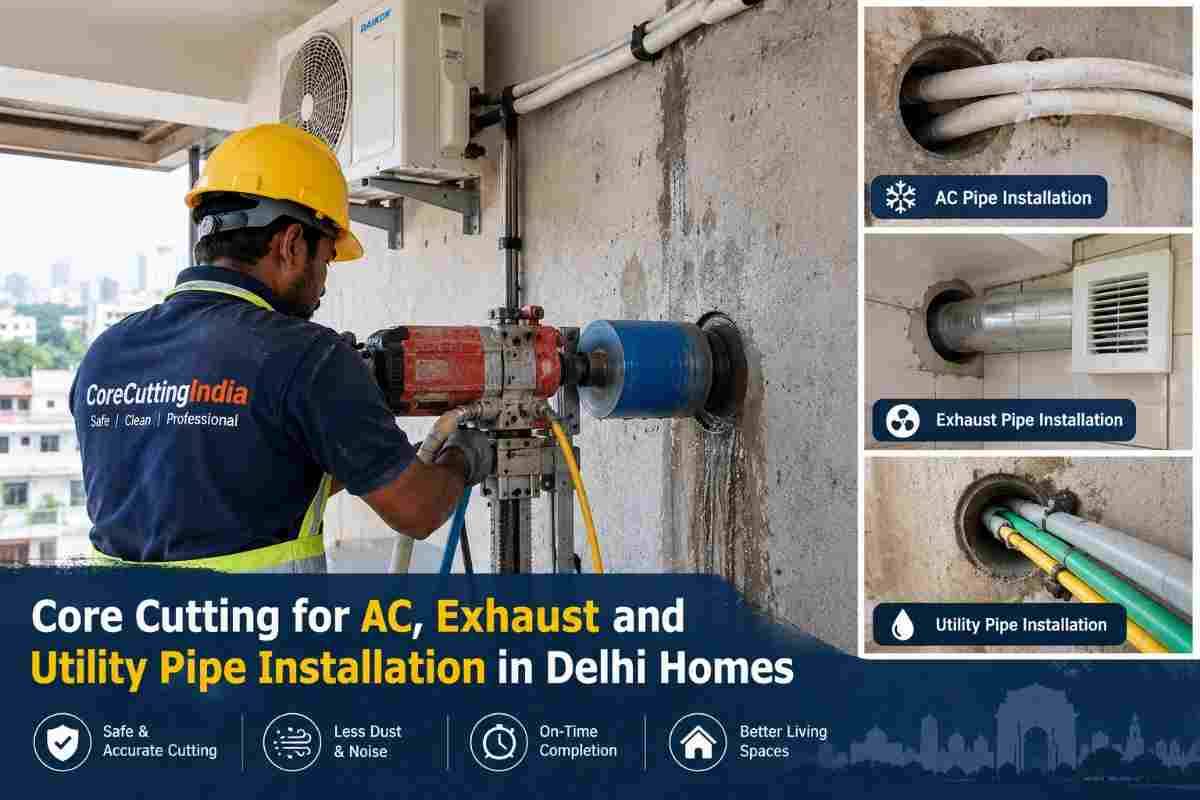
Anyone who has lived through a Delhi summer knows an air conditioner is a necessity. Delhi homes also need kitchen exhausts, drainage lines, water pipes, gas lines and cable conduits, and every one of them needs an opening through a wall, beam or slab. How that opening is made decides whether the finished job looks neat or damaged.
That is where core cutting comes in. At CoreCuttingIndia, we have seen what happens when a hammer and chisel are used for a job that needs a diamond drill. In this guide, we explain how core cutting works, why it suits Delhi’s building types, and what to know before you book a service for AC, exhaust or utility pipe installation.
What Is Core Cutting?
Core cutting, also called core drilling, makes precise round holes in concrete, brick, stone and masonry using a diamond-tipped hollow drill bit. The bit spins at high speed and grinds through the material, leaving a clean cylindrical “core” that is removed intact.
Unlike a hammer drill or chisel, which break material by impact, a core drill cuts it by abrasion. The result:
- Smooth, accurate holes that match the pipe diameter
- Minimal vibration, so the surrounding wall is not cracked or loosened
- Far less dust and noise than demolition-style methods
- Neat edges that need little or no repair
Core cutting can be done at almost any angle (horizontal, vertical or inclined) and in diameters from about 25 mm to several hundred millimetres, which makes it suitable for nearly every residential need.
Why Delhi Homes Need Core Cutting
Delhi’s housing is varied. You might be in a DDA flat in Dwarka, a builder floor in Rohini, a high-rise in Noida-adjacent Delhi, a kothi in South Delhi or an older house in Old Delhi. Each has its own construction challenges.
1. Dense, reinforced construction. Most Delhi structures use RCC (reinforced cement concrete) frames with brick or block infill. Chiseling through a beam or column can damage the steel reinforcement, while core cutting is controlled and predictable.
2. Tightly packed, shared buildings. In apartments and multi-storey builder floors, noise and vibration travel through the structure. Neighbours, RWAs and elderly residents will thank you for choosing a quieter method.
3. Dust and pollution concerns. Delhi’s air is already a problem. Wet core drilling suppresses dust at the source, keeping your home and lungs cleaner.
4. Finished interiors. Most homes have painted walls, modular kitchens, wooden panelling, tiles and false ceilings. A chiseled hole can crack tiles, chip paint and ruin expensive finishes. A core-cut hole stays contained.
5. Strict society rules. Many societies limit working hours and ban heavy demolition. Core cutting is typically more acceptable because it is controlled and less disruptive.
Core Cutting for AC Installation
Split ACs need a hole through the exterior wall so the copper refrigerant pipes, drain pipe and electrical cable can run between the indoor and outdoor units.
Why core cutting is the better way
A badly made AC hole causes problems for years:
- Water seepage. A rough, oversized hole is hard to seal and lets monsoon water into the wall.
- Poor drainage. A hole that slopes the wrong way makes condensate drip back into the room.
- Pest entry. Gaps around pipes invite lizards, insects and birds.
- Structural damage. Chiseling can crack plaster and loosen bricks, especially in older Delhi buildings.
A core drill gives a clean circular hole, normally in the 50 mm to 80 mm range depending on the AC model, pipe bundle and insulation. Because the hole is accurate, you can seal it neatly with a pipe sleeve and sealant.
Tips for AC hole positioning
- Keep the hole slightly sloped outward (about 5 to 10 degrees) so condensate drains away from the room.
- Plan the location before the AC is delivered, so the indoor unit sits at the ideal height and the pipe run is short.
- Avoid drilling too close to window frames, beams or electrical points.
- Use a PVC sleeve through the hole to protect the pipes and provide a clean finish.
- For high-rise apartments, confirm society rules on outdoor unit placement before drilling.
Core Cutting for Exhaust Fans, Chimneys and Ventilation
Indian cooking, with its tadka, frying and heavy spices, makes kitchen ventilation essential. Bathrooms, laundry areas and utility rooms also need exhaust points, and kitchen chimney ducts must exit to the outside.
Typical hole sizes
- Bathroom exhaust fans: commonly 100 mm to 150 mm
- Kitchen exhaust fans: often 150 mm to 250 mm
- Chimney ducts: typically 150 mm and above, depending on duct size
- Dryer vents: usually around 100 mm
Cutting these larger holes by hand is slow, messy and risky, especially in thick brick walls or RCC. Core cutting handles large diameters cleanly, and the smooth edge makes it easy to fit exhaust sleeves, louvres or ducting.
Kitchen-specific cautions
Modular kitchens in Delhi homes are costly, with polished tiles, granite counters and tall units. Core drilling lets the opening be made without vibration cracks to adjacent tiles. Always mark the position carefully so the hole aligns with the duct and chimney placement.
Core Cutting for Utility Pipes
Beyond ACs and exhausts, every home needs various pipes and conduits through walls and slabs. Core cutting works well for:
Plumbing and water supply lines. Whether you are renovating a bathroom or adding a water purifier, geyser or RO line, you often need new openings through walls or floors.
Drainage and soil pipes. Slab penetrations for soil pipes and floor drains must be precise to avoid leaks to the floor below. Core-cut holes make waterproofing sleeves and sealants far more effective.
Gas pipelines. Piped natural gas is expanding across Delhi. Pipes passing through walls need a well-fitted, properly sealed opening, and a clean core-cut hole is much easier to make compliant.
Electrical and data conduits. CCTV cables, internet lines, intercoms and solar wiring all need discreet wall or slab passages.
Rainwater and terrace drainage. Terrace drain pipes and rainwater harvesting lines often require vertical cores through slabs.
Solar and rooftop installations. Cable entries from rooftop panels into the home are best made with small, neat cores that can be waterproofed properly.
Core Cutting vs. Traditional Chiseling
| Factor | Core Cutting | Traditional Chiseling |
|---|---|---|
| Hole accuracy | Precise and circular | Irregular, often oversized |
| Vibration | Very low | High, can crack walls |
| Dust | Low with wet drilling | Heavy |
| Noise | Moderate | Loud and prolonged |
| Risk to structure | Lower, controlled | Higher |
| Finishing work | Minimal | Extensive patching |
| Sealing and waterproofing | Easy | Difficult |
Chiseling may look cheaper at first, but the hidden cost of repairing plaster, repainting, re-sealing and fixing leaks often makes it the more expensive choice.
How the Core Cutting Process Works
A professional job typically follows these steps:
1. Site inspection and marking. The technician checks the wall or slab, discusses the pipe size and angle, and marks the exact spot.
2. Scanning for hidden services. Delhi walls often contain concealed electrical conduits, water lines and steel bars. Professionals use scanners or careful inspection to avoid hitting them.
3. Machine setup. The drilling rig is anchored or fixed to the surface with a vacuum base or anchor bolt so it stays steady.
4. Wet drilling. Water is fed to the bit to cool it, reduce dust and flush out slurry.
5. Core removal. The cylindrical core is pulled out, leaving a clean opening.
6. Cleaning and finishing. Slurry is wiped up and the hole is checked for size, slope and alignment.
7. Sleeving and sealing. A sleeve is fitted if needed, and gaps are sealed to keep out water, pests and air leaks.
Safety and Structural Considerations
A hole in a wall is not always harmless. Keep these points in mind:
- Never drill through structural elements casually. Beams, columns and shear walls carry load. If the opening is near them, a structural engineer should be consulted.
- Watch for rebar. Cutting through reinforcement bars can weaken a member. Scanning and planning help avoid this, and an engineer should approve cuts that must pass through steel.
- Post-tensioned slabs. Some modern buildings use post-tensioned cables. Cutting into these is dangerous. Check building drawings before drilling slabs.
- Check existing utilities. Water, electrical and gas lines may be concealed in the wall.
- Follow society and building norms. Get written permission from your RWA or society where required, particularly for facade-facing holes.
Responsible contractors will raise these questions before starting, not after.
Factors That Affect Core Cutting Cost in Delhi
Pricing differs between providers and jobs. The main factors are:
- Hole diameter. Larger holes cost more.
- Depth and thickness. A thick RCC wall takes longer than a thin brick one.
- Material. Reinforced concrete is harder than brick or block.
- Floor and access. Upper floors, balconies and awkward spots may need extra setup.
- Number of holes. Many providers offer better rates for multiple cores in one visit.
- Power and water availability. Jobs without easy access to either may need extra arrangements.
- Urgency. Same-day or emergency work can cost more.
Ask for a clear quote that states per-hole pricing, diameter, and whether cleanup is included.
Common Mistakes to Avoid
Choosing the cheapest option blindly. Low rates sometimes mean poor equipment, untrained operators or skipped safety checks.
Skipping planning. Marking the hole position casually can leave you with misaligned pipes or an AC that needs awkward bends.
Ignoring slope. For ACs and drains, the wrong gradient causes leaks and overflow.
Forgetting waterproofing. An unsealed hole is a path for monsoon water into your wall.
Not protecting the interior. Furniture, flooring and modular units should be covered before drilling starts.
Drilling without permission. In societies and leased properties, unauthorised alterations can cause disputes.
How to Choose a Core Cutting Service in Delhi
When comparing providers, look for:
- Experience with residential work, not only industrial or commercial sites
- Modern diamond core drilling machines and a range of bit sizes
- Trained operators who understand rebar, slopes and finishing
- Dust and slurry control so your home stays clean
- Transparent pricing with no surprise charges
- Prompt service across Delhi, including colonies and societies with timing restrictions
- Willingness to inspect first for complex jobs
At CoreCuttingIndia, we focus on clean, precise and dependable core cutting for homes, so your AC, exhaust and pipe installations are done right the first time.
Aftercare: Keeping Your Penetrations Leak-Free
Once the pipes are in, a little follow-up goes a long way:
- Fill gaps around pipes with non-shrink grout or quality sealant.
- Use weatherproof sealant on the exterior side, especially around ACs.
- Check the hole after the first heavy rain for damp patches.
- Re-seal periodically if you see cracks or peeling.
- For slab penetrations, confirm that waterproofing is continuous around the pipe.
Frequently Asked Questions
Is core cutting safe for my apartment?
Yes, when done by trained professionals who check for hidden services and avoid structural elements. It is generally safer than chiseling because it produces far less vibration.
What size hole is needed for a split AC?
Most split ACs need a hole of roughly 50 mm to 80 mm, depending on the pipe bundle and insulation. Your AC installer can confirm the exact size for your model.
Can core cutting be done in an RCC wall or slab?
Yes. Diamond core drilling is designed for reinforced concrete, though cuts near beams, columns or post-tensioned slabs need extra care and sometimes engineering advice.
Does core cutting create a lot of dust or noise?
Wet core drilling keeps dust low, and noise is moderate and short-lived compared with chiseling. This makes it more comfortable for occupied homes.
How long does a core cutting job take?
A standard AC or exhaust hole usually takes a short time once the machine is set up. Thicker walls, larger diameters and difficult access take longer.
Do I need permission from my society before core cutting?
Often yes, especially for holes on the exterior or shared facade. Check your RWA or society rules before booking.
Can I use the same hole for multiple pipes?
For AC lines, yes, since the refrigerant pipes, drain and cable usually share one opening. Other utilities generally need separate, properly sealed holes.
How do I prevent leaks after drilling?
Use a sleeve, seal gaps with suitable sealant or grout, and make sure the exterior side is weatherproofed.
Final Thoughts
Installing an AC, exhaust or utility pipe in a Delhi home should not mean broken walls, dust-filled rooms and leaking holes. Core cutting gives accurate openings with minimal damage, easier sealing and a cleaner finish than traditional methods, which matters in a city of RCC buildings, packed societies and finished interiors.
Whether you are setting up a new AC, adding a kitchen chimney, running a gas line or renovating a bathroom, plan the hole properly, check for hidden hazards and use a professional service.
Need clean, precise core cutting in Delhi? Visit CoreCuttingIndia.com to get in touch and book a service for your home.