
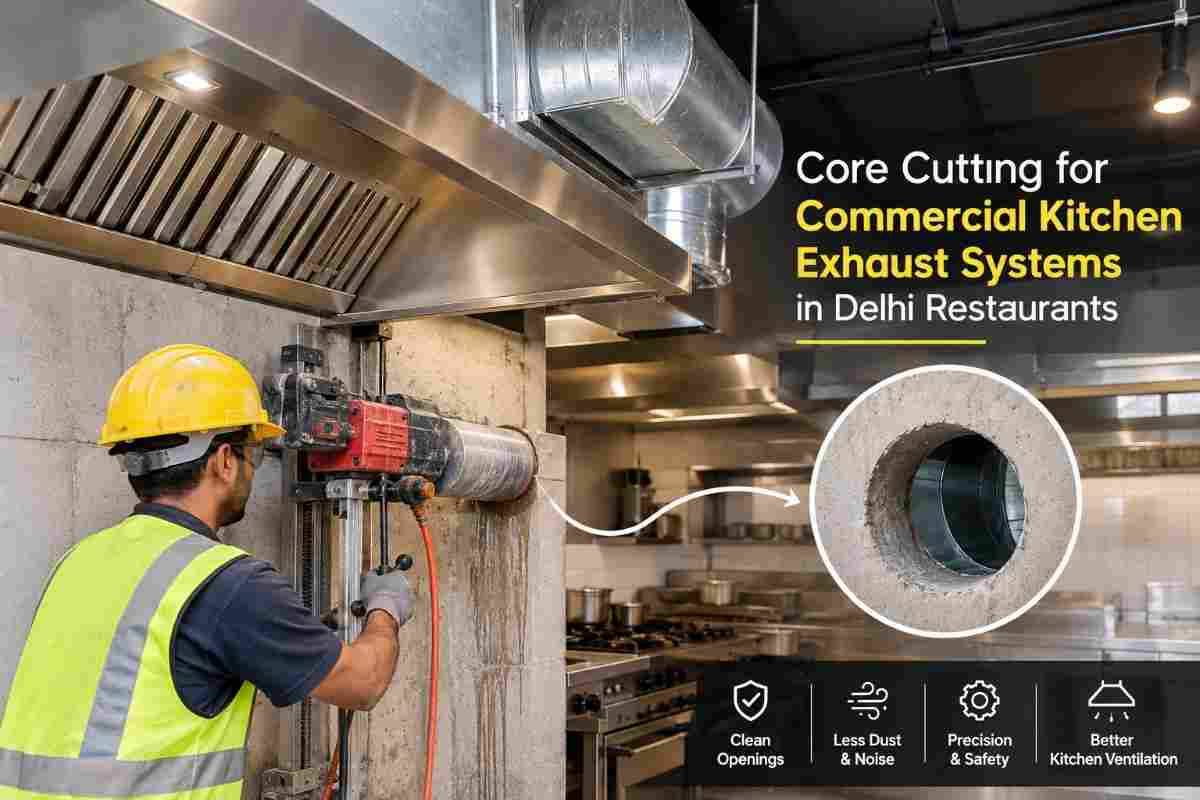
Delhi’s restaurant scene is one of the busiest in India. From heritage eateries in Old Delhi to rooftop lounges in Connaught Place, cloud kitchens in Okhla and fine-dining rooms in Aerocity, thousands of kitchens run for hours every day. Behind every successful kitchen is an exhaust system that works properly, and installing one in a concrete building usually begins with core cutting.
This guide explains what core cutting is, why it matters for commercial kitchen exhaust systems, and how Delhi restaurant owners, architects and contractors can plan the work. It also covers the common mistakes that cause delays, damage and compliance trouble. The expertise described here reflects the practical standards followed by CoreCuttingIndia.
Why Exhaust Systems Matter in Delhi Restaurant Kitchens
A commercial kitchen produces heat, grease-laden vapour, smoke, steam and cooking odours in large quantities. Tandoors, deep fryers, charbroilers and wok ranges make the load much heavier than in a home kitchen. Without proper extraction, a restaurant faces several problems:
- Fire risk: Grease builds up inside ducts and hoods and can ignite.
- Poor air quality: Staff work in heat and smoke, which affects health, productivity and retention.
- Customer complaints: Odours drifting into dining areas or neighbouring properties hurt reputation and invite complaints.
- Regulatory issues: Fire, health and licensing authorities expect adequate ventilation.
- Equipment damage: Heat and moisture shorten the life of appliances and finishes.
Delhi adds its own pressures. Summer temperatures are extreme, many restaurants occupy older RCC buildings with limited shaft space, and shared walls and floors mean any extraction route must be planned carefully. A well-designed exhaust system solves these problems, but it needs openings in the building structure, and that is where core cutting comes in.
What Is Core Cutting?
Core cutting, also called diamond core drilling, is a method of making precise, circular holes in concrete, reinforced cement concrete (RCC), brick, stone and masonry. A hollow cylindrical drill bit with diamond segments on its cutting edge rotates at controlled speed, usually with water to cool the bit and suppress dust. The bit cuts a clean ring through the material and leaves a solid cylinder, the “core”, which is removed.
Compared with breaking a hole by hammering or chiselling, core cutting offers clear advantages:
- Accuracy: Holes match the required diameter closely, with smooth edges.
- Minimal vibration: Surrounding structure and neighbouring units are far less disturbed.
- Lower noise and dust: This matters in occupied buildings, malls and mixed-use complexes.
- Structural safety: Controlled cutting reduces the chance of cracks spreading through slabs and walls.
- Clean finish: Less patching and finishing work afterwards.
For a restaurant fit-out on a tight schedule, these benefits save both time and money.
How Core Cutting Fits Into a Commercial Kitchen Exhaust Installation
A typical commercial exhaust system includes a hood over the cooking line, grease filters, ductwork, an exhaust fan or blower, and a discharge point. Often a make-up air system supplies fresh air to balance what is extracted. Core cutting is usually needed at these points:
1. Duct Penetrations Through Walls and Slabs
Exhaust ducts rarely run in a straight line from the hood to the outdoors. They pass through partition walls, shear walls, beams or floor slabs. Core cutting creates openings of the right diameter for round ducts, or a series of overlapping cores for larger and rectangular openings.
2. Vertical Shafts and Riser Openings
In multi-storey buildings, a restaurant on the first or second floor may need to route its duct vertically to the terrace. Core cutting forms the slab openings for these risers, often at several floor levels.
3. Fresh Air and Make-Up Air Openings
Balanced ventilation needs fresh air intake. Core-cut openings in external walls allow intake ducts or louvres to be installed neatly.
4. Services Around the Kitchen
The same project may need openings for plumbing drains, gas lines, electrical conduits, fire-suppression piping and refrigeration lines. Core cutting handles all of these with the same precision.
5. Grease Drain and Cleaning Access Points
Some systems need small openings for grease drainage lines or inspection ports, which core drilling makes cleanly.
Planning the Core Cutting Work: Step by Step
Good results start long before the machine arrives. Here is a practical sequence for Delhi restaurant projects.
Step 1: Review Drawings and Structure
Check architectural and structural drawings, if available, to understand where beams, columns, slabs and walls sit. Older Delhi buildings may lack reliable drawings, so a site survey is essential.
Step 2: Scan for Hidden Elements
Before cutting, the area should be checked for rebar, post-tension cables, electrical conduits and water or gas lines embedded in concrete. Scanning equipment such as GPR (ground penetrating radar) or rebar detectors helps avoid costly and dangerous strikes.
Step 3: Decide on Hole Size and Location
The duct diameter, insulation thickness, fire-rated sleeve requirements and clearance for installation all affect the final hole size. Aim for a snug fit that still leaves room for sealing, and avoid cutting through main structural reinforcement wherever possible.
Step 4: Get Approvals
Cutting through structural elements, especially beams and slabs, may need approval from the structural engineer, the building owner or the housing society. In malls and commercial complexes, the facility management team often has its own rules and working hours. For fire-related requirements, restaurant owners should confirm the current rules with the relevant authority, such as the Delhi Fire Service, and with their consultants.
Step 5: Mark and Prepare
Accurate marking on the wall or slab guides the work. The site should be protected with floor covering, and water and slurry management arranged. Nearby furniture, equipment and finishes should be covered or moved.
Step 6: Execute the Core Cutting
Experienced operators use a rig-mounted or hand-held drilling machine, depending on hole size, orientation and access. Water-cooled drilling keeps dust low. Slurry is collected and removed so floors and ceilings below stay clean.
Step 7: Install Sleeves and Seal
Once cores are removed, duct sleeves are fitted and gaps sealed with suitable fire-rated or non-combustible materials where required. Proper sealing prevents smoke spread, noise leakage and pest entry.
Common Core Cutting Mistakes in Restaurant Exhaust Projects
Many problems with kitchen ducting trace back to poorly planned openings. Watch for these:
- Cutting without scanning: Hitting rebar or a live conduit can damage the drill bit, weaken the structure or create a safety hazard.
- Wrong hole size: An opening that is too small forces rework, and one that is too large makes sealing difficult.
- Ignoring slab and beam locations: Cutting through the wrong part of a beam can compromise structural integrity.
- Skipping dust and slurry control: In a finished building, uncontrolled water and slurry can damage ceilings, equipment and neighbouring units.
- Working at the wrong time: Noise and disruption in malls or shared buildings can lead to complaints or stoppages. Schedule work within permitted hours.
- Poor coordination with HVAC and fire contractors: Core cutting should match the exact duct routing, so coordinate early.
- Choosing on price alone: Cheap, unskilled cutting often costs more after repairs and delays.
Choosing the Right Core Cutting Contractor in Delhi
Delhi has many core cutting providers, but quality varies. When choosing one for a commercial kitchen project, look for:
- Relevant experience: Ask about previous restaurant, hotel, mall or commercial kitchen work.
- Modern equipment: Quality diamond bits, rig-mounted machines and dust-control gear give better results.
- Range of sizes: A good contractor handles small pipe holes up to large duct and shaft openings.
- Site safety practices: Trained operators, proper PPE and safe water and power handling matter.
- Clear quotations: A professional quote explains hole sizes, depths, quantities and any extras.
- Flexible scheduling: Many restaurants need work done at night or on off-days to avoid lost trade.
- Clean working methods: Slurry management and tidy-up should be part of the service.
- Reputation and references: Reviews and past clients give a realistic picture.
A specialist provider such as CoreCuttingIndia focuses on precision concrete cutting and drilling for commercial and industrial sites, which suits the demands of restaurant exhaust installations.
Core Cutting vs. Other Methods for Exhaust Openings
| Method | Best For | Drawbacks |
|---|---|---|
| Core cutting (diamond drilling) | Round holes in concrete, RCC, brick | Needs water and power supply |
| Wall sawing / slab sawing | Large rectangular openings | Needs space and a heavier setup |
| Hammer drilling / breaking | Very small, non-critical holes | High vibration, ragged edges, risk of cracks |
| Wire sawing | Very thick or hard-to-reach elements | Specialised and more costly |
For most kitchen exhaust ducts, risers and service penetrations, core cutting is the most practical and cost-effective option. Large rectangular openings may need a combination of core cutting and wall sawing, and an experienced contractor can advise which suits the job.
Safety, Fire Protection and Compliance Considerations
Exhaust systems are closely tied to fire safety. While core cutting creates the opening, what happens afterwards matters just as much.
- Fire-rated sealing: Where ducts pass through fire-rated walls or floors, the gaps around them should be sealed with approved materials, following the applicable codes and consultant guidance.
- Grease duct design: Ducts carrying grease-laden air should follow recognised design practice, including cleaning access, suitable materials and clearances from combustible items.
- Structural safety: Never cut structural members without engineering advice.
- Gas and electrical safety: Isolate and mark utilities before cutting.
- Workplace safety: Use PPE, maintain safe water and electrical connections, and keep the work area barricaded.
Rules and approvals can change and depend on the building type, so always check current requirements with your architect, fire consultant and local authorities. This article is general guidance and not legal or engineering advice.
Tips to Save Time and Cost on Your Restaurant Project
- Involve the core cutting contractor early. Scheduling cuts before finishing work avoids damage to new interiors.
- Finalise duct routes before drilling. Changes after cutting mean extra holes and cost.
- Combine all penetrations into one visit. Exhaust, plumbing, electrical and gas openings can be done together.
- Confirm access and utilities. Reliable power and water supply speeds up the job.
- Plan debris and slurry removal. This is especially important in upper floors and malls.
- Keep a margin for reality. Older Delhi structures can hold surprises, such as dense reinforcement or undocumented pipes.
Why Delhi Restaurants Need Local Expertise
Working in Delhi brings conditions that outside contractors may not anticipate:
- Mixed building stock: Restaurants sit in old buildings, modern malls, residential-commercial conversions and rooftop spaces, each with different structural conditions.
- Tight timelines: Seasonal and festive peaks, such as the wedding season and Diwali, put pressure on launch dates.
- Congested locations: Markets like Karol Bagh, Lajpat Nagar, Hauz Khas and Connaught Place have limited access, restricted hours and parking issues.
- Climate demands: High summer heat means kitchens need strong, well-designed extraction.
- Multiple stakeholders: Owners, landlords, facility managers and consultants all need coordination.
A contractor familiar with these realities can plan access, timing and logistics, reducing surprises on site.
Frequently Asked Questions (People Also Ask)
What is core cutting in construction?
Core cutting is a method of drilling clean, round holes in concrete, brick or masonry using a hollow diamond-tipped drill bit. It is widely used for pipes, ducts, cables and ventilation openings.
Why is core cutting used for exhaust ducts?
It creates accurate openings with little vibration, dust and structural stress. This lets exhaust ducts pass through walls, slabs and beams cleanly and be sealed properly.
How much does core cutting cost in Delhi?
Cost depends on hole diameter, depth, material, reinforcement density, access, working hours and the number of holes. Larger and deeper holes cost more. Request a site-specific quotation, since flat per-hole rates can be misleading.
Is core cutting safe for RCC slabs and beams?
Yes, when done correctly. Scanning for rebar and utilities, getting structural approval and using experienced operators keep the work safe. Cutting into beams or main reinforcement needs engineer approval.
How long does it take to core-cut a hole for a kitchen exhaust duct?
Small holes can take minutes, while large or deep holes in heavily reinforced concrete can take much longer. Setup, marking and cleanup add time. A good contractor can estimate the duration after a site visit.
Can core cutting be done in an operating building or mall?
Yes. Water-cooled drilling produces less noise, vibration and dust than breaking methods, but you should follow the building’s working hours and rules, and often work at night or off-peak.
What size hole is needed for a commercial kitchen exhaust duct?
It depends on the duct size, insulation, sleeve and sealing requirements. Your HVAC or ventilation designer should specify duct dimensions, and the core cutting size should allow clearance for installation and sealing.
Do I need permission before cutting through a slab or wall?
Often yes. Structural elements may need engineer approval, and building owners, societies or mall management may have their own rules. Check requirements before starting.
What is the difference between core cutting and wall sawing?
Core cutting makes round holes, while wall sawing cuts larger straight-edged or rectangular openings. Many projects use both.
Conclusion
A reliable exhaust system protects your staff, your guests and your business, and every good system starts with accurate openings in the building. For Delhi restaurants, core cutting for commercial kitchen exhaust systems is the cleanest and safest way to route ducts through concrete and masonry, whether the project is a new fit-out, an expansion or a ventilation upgrade.
The recipe for a smooth project is simple: scan before cutting, plan duct routes early, get the right approvals, seal openings properly and hire experienced professionals. Choosing a specialist contractor saves time, avoids structural damage and keeps your opening date on track.
If you are planning a restaurant kitchen exhaust installation in Delhi NCR, visit CoreCuttingIndia to learn about their concrete core cutting and drilling services and request a consultation for your project.