
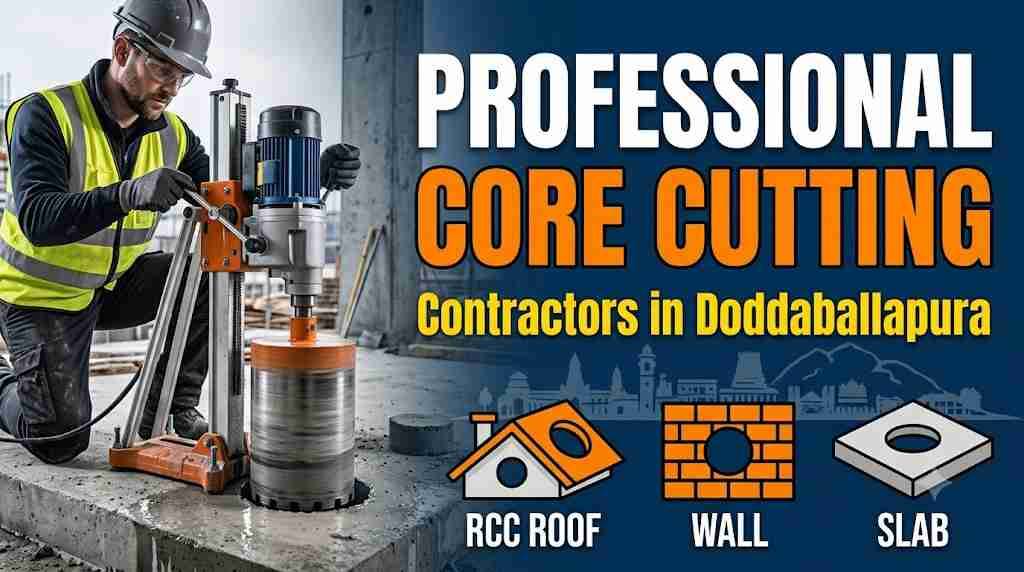
Doddaballapura sits at an interesting crossroads. It is close enough to Bengaluru to feel the pull of the metropolis, yet it has its own identity: a busy industrial belt, textile and manufacturing units, growing housing layouts, warehouses along the highway and a steady stream of homeowners extending or reworking what they already have.
That mix creates a steady need for one specialised trade: cutting reinforced concrete cleanly and safely.
A factory owner wants a new opening for a conveyor. A homeowner wants a staircase to the terrace. A builder needs holes for plumbing and electrical lines. A warehouse manager wants a trench cut across a floor. All of these are jobs for a core cutting contractor, and the difference between a good one and a careless one shows up in cracks, delays and repair bills.
This guide explains what core cutting contractors in Doddaballapura actually do, how roof, wall and slab cutting work, and how to choose the right team.
Quick Answer: What Do Core Cutting Contractors Do?
Core cutting contractors use diamond tools to cut or drill reinforced concrete and masonry with precision. They make round holes with core drills, straight openings in walls with wall saws, floor and roof openings with slab saws, and cut very thick or awkward sections with wire saws. Compared with hammer breaking, diamond cutting gives cleaner edges, far lower vibration and better protection for the surrounding structure.
Why Doddaballapura Has Its Own Cutting Needs
Every area has its own building habits. Here is what typically shapes work in and around Doddaballapura.
- Industrial and factory units. Thick slabs, machine foundations, heavy walls and tight production schedules are common.
- Warehouses and logistics spaces. Floor trenches, door openings, drainage cuts and equipment access need accurate work.
- Growing residential layouts. New homes and extensions often need staircase openings, plumbing holes and AC penetrations.
- Mixed old and new construction. Older structures may lack drawings, while newer ones may carry denser reinforcement.
- Highway access and larger sites. Equipment can usually reach, but planning transport, water and power is still essential.
- Close ties to Bengaluru. Many owners compare contractors across both markets, so expectations are high.
To see how our team works locally, visit our core cutting service in Doddaballapura page.
The Four Main Services Explained
1. Core cutting (core drilling)
A hollow diamond bit drills clean, round holes through concrete. It is used for pipes, cables, ducts, anchors and sampling.
Typical uses: AC lines, plumbing, drainage, conduits, exhaust ducts, anchor bolts.
2. Wall cutting (wall sawing)
A track-mounted diamond saw makes straight cuts through walls.
Typical uses: doors, windows, ventilation openings, equipment access, partition removal.
3. Slab cutting (floor and roof sawing)
A diamond blade saw cuts horizontal surfaces.
Typical uses: staircase openings, lift and shaft openings, trenches, expansion joints, floor cut-outs.
4. Wire sawing
A diamond wire loops through or around concrete and cuts very thick, heavily reinforced or hard-to-reach sections.
Typical uses: columns, beams, heavy foundations, large machine bases, thick walls.
A good contractor will recommend the right method for your site, and many projects combine two or three.
RCC Roof Cutting: What You Need to Know
Roof slabs are among the most sensitive elements in a building. They carry loads, tie walls and beams together and protect the structure from the weather.
Common reasons for roof cutting in Doddaballapura:
- New staircase to the terrace
- Lift installation
- Skylights or light wells
- Service shafts for ducts and pipes
- Structural modifications during extension or renovation
Key steps:
- Structural engineer review. Confirm that the opening is safe and design any strengthening.
- Scanning. Locate rebar, conduits and pipes.
- Marking. Outline the opening and confirm it with the owner and engineer.
- Protection and support. Clear and barricade the area below and use props where required.
- Cutting. Use slab saws or wire saws, with core holes at the corners if needed.
- Lifting. Support the section and lift it out in one piece or in smaller blocks.
- Strengthening and waterproofing. Add edge beams, reinforcement and waterproofing as designed.
Roof cutting during monsoon needs extra care, so plan around the weather where possible.
RCC Wall Cutting: What You Need to Know
Wall cutting is used to create or modify openings in concrete and masonry walls.
Common reasons:
- New door or window openings
- Ventilation and exhaust openings
- Equipment access in factories
- Merging rooms or shops
- Duct and service openings
Key points:
- Check whether the wall is load-bearing. Cutting a load-bearing wall without proper design can cause cracks and instability.
- Plan the size and position. Confirm frame sizes and clearances before cutting.
- Use a track-mounted saw. It keeps the cut straight and controlled.
- Plan finishing. Lintels, frames and plaster should be ready for the opening.
For a closer look at how openings are planned, see our concrete wall cutting guide for Bengaluru.
RCC Slab Cutting: What You Need to Know
Slab cutting applies to floors and roofs and is common in both homes and factories.
Common reasons:
- Staircase and lift openings
- Floor trenches for drains and cables
- Pit and sump openings in industrial floors
- Expansion and control joints
- Removal of old machine bases
- Shaft openings for ducts and risers
Key points:
- Scan first. Slabs may hold conduits, pipes and dense reinforcement.
- Support the cut section. Heavy slab pieces must be controlled before release.
- Control slurry. Water and concrete fines should be collected, not left to spread.
- Strengthen the opening. Edge beams and added reinforcement may be required.
Why Diamond Cutting Beats Hammer Breaking
Many people still break concrete with heavy hammers because it looks cheaper. But breaking comes with real drawbacks:
- High vibration that can crack walls, beams and finishes
- Ragged edges requiring extensive repair
- Bent or damaged reinforcement
- Loud noise and heavy dust
- Unpredictable damage beyond the marked area
Diamond cutting gives a clean, accurate opening that is easier to strengthen, finish and waterproof. In factories and occupied buildings, the reduced vibration alone is worth the choice.
Safety: What a Professional Team Does
Safety separates professionals from risk-takers. A good contractor will:
- Scan for hidden elements before cutting
- Work with a structural engineer where cuts affect load paths
- Mark and confirm cut lines with you
- Protect floors, machines and finishes around the work area
- Use water-cooled blades to control dust
- Protect electrical connections from water
- Support and lift cut sections safely
- Barricade the area and keep people clear
- Wear helmets, gloves, eye and ear protection, masks and safety shoes
- Collect slurry and debris and clean up properly
If a contractor cannot explain these steps clearly, keep looking.
Working in Industrial and Factory Settings
Industrial jobs have additional demands.
- Production schedules. Work is often done during shutdowns, nights or weekends.
- Heavier concrete. Machine foundations and thick slabs may need wire sawing.
- Live equipment nearby. Vibration and dust must be limited around sensitive machines.
- Site safety rules. Induction, permits and PPE are often mandatory.
- Logistics. Water, power and lifting arrangements must be planned in advance.
Share your shutdown window, site rules and drawings early so the contractor can plan properly.
What Affects the Cost of Core Cutting?
Costs vary from project to project. The main factors include:
- Method used (core, wall, slab or wire sawing)
- Concrete thickness and strength
- Density of reinforcement
- Size, length or number of cuts and holes
- Height, access and lifting needs
- Working hours and site restrictions
- Debris and slurry removal
- Travel and mobilisation
For a quick starting estimate, use our core cutting rate calculator. Larger or complex jobs usually need a site visit before a final quote.
How to Choose a Core Cutting Contractor in Doddaballapura
Use this checklist when comparing vendors:
- Relevant experience with similar roof, wall or slab cutting projects
- Proper diamond equipment rather than breakers
- Engineer awareness and willingness to coordinate
- Scanning and planning before cutting
- Clear written quote with scope and exclusions
- Safety practices explained in specific terms
- Prompt communication and reliable timing
- Cleanliness and slurry control
- Local understanding of site conditions and access
Avoid choosing solely on the lowest price. Very cheap quotes often leave out supports, lifting, cleanup or supervision. You can also explore our main concrete cutting services page for an overview of what we offer.
Common Mistakes to Avoid
Skipping the structural engineer. This is the most expensive shortcut.
Cutting without scanning. Hidden conduits and rebar cause avoidable damage.
Using breakers on structural elements. Vibration and rough edges can weaken a structure.
Forgetting temporary supports. Removing slabs or walls without props is dangerous.
Ignoring waterproofing. Open roof edges can leak quickly.
Overlooking approvals. Check local rules, landlord requirements and neighbour concerns.
Underestimating cleanup. Slurry and debris should be part of the plan.
Frequently Asked Questions
What do core cutting contractors do?
They use diamond tools to cut holes, openings and sections in concrete and masonry with precision and low vibration.
Can you cut RCC roofs and slabs in Doddaballapura?
Yes. Roof and slab cutting is common for staircases, lifts, shafts and trenches, but it must be planned with a structural engineer.
Is wall cutting safe for my building?
When planned and supervised properly, yes. Confirm whether the wall is load-bearing and follow the engineer's advice.
Is diamond cutting better than breaking concrete?
For most modifications, yes. It is cleaner, more accurate and causes far less vibration and damage.
How long does cutting take?
Small core holes may take minutes. Wall or slab openings may take hours to a day, while large industrial jobs can take longer.
Can you work in factories and warehouses?
Yes. Industrial sites often schedule work during shutdowns, nights or weekends to avoid disrupting production.
Do you provide core cutting in Doddaballapura?
Yes. Visit our core cutting service in Doddaballapura page or contact us directly.
How do I get a quote?
Send photos, measurements and the purpose of the cut by WhatsApp or email, or use the rate calculator for an estimate.
conclusion
Doddaballapura is growing, and so is the need for precise, safe concrete cutting. Whether you are opening a roof for a staircase, creating a door in a thick wall, trenching a factory floor or drilling holes for services, the right contractor makes the difference between a clean result and a costly repair.
Start with an engineer where needed, scan before cutting, use diamond tools, protect the site and finish the edges properly. That is how good concrete work gets done.
Need Core Cutting in Doddaballapura? Talk to Us Today
At Core Cutting India, we help homeowners, builders and industrial teams with clean, accurate roof, wall and slab cutting, with clear quotes and careful workmanship.
📞 Call now: 7009679903 💬 WhatsApp us: Chat on WhatsApp ✉️ Email: info@corecuttingindia.com
Want a quick estimate? Use our rate calculator or visit our Doddaballapura core cutting service page.
Send a photo of your site and the dimensions on WhatsApp. We will guide you on the next step.