
Commercial property renovation in India has picked up a remarkable pace over the last decade. From ageing office towers in Mumbai's Nariman Point to sprawling IT parks in Bangalore's Whitefield, and retail malls in Delhi NCR to hospitality projects in Pune and Hyderabad, businesses are constantly upgrading their spaces to meet modern standards. One process that quietly powers almost every such renovation, yet rarely gets the attention it deserves, is core cutting.
Whether it's creating a new doorway in a reinforced concrete wall, routing plumbing lines through a slab, or installing HVAC ducts in a shopping complex, core cutting is the technique that makes it all possible without compromising the structural integrity of the building. In this blog, we at Core Cutting India ([email protected]) break down everything property owners, facility managers, architects, and contractors need to know about core cutting during commercial renovation projects.
What Is Core Cutting?
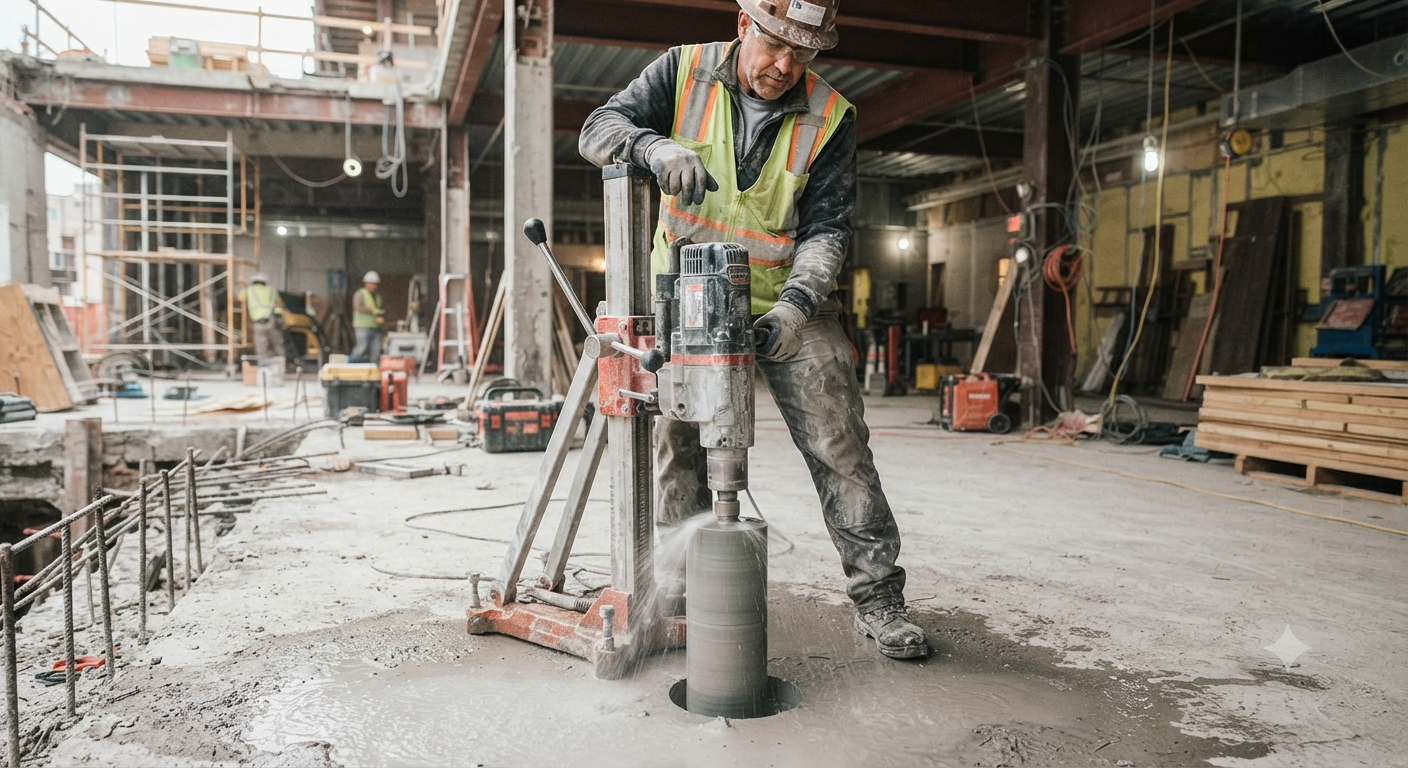
Core cutting, also known as core drilling, is a specialised construction technique used to cut precise, clean holes or openings in concrete, brick, or masonry structures. Unlike traditional demolition methods that rely on hammers or jackhammers, core cutting uses diamond-tipped drilling and sawing equipment to create smooth, accurate cuts with minimal vibration, dust, and noise.
This method is particularly valuable in occupied or partially occupied commercial buildings, where uncontrolled demolition could damage surrounding structures, disturb tenants, or even compromise load-bearing elements. Core cutting allows contractors to make openings of exact dimensions — whether circular holes for pipes and cables or rectangular openings for windows, doors, and ducts — with surgical precision.
Why Core Cutting Is Essential During Commercial Renovation
Commercial renovation projects in India often involve a mix of old and new infrastructure. A 20-year-old office building in Chennai being converted into a co-working space, for instance, may need entirely new electrical risers, fire-fighting lines, and internet cabling routed through existing concrete slabs and walls. Here's why core cutting becomes indispensable in such scenarios:
1. Precision Without Structural Compromise
Commercial buildings, especially RCC (reinforced cement concrete) structures, have load-bearing walls and slabs that cannot be broken carelessly. Core cutting allows contractors to make openings exactly where needed, avoiding rebar damage and maintaining the building's structural strength — something structural engineers in cities like Gurgaon and Noida insist on before approving any renovation plan.
2. Minimal Disruption to Business Operations
Many commercial renovations happen while a business is still partially operational — think of a bank branch renovation in Kolkata or a retail store upgrade in a busy market like Delhi's Connaught Place. Core cutting is a low-noise, low-dust process compared to conventional breaking, making it ideal for spaces where daily operations, customers, or tenants cannot be significantly disturbed.
3. Utility Installation and Upgrades
Renovation projects frequently involve upgrading plumbing, electrical, HVAC, and fire safety systems. Core cutting creates clean pathways for pipes, cables, and ducts through walls, floors, and ceilings — a common requirement in hospital renovations, hotel upgrades, and IT office fit-outs across India.
4. Faster Project Timelines
Because core cutting is precise and doesn't require extensive rework or patching, it speeds up renovation timelines. For commercial property owners paying rent or losing business during downtime, faster execution translates directly into cost savings.
Common Applications of Core Cutting in Indian Commercial Renovation
India's commercial real estate sector is diverse, and so are the applications of core cutting. Here are some real-world scenarios where this technique plays a critical role:
Shopping Malls and Retail Spaces: When malls like those in Mumbai's Andheri or Bangalore's Koramangala renovate their food courts or add new escalators, core cutting is used to create openings for elevator shafts, drainage lines, and structural modifications without shutting down the entire property.
IT Parks and Office Buildings: Tech parks in Hyderabad's HITEC City or Pune's Hinjewadi frequently undergo interior renovations to accommodate new tenants. Core cutting helps install raised flooring cable routes, server room cooling ducts, and additional electrical points.
Hospitals and Healthcare Facilities: Renovating a hospital wing, such as in a private healthcare facility in Chennai or Ahmedabad, requires extremely precise cutting for medical gas pipelines, oxygen lines, and specialised electrical circuits — all while maintaining a sterile, low-disruption environment.
Hotels and Hospitality Projects: When a hotel in Goa or Jaipur renovates its rooms or adds new bathrooms, core cutting is used to install plumbing risers and drainage systems through multiple floors efficiently.
Metro and Transit-Linked Commercial Complexes: With metro rail expansion in cities like Delhi, Mumbai, and Bangalore, many commercial complexes built above or near metro stations require core cutting for utility integration and structural connections during redevelopment.
Banks and Financial Institutions: Bank branch renovations often need secure cable routing for CCTV, alarm systems, and networking — core cutting ensures these installations are clean and code-compliant.
The Core Cutting Process: Step by Step
A professional core cutting project typically follows these stages:
- Site Assessment and Structural Survey: Before any cutting begins, structural drawings are reviewed, and often a rebar scanning or GPR (Ground Penetrating Radar) survey is conducted to locate embedded steel reinforcement, electrical conduits, or plumbing lines. This step is crucial in older Indian commercial buildings where original construction drawings may be incomplete or outdated.
- Marking and Planning: Exact locations and dimensions for the cuts are marked based on architectural and MEP (mechanical, electrical, plumbing) drawings.
- Selecting the Right Equipment: Depending on the material and thickness — whether it's a 150mm RCC slab or a thick masonry wall — contractors choose between handheld core drills, wall saws, or track-mounted drilling rigs.
- Cutting and Drilling: Diamond core bits, cooled with water to reduce dust and heat, are used to bore through the concrete. For larger openings, wire saws or wall saws may be used alongside core drills.
- Debris Management and Cleanup: Wet cutting methods generate slurry that must be collected and disposed of responsibly, especially important in occupied commercial spaces.
- Quality Check and Finishing: The final opening is inspected for accuracy, and edges are finished as required before handing over for the next phase of renovation work, such as pipe or cable installation.
Safety Considerations for Core Cutting in Commercial Buildings
Safety is non-negotiable when cutting into structural elements, particularly in high-footfall commercial properties. Some key safety practices followed by experienced core cutting professionals include:
- Conducting a thorough structural assessment to avoid cutting through primary load-bearing rebar
- Using wet cutting techniques to control dust, which is especially important in enclosed commercial environments like offices and hospitals
- Ensuring proper ventilation and dust barriers in occupied buildings
- Following local municipal and fire safety norms, which vary across Indian states and cities
- Using trained operators who understand both the equipment and the structural implications of cutting into concrete
Given the complexity and risk involved, it's advisable for commercial property owners to work with specialised agencies rather than general contractors for core cutting work.
Choosing the Right Core Cutting Contractor in India
With commercial renovation activity rising across Tier 1 and Tier 2 Indian cities, the demand for skilled core cutting contractors has grown significantly. When selecting a service provider, property owners and facility managers should consider:
- Experience with commercial structures: Cutting in a residential wall is very different from cutting through a post-tensioned slab in a commercial high-rise.
- Availability of modern equipment: Diamond core drills, wall saws, and wire saws suited to different materials and thicknesses.
- Compliance and safety certifications: Ensure the contractor follows recognised safety protocols and has trained personnel.
- Portfolio of past commercial projects: Ask for references from similar projects, such as mall renovations, office fit-outs, or hospital upgrades.
- Turnaround time and minimal disruption guarantees: Especially important for businesses that cannot afford extended downtime.
Cost Factors in Core Cutting Projects
The cost of core cutting during a commercial renovation in India depends on several variables:
- Material and thickness: Cutting through reinforced concrete costs more than cutting through brick or block masonry.
- Diameter and number of cuts: Larger openings and higher volumes typically reduce the per-unit cost.
- Location and accessibility: Upper floors or tightly packed urban sites (common in cities like Mumbai) may require special equipment, increasing costs.
- Presence of reinforcement or utilities: Additional scanning and careful cutting around embedded services adds to project time and cost.
- Urgency and working hours: Night or weekend work to avoid disrupting business hours can affect pricing.
It's recommended to get a detailed site assessment and quotation before starting any large-scale renovation involving core cutting.
Regulatory and Compliance Aspects in India
Commercial renovation projects, particularly those involving structural modifications, often require approvals from local municipal corporations, fire departments, and sometimes structural engineers registered with relevant authorities. Cities like Mumbai, Delhi, and Bangalore have specific building bylaws governing modifications to existing commercial structures. Engaging a core cutting contractor familiar with local regulations helps ensure the renovation proceeds smoothly without compliance issues that could delay project completion.
Conclusion
Core cutting has become an indispensable part of commercial property renovation across India, enabling businesses to modernise their spaces efficiently, safely, and with minimal disruption. From malls and IT parks to hospitals and hotels, this precise cutting technique supports the seamless integration of new utilities and structural changes into existing buildings.
If you're planning a commercial renovation and need reliable, precise, and safe core cutting services, reach out to Core Cutting India at [email protected]. Our experienced team works with architects, contractors, and facility managers across India to deliver clean, accurate, and code-compliant core cutting solutions for every type of commercial project.
Target-Related Searches
- core cutting services in India
- concrete core cutting contractor
- diamond core drilling for commercial buildings
- wall cutting for pipe installation
- slab cutting services near me
- core cutting cost per hole India
- RCC core cutting company
- core cutting for HVAC duct installation
- commercial building renovation contractors India
- core cutting vs wall sawing
People Also Ask
1. What is the difference between core cutting and core drilling? Core cutting is often used as a broader term covering both drilling (for round holes) and sawing (for larger, shaped openings), while core drilling specifically refers to creating circular holes using diamond-tipped drill bits.
2. Is core cutting safe for load-bearing walls? Yes, when done by trained professionals who conduct a structural assessment beforehand to avoid cutting through critical reinforcement or load-bearing sections.
3. How much does core cutting cost in India? Costs vary based on material thickness, hole diameter, location, and project complexity, so it's best to get a site-specific quotation from a professional contractor.
4. Can core cutting be done in occupied commercial buildings? Yes, core cutting is specifically valued for its low noise and reduced dust output, making it suitable for occupied offices, malls, hospitals, and hotels.
5. What equipment is used for core cutting in commercial renovation? Common equipment includes diamond core drills, wall saws, wire saws, and track-mounted drilling rigs, chosen based on material and project requirements.
6. How long does a typical core cutting job take? Timelines depend on the number and size of cuts, material thickness, and site accessibility, ranging from a few hours for small jobs to several days for large-scale renovations.
7. Do I need municipal approval for core cutting during renovation? Structural modifications, including certain core cutting work, may require approval from local municipal authorities or a structural engineer, depending on the scope and city regulations.