
Introduction
India's roads are undergoing a quiet but powerful transformation. As cities embrace the vision of smart infrastructure — sensor-embedded pavements, underground fiber networks, smart traffic systems, and integrated utility corridors — the humble task of cutting into concrete and asphalt has become a critical enabler of this progress. This is where core cutting steps in as an indispensable technique for smart road infrastructure projects.
Core cutting is no longer just about drilling holes or trenches. It is a precision-driven, technology-supported process that allows engineers to install utilities, test pavement quality, and integrate smart sensors without compromising the structural integrity of the road. At Core Cutting India, we specialize in delivering accurate, efficient, and safe core cutting solutions tailored to the demands of modern road infrastructure. In this blog, we explore what core cutting is, why it matters for smart roads, the techniques and equipment involved, and the key considerations for successful project execution.
What Is Core Cutting?
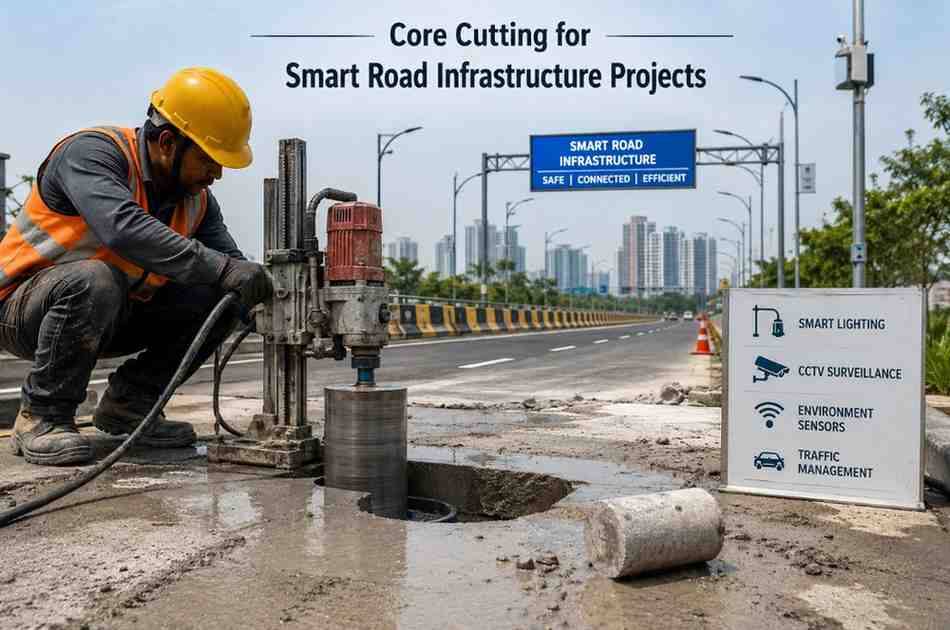
Core cutting is the process of removing a cylindrical or rectangular section of concrete, asphalt, or other hard pavement material using specialized cutting or drilling equipment. Unlike traditional breaking or demolition methods, core cutting is precise, controlled, and minimally disruptive to the surrounding structure.
In road infrastructure, core cutting is typically used to:
- Create openings for utility pipes, cables, and conduits
- Extract samples for pavement quality and thickness testing
- Install manholes, drainage systems, and inspection chambers
- Cut expansion joints and control joints in concrete pavements
- Enable the installation of smart sensors and IoT devices embedded in road surfaces
The technique relies on diamond-tipped core drills, wall saws, or wire saws depending on the depth, material, and location of the cut. Because these tools generate clean, accurate cuts, core cutting significantly reduces collateral damage to the surrounding pavement compared to jackhammering or manual breaking.
Why Core Cutting Matters for Smart Road Infrastructure
Smart road infrastructure projects differ from conventional road construction in one major way: they require extensive integration of technology beneath and within the road surface itself. This includes fiber-optic cables for connectivity, sensors for traffic monitoring, embedded weather and pollution sensors, smart lighting conduits, and utility ducts for electric vehicle charging networks.
Here's why core cutting has become essential to this new generation of road projects:
1. Precision Utility Installation
Smart roads depend on a dense underground network of cables and pipes. Core cutting allows contractors to create precisely sized and positioned openings for these installations without unnecessary demolition. This precision reduces material wastage and keeps restoration costs low.
2. Minimal Disruption to Traffic and Public Life
Smart cities cannot afford prolonged road closures. Core cutting is faster and less invasive than full-scale excavation, which means roads can be reopened to traffic sooner. This is especially valuable in dense urban areas where every hour of road closure impacts commuters and businesses.
3. Structural Integrity Preservation
Unlike breaking methods that create micro-cracks and weaken surrounding concrete, core cutting produces clean edges. This preserves the structural strength of the pavement, which is critical for roads expected to support smart infrastructure components for decades.
4. Enabling Pavement Testing and Quality Assurance
Smart road projects often require ongoing quality checks — core samples are extracted to test pavement thickness, density, and material composition. This ensures the road meets the durability standards required to support embedded technology and heavy traffic loads over time.
5. Supporting Retrofitting of Existing Roads
Not all smart road projects start from scratch. Many involve retrofitting existing roads with new technology. Core cutting makes it possible to integrate modern utilities into older pavement structures without a complete rebuild, saving both time and public funds.
Core Cutting Techniques Used in Road Projects
Different project requirements call for different core cutting methods. Here are the primary techniques used in road infrastructure work:
Diamond Core Drilling
This is the most common method for creating circular holes in concrete and asphalt. Diamond-tipped drill bits rotate at high speed, cutting through the material with minimal vibration and dust. It is widely used for utility pipe installation, sensor housing, and sampling.
Wall Sawing
Wall saws are used for cutting straight lines and openings, such as trenches for cable ducts or expansion joints. They offer high precision and are ideal for larger openings that require clean, straight edges.
Wire Sawing
For thicker or more complex sections, wire sawing uses a diamond-embedded wire to cut through concrete. This method is particularly useful for cutting through reinforced concrete sections found in bridges, flyovers, and heavy-duty road structures.
Flat Sawing (Slab Sawing)
Flat saws are used to cut horizontal surfaces such as road slabs and pavements, commonly used for joint cutting and creating access panels for underground utility work.
Each of these techniques requires trained operators, calibrated equipment, and strict adherence to safety protocols — all of which Core Cutting India ensures on every project.
Equipment and Technology Behind Modern Core Cutting
Smart road infrastructure demands more than just powerful machinery — it requires precision-engineered equipment supported by modern technology. Key equipment used in professional core cutting operations includes:
- Diamond core drilling rigs for accurate vertical and horizontal cuts
- Hydraulic wall saws for controlled, dust-reduced cutting
- Wire saw systems for heavy-duty structural cuts
- Vacuum dust extraction systems to maintain air quality and visibility on-site
- Laser-guided alignment tools to ensure cutting accuracy for utility placement
- Water-cooled cutting systems to reduce heat damage and extend tool life
The use of laser guidance and GPS-based mapping has become increasingly common in smart road projects, allowing crews to cut exactly where underground utility maps indicate, reducing the risk of damaging existing infrastructure.
Applications of Core Cutting in Smart Road Projects
Utility Duct and Cable Installation
Fiber-optic networks, power cables, and smart lighting systems all require underground ducting. Core cutting allows for clean trenching and hole creation without extensive road excavation.
Sensor and IoT Device Embedding
Smart roads increasingly feature embedded sensors that monitor traffic flow, weather conditions, and pavement health. Core cutting creates precise cavities for housing these devices securely within the road structure.
Drainage and Stormwater Management
Efficient road infrastructure requires proper drainage systems. Core cutting is used to install drainage pipes and connect stormwater management systems without disturbing large sections of pavement.
EV Charging Infrastructure
As electric vehicle adoption grows, roads and parking areas need embedded charging infrastructure. Core cutting enables the installation of charging conduits and cabling with minimal surface disruption.
Structural Testing and Maintenance
Routine core sampling helps engineers assess pavement condition, identify weaknesses, and plan timely maintenance — an essential part of maintaining smart road systems over their lifecycle.
Key Considerations for Successful Core Cutting in Road Projects
Executing core cutting on live roads, especially in urban and high-traffic areas, requires careful planning. Here are the factors that determine project success:
1. Accurate Utility Mapping
Before any cutting begins, existing underground utilities must be mapped accurately to avoid damaging live cables, water lines, or gas pipes. This step is non-negotiable for smart road projects with dense underground networks.
2. Choosing the Right Cutting Method
Depth, material type, and structural reinforcement all influence which cutting technique is most appropriate. An experienced contractor evaluates these factors before selecting equipment.
3. Dust and Noise Control
Urban core cutting projects must comply with environmental and safety regulations. Modern equipment with vacuum dust extraction and noise-reducing technology helps minimize disruption to nearby residents and businesses.
4. Traffic Management Planning
Since most road core cutting projects occur on active roads, proper traffic diversion, signage, and safety barriers are essential to protect both workers and the public.
5. Timely Restoration
Once cutting and installation work is complete, prompt and high-quality restoration of the road surface is critical to maintain safety and durability.
6. Skilled Workforce and Certified Equipment
Precision cutting requires trained operators who understand load-bearing structures, material behavior, and safety compliance. Working with an experienced provider like Core Cutting India ensures projects are executed to the highest standards.
The Role of Core Cutting India in Smart Infrastructure Development
At Core Cutting India, we understand that smart road infrastructure is the backbone of tomorrow's connected cities. Our team brings together experienced operators, modern diamond cutting equipment, and a safety-first approach to deliver core cutting services that meet the precision and reliability demands of smart infrastructure projects.
Whether it's installing utility ducts for fiber networks, creating access points for smart sensors, or conducting structural pavement testing, our services are designed to minimize disruption while maximizing accuracy and durability. We work closely with contractors, municipal bodies, and infrastructure developers to ensure every core cutting project supports the long-term vision of smart, resilient road networks.
Conclusion
As India continues to build smarter, more connected cities, the demand for precise, efficient, and minimally invasive construction techniques will only grow. Core cutting has proven itself as an essential process in enabling this transformation — supporting everything from utility installation and sensor embedding to structural testing and maintenance.
Choosing the right core cutting partner can make the difference between a smoothly executed smart road project and one plagued by delays, structural issues, or safety risks. With the right expertise, equipment, and commitment to quality, core cutting will continue to play a foundational role in shaping the roads of the future.
For professional, reliable, and precision-driven core cutting services for your next road infrastructure project, connect with Core Cutting India at [email protected].