
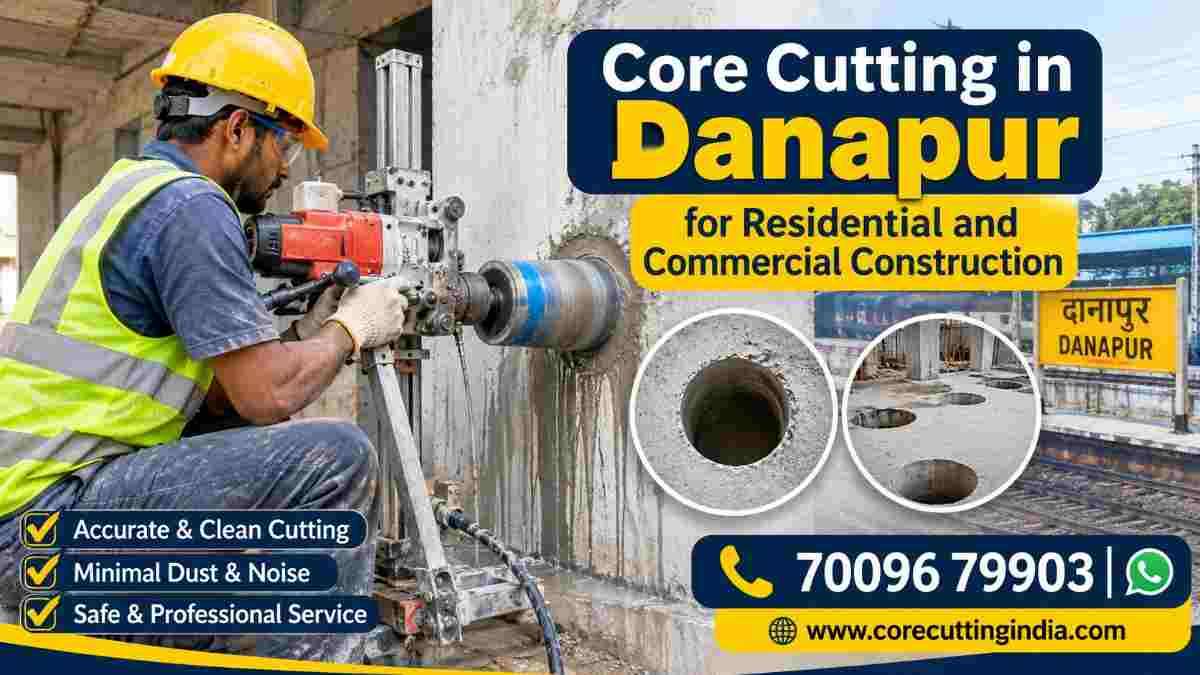
If you have ever tried to make an opening in a reinforced concrete wall or slab with a hammer and chisel, you know how it goes. It is slow, noisy, messy and risky. Cracks spread, edges break, and what should have been a clean round hole turns into a damaged section of the structure. This is why professional core cutting in Danapur has become the standard choice for builders, contractors, architects and homeowners.
Danapur, on the western edge of Patna, has changed quickly. New apartment complexes, independent homes, shopping spaces, hospitals, schools and office buildings keep coming up. Each of these projects needs pipes, ducts, cables and sleeves to pass through concrete, and the openings must be precise. This guide covers what core cutting is, how it works, where it is used, and how to choose the right service provider. The website for more information is https://corecuttingindia.com/.
What Is Core Cutting?
Core cutting, also called core drilling or diamond core drilling, is a method of making clean, circular holes in hard materials such as reinforced concrete, brick, stone and asphalt. A hollow cylindrical drill bit with diamond segments on its edge is attached to a powerful drilling rig. The bit rotates at controlled speed, usually with water cooling the cutting edge, and grinds through the material instead of smashing it.
Because diamond is the hardest known material, these bits cut through concrete and even steel reinforcement without the heavy impact that causes cracking. The result is a smooth-walled hole of exact diameter, and a solid cylinder of concrete (the “core”) that comes out intact.
Why Core Cutting Matters in Modern Construction
Traditional demolition-style methods use hammers, breakers and chisels. They send shockwaves through the structure, which can weaken nearby concrete, loosen embedded rebar and cause hairline cracks. Core cutting avoids this, and the difference shows in several ways.
Precision. The hole is exactly as wide as the bit. A 100 mm bit gives a 100 mm hole, which is essential when fitting pipe sleeves, drainage lines or conduit.
Structural safety. Cutting is smooth and controlled, so the surrounding concrete stays intact. Engineers can plan openings knowing the structure will not be compromised.
Low vibration. This matters for occupied buildings, hospitals, offices and heritage structures where shaking could damage finishes or disturb people.
Cleaner worksite. With water-cooled drilling and slurry control, dust stays low. That protects workers’ lungs and keeps finished interiors clean.
Speed. A hole that might take hours by hand is often finished in minutes, which keeps the project on schedule.
Core Cutting in Danapur: Why Local Expertise Counts
Danapur has a mix of building types. Older neighbourhoods have brick-and-mortar structures, newer areas have high-rise apartments with RCC frames, and commercial strips have a variety of retrofitted buildings. A team that understands local construction practices will handle each situation better.
Working in the Patna region also means knowing about monsoon conditions, water table considerations in foundation work, and the common slab thicknesses and reinforcement patterns used in Bihar construction. Local teams reach your site faster, can survey the job quickly, and are available if follow-up work is needed.
Core Cutting for Residential Construction
Homes need core cutting more often than most owners expect. Common residential uses include:
Plumbing and drainage openings. Bathrooms, kitchens and balconies need holes for waste pipes, water supply lines and floor drains. Cutting them cleanly prevents leaks later because the pipe sleeve fits tightly.
Air conditioner and exhaust openings. Split AC units need a neat hole in the wall for the refrigerant pipes and drain line. Exhaust fans and chimneys need larger openings. Core cutting gives a tidy finish that looks good indoors and outdoors.
Electrical and cable conduits. Running wiring between floors or rooms often requires small, precise holes through slabs or beams.
Water harvesting and borewell-related work. Rainwater pipes and recharge systems need openings in slabs and parapets.
Renovations and remodelling. If you are adding a bathroom, relocating a kitchen or converting a space, core cutting lets you modify the structure without major demolition.
Solar panel and water tank connections. Rooftop installations need pipes and cables passing through the slab, and core cutting keeps the waterproofing layer intact when done properly.
For homeowners, the main benefit is peace of mind. A clean cut does not weaken the wall or slab, and the work leaves little mess in a lived-in house.
Core Cutting for Commercial Construction
Commercial projects raise the stakes. Buildings are larger, schedules are tighter and the services running through them are more complex. Typical uses include:
HVAC and ventilation. Large ducts, chilled water pipes and refrigerant lines pass through multiple floors. Accurate openings keep the system efficient.
Fire safety systems. Sprinkler lines, fire alarm cabling and smoke extraction ducts need openings that comply with safety requirements.
Data and electrical infrastructure. Offices, malls, hospitals and schools need many openings for cable trays, conduits and bus ducts.
Elevator and lift shafts. Anchoring and service penetrations often need core drilling in thick concrete.
Retrofitting older buildings. Many commercial properties are upgraded with new utilities. Core cutting lets contractors add them without tearing apart the structure.
Industrial facilities. Factories and warehouses use core cutting for machine foundations, drainage trenches and pipe racks.
In commercial settings, downtime is expensive. A service that can complete the work quickly, with minimal noise and dust, lets the business keep running.
Types of Cutting Services Often Offered
Core drilling is the most common service, but a full provider usually offers related techniques for different needs.
Wall core cutting. Horizontal holes through walls for pipes, vents and conduits.
Slab or floor core cutting. Vertical holes through floors and ceilings, usually for plumbing and drainage.
Wall sawing. For larger rectangular openings such as doors, windows and lift openings.
Slab sawing and floor sawing. For long straight cuts in floors, used for trenches or removing sections.
Wire sawing. For very thick or irregular structures where other methods will not reach.
Wet and dry drilling. Wet drilling uses water for cooling and dust control. Dry drilling is used where water might damage finishes or equipment.
How the Core Cutting Process Works
Knowing the steps helps you judge whether a provider is working properly.
1. Site inspection. The team checks the location, thickness of the concrete, access and any hazards. This is where they decide on bit size and rig type.
2. Scanning for hidden elements. Before drilling, a good crew checks for rebar, electrical conduits and water pipes embedded in the concrete. This prevents accidents and damage.
3. Marking and setup. The centre point is marked accurately. The rig is anchored or clamped securely so it does not wobble, which is key to a straight hole.
4. Drilling. The diamond bit rotates and advances steadily. Water cools the bit and controls dust. The operator adjusts speed and pressure depending on material and reinforcement.
5. Core removal and cleanup. The cut core is extracted, slurry is collected and the area is cleaned. A professional crew leaves the site tidy.
6. Final check. The hole is checked for size, alignment and smoothness before the team signs off.
Key Benefits of Professional Core Cutting
Accuracy to the millimetre. Plumbers and electricians can install sleeves and pipes without gaps or forcing.
Preserved structural integrity. Smooth cuts avoid micro-cracks that weaken concrete over time.
Reduced noise and vibration. Neighbours, tenants and staff are far less disturbed.
Cost savings over time. Avoiding rework, repairs and patching saves money, even if the upfront cost seems higher than crude methods.
Safer working conditions. Controlled equipment and trained operators reduce accident risk.
Faster project timelines. Quick, clean cuts keep trades following each other without delays.
How to Choose a Core Cutting Contractor in Danapur
Not every provider delivers the same quality. Before hiring, consider the following.
Experience with your type of project. Ask whether they have handled residential, commercial or industrial work similar to yours.
Equipment quality. Modern rigs, quality diamond bits and rebar detection tools show a serious operation.
Trained operators. Skill matters as much as equipment. Experienced operators avoid mistakes that cause damage.
Range of diameters. Make sure they can handle both small pipe holes and large openings.
Clear quotations. A reliable company explains pricing by hole size, depth and number of holes, without vague charges.
Safety practices. Ask about dust control, protective equipment and site cleanliness.
Availability and response time. Construction schedules are tight. A provider that responds quickly and shows up on time is valuable.
References and reviews. Past work and customer feedback tell you more than any advertisement.
Tips to Prepare Before the Cutting Team Arrives
A little preparation makes the job smoother.
- Mark the exact positions where openings are required, or have your engineer or plumber confirm them.
- Share structural drawings if available, so the team knows where beams and columns run.
- Clear furniture and cover floors near the work area.
- Make sure there is access to water and electricity for the rig.
- Inform neighbours or building management if the work is in a shared building.
Common Mistakes to Avoid
Skipping the rebar scan. Cutting through main reinforcement can weaken the structure. Always scan first.
Choosing the wrong bit size. A hole that is too large or too small forces rework and weakens waterproofing.
Drilling near structural elements without approval. Holes close to beam edges or column faces need an engineer’s input.
Hiring on price alone. The cheapest option often means worn equipment, inexperienced staff and messy results.
Ignoring waterproofing. After cutting through slabs, especially on terraces and bathrooms, the opening must be properly sleeved and sealed to prevent leaks.
Why Choose Core Cutting India for Danapur
Core Cutting India (https://corecuttingindia.com/) provides concrete core cutting services designed around the needs of builders, contractors and homeowners. Whether your project is a single-family home, an apartment complex, a commercial showroom or an industrial unit, the focus stays on clean, accurate work that protects your structure.
What clients can expect:
- Diamond core drilling for walls, slabs, beams and floors
- A range of bit diameters for different pipe and duct requirements
- Dust and slurry control for tidy sites
- Trained operators using modern equipment
- Quick response and scheduling that respects your project timeline
- Transparent communication about scope and pricing
To discuss your requirement, get a quote or schedule a site visit in Danapur, call +91 70096 79903 or visit https://corecuttingindia.com/.
Frequently Asked Questions (People Also Ask)
What is core cutting in construction?
Core cutting is the process of drilling clean, round holes in concrete, brick or stone using a hollow diamond-tipped bit. It is used for pipes, cables, ducts and other service openings.
How much does core cutting cost in Danapur?
The cost depends on the hole diameter, depth, number of holes, reinforcement density and site access. Larger and deeper holes cost more per hole. The best approach is to request a quotation after the contractor understands your requirements, and you can call +91 70096 79903 for an estimate.
Is core cutting safe for the building’s structure?
Yes, when done correctly. Core cutting causes minimal vibration and no impact, so it does not crack surrounding concrete. For structural elements like beams and columns, an engineer should approve the location.
What is the difference between core cutting and core drilling?
The two terms are mostly used interchangeably. Both refer to making circular holes with a hollow diamond bit.
Can core cutting be done in an occupied house or office?
Yes. Because it is low in vibration and dust when done with water cooling, it is well suited to occupied buildings. Covering furniture and keeping the area clear helps further.
How long does it take to core cut a hole?
A standard hole in a wall or slab usually takes only a few minutes to a short while, depending on thickness, diameter and reinforcement.
Can core cutting cut through rebar?
Yes. Diamond bits can cut through steel reinforcement, but it is best to scan first and avoid cutting main structural bars unless the engineer approves.
What sizes of holes can be core cut?
Bits are available in a wide range, from small diameters for cables and conduits to very large ones for ducts and shafts. Your contractor will recommend the right size for your pipes or sleeves.
Why choose core cutting over hammering or chiselling?
It is more precise, cleaner, faster, quieter and safer for the structure. Hammering can crack concrete and leave rough, uneven openings.
Do I need to arrange water and electricity for the work?
Usually yes. Wet drilling requires a water source, and the rig requires a power supply. Confirm these details with your contractor beforehand.
Final Thoughts
Core cutting is a small step in the building process, but it has a big effect on safety, finish quality and long-term performance. Whether you are building a new home in Danapur, upgrading a commercial property or fitting new utilities into an existing structure, using the right method and the right professionals saves time, money and trouble.
For precise, dependable and clean concrete cutting, contact Core Cutting India at +91 70096 79903 or visit https://corecuttingindia.com/ to request a quote today.