
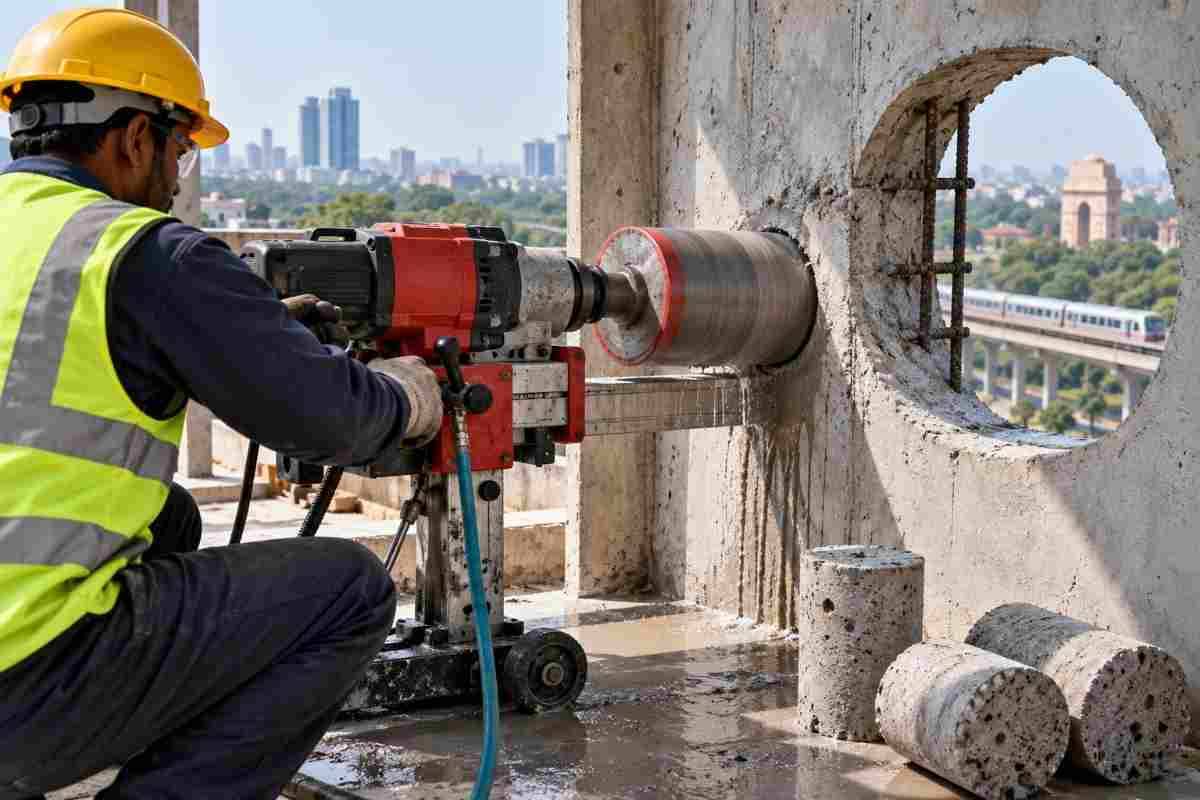
Delhi never stops building. Metro corridors, high-rise apartments, hospitals, malls, data centres and renovation projects in older neighbourhoods all demand one thing from structural work: precision. When plumbing, electrical, HVAC or fire-safety services must pass through reinforced cement concrete (RCC), contractors cannot simply break the wall or slab and hope for the best. They need clean, accurate openings that do not weaken the structure.
That is where core cutting in Delhi comes in. It is the preferred method for creating round holes in concrete with minimal vibration, dust and structural damage. In this guide from Core Cutting India (https://corecuttingindia.com/), we explain how professionals create accurate RCC openings, which tools they use, how they stay safe around rebar, and what to look for when hiring a service provider.
What Is Core Cutting?
Core cutting, also called core drilling or diamond core drilling, is the process of cutting a cylindrical hole in concrete, brick, stone or masonry using a hollow drill bit with diamond segments on its edge. As the bit rotates, it grinds through the material and leaves behind a solid cylinder of concrete, the “core,” which is removed from the hole.
Unlike a hammer drill or a chisel, which break concrete through impact, a diamond core drill cuts it. This is why the result is a smooth-walled, true-to-size opening with little or no cracking around the edges.
Typical core diameters range from about 25 mm for small cable passages to 600 mm or more for large ducts and drainage pipes. Anything larger is often handled by wall sawing or wire sawing instead.
Why Accuracy Matters in RCC Openings
RCC is concrete reinforced with steel bars. The two materials work together: concrete resists compression, and steel resists tension. Cut the wrong bar, or place an opening in the wrong zone, and you can reduce the load-carrying capacity of a beam, column or slab.
Accuracy matters for several reasons:
- Structural safety: Poorly planned holes near beam-column junctions or in high-stress zones can compromise the structure.
- Service alignment: Pipes, conduits and ducts must meet at exact points. A hole that is a few centimetres off can force costly rerouting.
- Finish quality: Clean edges mean less patching, grouting or plastering later.
- Fire and waterproofing compliance: Openings must be sized correctly to fit sleeves, fire-stop materials and waterproofing details.
- Cost control: Mistakes in concrete are expensive to repair and can delay entire projects.
In a dense city like Delhi, where buildings are often close together, old, or still occupied during renovation, getting each opening right the first time is critical.
Where Is Core Cutting Used in Delhi and NCR?
The demand for concrete core cutting in Delhi spans many types of projects:
- Residential buildings: Passages for AC refrigerant lines, exhaust fans, chimneys, plumbing stacks and electrical conduits.
- Commercial complexes: Openings for HVAC ducts, sprinkler pipes, cabling and drainage in slabs and shear walls.
- Hospitals and laboratories: Precise, low-vibration cutting where sensitive equipment and patients are nearby.
- Metro and infrastructure projects: Drilling for anchor bolts, dowel bars, drainage and inspection holes in heavy concrete structures.
- Industrial sites: Machine foundations, cable trays and ventilation shafts.
- Renovation and retrofit work: Adding new services to existing buildings without demolishing large sections.
- Pile and pavement testing: Extracting concrete samples to test strength and quality.
Because core cutting produces little vibration, it is especially suited for occupied buildings, heritage structures and neighbourhoods with noise restrictions.
How Professionals Create Accurate RCC Openings: Step by Step
A good core cutting job is more than switching on a machine. Here is how experienced teams approach it.
1. Site Inspection and Planning
The team first studies the structure: wall or slab thickness, concrete grade, age of the building and the purpose of the opening. They review structural drawings where available and check whether the location falls near beams, columns or post-tensioned elements.
2. Marking the Opening
The exact centre point and diameter are marked using measuring tape, spirit level and chalk or marker. For overhead or multi-floor work, plumb bobs or laser levels ensure that holes on different levels line up perfectly. Accuracy at this stage saves hours later.
3. Scanning for Rebar and Hidden Services
Before drilling, professionals use a rebar detector or ground penetrating radar (GPR) scanner. This identifies steel reinforcement, electrical conduits, water pipes and post-tension cables hidden inside the concrete. Shifting a hole by even 50 mm can avoid a critical bar or a live cable.
4. Choosing the Right Equipment
The team selects a drill rig, bit diameter and bit type based on the material and thickness. Heavily reinforced concrete needs a bit with more durable, steel-cutting diamond segments, while softer masonry works with a different bond.
5. Securing the Machine
Accuracy depends on stability. Rigs are fixed to the surface using an anchor bolt, vacuum base or a stand with braces. Hand-held drilling is limited to small, shallow holes. A rigid setup prevents wobbling, which would produce oval or tapered holes and wear out the bit.
6. Drilling with Water Cooling
Water is fed through the bit to cool the diamonds, flush out slurry and reduce dust. The operator starts slowly to establish the groove, then increases pressure gradually. Steady feed and correct speed give a clean cut and extend bit life.
7. Handling Rebar
When rebar is unavoidable and the structural engineer approves, the bit cuts through the steel. Operators watch for sudden resistance, reduce feed pressure and keep the bit cool, since cutting steel can damage a bit that is not designed for it.
8. Core Removal and Cleaning
Once the bit breaks through, the core is carefully extracted. In slabs, teams use catch trays or protect the area below to prevent falling debris. Slurry is vacuumed or mopped up, and the opening is checked for diameter and alignment.
9. Finishing and Handover
The hole is inspected for smoothness, and sleeves or pipes can be fitted directly. The work area is cleaned and left ready for the next trade.
Equipment Behind Precise Core Cutting
The quality of the equipment directly affects the quality of the opening. Key tools include:
- Diamond core bits: Available in different sizes and bond hardness for concrete, reinforced concrete, brick and stone.
- Core drill machines: Electric rigs ranging from handheld units to heavy-duty stand-mounted machines with variable speed.
- Drill stands: Provide rigidity and straight alignment, with angle adjustment for inclined holes.
- Anchoring and vacuum systems: Hold the stand steady against the surface.
- Water supply and slurry vacuum: Keep the cut cool and the site clean.
- Rebar and GPR scanners: Detect hidden elements before drilling begins.
- Extension rods: Allow deeper holes through thick slabs or walls.
Well-maintained machines and sharp bits are what separate a professional operation from an improvised one.
Safety Practices in Core Cutting
Core cutting is safer than demolition-style methods, but it still involves heavy machinery, electricity and water. Professionals follow standard safety practices:
- Using ground-fault protected power supply to avoid electric shock when water is present.
- Wearing helmets, safety glasses, gloves, ear protection and non-slip footwear.
- Cordoning off the area below slab openings so falling cores do not injure anyone.
- Checking for hidden live cables and pipes before drilling.
- Securing the rig properly so it does not tip or spin.
- Managing slurry to avoid slippery floors and drain blockages.
A reputable provider will also train operators and plan the job so that other trades on site are not put at risk.
Wet Core Cutting vs Dry Core Cutting
Most professional work in Delhi uses wet core cutting, because water reduces airborne silica dust, cools the bit and prolongs its life. Dry cutting is sometimes used for short, light-duty jobs where water would damage finishes or electrical equipment, but it produces more dust and wears bits faster. Where dry cutting is necessary, dust extraction systems and respirators are essential.
Given Delhi’s air quality concerns, minimising dust on construction and renovation sites is increasingly important, and wet methods with proper slurry control help meet that expectation.
Benefits of Core Cutting Over Traditional Methods
Compared with breaking concrete using a hammer or jackhammer, core cutting offers clear advantages:
- Precision: Exact diameters and positions.
- Minimal vibration: Protects the surrounding structure and nearby occupants.
- Low noise: Suitable for hospitals, offices and residential societies.
- Less debris: Only the core is removed, so cleanup is easier.
- Structural integrity: No micro-cracks from impact.
- Speed: Many holes can be completed in a day.
- Flexibility: Works on walls, floors, ceilings and even at angles.
Factors That Affect Core Cutting Cost in Delhi
Pricing varies from project to project. The main factors are:
- Hole diameter: Larger holes need bigger bits and more time.
- Depth or thickness: Thicker slabs and walls cost more per hole.
- Reinforcement density: Heavily reinforced concrete takes longer and wears bits faster.
- Access and location: Working at height, in basements or in tight spaces adds complexity.
- Number of holes: Bulk jobs usually have lower per-hole rates.
- Equipment requirements: Special rigs, scanning or dust control may add cost.
- Site conditions: Availability of water and power, and any restrictions on working hours.
Always ask for a written quote that specifies diameter, depth and what is included, such as scanning, slurry removal and finishing.
How to Choose a Core Cutting Service in Delhi
Not every provider offers the same standard of work. When comparing options, look for:
- Experience: Proven work on similar structures and project types.
- Modern equipment: Quality rigs, diamond bits and scanning tools.
- Trained operators: Skilled technicians who understand rebar, loads and safety.
- Clear communication: A site visit, a transparent quote and a defined timeline.
- Safety and cleanliness: Slurry control, protective measures and tidy handover.
- Engineer coordination: Willingness to work with your structural engineer on sensitive openings.
- Reputation: Reviews, references and a track record in Delhi NCR.
Providers like Core Cutting India (https://corecuttingindia.com/) focus on precise, clean and safe RCC openings for homes, commercial buildings and large infrastructure projects across Delhi and nearby areas.
Common Mistakes to Avoid
Even simple core cutting jobs can go wrong. Watch out for these frequent mistakes:
- Skipping the scan: Drilling blind risks cutting critical rebar or live conduits.
- Ignoring structural advice: Holes near beams, columns or joints should be approved by an engineer.
- Using poor equipment: Worn bits and unstable rigs cause rough, misaligned holes.
- Cutting too close together or too near edges: This weakens the concrete between openings.
- No water or slurry plan: Leaks can damage finishes, furniture and electrical systems.
- Choosing purely on price: The cheapest bidder may cut corners on safety and accuracy.
Frequently Asked Questions
What is core cutting in concrete?
Core cutting is a method of drilling clean, round holes in concrete using a hollow diamond-tipped bit. It is used for pipes, ducts, cables and structural testing.
Is core cutting safe for RCC structures?
Yes, when planned properly. Scanning for rebar, following engineer guidance and keeping openings away from critical zones keeps the structure safe.
Can core cutting be done on walls and slabs?
Yes. Core cutting works on vertical walls, horizontal slabs, floors, ceilings and even inclined surfaces, using suitable rigs and stands.
How long does a core cutting job take?
A single hole in a standard wall may take under an hour, while thick, heavily reinforced slabs or large diameters take longer. A professional team can complete many holes in a day.
What is the difference between core cutting and wall sawing?
Core cutting makes round holes, while wall sawing cuts rectangular openings such as doors, windows or large cut-outs.
Does core cutting cause dust and noise?
Wet core cutting keeps dust low, and the noise is far lower than breaking concrete with a jackhammer. Vibration is minimal too.
Can you core cut through rebar?
Yes, diamond bits can cut steel reinforcement, but it should be avoided where possible and approved by a structural engineer when it is not.
How much does core cutting cost in Delhi?
Cost depends on diameter, depth, reinforcement, access and quantity. Request a site-specific quote for an accurate figure.
Conclusion
Accurate RCC openings do not happen by accident. They come from careful planning, proper scanning, the right diamond tools, stable rigs, skilled operators and close attention to safety. Whether you are renovating a flat, fitting out an office or working on a large infrastructure project, professional core cutting in Delhi gives you clean, precise holes without compromising the strength of your structure.
If you need dependable, precise and safe concrete drilling, Core Cutting India (https://corecuttingindia.com/) can help you plan and execute every opening with confidence. Reach out for a site assessment and a clear quote, and get the job done right the first time.