
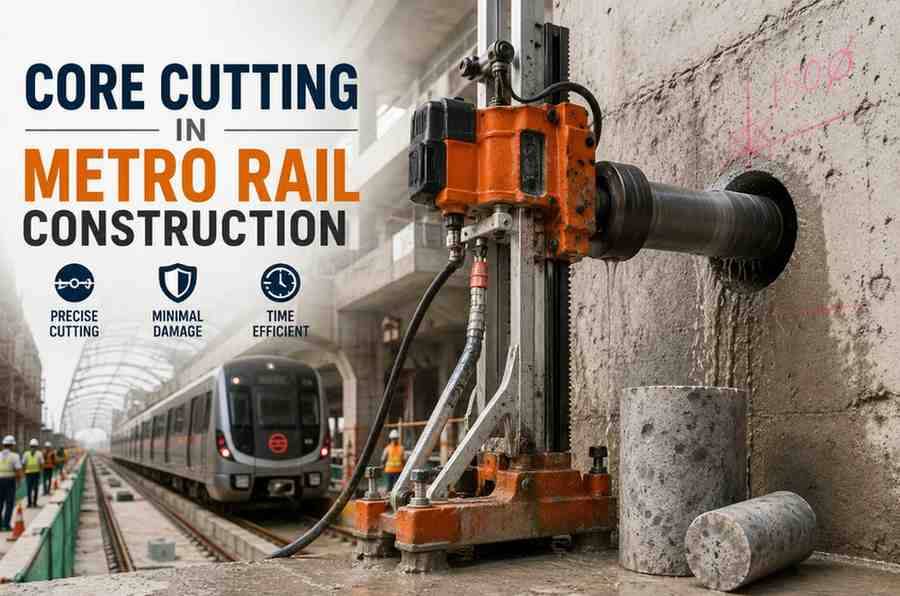
Introduction to Metro Rail Engineering and Concrete Cutting
Urban transportation has evolved dramatically over the past few decades, with metro rail networks serving as the lifeblood of modern megacities. Building these underground labyrinths, elevated corridors, and complex subterranean transfer stations requires meticulous engineering, robust safety protocols, and advanced structural modifications. Among the myriad techniques utilized by civil engineers, core cutting and diamond wire sawing stand out as indispensable operations.
Whether it is creating precise openings for utility conduits, modifying heavy reinforced concrete (RCC) diaphragm walls, or executing intricate pile-cutting procedures when new shield tunnels intersect existing structures, precision cutting determines the success of the project (Ma et al., 2024). At [email protected], we understand that modern infrastructure development leaves zero room for error. This comprehensive guide explores the multifaceted role of core cutting in metro rail construction, detailing the methodologies, machinery, and safety parameters that make subterranean expansion possible.
Understanding Core Cutting and Core Drilling
At its core, core cutting is a specialized construction technique designed to extract cylindrical cores of concrete, asphalt, or masonry from structural elements. Utilizing industrial-grade diamond-impregnated drill bits mounted on high-torque rotary rigs, operators can create flawless circular openings ranging from small diameter holes for wiring to massive openings for ventilation shafts and drainage pipes.
In metro rail construction, structural integrity is paramount. Traditional demolition methods—such as pneumatic hammering, jackhammers, or heavy breaking—generate violent shockwaves and micro-cracks that can compromise surrounding load-bearing elements. Core cutting, by contrast, operates with surgical precision. It relies on abrasive friction and continuous water cooling to shear through dense aggregate and high-tensile steel reinforcement bars simultaneously, leaving surrounding structures completely uncompromised.
Key Applications of Core Cutting in Metro Infrastructure
Metro rail projects encompass diverse structural phases, from open-cut excavations to deep underground tunneling and elevated viaducts. Core cutting services are deployed across several critical stages:
1. Utility and MEP (Mechanical, Electrical, and Plumbing) Penetrations
Modern metro stations are high-tech hubs requiring extensive networks of electrical wiring, fire suppression pipelines, ventilation ducts, and drainage systems. Drilling clean pathways through thick floor slabs, shear walls, and ceiling beams without destabilizing the concrete matrix requires specialized core drilling equipment.
2. Diaphragm Wall and Secant Pile Modifications
In cut-and-cover station construction, reinforced concrete diaphragm walls and secant pile walls form the primary temporary or permanent retaining structures (Behnia, 2021). During subsequent construction phases, openings must often be cut through these massive walls to create passageways, platform connections, or cross-passages. Diamond core drilling combined with wire sawing allows engineers to remove designated sections cleanly.
3. Tunnel Boring Machine (TBM) Intersections and Pile Undermining
As urban transit networks expand, new metro lines frequently cross beneath or intersect existing operational stations. This often requires cutting through existing station foundation piles or diaphragm walls. Advanced shield tunneling techniques and precise core cutting protocols are implemented to manage ground settlement and structural redistribution (Ma et al., 2024; Guan et al., 2023).
4. Quality Control and Geotechnical Sampling
Before heavy loads are applied to metro viaducts or station foundations, engineers extract cylindrical core samples to test the compressive strength, density, and internal composition of the cured concrete. This destructive yet vital testing ensures that the materials meet strict regulatory codes.
Advanced Machinery and Cutting Technologies
Executing core cuts on massive metro projects requires heavy-duty, state-of-the-art machinery. Industry leaders rely on several core technologies:
-
Diamond Core Drill Rigs: Powered by electric, hydraulic, or pneumatic motors, these rigs utilize diamond crown segments that wear away concrete matrices smoothly. They can operate at any angle—horizontal, vertical, or inverted.
-
Diamond Wire Saws: For massive structural members, thick diaphragm walls, or massive bridge piers where core drills are too small, continuous diamond-bead wire saws are looped around the structure and pulled tight while rotating at high speeds to slice through heavy RCC sections.
-
Wall Saws (Track Saws): Mounted on precision-guided tracks bolted directly to walls or floors, track saws are used to cut square or rectangular openings for doors, escalators, and elevator shafts within metro stations.
Mitigating Engineering Challenges in Subterranean Construction
Metro construction rarely occurs in ideal conditions. Engineers constantly face complex geological and structural hurdles that demand specialized cutting solutions:
Managing Ground Settlement and Structural Stress
When cutting existing piles or diaphragm walls, the load-bearing equilibrium of the underground structure changes. Researchers have demonstrated that proper sequencing—such as coordinating pile cutting with secondary tunnel lining and grouting—significantly minimizes station settlement and surface deformation (Ma et al., 2024).
Overcoming High-Tensile Steel Reinforcement
Metro construction utilizes dense grades of concrete (such as C45 and Ultra-High Performance Concrete or UHPC) reinforced with heavy steel mesh and thick rebars (Yu et al., 2022; Lei et al.,). Standard cutting tools wear down rapidly or jam when encountering steel. Diamond-impregnated segments are engineered to grind through concrete aggregate and slice through steel reinforcement simultaneously, ensuring continuous operation without thermal distortion.
Safety, Environmental, and Operational Best Practices
Precision cutting in confined subterranean spaces introduces unique environmental and safety challenges. Professional contractors adhere to strict operational guidelines:
-
Dust and Sludge Management: Core cutting requires continuous water cooling to prevent diamond bit overheating and suppress hazardous silica dust. Vacuum recovery systems and settling tanks are deployed to capture slurry immediately.
-
Noise and Vibration Control: Unlike pneumatic breakers that produce disruptive shockwaves, rotary core cutting generates minimal vibration, safeguarding sensitive nearby architectural foundations and historical structures.
-
Operator Safety: Subterranean workers must wear appropriate PPE, monitor air quality for exhaust or hazardous gases in enclosed tunnels, and utilize ground-fault circuit interrupters (GFCIs) for water-cooled electrical equipment.
Conclusion
As cities expand upward and downward, metro rail transit remains the cornerstone of sustainable urban mobility. The success of these monumental engineering feats relies heavily on precision, safety, and advanced structural modification techniques. From creating initial geotechnical core samples to executing complex pile modifications during subterranean station intersections, core cutting is an irreplaceable discipline in modern civil engineering.
For expert consultation, heavy structural modifications, and professional core cutting services tailored to major infrastructure projects, trust the specialists at [email protected]. We bring precision, safety, and advanced technological expertise to every meter of your construction journey.