
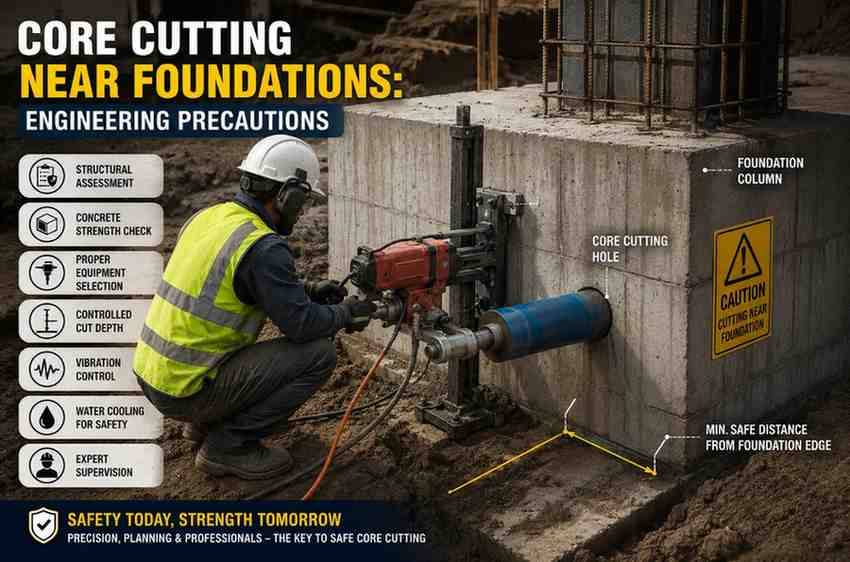
Core cutting is one of the most precise and demanding operations in modern construction and renovation work. It involves drilling or cutting circular or rectangular openings through concrete, masonry, or reinforced structures to make way for pipes, cables, ducts, or structural modifications. While core cutting is routine in slabs, walls, and beams, the process becomes significantly more sensitive when performed near foundations. Foundations bear the entire load of a structure, and any error during cutting can compromise the stability of the building above. This is why engineering precautions for core cutting near foundations deserve special attention from contractors, engineers, and property owners alike.
At Core Cutting India ([email protected]), we specialize in structural core drilling and core cutting services that prioritize safety, precision, and compliance with engineering standards. In this blog, we explore why core cutting near foundations is a specialized task, the risks involved, the precautions engineers must take, and best practices that ensure the job is completed without endangering the structure.
Why Core Cutting Near Foundations Requires Special Attention
Foundations are the load-bearing base of any structure. They transfer the weight of the building, along with live loads such as occupants, furniture, and equipment, safely into the ground. Unlike slabs or partition walls, foundations are not designed with the same margin for modification. Any unplanned cutting, drilling, or coring near a foundation can disturb this load path, leading to cracks, settlement, or in severe cases, structural failure.
Several factors make foundation-area core cutting particularly delicate:
- Load Concentration: Foundations carry concentrated loads from columns and walls above. Removing material, even in small amounts, near these load paths can reduce the foundation's capacity to bear that load safely.
- Reinforcement Density: Foundations typically have dense steel reinforcement compared to slabs. Cutting through or near rebar without proper planning can weaken the reinforcement's continuity and reduce the foundation's tensile strength.
- Soil Interaction: Foundations interact directly with the soil beneath them. Vibrations from cutting equipment can, in certain soil conditions, cause settlement or disturb the soil-structure interface, especially in loose or sandy soils.
- Groundwater and Moisture Sensitivity: Many foundations are located below or near the water table. Core cutting operations near foundations may expose the area to water ingress, which can accelerate corrosion of reinforcement or cause soil erosion beneath the footing.
- Limited Access and Visibility: Foundation-level cutting is often performed in confined spaces such as basements, crawl spaces, or trenches, making it harder to monitor cutting depth, alignment, and structural response in real time.
Given these challenges, core cutting near foundations should never be treated as a standard drilling task. It requires a structured engineering approach from planning through execution.
Common Applications of Core Cutting Near Foundations
Understanding why core cutting is performed near foundations helps clarify the precautions needed. Typical applications include:
- Installing plumbing lines, drainage pipes, or sewer connections that pass through or near footings
- Creating openings for electrical conduits or cable trenches
- Retrofitting waterproofing systems around foundation walls
- Installing underpinning or foundation strengthening systems
- Creating access points for soil testing, geotechnical investigation, or utility inspection
- Modifying foundations during structural retrofitting or seismic strengthening projects
Each of these applications carries a different risk profile, and the precautions taken must be tailored accordingly.
Engineering Precautions for Core Cutting Near Foundations
1. Structural Assessment Before Cutting
Before any cutting begins, a qualified structural engineer should assess the foundation design, including its depth, reinforcement layout, load-bearing capacity, and soil-bearing conditions. This assessment identifies safe zones where cutting can be performed without compromising structural integrity, and it flags critical zones that must be avoided entirely.
2. Reviewing Structural Drawings and As-Built Records
Wherever available, original structural drawings, foundation layout plans, and reinforcement details should be reviewed. In older buildings where drawings may not exist, non-destructive testing methods such as ground-penetrating radar (GPR) or rebar scanning should be used to map the internal reinforcement and utility lines before cutting.
3. Rebar Detection and Mapping
Cutting through primary reinforcement bars in a foundation, especially at critical load points, can significantly reduce its capacity. Rebar scanning tools help identify the exact location, spacing, and depth of reinforcement so that cutting paths can be planned to avoid or minimize interference with structural steel.
4. Load Path Analysis
Engineers must analyze how loads travel from the superstructure into the foundation and further into the soil. Core cutting locations should be chosen away from primary load paths, column footings, and areas of stress concentration. If cutting must occur in a load-bearing zone, temporary support systems should be designed and installed first.
5. Vibration Control
Diamond core drilling is generally preferred over impact-based cutting methods near foundations because it produces significantly less vibration and noise. Excessive vibration can cause micro-cracking in concrete or disturb adjacent soil, particularly in structures founded on loose, saturated, or expansive soils. Vibration monitoring equipment can be used on sensitive sites to ensure levels remain within safe limits.
6. Depth and Diameter Control
Precise control over the depth and diameter of the core being cut is essential. Over-cutting, even by a small margin, can unexpectedly breach into soil, water-bearing layers, or adjacent structural elements. Modern core cutting equipment with depth stops and diameter-specific bits allows for tightly controlled, predictable cuts.
7. Temporary Shoring and Support
When cutting near or through a foundation element that carries active load, temporary shoring, needle beams, or jacking systems may be required to transfer loads away from the cutting zone during the operation. This is especially critical in underpinning projects or where existing footings are being modified for extension or retrofit work.
8. Sequencing of Cuts
In projects involving multiple core cuts near a foundation, the sequence in which cuts are made matters. Cutting should proceed in a planned order, often starting from less critical zones and moving toward more sensitive areas, with structural monitoring between stages to detect any signs of movement or distress.
9. Water Management
Wet core cutting techniques are commonly used to control dust and reduce heat generated during drilling. Near foundations, however, water ingress must be carefully managed to prevent pooling, soil softening, or water penetration into the foundation itself. Proper drainage arrangements and sealing of completed cores help mitigate this risk.
10. Post-Cutting Inspection and Sealing
Once cutting is complete, the affected area should be inspected for cracks, exposed reinforcement, or signs of stress. Any exposed rebar should be treated against corrosion, and the opening should be properly sealed or filled using appropriate structural grout or waterproofing compounds to restore integrity and prevent future water ingress.
11. Compliance with Codes and Standards
Core cutting near foundations should always comply with applicable structural codes and local building regulations. In many regions, any modification to a load-bearing foundation element requires approval from a structural engineer or local building authority before work begins.
12. Monitoring During and After Cutting
For sensitive structures, especially older buildings or those with known foundation issues, monitoring instruments such as crack gauges, tilt meters, or settlement markers can be installed to track any movement during and after the cutting process. This allows for immediate corrective action if unexpected structural response occurs.
Choosing the Right Core Cutting Method
Not all core cutting methods are suitable for foundation-area work. Diamond core drilling is widely regarded as the safest option due to its precision, minimal vibration, and clean finish. It allows contractors to cut through reinforced concrete with accuracy while minimizing collateral damage to surrounding structural elements. Handheld or track-mounted diamond core drills with dust and water management systems are commonly used for foundation-level work, especially in confined spaces like basements.
Percussive or hammer-based cutting methods, while faster, generate higher vibration and are generally avoided near foundations unless the structural engineer confirms that the surrounding elements can tolerate the additional stress.
The Role of Experienced Contractors
Given the risks involved, core cutting near foundations should only be undertaken by experienced, qualified contractors who understand both the technical operation of cutting equipment and the structural implications of their work. An experienced team will:
- Coordinate closely with structural engineers before starting work
- Use appropriate detection and scanning tools before cutting
- Select cutting methods suited to the specific structural and soil conditions
- Maintain clear documentation of the process for future reference
- Respond quickly to any signs of structural distress during the operation
At Core Cutting India, our teams follow a structured, engineering-led approach to every foundation-area core cutting project, ensuring that safety and structural integrity are never compromised for speed or convenience.
Conclusion
Core cutting near foundations is a task that sits at the intersection of precision engineering and structural safety. Because foundations are responsible for transferring a building's entire load safely into the ground, even minor errors during cutting can have serious consequences. By combining thorough structural assessment, accurate rebar and utility detection, vibration-controlled cutting methods, and careful post-cutting treatment, engineers and contractors can carry out these operations safely and effectively.
Whether the requirement is installing a new utility line, retrofitting a foundation, or supporting a larger renovation project, the precautions outlined above form the foundation of safe core cutting practice, quite literally. For projects that involve cutting near load-bearing foundations, always consult a structural engineer and work with a specialized core cutting contractor who understands the risks involved.
For professional, engineering-backed core cutting services, reach out to Core Cutting India at [email protected]. Our experienced team is equipped to handle even the most sensitive core cutting requirements near foundations, walls, and other critical structural elements, safely and precisely.
Target-Related Searches
- core cutting near foundations
- core cutting services India
- diamond core drilling contractor
- concrete core cutting company
- structural core drilling services
- RCC core cutting for pipes and cables
- core cutting near basement walls
- foundation core drilling precautions
- core cutting for plumbing installation
- core cutting cost near me
People Also Ask
1. Is core cutting near a foundation safe? Yes, when performed by trained professionals following proper structural assessment, rebar detection, and controlled cutting techniques. Without these precautions, it can weaken the foundation and cause cracks or settlement.
2. What is the difference between core cutting and core drilling? Core cutting generally refers to cutting larger openings or sections in concrete, while core drilling refers to creating circular holes using a rotary diamond drill. Both terms are often used interchangeably in construction.
3. Can core cutting damage a building's foundation? If done without proper planning, yes. Cutting through critical reinforcement, load paths, or excessive depth can reduce the foundation's load-bearing capacity and lead to structural issues.
4. How deep can core cutting be done safely near a foundation? This depends on the foundation's design, thickness, and reinforcement layout. A structural engineer should determine safe cutting depth based on site-specific assessment.
5. Why is diamond core drilling preferred near foundations? Diamond core drilling produces minimal vibration and precise, clean cuts, reducing the risk of micro-cracking or disturbance to the surrounding soil and structure compared to impact-based methods.
6. Do I need engineering approval before core cutting near a foundation? In most cases, yes. Any modification to a load-bearing foundation element typically requires review and approval from a structural engineer or relevant local authority.