
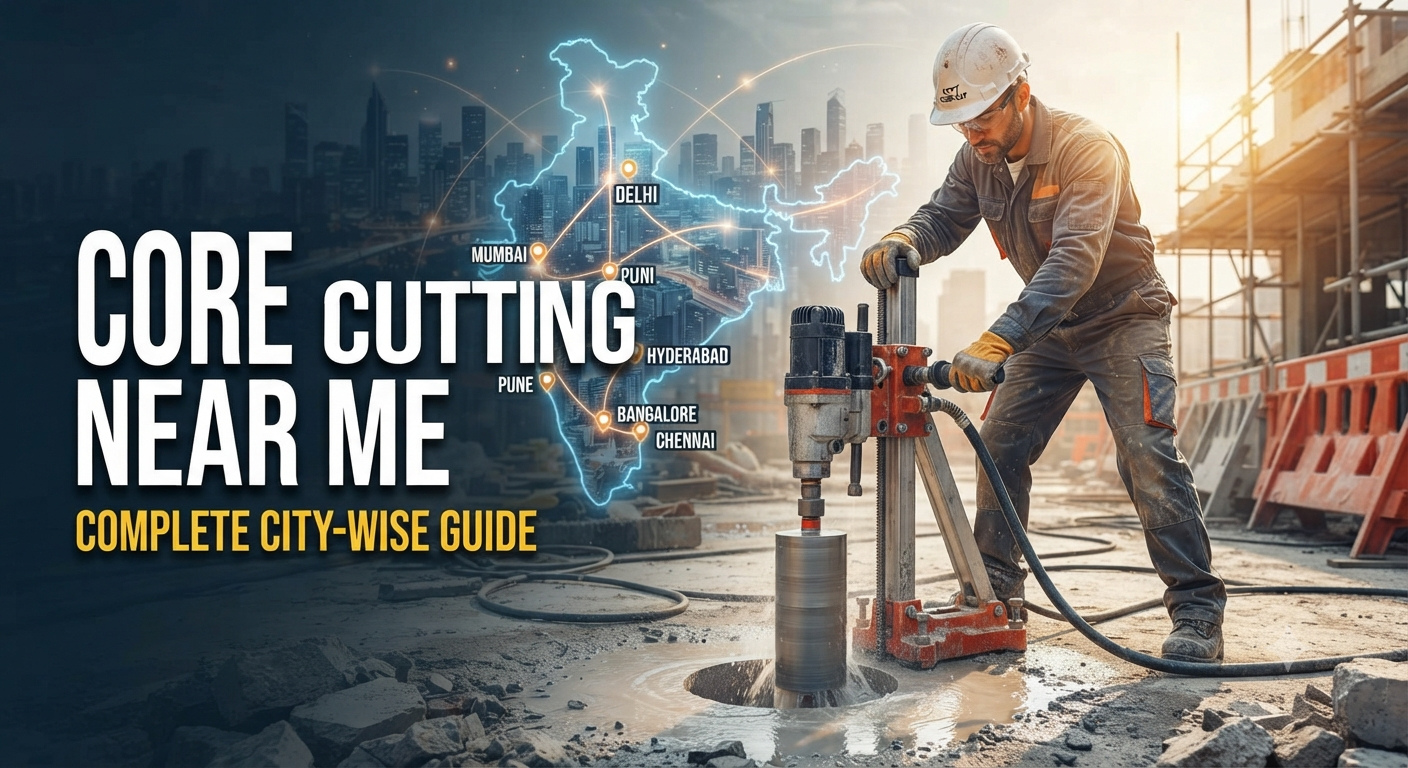
In modern construction, precision is not just a preference; it is a structural necessity. Whether you are retrofitting a historic building or installing state-of-the-art HVAC systems in a high-rise, the ability to create clean, accurate openings in reinforced concrete is paramount. This is where professional core cutting comes into play.
If you have been searching for "core cutting near me," you have likely realized that the quality of the finish, the speed of the project, and the safety of your existing structure depend entirely on the expertise of the contractor you hire.
At [email protected], we understand that finding reliable, professional services can be daunting. This guide is designed to help you navigate the process of selecting the right experts, understanding the technology, and ensuring your project stays on schedule.
Understanding Core Cutting: The Modern Standard
Concrete core cutting is the process of creating precise, cylindrical openings in reinforced concrete, brickwork, or stone. Unlike traditional jackhammering, which can cause micro-fracturing and structural damage, core cutting uses diamond-tipped drill bits to "core" through the material.
Why Choose Core Cutting?
-
Precision: It allows for openings at exact diameters and angles.
-
Structural Integrity: By eliminating heavy vibrations, the surrounding concrete remains undamaged.
-
Efficiency: It is a faster, cleaner process that significantly reduces noise and dust, making it ideal for occupied buildings or sensitive environments.
Core Cutting Services: A City-Wise Outlook
Construction needs vary significantly from one urban center to another. Whether you are in a bustling metropolis like Delhi or an emerging industrial hub, the demand for specialized cutting services is driven by rapid infrastructure development.
Finding Reliable Services in Major Cities
When searching for local contractors, it is important to look beyond just the price. In cities like Delhi, Mumbai, Bangalore, and Pune, the market is saturated with providers, but high-quality service is distinguished by:
-
Technological Capability: Does the provider use advanced, water-cooled diamond drilling equipment?
-
Portfolio of Work: Have they handled projects similar to yours (e.g., residential vs. heavy industrial)?
-
Responsiveness: A reliable contractor will offer clear project timelines and safety briefings before starting.
For professional guidance and connection to verified services, reach out to us at [email protected].
Factors to Consider Before Hiring
Selecting a contractor is a critical step in your project's lifecycle. To avoid costly mistakes, evaluate potential providers against these benchmarks:
-
Industry Experience: Experienced teams understand aggregate hardness and steel reinforcement patterns. They can anticipate complications—like hitting rebar—before they become costly delays.
-
Modern Machinery Fleet: A company that invests in the latest laser-guided alignment tools and diamond matrix blades will consistently deliver superior results compared to those relying on outdated equipment.
-
Safety Standards: Does the company adhere to strict personal protective equipment (PPE) protocols? Are they equipped to handle dust management, which is essential for health and safety compliance?
Safety Measures: A Non-Negotiable Priority
Concrete work is inherently unpredictable. Even a seemingly simple hole can harbor hidden dangers like electrical conduits, plumbing lines, or post-tension cables.
Essential Safety Checklist:
-
Scan Before You Cut: Always use concrete scanning (Ground Penetrating Radar) to map the subsurface area.
-
Utility Mapping: Ensure all private and public underground utilities are identified.
-
Controlled Environment: Use wet-cutting methods to keep dust levels low and maintain a clear, organized work site to prevent trip hazards.
-
Briefing: Hold a team meeting before starting to ensure every worker understands the cutting plan and emergency protocols.
Core Cutting vs. Other Methods
Many clients ask: Why not use a wall saw or a jackhammer?
-
Vs. Jackhammering: Jackhammers are destructive, loud, and imprecise. They are suitable for rough demolition but unacceptable for structural modifications where precision is needed.
-
Vs. Wall Sawing: Wall sawing is the gold standard for creating large, straight, rectangular openings (like doorways or windows). In contrast, core cutting is superior for circular openings, such as HVAC ducts, pipe installations, or anchor holes.
People Also Ask (PAA)
-
Is core cutting safe for old buildings?
Yes, if performed by professionals. Because it creates minimal vibration compared to traditional breaking methods, it is the safest way to modify older structures without causing cracks.
-
How much does core cutting cost?
Costs vary based on the diameter of the hole, the thickness of the concrete, and the amount of steel reinforcement. It is best to request a custom quote based on your site specifications.
-
Do I need a permit for core cutting?
In many commercial areas, you may need a permit, especially if the cutting involves structural load-bearing walls. Always check with your local building department.
Final Thoughts
Choosing the right partner for your structural needs is the difference between a project that runs smoothly and one that suffers from delays. Whether you need precise coring for a plumbing installation or complex structural modifications, professional expertise is your best investment.
For further assistance, inquiries, or to connect with the best in the business, contact us at [email protected]. Let us help you build with precision.
Related Searches:
-
RCC core cutting price list
-
Concrete scanning services near me
-
Professional concrete drilling contractors
-
Diamond core cutting machines
-
Structural retrofitting services