
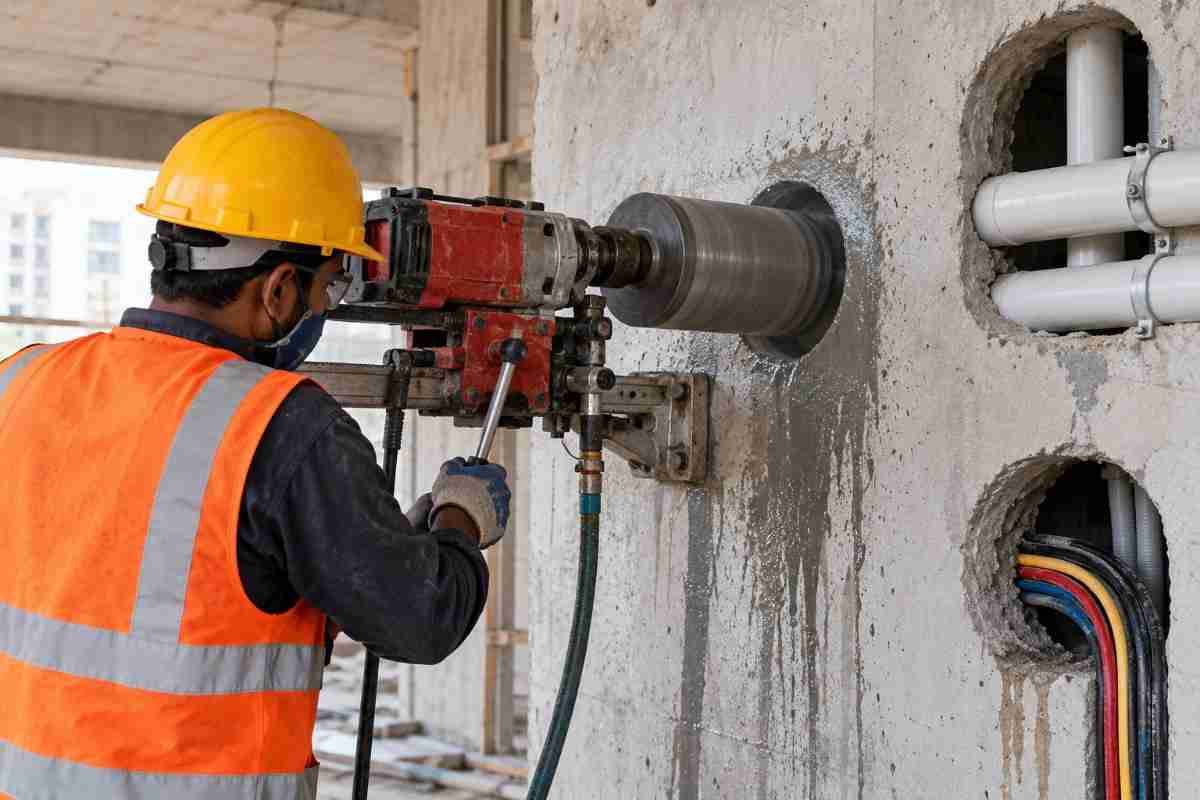
Delhi is a city of constant construction. Residential towers rise in Dwarka and Rohini, commercial complexes expand in Nehru Place and Connaught Place, and older buildings across South Delhi, Karol Bagh and Laxmi Nagar are renovated every year. In all of these, one problem keeps coming up: how do you run plumbing pipes, drainage lines, electrical conduits and cables through thick reinforced concrete without damaging the structure?
Hammering, chiselling and breaking concrete by hand was once the standard answer. It is noisy, messy, imprecise and risky for the building. Today the professional answer is core cutting, also called diamond core drilling. This guide explains how core cutting works, why it suits plumbing and electrical installations in Delhi buildings, and what to consider before hiring a service provider. It draws on the kind of work offered by Core Cutting India.
What Is Core Cutting?
Core cutting is a method of making clean, round holes in concrete, brick, stone and masonry using a hollow cylindrical drill bit with diamond segments on its cutting edge. A motorised drilling rig turns the bit at high speed, and the diamonds grind through the material. The result is a smooth-walled hole and a solid cylinder of material (the “core”) that comes out intact.
Unlike a percussion drill or a hand breaker, a core drill does not smash the material. It cuts it. That is why core cutting is the preferred method wherever precision, low vibration and structural safety matter, which in a dense city like Delhi is almost everywhere.
Core holes typically range from about 25 mm up to 600 mm or more in diameter, depending on the equipment, so one technique covers everything from a small electrical conduit to a large drainage stack or ventilation duct.
Why Plumbing and Electrical Work Needs Core Cutting
Every modern building depends on services that must pass through floors, beams, shear walls and partitions. Plumbing and electrical systems are the most common reasons for new openings, either during construction or later during retrofits.
Plumbing installations often need openings for water supply lines, soil and waste pipes, rainwater downtake pipes, fire-fighting lines and sewage connections. Many of these are large, typically 75 mm to 200 mm, and they must be positioned accurately to maintain slope and alignment.
Electrical installations need openings for conduits, cable trays, bus ducts, earthing connections and riser shafts. These holes may be smaller, but placement matters because cables must run in neat, protected paths that meet safety codes.
When such holes are made carelessly, the consequences can be serious. Cracks can spread through slabs, reinforcement can be cut, and water can leak through badly finished openings. A mis-sized hole means expensive patch-up work, and a hole in the wrong place can mean starting over. Core cutting addresses these problems at the source.
Key Benefits of Core Cutting in Delhi Buildings
1. Precision and Clean Finish
A core drill produces a hole of exactly the diameter you need, with smooth, straight walls. This allows pipes and conduit sleeves to fit snugly, which reduces the need for heavy grouting and makes waterproofing and fire-stopping easier.
2. Minimal Vibration and Structural Stress
Delhi has many older buildings and a lot of occupied multi-storey structures. Heavy hammering sends vibrations through slabs and walls and can weaken plaster, loosen tiles and stress joints. Core cutting is a low-vibration process, so it is much safer for existing structures and for the people who live or work in them.
3. Lower Noise and Dust
Wet core drilling uses water to cool the bit and capture dust at the source. Compared with chiselling, noise is lower and airborne dust is greatly reduced. That matters in hospitals, offices, hotels, schools and residential societies, where disturbance must be kept to a minimum.
4. Speed and Efficiency
A well-set rig can cut through a 200 mm slab in minutes. Faster openings keep plumbers and electricians on schedule, which cuts labour costs and project delays.
5. Ability to Cut Reinforced Concrete
Diamond bits can cut through steel reinforcement embedded in RCC. With proper scanning and planning, the crew avoids unnecessary contact with main rebar and cuts only where it is structurally acceptable.
6. Reduced Rework
Because core cutting is accurate, there is less patching, plastering and finishing afterwards. Over a whole project this adds up to meaningful savings.
Wet Core Cutting vs Dry Core Cutting
There are two main methods, and each has its place.
Wet core cutting is the standard for most plumbing and electrical work. Water flows through the bit, cooling the diamonds, flushing out slurry and suppressing dust. It gives a faster cut, longer bit life and a cleaner hole. The trade-off is that slurry must be managed, which is why a good crew uses wet vacuums and protective sheeting.
Dry core cutting is used where water is a risk, for example near live electrical panels, in finished interiors with sensitive flooring, or on upper floors where water runoff could damage the spaces below. It generally uses specialised dry bits with a dust-extraction system. Dry cutting is slower and wears bits faster, but it avoids water damage.
An experienced contractor will choose the method based on the site rather than using one approach for everything.
The Core Cutting Process, Step by Step
Understanding the process helps you check that a contractor is doing the job properly.
Step 1: Site inspection and planning. The team reviews drawings, marks the exact positions and diameters of openings, and confirms the thickness and type of material. Coordination between the plumbing, electrical and structural teams happens here.
Step 2: Scanning for hidden hazards. Before any drilling, the area should be checked for rebar, embedded conduits, post-tension cables and water or gas lines. Detection tools such as rebar scanners or ground-penetrating radar help the crew avoid damaging existing services. This step is especially important in older Delhi buildings where as-built drawings may be missing or out of date.
Step 3: Securing the rig. The drill stand is fixed to the surface using an anchor bolt or a vacuum base. A stable rig is essential for a straight, accurate hole and for operator safety.
Step 4: Drilling. The operator advances the bit steadily, with water supply running if the cut is wet. Pressure and speed are adjusted to suit the material and the reinforcement.
Step 5: Core removal and cleanup. The core is extracted, slurry is collected, and the area is cleaned. The finished hole is checked for diameter, alignment and edge quality.
Step 6: Sleeving and sealing. Pipes or conduit sleeves are fitted, and the gaps are sealed with suitable grout, sealant or fire-stop material. Doing this carefully prevents leakage, pest entry and fire spread.
Typical Applications in Delhi Projects
Core cutting for plumbing and electrical work appears in many project types across Delhi and NCR:
- High-rise residential towers: Openings for soil stacks, water risers, cable risers and fire-fighting lines through every floor slab.
- Commercial offices and malls: Penetrations for electrical conduits, data cabling, chilled water pipes and drainage in busy, tightly scheduled fit-outs.
- Hospitals and clinics: Low-noise, low-dust openings for medical gas lines, plumbing and electrical upgrades inside operational buildings.
- Hotels and restaurants: Drainage lines, kitchen exhausts and utility connections in renovated spaces.
- Old building retrofits: Adding bathrooms, new wiring or modern plumbing to older RCC and masonry structures without disturbing the structure.
- Industrial and warehouse facilities: Large-diameter holes for process piping, cable routes and floor drains.
Structural Safety: The Most Important Consideration
A core hole is small compared with the whole building, but in the wrong place it can weaken a beam, column or slab. Several principles keep the work safe.
First, openings should be kept away from critical structural elements wherever possible. Cutting through beams, columns and the junction zones near them needs approval from a qualified structural engineer, and in many cases it should be avoided altogether.
Second, reinforcement should be located before drilling, and cutting main bars should be avoided unless the engineer has reviewed and approved it.
Third, spacing matters. Many holes close together can reduce the capacity of a slab. Engineers usually set limits on hole diameter, spacing and distance from supports.
Finally, buildings in Delhi sit in a high seismic zone, so preserving structural integrity is more than a formality. A responsible contractor will always ask about drawings and engineering approval rather than simply starting to drill.
Safety on the Worksite
Good core cutting practice protects workers and occupants. Key practices include using proper personal protective equipment such as helmets, gloves, safety shoes, eye protection and hearing protection. Electrical safety around wet drilling is vital, so ground-fault protection and well-maintained cables are essential. The area below the drilling point should be cleared and barricaded, because a core can drop through a slab when the cut completes. Anchoring the rig properly, containing slurry, and keeping the work area tidy all reduce accidents and complaints.
Tips for Choosing a Core Cutting Service in Delhi
Not all contractors are equal. When you are looking for a provider, consider the following.
Check equipment and range. Ask whether they have rigs and bits across the diameters you need, and whether they offer both wet and dry methods.
Ask about scanning. A provider who scans for rebar and embedded services before drilling is far less likely to damage your building or hit a live cable.
Look at experience. Experience with RCC, brick walls and old structures in Delhi conditions is valuable, since each material behaves differently.
Confirm safety practices. Ask how they handle slurry, dust, noise and worker safety, especially for occupied buildings.
Request clear quotes. Pricing is often based on diameter and depth, so ask for a breakdown that includes mobilisation, any scanning, and cleanup. Be cautious about quotes that look unusually low.
Check coordination. The best crews work smoothly with your plumber, electrician and structural engineer, which keeps the schedule on track.
If you are planning a project in Delhi or the NCR region, you can explore services and get in touch through Core Cutting India.
Planning Ahead: Cost and Timing
Core cutting cost generally depends on hole diameter, depth of the material, reinforcement density, access difficulty, the number of holes, and whether the work is at height or in a confined space. Larger and deeper holes take more time and bit wear, so they cost more per hole. Ordering many holes in a single visit usually reduces the per-hole cost because setup and travel are shared.
The most useful thing you can do to control costs is plan early. Finalise plumbing and electrical layouts before slabs are poured, using sleeves where possible, and use core cutting for the changes and additions that inevitably come up later. Marking hole positions clearly and getting engineering sign-off in advance prevents expensive revisions.
Environmental and Neighbourhood Considerations
Delhi’s air quality is a serious public concern, and construction dust is a known contributor. Wet core cutting helps directly by suppressing dust at the source. Slurry should be collected and disposed of responsibly instead of being washed into drains, where it can clog pipes. In apartment societies and commercial buildings, working in agreed hours and keeping noise low helps maintain good relations with neighbours and building management.
Frequently Asked Questions
What is core cutting used for in plumbing and electrical work?
It is used to make precise holes in concrete floors, walls and slabs so that pipes, drains, conduits and cables can pass through without damaging the structure.
Is core cutting better than breaking concrete with a hammer?
For most installations, yes. It is cleaner, quieter, more accurate and far less likely to cause cracks or vibration damage.
Can core cutting be done in an occupied building?
Yes. Because it creates lower noise and dust, especially when done wet with proper containment, it is well suited to homes, offices and hospitals that remain in use.
Will core cutting damage the reinforcement in my slab?
Diamond bits can cut steel, but the aim should be to avoid main reinforcement. Scanning before drilling and consulting a structural engineer helps protect the structure.
What sizes of holes can be cut?
Core drilling commonly covers small conduit holes of around 25 mm up to large openings of several hundred millimetres, depending on the rig and bit.
Do I need permission before cutting into a structural element?
You should always get approval from a qualified structural engineer for openings in beams, columns, shear walls or heavily loaded slabs, and check any building or society requirements.
How long does a core cut take?
A typical hole in a standard slab or wall may take just a few minutes to around half an hour, depending on diameter, depth and reinforcement.
Conclusion
Core cutting has become essential for plumbing and electrical installations in Delhi buildings. It offers accuracy, cleanliness, speed and structural safety that traditional breaking methods cannot match. Whether you are working on a new high-rise, upgrading a commercial space or retrofitting an older home, the right approach combines careful planning, hazard scanning, engineer approval and a skilled crew using quality equipment.
By choosing a professional service and planning your openings early, you protect your building, keep your schedule on track and avoid costly rework. For reliable support with concrete core cutting in Delhi and across India, visit https://corecuttingindia.com/ and discuss your project requirements with the team.