
Planning a construction or renovation project? Whether you are installing a new HVAC system, laying plumbing pipes, or modifying structural elements, you have likely encountered the term "core cutting." As we move through 2026, understanding the pricing dynamics of this essential service is crucial for staying within your budget.
At [email protected], we prioritize transparency and precision. This guide breaks down everything you need to know about core cutting costs, the factors influencing them, and why professional intervention is non-negotiable.
What is Core Cutting?
Core cutting (or core drilling) is a precision construction technique used to create clean, circular openings in hard surfaces like reinforced concrete (RCC), stone, marble, brick, and asphalt. Using specialized diamond-tipped drill bits, this method allows for the insertion of utility lines—such as electrical conduits, plumbing pipes, and HVAC ducts—without the destructive vibration of traditional hammering or chiseling.
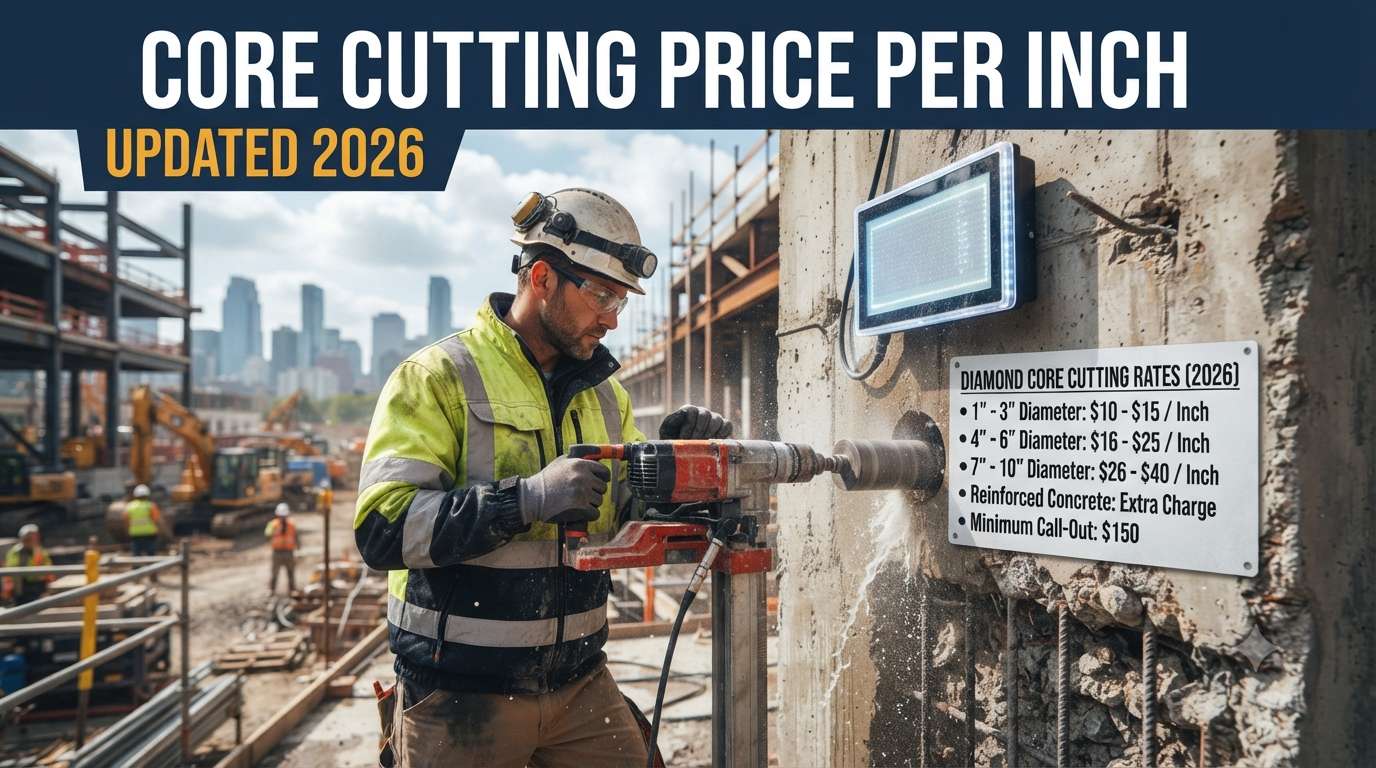
Core Cutting Price Per Inch (Updated 2026)
Pricing for core cutting is rarely a one-size-fits-all figure. Contractors typically quote based on a few different metrics: per inch/mm, per piece, or per hour.
Indicative Rate Card (2026)
While prices fluctuate based on location and site conditions, here is a general breakdown of current market rates in India:
| Metric | Estimated Price Range (INR) |
| Per Inch (Diameter) | ₹60 – ₹100 |
| Per Piece (Standard Diameter) | ₹450 – ₹3,000 |
| Per Hour (Large/Complex Projects) | ₹400 – ₹2,500 |
Note: The "Per Piece" price varies significantly depending on the depth and diameter of the hole, as well as the hardness of the material.
Factors Influencing Your Final Quote
When you request a quote from [email protected], several technical factors determine the final cost:
-
Material Hardness: Cutting through plain concrete is faster and cheaper than drilling through heavily reinforced concrete (RCC). The density of steel rebar significantly increases bit wear and labor time.
-
Diameter and Depth: A 50mm hole is far less labor-intensive than a 300mm opening. Thicker walls or slabs require multiple passes and specialized cooling techniques.
-
Site Accessibility: Work performed on the ground floor is generally cheaper. Projects involving high-rise scaffolding, restricted spaces, or overhead drilling incur additional labor costs.
-
Job Volume: Economies of scale apply. Drilling 20 holes at a single site is more cost-effective per unit than performing a single, isolated cut.
-
Urgency: Off-hours, weekend, or emergency service requests typically command a premium.
Why Professional Core Cutting Matters
It is tempting to look for the "cheapest" rate, but core cutting is a structural process. Improper drilling can cause:
-
Structural Damage: Cutting through load-bearing columns or beams without structural clearance can lead to cracks or, in extreme cases, partial collapse.
-
Safety Hazards: Professional teams use water-cooling systems to manage dust and prevent overheating of the diamond bits, ensuring a clean, safe, and vibration-free process.
-
Precision: Standard drilling often leaves jagged edges. Professional core cutting ensures a perfect fit for your pipes and ducts, reducing the need for costly patching or grout work later.
People Also Ask (PAA)
1. Is core cutting safe for my home’s structure?
Yes, when done professionally. Experts avoid drilling into critical structural components like main load-bearing beams or columns without a structural engineer’s approval.
2. Can I do core cutting with a normal hammer drill?
No. A hammer drill creates significant vibration that causes micro-cracks in concrete. Core cutting machines use a rotary motion with diamond bits to cut smoothly, preserving the integrity of the surrounding structure.
3. How do I get an accurate quote?
For an accurate estimate, provide your contractor with the diameter of the hole, the thickness of the wall/slab, the material type (e.g., RCC, brick), and the total number of holes. You can reach out to us at [email protected] for a detailed site assessment.
Conclusion
Investing in professional core cutting is an investment in the longevity and safety of your property. By understanding the pricing structure and opting for experienced service providers, you ensure that your utility installations are precise, clean, and structurally sound.
Need a professional estimate for your project?
Contact our expert team at [email protected] today for a consultation tailored to your specific site requirements.