
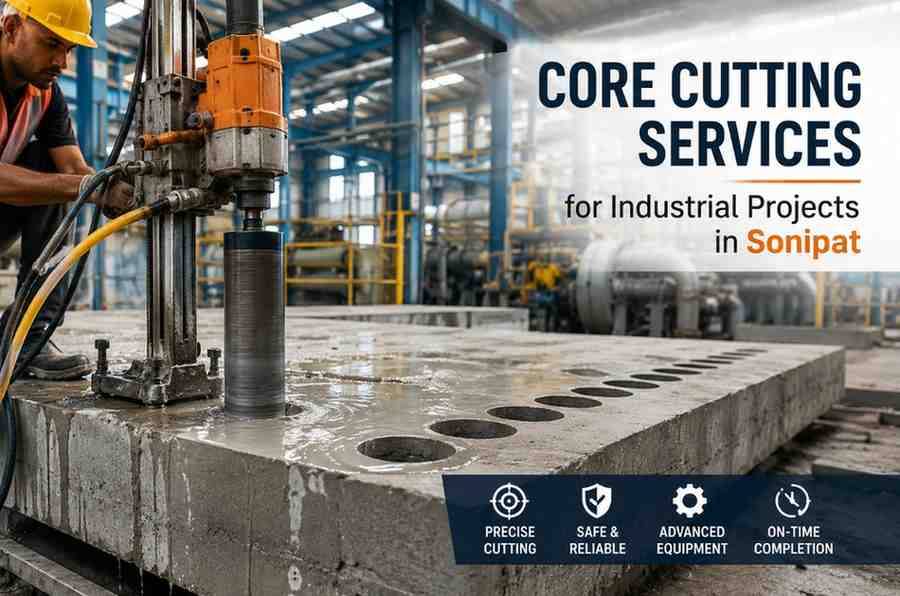
Sonipat has quietly become one of the most important industrial belts in the National Capital Region. With its proximity to Delhi, strong road and rail connectivity, and a fast-growing base of manufacturing units, warehouses, and processing plants, the city is witnessing continuous construction and infrastructure upgrades. Every time a factory expands, a new pipeline is laid, or an old building is retrofitted with modern utilities, one specialised trade quietly makes it all possible: core cutting.
If you manage a plant, oversee a construction project, or handle facility maintenance in Sonipat, understanding core cutting services can save you time, money, and a lot of structural headaches. This guide walks through what core cutting is, why it matters for industrial work, the different techniques used, and how to choose the right service provider — such as Core Cutting India ([email protected]) — for your next project.
What Is Core Cutting?
Core cutting, also known as core drilling, is a precision construction technique used to cut circular or straight openings through concrete, brick, stone, or reinforced cement concrete (RCC) structures. Unlike conventional breaking or chiselling, core cutting uses diamond-tipped drilling and sawing equipment that cuts through hard materials cleanly, quickly, and with minimal vibration or dust.
The process is widely used to create openings for pipes, cables, ducts, HVAC systems, drainage lines, and structural modifications without compromising the integrity of the surrounding structure. In industrial settings, where machinery, load-bearing walls, and safety codes are involved, this precision is not just a convenience — it is a necessity.
Why Core Cutting Matters for Industrial Projects in Sonipat
Sonipat's industrial landscape includes textile units, auto component manufacturers, food processing plants, warehousing hubs, and pharmaceutical facilities, many of which are located in established industrial areas like Kundli, Rai, and the Barhi industrial estate. These facilities often require:
- Retrofitting of new utility lines into existing structures
- Machine foundation modifications
- Fire safety and HVAC duct installations
- Expansion of existing production floors
- Underground cabling and drainage upgrades
Because these facilities are often operational while construction work is being carried out, contractors cannot afford the noise, dust, and structural risk associated with traditional demolition methods. Core cutting offers a controlled, low-impact alternative that keeps operations running with minimal disruption.
Common Applications of Core Cutting in Industrial Settings
1. Pipe and Duct Installation
Factories and warehouses frequently need to install or upgrade plumbing, drainage, and HVAC ductwork. Core drilling creates clean, accurately sized openings in walls, floors, and ceilings for pipes and ducts to pass through, without cracking the surrounding concrete.
2. Electrical and Cable Routing
Modern industrial units run extensive electrical and data cabling through walls and floor slabs. Core cutting allows cables to be routed through concrete structures safely, maintaining fire ratings and structural stability around the opening.
3. Machine Foundation Work
Installing new heavy machinery often requires cutting into existing foundations to anchor equipment or run utility lines beneath it. Precision core cutting ensures these modifications do not weaken the load-bearing capacity of the foundation.
4. Structural Inspections and Testing
Core samples are also extracted from concrete structures to test strength, density, and quality — a process essential for quality audits, structural certifications, and compliance checks in industrial buildings.
5. Fire Safety and Ventilation Systems
Sprinkler systems, exhaust vents, and fire safety conduits often need to pass through multiple floors or walls. Core cutting provides the clean penetrations required without damaging fireproofing materials nearby.
6. Road and Pavement Cutting
Many industrial projects also require cutting through concrete roads, pavements, or yards to lay underground utilities or repair damaged sections, which falls under a specialised branch of core and slab cutting services.
Techniques Used in Professional Core Cutting
A reliable core cutting company uses a combination of specialised techniques depending on the material, thickness, and location of the cut:
Diamond Core Drilling – Uses a hollow diamond-tipped bit to bore precise circular holes through concrete, brick, or stone. Commonly used for pipe and cable openings.
Wall Sawing – Employs a track-mounted circular diamond blade to make straight, controlled cuts through vertical walls, ideal for doorways, windows, or large openings.
Floor Sawing (Slab Sawing) – Uses a walk-behind saw to cut straight lines into horizontal concrete slabs, often used for trenching, drainage lines, or floor modifications.
Wire Saw Cutting – Utilises a diamond-embedded wire to cut through extremely thick or reinforced concrete sections, useful for heavy industrial demolition work.
Chain Saw Cutting – A specialised diamond chainsaw cuts corners and tight spaces where circular blades cannot reach, often used in confined industrial areas.
Each method is chosen based on the specific requirements of the project — the material composition, thickness, reinforcement level, and site accessibility all play a role in determining the right approach.
Benefits of Professional Core Cutting Services
Precision and Accuracy Unlike manual breaking methods, core cutting produces exact dimensions with clean edges, reducing the need for finishing work or repairs.
Minimal Structural Damage Because the cutting is controlled and localised, the surrounding structure remains largely undisturbed, preserving the building's structural integrity.
Reduced Noise and Vibration Diamond cutting tools generate significantly less vibration than jackhammers or manual chiselling, which matters when working near sensitive machinery or during operational hours.
Dust Control Most professional equipment includes water-fed or vacuum dust suppression systems, keeping the worksite cleaner and safer — an important factor for facilities that must meet hygiene or air quality standards, such as food processing or pharmaceutical units.
Faster Turnaround Core cutting is considerably quicker than traditional demolition, helping industrial projects stay on schedule and minimising downtime for operational facilities.
Cost Efficiency Fewer structural repairs, less cleanup, and reduced labour time typically make core cutting more cost-effective over the life of a project compared to conventional methods.
Safety Considerations in Industrial Core Cutting
Because industrial sites often involve live utilities, heavy machinery, and structural load-bearing elements, safety planning is critical. A professional core cutting team typically follows these practices:
- Conducting a structural survey before cutting to identify reinforcement bars, embedded utilities, and load-bearing elements
- Using scanning equipment such as ground-penetrating radar or rebar detectors to avoid damaging hidden electrical lines or pipes
- Following site-specific safety protocols, including PPE requirements and confined space procedures
- Managing dust and water runoff to prevent slip hazards and maintain air quality
- Coordinating with facility operations teams to schedule cutting during low-impact hours
Working with a company experienced in industrial environments ensures these precautions are built into the project plan from day one, rather than addressed reactively.
Choosing the Right Core Cutting Service Provider in Sonipat
Not all core cutting contractors offer the same level of expertise or equipment quality. When selecting a service provider for an industrial project, consider the following factors:
Experience with Industrial Sites – Look for a provider with a track record of working in live industrial facilities, not just residential or small commercial jobs.
Equipment and Technology – Modern diamond drilling and sawing equipment produces cleaner cuts and reduces project time. Ask about the machinery being used.
Safety Compliance – A trustworthy contractor should be able to demonstrate their safety protocols and, where applicable, relevant certifications.
Turnaround Time – Industrial projects often run on tight schedules. Choose a provider that can commit to realistic timelines without compromising quality.
Local Presence – A Sonipat-based team understands local site conditions, permitting requirements, and can respond quickly to urgent project needs.
Transparent Pricing – Request a clear, itemised quote before work begins to avoid unexpected costs later in the project.
Core Cutting India is one such provider serving the Sonipat industrial belt, offering diamond core drilling, wall sawing, floor sawing, and related concrete cutting services tailored to industrial requirements. For project inquiries or site assessments, the team can be reached at [email protected].
What to Expect From a Core Cutting Project
A typical industrial core cutting project follows a structured process:
- Site Assessment – The team visits the facility to evaluate the structure, identify utilities, and understand project requirements.
- Planning and Scanning – Structural scanning is carried out to map reinforcement and embedded services before any cutting begins.
- Equipment Setup – Diamond drilling or sawing equipment is set up with appropriate dust and water management systems.
- Cutting Execution – Precision cuts or drilled holes are made according to the approved plan and specifications.
- Cleanup and Handover – Debris and slurry are cleared, and the finished openings are inspected against project requirements before handover.
Clear communication throughout this process helps industrial clients minimise disruption to ongoing operations while ensuring the work meets engineering and safety standards.
Frequently Asked Questions
What is core cutting used for in industrial projects? Core cutting is primarily used to create precise openings for pipes, cables, ducts, and HVAC systems, as well as for structural modifications, machine foundation work, and concrete sample testing in industrial buildings.
How much does core cutting cost per hole in India? Costs vary depending on the diameter of the hole, the thickness and reinforcement of the concrete, and site accessibility. It is best to request a site-specific quote from a local provider like Core Cutting India for an accurate estimate.
Is core cutting better than traditional drilling or breaking methods? For most industrial applications, yes. Core cutting produces cleaner, more accurate results with less structural damage, reduced noise and dust, and faster completion times compared to manual breaking or standard drilling.
How long does a core cutting project take? Timelines depend on the scope of work — a few holes for pipe routing may take a single day, while larger wall or floor sawing projects across a facility may take several days. Providers typically share a project timeline after the initial site assessment.
What safety precautions are followed during core cutting? Reputable contractors conduct structural scanning before cutting, use PPE and dust/water management systems, follow confined space and electrical safety protocols, and coordinate closely with facility staff to avoid disruption to live operations.
Conclusion
As Sonipat continues to grow as an industrial hub within the NCR, the demand for precise, low-disruption construction techniques like core cutting will only increase. Whether it's installing new utility lines, modifying machine foundations, or upgrading fire safety systems, professional core cutting services allow industrial facilities to make structural changes without compromising safety, operations, or budgets.
For industrial projects in Sonipat that require dependable, experienced core cutting support, Core Cutting India offers a full range of diamond core drilling, wall sawing, and floor sawing services suited to the demands of active industrial sites. Reach out to the team at [email protected] to discuss your project requirements or schedule a site assessment.