
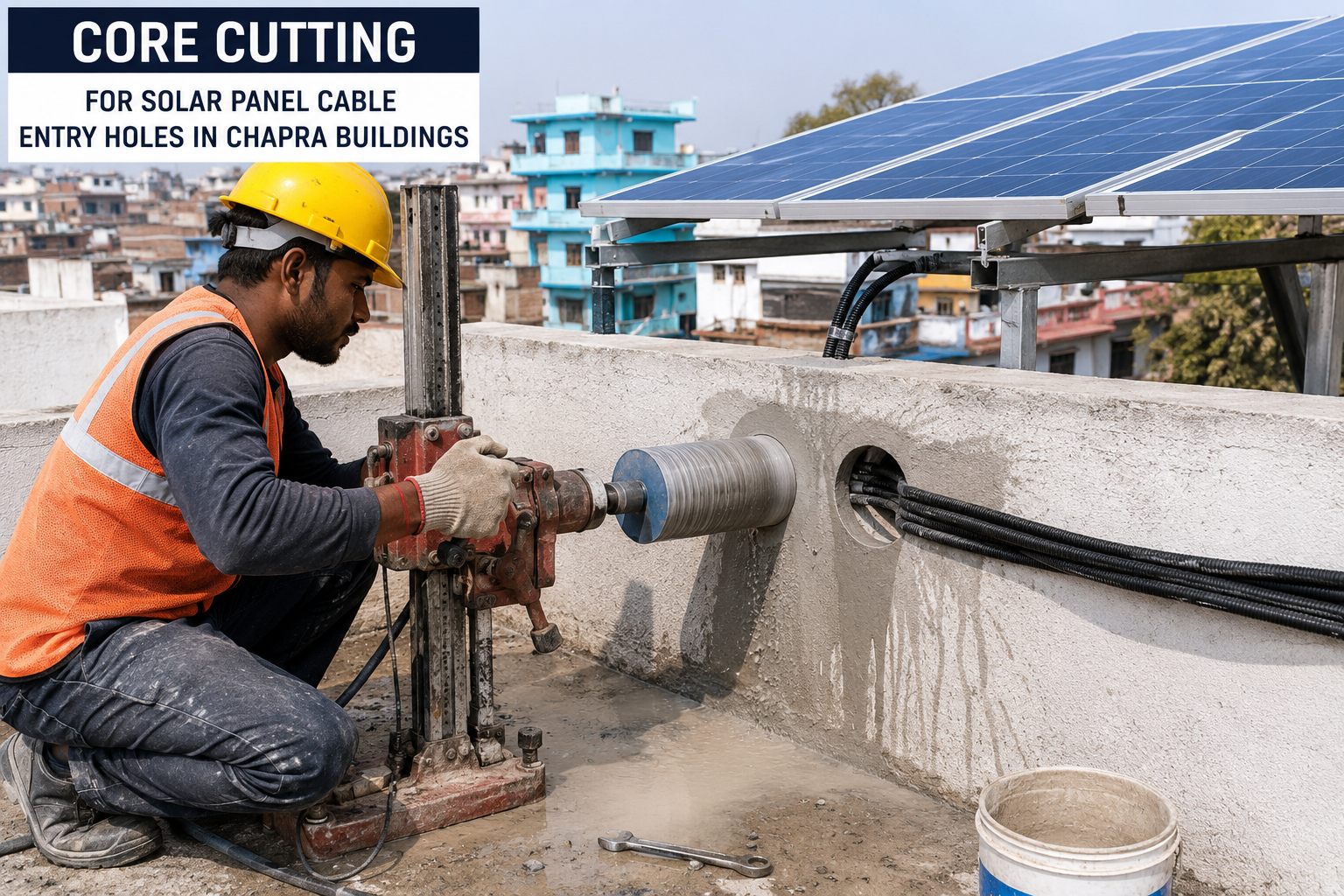
Rooftop solar has moved from being a luxury to a practical choice for homes, schools, hospitals, shops and factories across Bihar. In Chapra (Chhapra), more building owners are installing solar systems to cut their electricity bills and rely less on the grid. But one small detail decides whether an installation is neat, safe and long-lasting: how the cables enter the building.
Solar panels sit on the roof, while the inverter, meter and distribution board are usually inside or on a lower floor. The DC and AC cables, earthing wires and sometimes communication cables must pass through slabs and walls to connect them. Doing this badly with a hammer and chisel can crack concrete, damage reinforcement and cause leaks for years to come.
This is where core cutting comes in. In this guide, we explain how professional diamond core cutting creates precise, clean cable entry holes for solar installations in Chapra buildings, and what you should know before you book the service. This guide comes from Core Cutting India (https://corecuttingindia.com/), which provides concrete cutting and drilling solutions.
What Is Core Cutting?
Core cutting, also called core drilling, is a method of making perfectly round holes in concrete, RCC slabs, brick walls, stone and masonry using a hollow cylindrical drill bit. The bit has industrial diamond segments on its edge. As it rotates, it grinds through the material and leaves a smooth hole, while a solid cylinder of material (the “core”) is removed from the center.
Unlike a hammer drill or manual breaking, core cutting:
- Produces very little vibration
- Leaves clean, smooth hole walls
- Gives a precise diameter
- Avoids cracking or spalling around the hole
- Makes far less dust and debris, especially in the wet method
For solar installations, this precision matters, because the hole must be exactly where the cable conduit needs to go, with a size that allows sealing and waterproofing.
Why Solar Installations in Chapra Need Cable Entry Holes
Chapra is part of the Saran district in Bihar, a region with strong sunshine for much of the year, which makes it well suited to rooftop solar. A typical rooftop system includes:
- Solar panels mounted on the terrace or roof
- DC cables running from the panels to the inverter
- An inverter converting DC to AC power
- AC cables connecting the inverter to the main distribution board and meter
- Earthing and lightning protection cables
The panels are outside, and the electrical equipment is usually inside. So cables must pass through the roof slab, parapet wall, or outer wall. Those penetrations are the cable entry holes, and they need to be:
- Correctly sized for the conduit or cable gland
- Placed away from structural elements such as beams and columns
- Sealed against rain, moisture, insects and rodents
- Clean enough that the finish of the building is not damaged
The Problem with Traditional Hole-Making Methods
Many small installers still use hammers, chisels or heavy impact drills to break through slabs and walls. In Chapra’s mix of old brick-and-lime buildings and newer RCC constructions, this approach causes several problems:
- Cracks and weakening: Impact can create micro-cracks that spread over time, especially in older slabs.
- Damaged reinforcement: Uncontrolled breaking can cut or expose steel bars, which then rust.
- Rough, oversized holes: These are harder to seal and invite water leakage.
- Noise and dust: This is a nuisance in homes, schools, clinics and offices that stay in use.
- Repair costs: Patching broken plaster and concrete adds time and money.
A cable entry hole is a small feature, but a poorly made one can become a permanent weak point in the waterproofing of your terrace.
How Core Cutting Works for Solar Cable Entry
Step 1: Site Inspection and Marking
A technician inspects the slab or wall, identifies the cable route, and marks the hole position. Where possible, the position is chosen to avoid beams, columns and visible reinforcement. Using a rebar scanner is good practice for thick RCC slabs.
Step 2: Choosing the Hole Diameter
Hole size depends on the number and thickness of cables and the type of conduit. Common cable entry holes for solar projects range from about 25 mm to 100 mm. Larger holes are used when several cables must pass together or when a bigger conduit or pipe sleeve is needed. Your solar installer should confirm the final size.
Step 3: Fixing the Machine
The core drilling machine is anchored to the surface with an expansion bolt or a vacuum base so it stays stable. For wall penetrations or angled routes, the machine is set up on a stand with the correct orientation.
Step 4: Drilling with a Diamond Bit
The diamond core bit is rotated at a controlled speed. In wet core cutting, water is fed to the bit to cool it, reduce dust and flush out slurry. This is the most common method for concrete. Dry core cutting is used in limited situations where water is not suitable.
Step 5: Removing the Core and Cleaning
Once the bit passes through, the core is removed, and the hole is cleaned of slurry and debris. The result is a smooth, round hole ready for the sleeve or conduit.
Step 6: Sleeving, Cabling and Sealing
The installer inserts a PVC or HDPE sleeve or conduit, runs the cables, and seals the gap using suitable waterproof sealant, non-shrink grout or fire-rated sealing compound, as the site requires.
Benefits of Core Cutting for Solar Cable Entry Holes
1. Clean, Accurate Holes
A round hole of exact diameter means the conduit fits snugly. That makes the waterproofing job much easier and more reliable.
2. Protection of Structural Integrity
Core cutting is a controlled process with minimal vibration. It reduces the risk of cracking the slab or damaging surrounding concrete. This matters in Chapra, where many buildings have been standing for years and have mixed construction quality.
3. Low Disturbance to Occupants
Because the method is quiet and relatively low-vibration compared to breaking, it suits occupied buildings such as homes, hospitals, schools and offices.
4. Reduced Water Leakage Risk
Terrace leakage during the monsoon is a major concern in Bihar. A neat, sealed entry hole is far less likely to become a leakage path than a ragged, broken opening.
5. Faster Installation
A skilled operator can drill a hole in minutes. Faster hole-making helps solar teams finish the job on schedule without extra repair work afterward.
6. Neater Finish
Clean holes mean no broken edges, loose plaster or large patches. The final installation looks professional, which also helps with inspections and handover.
Where Core Cutting Is Used in Solar Projects
Core cutting for cable entry is useful across many types of buildings in Chapra:
- Residential homes: Rooftop solar for family homes, apartments and duplexes
- Schools and colleges: Campus rooftop systems with long cable runs
- Hospitals and clinics: Where noise, dust and vibration must be kept low
- Commercial buildings and shops: Showrooms, malls, offices and complexes
- Warehouses and factories: Larger systems with multiple conduits and cable trays
- Government and institutional buildings: Public offices and community buildings
- Farmhouses and agricultural facilities: Solar systems for pumps and storage units
Core cutting is also used for related solar work, such as holes for earthing pits, conduit passes through parapet walls, and openings for cable trays between floors.
Planning Your Solar Cable Entry Holes: Key Tips
1. Plan the cable route early. Decide the shortest, safest path from the panels to the inverter before drilling. Fewer penetrations means fewer places to seal.
2. Avoid structural elements. Do not drill through beams or columns. Keep clear of dense reinforcement where possible, and scan the slab first if you are unsure.
3. Consider the slope and drainage. Where a hole passes through a terrace, place it so water cannot pool around it. Raised sleeves or a small curb around the opening can help.
4. Choose the right sleeve and sealant. Use durable UV-resistant conduit on the roof and good-quality sealant or grout around the sleeve.
5. Allow for future expansion. If you may add panels or batteries later, consider a slightly larger sleeve with spare capacity instead of drilling again.
6. Follow electrical safety norms. Cable sizing, earthing and protection should follow applicable Indian standards and your installer’s design. Core cutting only creates the opening; the electrical work should be done by qualified professionals.
Common Mistakes to Avoid
- Drilling without checking for rebar or hidden conduits. This can damage existing wiring or pipes.
- Making the hole too large. Oversized holes are harder to seal and waste time and materials.
- Leaving gaps around cables. Unsealed openings let in water, insects, rats and moisture.
- Using hammer and chisel on thin or old slabs. This can crack the slab and cause leaks later.
- Skipping waterproofing. Even a perfect hole needs proper sealing, especially before the monsoon.
- Hiring inexperienced operators. Core cutting looks simple, but the machine setup, bit choice and technique make a big difference.
What Affects the Cost of Core Cutting?
Pricing varies from site to site. The main factors are:
- Hole diameter: Larger holes cost more.
- Depth of cut: Thicker slabs and walls take more time and bit wear.
- Material type: Reinforced concrete is harder than brick or block.
- Number of holes: Multiple holes at one site are often more economical per hole.
- Access and height: Rooftop or hard-to-reach locations may need extra setup.
- Water and power availability: Wet cutting needs a water source and electricity.
For an accurate quote, it is best to share the number of holes, the sizes and the location, and ask for a site visit or a call.
Why Choose Core Cutting India for Chapra Solar Projects?
When you are investing in a solar system, the last thing you want is a leaking terrace or a cracked slab caused by a careless hole. Core Cutting India (https://corecuttingindia.com/) focuses on precision concrete cutting and core drilling for construction, renovation and installation projects.
Here is what customers can expect:
- Professional diamond core cutting equipment suited to RCC, brick and masonry
- Trained operators who understand structural safety and site conditions
- Clean, dust-controlled work suitable for occupied buildings
- Flexible hole sizes for solar conduits, pipes, cable trays and sleeves
- Coordination with solar installers so holes match the electrical design
- Clear communication on timelines and requirements
Whether you are a homeowner planning a small rooftop system or a contractor handling a large commercial project in Chapra, getting the cable entry right from day one saves trouble later.
Call us today at +91 70096 79903 to discuss your requirement or request a quote.
Frequently Asked Questions (People Also Ask)
What is core cutting in construction?
Core cutting is the process of drilling clean, circular holes through concrete, brick or stone using a hollow diamond-tipped bit. It is used for plumbing, electrical conduits, HVAC, solar cable entries and more.
Why is core cutting better than breaking with a hammer for cable holes?
Core cutting is more precise, causes less vibration and noise, and avoids cracks. The smooth, round hole is also much easier to seal and waterproof.
What size hole is needed for solar panel cables?
It depends on the cable type and number of cables. Many residential systems use holes between roughly 25 mm and 75 mm, while larger projects may need bigger openings. Your solar installer can confirm the exact size.
Can core cutting damage the reinforcement in a slab?
A careful operator will try to avoid cutting reinforcement by scanning and choosing the location wisely. If a bar must be cut, the decision should be made with structural guidance, because it can affect the slab.
How do you waterproof a cable entry hole on a terrace?
Use a properly sized sleeve, fill gaps with waterproof sealant or non-shrink grout, and, where needed, add a raised curb or flashing so water drains away from the opening.
Is wet or dry core cutting better for solar installations?
Wet cutting is generally preferred for concrete because it controls dust, cools the bit and gives a cleaner cut. Dry cutting may be used where water is impractical, but it creates more dust.
How long does it take to core cut a hole for solar cables?
A standard hole in a slab or wall typically takes only a few minutes to a short while, depending on thickness, diameter and reinforcement, plus setup time.
Is core cutting suitable for old buildings in Chapra?
Yes. Because it limits vibration and impact, core cutting is often the safer choice for older structures, though a site inspection is recommended first.
Do I need permission to drill into my roof for solar?
For your own property, generally not, but for shared buildings, apartments or rented premises, you should get approval from the owner, society or relevant authority. Always follow local building and electrical rules.
How do I book core cutting services in Chapra?
You can contact Core Cutting India at +91 70096 79903 or visit https://corecuttingindia.com/ to share your requirements and get a quote.
Conclusion
A solar installation is only as good as its details. While the panels get the attention, the humble cable entry hole quietly determines whether your system stays watertight, neat and structurally safe for decades. In Chapra’s climate, with heavy monsoon rain and strong summer sun, getting this detail right is especially important.
Diamond core cutting offers the precision, cleanliness and control that solar projects need. It protects your building’s structure, reduces disruption, and makes sealing and finishing simple and reliable.
If you are planning a rooftop solar installation in Chapra, talk to the experts at Core Cutting India before the cables go in. Visit https://corecuttingindia.com/ or call +91 70096 79903 to book your service today.