
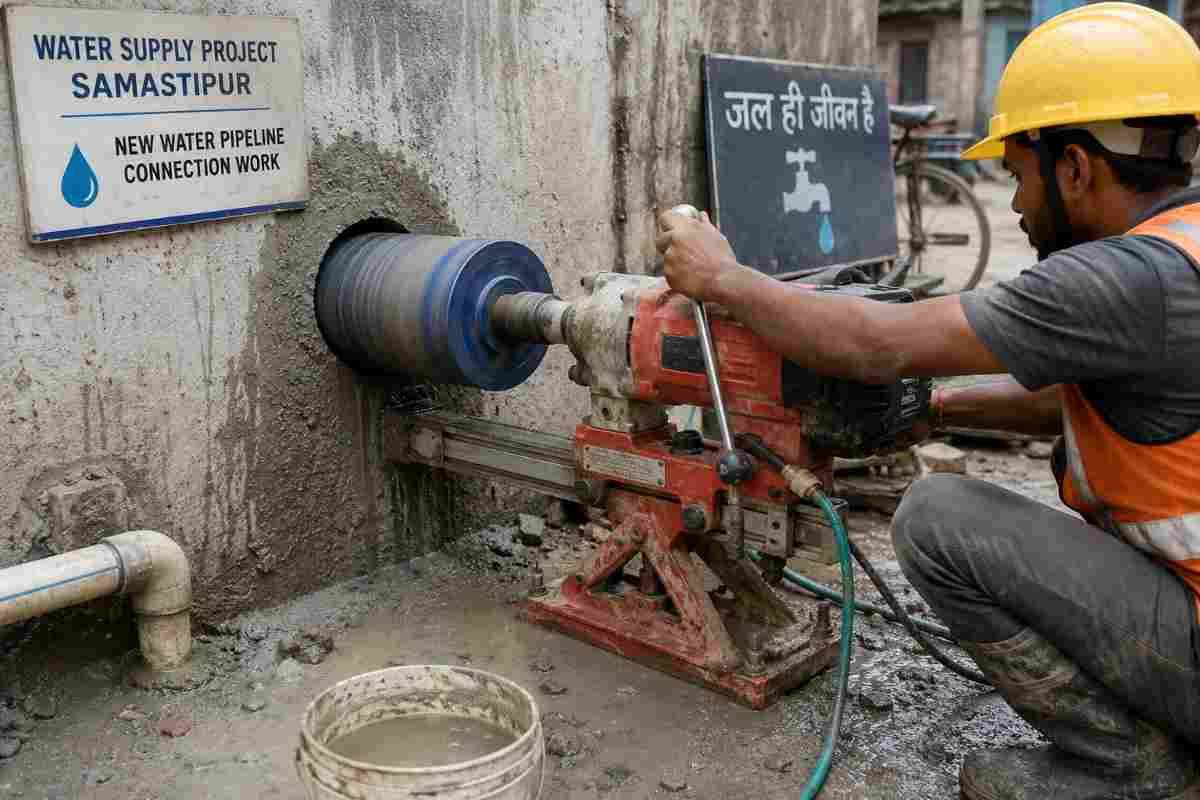
Rooftop solar is spreading quickly across Bihar. Homeowners, schools, clinics, shops and small factories in Samastipur are looking at solar panels to cut their electricity bills and reduce dependence on grid power. But once the panels are fixed on the roof, one practical question arises: how do you safely bring the DC and AC cables from the roof into the building?
The answer is a neat, precisely drilled cable entry hole made with a diamond core cutting machine. At Core Cutting India, we help building owners, solar installers and contractors create these openings cleanly, without cracking walls, damaging reinforcement or leaving behind a mess. This guide explains why core cutting is the right method for solar cable entry holes, how the process works, what it costs you in time and effort, and what to look for in a service provider in Samastipur.
Why Solar Installations Need Cable Entry Holes
A rooftop solar system has three main electrical parts: the solar panels, the inverter and the distribution or metering point. The panels sit on the roof, while the inverter and connection panel are usually inside the building, often on a ground-floor wall, in a staircase area or in a utility room.
The cables carrying power from the panels must travel from roof to inverter. In most RCC (reinforced cement concrete) buildings in Samastipur, this means passing through a roof slab, a parapet wall, a brick wall or a beam-column junction. A well-planned cable route needs:
- A clean opening of the right diameter for conduit or cable gland
- Straight alignment, so cables are not bent sharply
- Weatherproof sealing, so rain does not enter the building
- Minimal structural impact, so the slab or wall keeps its strength
Many people still try to make these holes with hammers, chisels or ordinary impact drills. The result is often a ragged, oversized opening, cracks spreading into the plaster, and a long repair job afterwards. Core cutting avoids all of this.
What Is Core Cutting?
Core cutting, also called core drilling, uses a hollow cylindrical drill bit with diamond segments on its cutting edge. The bit is mounted on a motorised drilling machine that rotates it at controlled speed. Water is usually supplied to the bit to cool it and flush out the slurry.
As the bit rotates, it grinds through concrete, brick and even steel reinforcement, leaving a perfectly round hole with smooth walls. A solid cylinder of material, called the “core,” comes out intact. Hole diameters can range from small sizes of around 25 mm up to 300 mm or more, depending on the requirement.
For solar cable entry, the typical diameters are 40 mm, 50 mm, 75 mm, 100 mm and 150 mm, depending on how many cables or how large a conduit you need to pass.
Why Core Cutting Is Ideal for Solar Cable Holes
1. Clean, Precise Openings
The hole is exactly as large as the bit you select. There is no chipping around the edges and no need to widen the hole to fit a pipe. This makes it easy to fit PVC conduits, GI pipes or cable glands snugly.
2. No Damage to the Surrounding Structure
Hammer drilling sends shock waves through concrete, which can cause micro-cracks. Core cutting is a grinding process with very low vibration, so the surrounding slab, wall and plaster stay intact. This matters especially in older Samastipur buildings where the concrete may already be ageing.
3. Cuts Through Reinforcement Safely
Roof slabs contain steel bars. A diamond core bit can cut through rebar when necessary, and a skilled operator will scan or plan the position to avoid cutting main structural bars wherever possible.
4. Low Dust and Low Noise
Wet core cutting keeps dust down, which is a major benefit if the building is occupied, such as a home, a school, a hospital or a shop. The noise level is also far lower than that of breakers or heavy hammers.
5. Faster Completion
A typical cable entry hole of 50 to 100 mm through a standard slab or wall can often be finished in minutes rather than hours. That keeps your solar installation on schedule.
6. Better Waterproofing
Samastipur gets heavy monsoon rainfall, and north Bihar is known for waterlogging and high humidity. A smooth-walled round hole is much easier to seal with sleeves, waterproof sealants, grout or gland fittings than a jagged chiselled opening. This protects the building from seepage, which is one of the most common complaints after poorly executed rooftop work.
Where Cable Entry Holes Are Needed in Samastipur Buildings
Different types of buildings have different cable routing needs:
Residential houses and apartments: Most homes in Samastipur town and nearby areas are RCC-framed with brick infill. The cable usually passes through the roof slab near a staircase headroom or through a parapet and then down an external wall.
Schools and colleges: Educational buildings often install larger systems. These need multiple cable holes for DC strings, AC output and earthing connections.
Hospitals and nursing homes: Reliable power is critical here. Clean, vibration-free cutting is important because patients and sensitive equipment are nearby.
Shops, showrooms and commercial complexes: Roof access and cable routes may pass through shared walls or shafts. Controlled cutting avoids disturbing neighbours.
Government offices and institutions: Public buildings may have older structures. Gentle, precise core cutting helps preserve the structure.
Small factories, warehouses and cold storage units: These often use larger solar plants, with bigger conduits and sometimes cable trays that need wider openings.
Agricultural and rural buildings: Farm buildings, pump houses and rice mills around Samastipur district can benefit from solar power, and core cutting is a convenient way to route cables through thick brick or concrete walls.
Step-by-Step: How Core Cutting for Solar Cable Entry Works
Here is how a professional team typically carries out the job.
Step 1: Site Inspection and Planning
The team studies the roof, the inverter location and the planned cable route. Together with the solar installer or the building owner, they decide the hole position, diameter and angle. The aim is the shortest practical path that avoids beams, columns and heavy reinforcement.
Step 2: Marking the Position
The exact centre point is marked on both the roof side and the interior side where possible. For slabs, the marking is checked so the hole comes out where planned and does not land inside a ceiling fixture, a beam or a wiring conduit.
Step 3: Setting Up the Machine
The core drilling rig is fixed firmly. On vertical cuts through a slab, the machine is anchored to the surface or held with a vacuum or bolt-down base. On horizontal cuts through a wall, a wall-mounted stand is used. A stable setup is what gives a straight, accurate hole.
Step 4: Water Supply and Protection
A water supply is connected for cooling. Plastic sheets or a water-collection ring can be used to keep slurry from spreading, protecting floors, furniture and finished interiors.
Step 5: Cutting the Hole
The diamond bit is started at a gentle speed so it can seat itself without wandering. Once it bites, the operator increases the feed. The bit cuts through concrete and any steel on the way, and the core is removed once complete.
Step 6: Cleaning Up
The slurry is wiped or vacuumed, and the area is cleaned. The extracted core is taken away or handed to the owner.
Step 7: Sleeving and Sealing
The solar installer can then place a PVC or GI sleeve, run the cables through, and seal both ends with a waterproof compound, fire-rated sealant or cable gland as required. Sealing on the roof side is especially important to prevent water entering during the rains.
Common Mistakes to Avoid
Even with a good machine, some mistakes can cause trouble. Knowing them helps you ask the right questions when you hire a service.
Cutting without checking the structure. Cutting through a beam or column can weaken the building. Always confirm that the hole position is acceptable. For larger holes or any hole near beams, consult a structural engineer.
Choosing the wrong diameter. Too small and the cables will not fit; too large and sealing becomes difficult. Plan for the number of cables, the conduit size and a little spare room for future additions.
Ignoring the slope. For roof-level openings, a slight downward slope away from the building helps drain water away from the entry point.
Skipping waterproofing. An unsealed hole is a leak waiting to happen. Always use proper sealing around the sleeve and cables.
Using the wrong method. Chiselling and breaking can leave behind cracks that spread over time. Core cutting costs little more but saves repair costs later.
Hiring untrained operators. An inexperienced operator can drift off alignment, cut at the wrong spot or damage the bit. Experience matters.
Safety Considerations
Safety is a key part of any core cutting job on a rooftop or in an occupied building. A responsible team will:
- Check the roof edge and use proper footing, especially on parapet walls
- Use electrical safety devices when water and electricity are close together, such as an RCCB or GFCI-protected supply
- Wear protective gear: gloves, safety shoes, helmets and eye protection
- Keep people and pets out of the working area
- Avoid cutting near live wiring, hidden pipes or gas lines
- Make sure the machine is firmly anchored before starting
If your solar system is already installed or partly energised, inform the cutting team so that nobody drills near live cables.
Core Cutting vs Traditional Drilling: A Quick Comparison
| Feature | Core Cutting | Hammer/Chisel Method |
|---|---|---|
| Hole finish | Smooth and round | Rough and uneven |
| Vibration | Very low | High |
| Cracking risk | Minimal | High |
| Dust | Low (wet cutting) | High |
| Noise | Moderate to low | Loud |
| Reinforcement cutting | Clean cut | Often bent or torn |
| Sealing ease | Easy | Difficult |
| Repair work after | Little or none | Frequently needed |
For solar installations, where tidy and watertight work reflects directly on the quality of the project, core cutting is the clear choice.
How Many Holes Does a Solar System Need?
This depends on the system design. A small home system of 2 to 5 kW may need just one hole for DC cables and possibly another for earthing or communication cables. Larger commercial systems may need several holes, or a larger single opening to carry a cable tray or multiple conduits.
Planning all the holes at once, before work begins, saves time and avoids repeated visits. Share the system layout with your core cutting provider so that positions and sizes are finalised together.
Planning Tips for Samastipur Building Owners
Talk to your solar installer first. They will know where the inverter will sit and how the cable run should go.
Choose the position carefully. A shorter, straighter path reduces cable cost and power loss.
Think about future expansion. If you may add panels later, consider a slightly larger sleeve or a spare conduit.
Protect against monsoon water. Ask for sleeves with proper slope and sealing at the entry point.
Keep records. Note the hole positions and sizes for future maintenance and for any structural inspection.
Use a trained team. A good core cutting team can deliver in a single visit and leave your property tidy.
Why Choose Core Cutting India?
Core Cutting India provides professional diamond core cutting services for residential, commercial and industrial buildings. For solar projects in and around Samastipur, our approach focuses on what matters most to building owners and solar installers:
- Precision: Accurate placement and straight, round holes in the size you need
- Cleanliness: Wet cutting methods and careful cleanup to keep your property tidy
- Structural care: Methods that minimise cracking and protect your building
- Speed: Quick turnaround so your solar installation stays on schedule
- Flexible sizes: A wide range of core bit diameters to match your conduit and cable needs
- Experienced operators: Trained technicians who understand RCC slabs, brick walls and reinforcement
Whether you are a homeowner installing a small rooftop plant or a contractor handling several buildings, we can adapt to your timeline and requirements.
Frequently Asked Questions
What is core cutting for solar panel cables?
It is the process of drilling a clean, round hole through a wall or roof slab using a diamond-tipped hollow bit so that solar cables can pass safely into the building.
Is core cutting safe for my building?
Yes, when done by trained operators. It produces very little vibration and avoids the cracking commonly caused by hammer drilling. For holes near beams or columns, get a structural engineer’s advice.
Can the machine cut through steel reinforcement?
Diamond core bits can cut through rebar. However, it is always better to plan the hole position to avoid cutting main structural bars where possible.
What hole sizes are available?
Sizes typically range from small diameters such as 25 mm to large holes of 300 mm or more. For most solar cable entries, 40 mm to 150 mm is common.
How long does it take to cut one hole?
A standard hole in a normal slab or wall usually takes only a short time, though the exact duration depends on thickness, reinforcement and hole size.
Will core cutting cause water leakage?
The cutting itself does not cause leakage. Leaks happen when the opening is not sealed properly afterwards. Using sleeves, waterproof sealant and a slight outward slope keeps water out.
Can core cutting be done in an occupied building?
Yes. Because it creates low vibration and controlled dust, core cutting is well suited to homes, schools, offices and hospitals that stay in use during the work.
Do I need to switch off the power during cutting?
It is wise to isolate any live circuits near the cutting area. Always tell the team about existing wiring and solar equipment so they can work safely.
Should the hole be cut before or after panel installation?
Ideally, plan and cut the hole before or alongside the installation so cables can be routed neatly. Cutting after installation is possible, but extra care is needed around existing wiring.
How do I get a quote for core cutting in Samastipur?
Share your hole size, number of holes, wall or slab thickness and location. Then call or message the team for a quote and schedule.
Final Thoughts
A solar installation is only as good as its finishing. Even the best panels and inverter can be let down by messy cable routing, leaky entry points or damaged walls. Core cutting for cable entry holes gives you a clean, precise, structurally friendly and weather-ready solution that suits Samastipur’s mix of homes, institutions and commercial buildings.
If you are planning a rooftop solar project and need dependable core cutting, reach out to the team at Core Cutting India.
📞 Call or WhatsApp: +91 70096 79903
🌐 Website: https://corecuttingindia.com/
Get precise, dust-controlled core cutting for your solar cable entry holes in Samastipur, done right the first time.