
Introduction
Every building, whether a residential apartment in Mumbai, a commercial complex in Bengaluru, or an industrial shed in Pune, eventually needs repair or upgrading. Pipes leak, cables need rerouting, HVAC ducts require new pathways, and structural engineers need to inspect concrete health years after construction. In almost every one of these situations, a precise, controlled hole needs to be cut through concrete, brick, or stone — and that is where core drilling becomes indispensable.
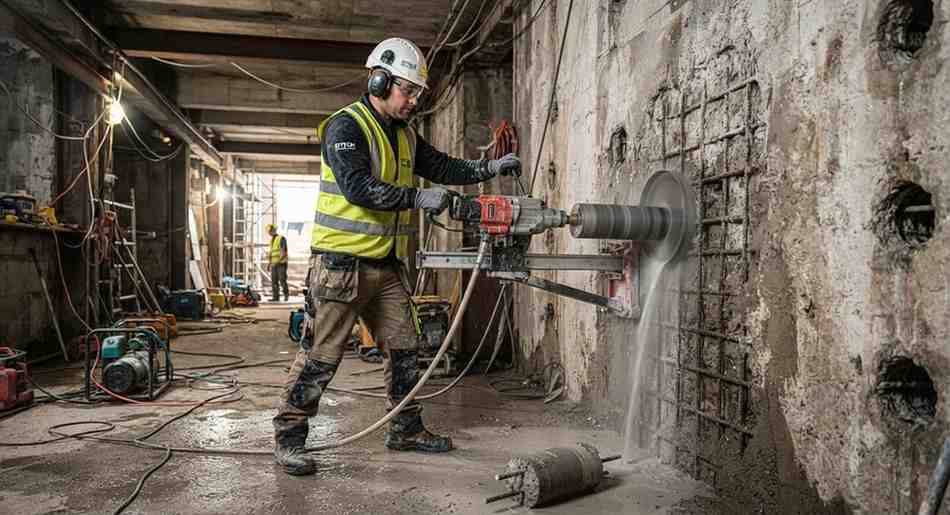
Core drilling is a specialised construction technique used to cut clean, circular holes through concrete, reinforced cement concrete (RCC), stone, and masonry without disturbing the surrounding structure. Unlike traditional breaking methods that use hammers and chisels, core drilling uses a diamond-tipped hollow bit that rotates at high speed, cutting through even heavily reinforced concrete with minimal vibration, dust, and noise.
At Core Cutting India ([email protected]), we work with contractors, MEP teams, structural consultants, and building owners across the country to deliver safe, accurate core drilling solutions for repair and maintenance projects. In this blog, we explain why core drilling has become the preferred method for building maintenance work in India, where it is used, and what to consider before hiring a core drilling contractor.
What Is Core Drilling?
Core drilling is the process of using a hollow, diamond-embedded cylindrical bit — mounted on a drill rig — to bore precise holes through concrete, stone, or masonry. As the bit rotates, it removes a solid cylindrical "core" of material, leaving behind a smooth, clean-edged hole. The extracted core can even be tested in a laboratory to assess the strength and quality of the concrete, making core drilling doubly useful for both utility work and structural diagnostics.
Core drilling machines are commonly rated by the diameter of hole they can cut, ranging from small 12 mm holes for anchor bolts to large 600 mm+ holes for HVAC ducts, elevator shafts, or large pipe penetrations.
Why Core Drilling Is Essential in Building Repair and Maintenance
Older buildings in Indian cities — many constructed 20 to 50 years ago — were not designed with modern electrical, plumbing, fire-fighting, or internet infrastructure in mind. As these buildings age and get renovated, contractors must find ways to route new systems through existing solid concrete without weakening the structure. Core drilling solves this problem in several key ways:
1. Precision Without Structural Damage
Traditional breaking methods using jackhammers can create micro-cracks, loosen rebar, and destabilise surrounding concrete. Core drilling, by contrast, applies rotational force rather than impact force, keeping the surrounding structure intact. This is critical when working near load-bearing walls, columns, or slabs.
2. Minimal Noise, Dust, and Vibration
In occupied buildings — hospitals, IT parks, residential societies — noise and dust are major concerns. Diamond core drilling machines used with water-cooling systems produce far less dust and noise compared to hammer drilling, making them suitable for use in live, occupied environments.
3. Speed and Efficiency
Core drilling machines can cut through reinforced concrete far faster than manual breaking, reducing project downtime — an important factor for commercial buildings and factories that cannot afford long shutdowns.
4. Ability to Cut Through Reinforced Concrete
Modern Indian buildings, particularly RCC-framed structures, often have dense steel reinforcement. Diamond core bits are engineered to cut through both concrete and embedded rebar cleanly, something conventional drilling struggles with.
Common Applications of Core Drilling in Indian Building Repair Projects
Plumbing and Drainage Repairs
Old buildings frequently need new plumbing lines, especially during bathroom or kitchen renovations. Core drilling allows plumbers to cut precise holes through RCC slabs for pipe risers without disturbing the floor above or below — a common requirement in high-rise apartments in cities like Chennai, Hyderabad, and Noida.
Electrical and Data Cabling
As buildings upgrade to modern electrical loads, Wi-Fi infrastructure, and CCTV systems, cables must be routed through walls and slabs. Core drilling creates clean cable pathways through concrete without the excessive breakage caused by chiselling.
HVAC Duct and Ventilation Installation
Retrofitting air-conditioning systems in older commercial buildings — a very common project in India's growing office and retail sector — requires large-diameter core holes for ducting and exhaust systems. Core drilling machines capable of cutting holes up to 500–600 mm are typically deployed for such work.
Fire-Fighting and Sprinkler System Retrofits
With updated fire safety regulations across Indian states, many older buildings are being retrofitted with sprinkler systems and fire hydrant lines. This requires drilling through multiple RCC floor slabs in a vertical shaft — a task well suited to core drilling due to its precision and ability to maintain structural alignment across floors.
Structural Inspection and Testing
Structural engineers often use core drilling to extract concrete cores for laboratory testing. This helps assess the compressive strength, carbonation depth, and overall health of ageing concrete — particularly relevant for older government buildings, bridges, and heritage structures undergoing restoration work across India.
Anchor Bolt and Machinery Foundation Work
Factories and industrial units frequently need to install or reposition heavy machinery. Core drilling is used to create precise anchor bolt holes in concrete foundations, ensuring machinery is securely and accurately mounted.
Elevator and Staircase Modernisation
As older residential societies add or upgrade lift infrastructure, core drilling is used to cut shaft openings and structural penetrations required for lift installation, especially in mid-rise buildings across metro cities.
Core Drilling Methods Used in India
Wet Core Drilling
This is the most widely used method for RCC structures. Water is continuously fed to the drill bit during cutting, which cools the diamond segments, reduces dust, and extends the life of the equipment. Wet drilling is preferred for larger diameter holes and thick concrete sections.
Dry Core Drilling
Used for smaller diameter holes, typically in brick or lightweight masonry, where water use is impractical — for example, indoor drilling in finished interiors where water damage must be avoided.
Handheld Core Drilling
Portable, handheld machines are used for smaller jobs such as installing exhaust fans, split AC pipe holes, or small utility penetrations — extremely common in residential repair and renovation work across Indian homes.
Rig-Mounted Core Drilling
For larger holes and thicker structural elements, drill rigs are anchored to the floor or wall using anchor bolts or vacuum bases, allowing for stable, high-precision drilling — commonly used in commercial and industrial retrofit projects.
Indian Examples of Core Drilling in Practice
- Residential retrofitting in Mumbai and Pune: As older housing societies upgrade plumbing and electrical systems, core drilling teams are commonly hired to cut through RCC slabs for pipe and cable routing without disturbing neighbouring flats.
- Commercial office fit-outs in Bengaluru and Gurugram: IT parks and office towers frequently undergo interior renovations that require HVAC duct penetrations and structured cabling pathways, both achieved through core drilling.
- Heritage building restoration: Structural assessments of older government and heritage structures in cities such as Delhi and Kolkata often use core sampling to test concrete and masonry strength before restoration work begins.
- Industrial maintenance in manufacturing hubs: Factories in industrial belts like Pune, Chennai, and the NCR region use core drilling for machine foundation modifications and utility line upgrades during plant maintenance shutdowns.
- Metro and infrastructure projects: Core drilling is also used in utility relocation work around metro rail corridors, where precise penetrations through existing structures are required without affecting structural integrity.
Choosing the Right Core Drilling Contractor
Building repair and maintenance work involves real structural risk if core drilling is not executed correctly. Here are a few factors to consider when hiring a core drilling service in India:
- Experience with RCC and reinforced structures – Ensure the contractor has handled reinforced concrete cutting, not just masonry.
- Proper equipment – Diamond core bits, wet drilling rigs, and dust management systems should be standard.
- Structural safety assessment – A qualified team will check for rebar location and load-bearing considerations before drilling, especially near columns or beams.
- Compliance and safety practices – Look for contractors who follow safety protocols, use PPE, and manage water and dust responsibly, especially in occupied buildings.
- Track record – Ask for references from similar repair and maintenance projects, ideally within your city or building type.
At Core Cutting India, our teams specialise in precision core drilling for residential, commercial, and industrial repair and maintenance projects across the country. We combine trained manpower with modern diamond drilling equipment to deliver safe, clean, and efficient results.
Safety Considerations During Core Drilling
Because core drilling often takes place in occupied or structurally sensitive buildings, safety planning is critical:
- Rebar detection: Using scanning equipment before drilling helps avoid cutting through critical structural reinforcement.
- Water management: In wet drilling, proper containment prevents water damage to floors below.
- Dust control: Vacuum attachments and wet methods reduce airborne dust, important for occupied and healthcare environments.
- Structural consultation: For load-bearing elements, a structural engineer should be consulted before drilling to avoid weakening the building.
- PPE and site safety: Operators should use appropriate protective equipment, and work areas should be cordoned off from building occupants.
Conclusion
Core drilling has become a cornerstone technique in modern building repair and maintenance across India. From routing new plumbing and electrical systems in ageing residential buildings to enabling structural testing on heritage sites and supporting large-scale HVAC and fire-safety retrofits in commercial towers, core drilling offers a precise, low-impact solution that traditional breaking methods simply cannot match.
As Indian cities continue to grow and their building stock ages, the demand for skilled, safety-conscious core drilling services will only increase. Whether you're managing a residential renovation, a commercial fit-out, or a large-scale industrial maintenance project, working with an experienced core drilling partner ensures your repair work is completed efficiently, safely, and without compromising the structural integrity of your building.
For professional core drilling and core cutting services across India, reach out to Core Cutting India at [email protected].
Target-Related Searches
- core drilling services India
- concrete core cutting company near me
- core drilling machine price India
- RCC core cutting contractor
- diamond core drilling services
- wall and slab core cutting India
- core drilling for plumbing pipes
- core cutting for AC pipe installation
- structural core sampling India
- core drilling for cable and duct work
People Also Ask
- What is core drilling used for in building repair? Core drilling is used to create precise holes in concrete, walls, and slabs for plumbing, electrical, HVAC, and structural inspection work without damaging the surrounding structure.
- Is core drilling safe for load-bearing walls? Core drilling can be done safely on load-bearing elements if a structural engineer assesses the location and rebar scanning is done beforehand to avoid cutting critical reinforcement.
- What is the difference between core drilling and core cutting? Core drilling refers to cutting circular holes, while core cutting is a broader term that can include cutting slots, openings, or larger sections of concrete and masonry.
- How much does core drilling cost in India? Core drilling costs vary based on hole diameter, concrete thickness, location, and accessibility, and are typically quoted per hole or per project by contractors like Core Cutting India.
- Can core drilling be done in occupied buildings? Yes, wet diamond core drilling produces minimal noise, dust, and vibration, making it suitable for use in occupied residential and commercial buildings.
- What tools are used for core drilling concrete? Diamond-tipped hollow core bits mounted on electric or hydraulic drill rigs, often paired with water-cooling systems, are used for concrete core drilling.
- How long does core drilling take? Drilling time depends on hole diameter and concrete thickness, but most standard holes for plumbing or cabling can be completed within 15 to 45 minutes per hole.