
Target-Related Searches
-
Concrete core drilling safety protocols
-
How to avoid gas and water lines during core cutting
-
Ground Penetrating Radar for utility location
-
Dangers of hitting water mains while drilling
-
Professional core drilling and scanning services India
People Also Ask (PAA) Questions
-
What happens if you hit a gas line while core drilling?
-
How do you locate water and gas pipes before drilling concrete?
-
Can Ground Penetrating Radar (GPR) detect plastic water pipes?
-
What are the legal liabilities of striking a utility line on a job site?
-
Why is concrete scanning mandatory before core cutting?
Introduction
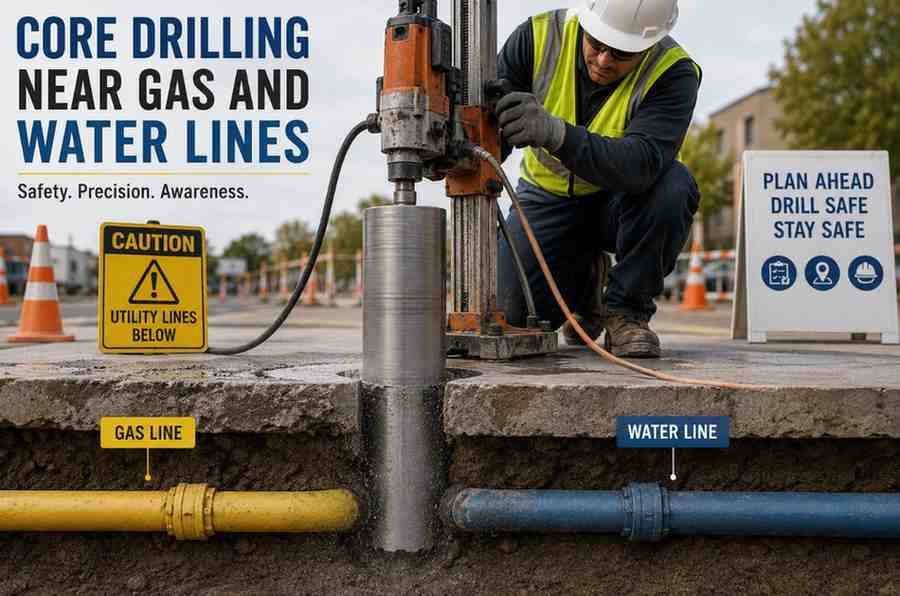
Modern construction, renovation, and infrastructure expansion rely heavily on precision techniques to modify existing concrete structures. Among these techniques, diamond core drilling is indispensable. It allows engineers and contractors to create clean, circular openings for plumbing, electrical conduits, HVAC systems, and structural anchors. However, beneath the smooth exterior of a concrete slab, wall, or foundation often lies a complex web of vital infrastructure—most notably, gas pipelines and water supply lines.
Core drilling near gas and water lines introduces severe operational risks. A single miscalculated inch or an unmapped utility can transform a routine construction task into a catastrophic emergency. From devastating gas explosions and toxic environmental contamination to massive structural flooding and exorbitant repair costs, the stakes could not be higher.
This comprehensive guide explores the critical safety protocols, advanced detection technologies, and operational best practices required when performing core drilling near gas and water lines. Whether you are managing a commercial high-rise or a residential renovation, partnering with experts through [email protected] ensures that your project remains safe, compliant, and structurally sound.
Understanding the Hidden Dangers Beneath the Surface
Concrete looks uniform and impenetrable from the outside, but slabs and foundation walls are rarely solid blocks of cement. They are reinforced composites packed with steel rebar, post-tension cables, electrical conduits, and active plumbing infrastructure.
When contractors or DIY operators attempt to drill without comprehensive subsurface knowledge, they expose themselves and their teams to immense hazards:
-
The Lethal Threat of Gas Line Strikes: Natural gas lines transport highly volatile fuel under pressure. If a core drill bit breaches a gas pipe, escaping gas can quickly fill enclosed spaces, basements, or crawlspaces. A single spark from electrical equipment, friction, or static electricity can trigger a catastrophic explosion, resulting in severe injuries, fatalities, and total structural destruction.
-
The Destructive Impact of Water Main Breaches: Striking a high-pressure water line unleashes thousands of gallons of water per minute. This sudden flooding can wash away structural foundations, short-circuit surrounding electrical systems, ruin expensive building materials, and cause extensive property damage. Furthermore, standing water combined with heavy power tools creates an immediate electrocution hazard.
-
Financial and Legal Liabilities: According to industry studies, the average cost of an underground utility strike—encompassing emergency repairs, project downtime, and property damage—runs into tens of thousands of dollars. If injuries or fatalities occur due to negligence, indirect costs and legal penalties can skyrocket into millions, permanently damaging a company’s reputation.
Pre-Drilling Planning: The Foundation of Job Site Safety
Mitigating the risks associated with core drilling near gas and water systems requires a strict, multi-phase safety strategy. Preparation must begin long before the diamond core bit touches the concrete surface.
1. Comprehensive Record Review and Blueprints
Always start by reviewing architectural, structural, and MEP (Mechanical, Electrical, and Plumbing) blueprints. While older buildings may have outdated or altered schematics, blueprints provide a critical baseline for where utility lines should enter and traverse the structure.
2. Visual Site Inspections
Walk the job site to identify surface indicators. Look for shut-off valves, water meters, gas regulators, wall penetrations, and utility room alignments. If a core drilling location lines up directly between an exterior gas meter and an interior boiler room, treat the entire path as a high-risk zone.
3. Professional Utility Locating and Concrete Scanning
Blueprints and visual inspections are never enough on their own. Renovations often introduce unauthorized or undocumented rerouting. This is where advanced non-destructive testing (NDT) technology becomes essential.
-
Ground Penetrating Radar (GPR): GPR units emit high-frequency radio waves into the concrete, reflecting data back to create a detailed subsurface profile. GPR can accurately identify the depth and location of metallic objects, PVC pipes, conduits, and voids.
-
Electromagnetic Detection (EMD): EMD equipment traces active electrical currents and conductive metal pipes (such as steel gas or water lines) by detecting electromagnetic fields.
Advanced Technology: Can GPR Find Non-Metallic Gas and Water Lines?
A frequent question among contractors is whether scanning equipment can detect modern plastic (PVC, HDPE) water and gas pipes.
Traditionally, plastic utilities were notoriously difficult to detect because they do not conduct electricity and have similar dielectric properties to surrounding soil or concrete. However, modern subsurface imaging technologies have evolved significantly:
-
Advanced High-Frequency GPR: Modern multi-frequency antennas can detect subtle disturbances in concrete and soil matrices, highlighting the distinct profile of a pipe trench or embedded sleeve even if the pipe material is non-metallic.
-
Trace Wires and Acoustic Methods: Many modern plastic utility installations include an integrated tracer wire. EMD locators can easily pick up the signal of this wire. Additionally, acoustic leak detectors and pressure testing can verify line locations before cutting commences.
Step-by-Step Best Practices for Core Drilling Near Utilities
When it is time to execute the core drilling process near active gas and water infrastructure, operators must adhere to strict procedural guidelines.
+-------------------------------------------------------------------+
|                  CORE DRILLING SAFETY WORKFLOW                    |
+-------------------------------------------------------------------+
  [1. Site Assessment & Blueprint Review]
                   │
                   ▼
  [2. Non-Destructive GPR & Utility Scanning]
                   │
                   ▼
  [3. System Isolation & Pressure Reduction (Lockout/Tagout)]
                   │
                   ▼
  [4. Rig Stabilization & Mechanical Anchoring]
                   │
                   ▼
  [5. Controlled Wet Drilling at Low RPMs]
1. Execute Lockout/Tagout (LOTO) Procedures
Whenever feasible, active gas and water lines running through or near the drilling zone should be temporarily shut off, depressurized, and locked out. Never assume a pipe is dead; always verify zero energy state with facility managers before proceeding.
2. Securely Anchor the Core Drill Rig
Wobbly or hand-held drilling near critical utilities is an invitation for disaster. Hand-held drills can easily skid or bind when encountering unexpected obstacles. Always use a rigidly mounted, securely anchored core drill stand (using mechanical anchors or vacuum bases where appropriate) to ensure absolute stability and precision control.
3. Implement Controlled Wet Drilling Techniques
Water is essential in diamond core drilling to cool the bit, extend its lifespan, and suppress hazardous crystalline silica dust. Ensure your water delivery system is regulated:
-
Maintain a steady flow that creates a manageable slurry rather than flooding the workspace.
-
When operating electric core drills near water sources, always connect through a Ground Fault Circuit Interrupter (GFCI) to prevent electrocution.
4. Monitor Feed Pressure and Bit Speed
Begin drilling at a low RPM and light pressure to carve a clean tracking groove. Forcing the drill increases the risk of bit deviation or binding. If the drill encounters unexpected resistance—which could indicate a protective conduit or encasement layer—stop immediately, clear the debris, and re-verify the subsurface scan data.
Regulatory Compliance and Legal Responsibilities
Operating heavy cutting and coring equipment is governed by stringent occupational health and safety standards. Regulatory bodies such as OSHA (Occupational Safety and Health Administration) mandate that employers provide a hazard-free workplace.
-
Silica Dust Regulations: Inhaling respirable crystalline silica generated during concrete cutting leads to severe pulmonary diseases like silicosis. Wet cutting and HEPA dust collection systems are mandatory compliance measures.
-
Utility Notification Laws: Laws like "Call Before You Dig" (e.g., 811 services) apply primarily to subsurface excavation, but professional responsibility extends to interior and structural concrete penetrations as well. Contractors are legally and financially liable for damages caused by failing to inspect hidden structural elements.
Why Professional Expertise Matters
Core drilling is a specialist trade that combines engineering knowledge, mechanical skill, and rigorous safety discipline. Attempting to cut corners or bypass utility scanning to save time invariably leads to devastating consequences.
At [email protected], we specialize in precision concrete cutting, diamond core drilling, and advanced utility mapping. Our experienced technicians utilize state-of-the-art GPR scanning equipment to map out every square inch of your work area before a single hole is drilled. By identifying gas lines, water pipes, and electrical conduits in advance, we protect your personnel, safeguard your structural assets, and keep your project on schedule and within budget.
Conclusion
Core drilling near gas and water lines leaves zero margin for error. The intersection of high-powered diamond machinery and vital municipal or structural utilities demands absolute precision, advanced technology, and unwavering adherence to safety protocols.
By prioritizing comprehensive non-destructive concrete scanning, executing proper lockout/Tagout procedures, and utilizing professional-grade equipment, contractors can eliminate the catastrophic risks of utility strikes. Do not leave your job site's safety to chance. For expert consultation, advanced concrete scanning, and reliable core drilling services, reach out to the professionals at [email protected] today and ensure your next project is built on a foundation of absolute safety and precision.