
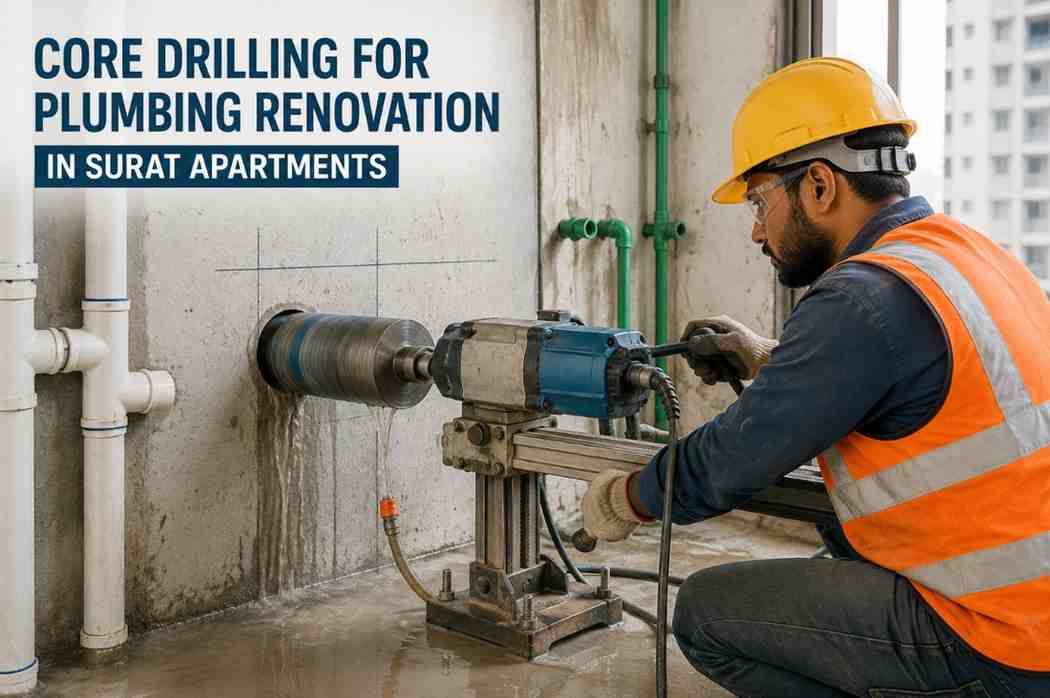
Renovating a plumbing system inside an apartment is never as simple as swapping old pipes for new ones. In a city like Surat, where high-rise apartments and densely packed residential complexes are the norm, plumbing renovation almost always involves cutting through concrete slabs, RCC walls, or beams to reroute pipelines, install new drainage points, or fix leakages hidden inside structural elements. This is where core drilling becomes indispensable.
At Core Cutting India ([email protected]), we specialize in precision core drilling and core cutting services tailored for residential plumbing renovations across Surat. In this guide, we explain what core drilling is, why it matters for plumbing work in apartments, the process involved, and what homeowners and contractors should know before starting a renovation project.
What Is Core Drilling?
Core drilling is a specialized construction technique that uses a diamond-tipped, hollow cylindrical bit to cut precise, clean circular holes through concrete, RCC (reinforced cement concrete), brick, or stone surfaces. Unlike traditional hammer drilling, which breaks material apart through impact, core drilling removes a solid cylindrical "core" of material, leaving behind a smooth, accurately sized hole.
For plumbing renovation, this precision matters enormously. Pipes, conduits, and drainage lines need clean, correctly sized openings through slabs and walls so they can pass through without weakening the surrounding structure or leaving jagged, uneven edges that are difficult to seal properly.
Why Core Drilling Is Essential for Plumbing Renovation in Surat Apartments
Surat's residential landscape is dominated by multi-storey apartment buildings, many of which were constructed decades ago with plumbing layouts that no longer suit modern lifestyles. When homeowners renovate their bathrooms, kitchens, or utility areas, they often need to:
- Relocate water supply lines or drainage pipes to a new position
- Install additional bathrooms or utility connections
- Upgrade old GI (galvanized iron) pipes to modern CPVC or PVC piping
- Fix concealed leakages running through slabs and walls
- Create new floor traps, floor drains, or vent pipe openings
- Connect new fixtures like geysers, washing machines, or RO systems that need dedicated drain lines
Almost all of these tasks require cutting through concrete floors, RCC slabs, or load-bearing walls — and this cannot be done safely with ordinary hand tools. Core drilling is the only method that ensures the structural integrity of the building is preserved while creating exactly the opening size needed for the pipe or conduit.
Common Applications of Core Drilling in Apartment Plumbing Work
1. Bathroom and Kitchen Renovations
Most plumbing renovation projects in Surat apartments start with bathroom or kitchen remodeling. Since these spaces have fixed plumbing points built into the original construction, any repositioning of a wash basin, WC, or kitchen sink requires new holes to be drilled through the floor slab or wall for water inlet and outlet pipes.
2. Drainage and Sewage Line Upgrades
Older apartment buildings in Surat often have narrow or poorly placed drainage pipes that cause frequent blockages. Core drilling allows plumbers to create new, appropriately sized openings for larger diameter drainage pipes, improving flow and reducing future maintenance issues.
3. Vertical Pipe Shaft Connections
In multi-storey apartments, vertical plumbing shafts run through several floors. When a floor slab needs a new connection point — for instance, to add a floor drain in a balcony or utility area — core drilling through the RCC slab is required to maintain a clean, structurally sound passage.
4. Installing New Fixtures
Modern apartments increasingly include geysers, washing machines, dishwashers, and RO purifiers, each requiring dedicated water supply or drainage connections. Core drilling makes it possible to create these new connection points without demolishing large sections of wall or floor.
5. Leak Detection and Repair
When a concealed pipe inside a wall or slab develops a leak, core drilling offers a targeted way to access the exact location without breaking open the entire wall. This minimizes disruption to the apartment interior and speeds up repair work.
The Core Drilling Process for Plumbing Renovation
Understanding the process helps homeowners and building managers know what to expect during a renovation project.
Step 1: Site Assessment and Planning
Before any drilling begins, our team at Core Cutting India conducts a detailed site survey. This includes identifying the exact location for the pipe passage, checking for embedded electrical wiring or reinforcement bars using detection equipment, and confirming the required hole diameter based on the pipe size specified by the plumbing contractor.
Step 2: Marking and Machine Setup
Once the location is finalized, the core drilling machine is mounted using a stabilizing base or vacuum/anchor system to ensure precision and safety. The correct diamond core bit size is selected — typically ranging from 25mm to 300mm in diameter depending on whether the opening is for a small supply pipe or a larger drainage line.
Step 3: Water-Fed or Dry Drilling
Most core drilling for concrete and RCC surfaces uses a water-fed system, which cools the diamond bit and reduces dust generation. This is particularly important in occupied apartment buildings, where dust control and noise management directly affect neighboring residents.
Step 4: Drilling Through the Surface
The machine drills through the slab or wall in a slow, controlled manner, extracting a clean cylindrical core. Depending on the thickness of the concrete and the diameter of the hole, this process can take anywhere from a few minutes to over half an hour per hole.
Step 5: Cleanup and Finishing
After drilling, the core cutting team removes debris, checks the opening for smoothness, and hands the site over to the plumbing contractor for pipe installation. Any minor edge finishing is done to ensure the pipe fits securely and can be properly sealed afterward.
Why Precision Matters: Core Drilling vs. Traditional Breaking Methods
Some contractors still rely on chiseling or hammering to create openings for pipes, especially for smaller jobs. However, this approach carries significant risks:
- Structural damage: Hammering can create micro-cracks in the surrounding concrete, weakening the slab or wall over time.
- Irregular openings: Uneven holes make it harder to seal pipe penetrations properly, increasing the risk of water seepage into neighboring flats.
- Rebar damage: Uncontrolled breaking can accidentally cut through steel reinforcement bars, compromising structural strength.
- Excess noise and vibration: In apartment buildings, this can cause complaints from neighbors and even damage to plaster or tiles in adjoining units.
Core drilling avoids all of these issues by using a controlled, rotational cutting method that produces a precise, clean-edged hole without unnecessary vibration or impact stress on the surrounding structure.
Factors That Affect Core Drilling Cost in Surat
Homeowners planning a plumbing renovation often ask about pricing. While exact costs depend on the specific project, several factors typically influence core drilling charges in Surat:
- Hole diameter: Larger holes for drainage pipes cost more than small holes for water supply lines.
- Material thickness: Drilling through a thick RCC slab takes longer and costs more than drilling through a thinner partition wall.
- Number of holes: Bulk drilling for multiple pipe connections is generally more cost-effective per hole than a single isolated job.
- Accessibility: Ground floor or easily accessible units are quicker to service than higher floors requiring additional equipment setup.
- Presence of reinforcement: Extra care and time are needed when rebar detection and careful cutting around steel bars are required.
For an accurate quote tailored to your apartment renovation, it's best to consult directly with a core cutting specialist who can assess the site in person or through photos and floor plans.
Safety Considerations During Core Drilling in Occupied Apartments
Since most plumbing renovations happen in apartments that are still occupied — either by the owner or neighboring residents — safety and cleanliness are top priorities. Reputable core cutting service providers follow strict protocols:
- Covering furniture and flooring near the work area with protective sheeting
- Using water-fed drilling systems to suppress dust
- Employing wet vacuum systems to immediately collect slurry and debris
- Checking for embedded electrical conduits before drilling to avoid accidental damage
- Coordinating drilling schedules with building management to minimize disturbance to neighbors
- Ensuring the crew is trained in handling diamond core drilling equipment safely
Choosing an experienced, professional team significantly reduces the risk of accidents, structural issues, or disputes with neighboring flat owners during the renovation.
Choosing the Right Core Drilling Contractor in Surat
Not every construction crew has the specialized equipment or expertise needed for precision core drilling. When selecting a contractor for your plumbing renovation project, consider the following:
- Experience with residential apartments — Working in occupied buildings requires a different approach than drilling on an open construction site.
- Proper equipment — Diamond core drilling machines with variable bit sizes and water-fed cooling systems produce cleaner, safer results than makeshift tools.
- Structural awareness — A good contractor checks for rebar and load-bearing considerations before drilling, especially in older buildings.
- Dust and debris management — Ask how the team handles cleanup, since plumbing renovations inside a lived-in apartment need minimal mess.
- Clear cost estimates — Transparent pricing based on hole size, material, and location helps avoid surprises mid-project.
At Core Cutting India, our team has extensive experience handling core drilling for plumbing renovations across Surat's residential apartments, from independent flats to large housing societies. We work closely with plumbers, interior contractors, and homeowners to ensure every opening is cut precisely where it's needed, with minimal disruption to daily life.
Final Thoughts
Plumbing renovation in an apartment setting is a delicate balancing act between upgrading old systems and preserving the structural integrity of the building. Core drilling has become the industry-standard method for creating clean, accurate openings for pipes and drainage lines, especially in cities like Surat where multi-storey apartment living is common.
Whether you're relocating a bathroom, upgrading old pipework, or fixing a hidden leak, professional core drilling ensures the job is done safely, efficiently, and with minimal disturbance to your home or your neighbors.
If you're planning a plumbing renovation in your Surat apartment and need reliable core drilling or core cutting services, reach out to Core Cutting India at [email protected]. Our experienced team is ready to assess your project and deliver precise, safe, and efficient core drilling solutions tailored to your renovation needs.
Frequently Asked Questions (People Also Ask)
What is core drilling used for in plumbing? Core drilling is used to create precise, clean holes through concrete slabs, RCC walls, or beams so that water supply pipes, drainage lines, and conduits can pass through safely during plumbing installation or renovation work.
How much does core drilling cost in Surat? Costs vary based on hole diameter, material thickness, number of holes, and site accessibility. Smaller holes for supply pipes are generally cheaper than larger holes for drainage lines. It's best to get a site-specific quote from a local contractor.
Is core drilling safe for RCC slabs and walls? Yes, when performed by trained professionals using proper equipment. Core drilling is designed to minimize stress on surrounding concrete, and technicians typically check for embedded reinforcement bars before drilling to avoid structural damage.
How long does core drilling take for a bathroom renovation? A single hole can take anywhere from a few minutes to 30-45 minutes depending on the concrete thickness and hole diameter. A full bathroom renovation with multiple pipe connections may take a few hours to a full day.
Can core drilling be done without damaging the building structure? Yes. Unlike hammering or chiseling, core drilling uses a controlled rotational cutting method that produces clean, precise holes without creating cracks or destabilizing the surrounding structure, provided it's done by experienced professionals.
What size core drill is used for plumbing pipes? Core drill bit sizes typically range from 25mm for small supply lines to 150mm or more for larger drainage and sewage pipes, depending on the specific plumbing requirement.
Do I need a contractor for core drilling or can plumbers do it? While some plumbers may attempt smaller holes with basic tools, structural core drilling through RCC slabs or load-bearing walls should be handled by specialized core cutting contractors who have the right equipment and structural knowledge to avoid damage.
For professional core drilling and core cutting services for your plumbing renovation project in Surat, contact Core Cutting India at [email protected].