
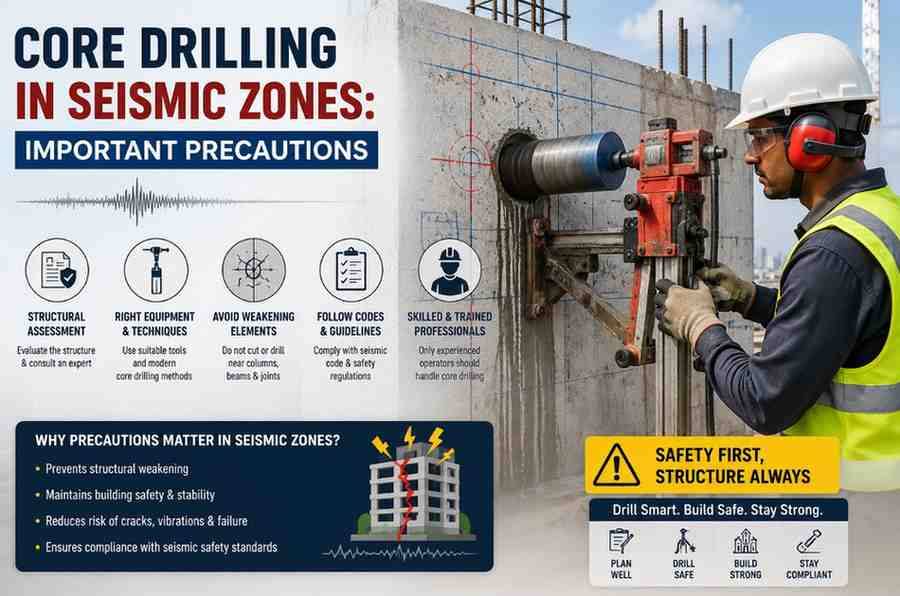
Introduction
Core drilling is one of the most widely used techniques in construction, infrastructure development, and geotechnical investigation. It allows engineers and contractors to create precise, clean holes through concrete, rock, and other hard materials for purposes ranging from utility installation to structural testing. However, when core drilling takes place in seismic zones — regions prone to earthquakes and ground movement — the process demands a far higher level of caution, planning, and technical expertise.
At Core Cutting India ([email protected]), we understand that drilling in seismically active regions is not just about precision; it is about safety, structural integrity, and long-term stability. This blog explores the unique challenges of core drilling in seismic zones and outlines the important precautions that professionals and property owners must take before, during, and after the drilling process.
Understanding Seismic Zones and Their Risks
Seismic zones are geographical areas classified based on their susceptibility to earthquakes. In India, the Bureau of Indian Standards (BIS) classifies the country into four seismic zones — Zone II, III, IV, and V — with Zone V being the most earthquake-prone. Regions such as the Himalayan belt, parts of the Northeast, Kutch in Gujarat, and certain areas near fault lines fall into higher-risk categories.
When core drilling is performed in these areas, several risk factors come into play:
- Ground instability: Seismic zones often have looser or fractured subsurface conditions, making drilling less predictable.
- Structural vulnerability: Buildings in these zones are often designed with specific load-bearing tolerances. Drilling into structural elements can compromise their ability to withstand seismic forces.
- Vibration sensitivity: Excessive vibration from drilling equipment can interact unpredictably with already-stressed structures or unstable soil.
- Aftershock potential: Even after the primary seismic event has passed, aftershocks can occur during or after drilling operations, increasing risk to workers and structures.
Because of these factors, core drilling in seismic zones requires a fundamentally more cautious and technically informed approach than standard drilling projects.
Why Precautions Matter: The Stakes Involved
Ignoring seismic considerations during core drilling can lead to serious consequences, including:
- Structural cracks or weakening of load-bearing walls, columns, and slabs
- Compromised foundation integrity
- Increased vulnerability to collapse during future seismic events
- Worker injuries due to unstable drilling conditions
- Legal and regulatory non-compliance, leading to project delays or penalties
Given these risks, a systematic, precaution-driven approach isn't optional — it is essential for anyone undertaking core drilling projects in earthquake-prone regions.
Important Precautions for Core Drilling in Seismic Zones
1. Conduct a Thorough Site and Structural Assessment
Before any drilling begins, a detailed structural and geotechnical assessment must be carried out. This includes:
- Reviewing the building's structural drawings to identify load-bearing elements, reinforcement placement, and utility lines
- Conducting a geotechnical survey to understand soil composition, water table levels, and rock stability
- Consulting the local seismic zoning classification to understand the expected intensity of ground motion
- Identifying any existing cracks, settlement, or structural damage that could be exacerbated by drilling vibrations
This assessment should ideally be performed by a qualified structural engineer in coordination with the drilling contractor.
2. Avoid Drilling Through Critical Load-Bearing Elements
One of the most important precautions is identifying and avoiding — wherever possible — critical structural elements such as main columns, shear walls, and primary beams. In seismic zones, these elements are specifically engineered to absorb and redistribute lateral forces during an earthquake. Drilling through or near them, even for seemingly minor purposes like utility installation, can significantly reduce a structure's seismic resistance.
If drilling through structural elements is unavoidable, it should only be done after consultation with a structural engineer, who can specify safe drilling zones, maximum hole diameters, and reinforcement compensation methods.
3. Select the Right Drilling Equipment
Not all core drilling machines are suitable for seismic zone projects. Precision, vibration control, and stability should guide equipment selection:
- Diamond core drilling machines are preferred over traditional percussion or hammer drills because they produce significantly less vibration and offer cleaner, more controlled cuts.
- Variable-speed drilling rigs allow operators to adjust drilling speed based on real-time material resistance, reducing sudden shocks to the structure.
- Wet drilling systems help minimize dust and reduce heat-related stress on both the equipment and the surrounding material.
- Anchored and stabilized rigs prevent equipment movement during operation, which is especially important on uneven or unstable ground common in seismic regions.
Using low-vibration, high-precision equipment is one of the simplest yet most effective ways to reduce risk during seismic zone drilling.
4. Implement Vibration Monitoring
Vibration control is central to safe drilling in seismic zones. Continuous vibration monitoring using seismographs or vibration sensors should be conducted throughout the drilling process. These devices measure peak particle velocity (PPV) and help ensure that vibration levels remain within safe thresholds defined by structural engineers or local building codes.
If vibration levels approach unsafe limits, drilling should be paused immediately, and the approach reassessed. This is particularly critical when drilling near older structures, heritage buildings, or areas with pre-existing structural weaknesses.
5. Time Drilling Operations Strategically
While earthquakes cannot be predicted with precision, certain precautions can still reduce risk:
- Avoid drilling during periods of heightened seismic activity, such as immediately following a recorded tremor, when aftershocks are more likely.
- Stay updated with real-time seismic monitoring data from national or regional seismological agencies.
- Schedule high-risk drilling phases during daylight hours when visibility and emergency response capabilities are optimal.
6. Reinforce and Stabilize Before Drilling
In many seismic zone projects, temporary reinforcement or shoring is necessary before drilling begins. This may include:
- Installing temporary support structures around the drilling area
- Using props or braces to redistribute structural load away from the drilling zone
- Applying protective barriers to prevent debris or material displacement from affecting nearby structural elements
These measures help maintain structural stability throughout the drilling process, reducing the risk of unexpected shifts or failures.
7. Follow Local Building Codes and Seismic Regulations
Every seismic zone has specific building codes and regulatory requirements governing construction and modification activities, including drilling. In India, this includes compliance with IS 1893 (Criteria for Earthquake Resistant Design of Structures) and other relevant BIS codes.
Before starting any core drilling project, contractors must:
- Obtain necessary permits and approvals from local municipal or regulatory authorities
- Ensure the drilling plan aligns with the seismic design category of the structure
- Document compliance for future reference, especially for commercial or high-rise projects
Working with a drilling contractor who understands local regulatory nuances, such as Core Cutting India, ensures that projects remain compliant while minimizing risk.
8. Train and Equip Workers for Emergency Situations
Worker safety is paramount, especially in seismic zones where conditions can change rapidly. Precautions should include:
- Providing workers with training on recognizing early warning signs of structural instability
- Establishing clear evacuation protocols in case of sudden tremors during drilling
- Equipping the site with appropriate personal protective equipment (PPE), including hard hats, safety goggles, and hearing protection
- Ensuring workers are trained to immediately halt operations and secure equipment if seismic activity is detected
Regular safety drills and clear communication protocols can significantly reduce response time in the event of an actual seismic event during drilling operations.
9. Monitor Structural Health Post-Drilling
Precautions shouldn't end once drilling is complete. Post-drilling structural monitoring helps confirm that the surrounding structure has not been compromised. This may involve:
- Visual inspections for new cracks or shifts in adjacent structural elements
- Use of structural health monitoring (SHM) sensors for ongoing assessment, particularly in critical infrastructure projects
- Periodic follow-up inspections in the weeks following drilling to catch any delayed structural responses
This ongoing vigilance ensures that any issues are identified and addressed before they escalate into significant structural concerns.
10. Partner with Experienced Professionals
Perhaps the most important precaution of all is choosing an experienced, technically competent drilling partner. Core drilling in seismic zones is not a task for inexperienced contractors. It requires:
- A deep understanding of seismic engineering principles
- Access to appropriate low-vibration equipment
- Familiarity with local geological and regulatory conditions
- A proven track record of safe, precise drilling in sensitive environments
At Core Cutting India, our team combines technical expertise with a strong safety-first approach, ensuring that every drilling project — regardless of seismic risk — is executed with precision and care.
Best Practices Checklist
For quick reference, here is a summary checklist for core drilling in seismic zones:
- Conduct structural and geotechnical assessments before drilling
- Identify and avoid critical load-bearing elements where possible
- Use low-vibration, precision drilling equipment
- Continuously monitor vibration levels during operation
- Avoid drilling during periods of heightened seismic activity
- Reinforce and stabilize structures before drilling if needed
- Ensure full compliance with local seismic building codes
- Train workers on emergency response protocols
- Conduct post-drilling structural inspections
- Work only with experienced, qualified drilling professionals
Conclusion
Core drilling in seismic zones presents unique challenges that go far beyond standard drilling practices. From structural assessments and equipment selection to vibration monitoring and regulatory compliance, every step must be approached with heightened caution and technical expertise. The goal is not just to complete the drilling task efficiently, but to preserve the structural integrity and long-term safety of the building or infrastructure involved.
By following these important precautions, contractors, engineers, and property owners can significantly reduce the risks associated with drilling in earthquake-prone regions. Whether you're working on a residential renovation, commercial construction, or critical infrastructure project, partnering with an experienced core drilling company is essential to ensuring safety, compliance, and quality outcomes.
For expert core drilling services that prioritize safety and precision, especially in seismic-sensitive regions, reach out to Core Cutting India at [email protected]. Our experienced team is equipped to handle complex drilling projects with the care and technical rigor that seismic zones demand.
Frequently Asked Questions (People Also Ask)
1. What is core drilling and why is it used in construction? Core drilling is a precision technique used to cut cylindrical holes through concrete, rock, or masonry. It's commonly used for utility installations, structural testing, ventilation systems, and plumbing routes in construction and infrastructure projects.
2. Why is drilling riskier in seismic zones? In seismic zones, structures are engineered to withstand specific lateral and vertical forces during an earthquake. Drilling can disrupt reinforcement patterns, weaken load-bearing elements, or introduce vibrations that interact unpredictably with already-stressed structures, increasing the risk of structural failure.
3. What precautions should be taken before core drilling in earthquake-prone areas? Key precautions include conducting a structural and geotechnical assessment, identifying safe drilling zones, selecting low-vibration equipment, monitoring vibration levels, complying with local seismic codes, and consulting a structural engineer before drilling near load-bearing elements.
4. Can core drilling weaken a building's structural integrity? Yes, if performed without proper assessment and precautions, core drilling can compromise structural integrity — particularly if it damages reinforcement bars, load-bearing walls, or columns. This risk is heightened in seismic zones where structural resilience is critical.
5. What equipment is best suited for core drilling in seismic zones? Diamond core drilling machines with variable speed control and wet drilling capabilities are generally preferred, as they produce less vibration and allow for more precise, controlled cuts compared to traditional percussion drills.
6. How do engineers assess seismic risk before drilling? Engineers typically review the seismic zoning classification of the area, conduct geotechnical surveys, analyze structural drawings, and assess existing structural conditions to determine safe drilling parameters and identify any elements that must be avoided.
7. Is core drilling safe near fault lines? Drilling near fault lines requires extreme caution and specialized engineering input. While it can be done safely with proper assessment, reinforcement, and monitoring, it should only be undertaken by experienced professionals familiar with the specific geological and seismic conditions of the area.
Core Cutting India | [email protected]