
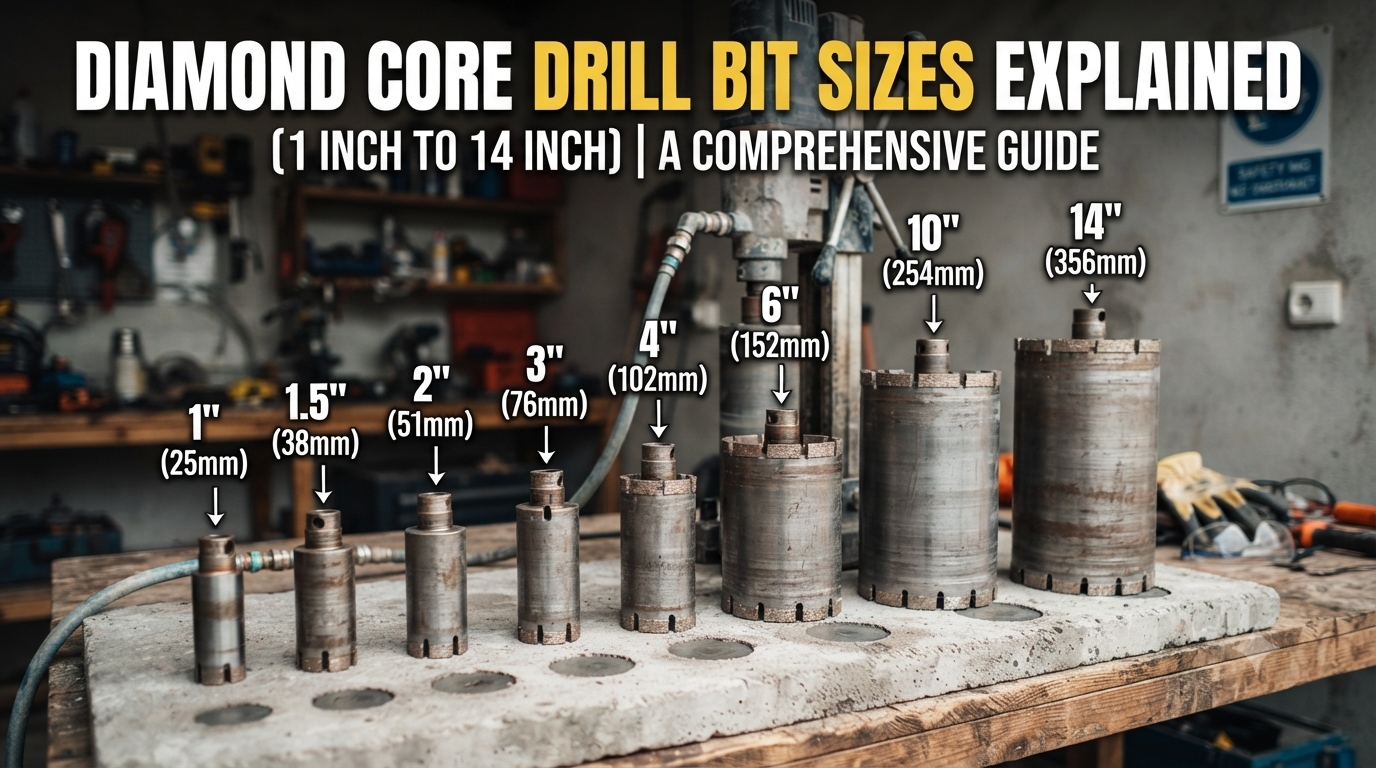
Are you looking for the perfect core drill bit for your next construction or renovation project? Understanding the vast array of available sizes is critical to achieving clean, efficient, and precise holes. Whether you are installing plumbing, electrical conduits, or performing core sampling, selecting the right diameter is the difference between a job well done and costly project delays.
At corecuttingindia.com, we specialize in providing high-performance diamond tools for the toughest construction challenges. In this guide, we break down everything you need to know about diamond core drill bit sizes ranging from 1 inch to 14 inches.
The Importance of Choosing the Right Bit Size
The diameter of a core bit directly influences drilling speed, heat management, and the overall outcome of your project. Using a bit that is too small for a conduit might leave you with insufficient clearance, while an oversized bit can compromise the structural integrity of the material you are drilling into.
Understanding the Spectrum
-
Small Diameters (1" – 2"): These are the workhorses for precise, small-scale tasks. They are ideal for anchor bolts, thin pipes, and electrical cables. Because they have a smaller surface area, they drill faster but require careful handling to avoid uneven wear.
-
Medium Diameters (2" – 6"): These are the most common sizes for general construction, including plumbing installations, HVAC systems, and medium-sized utility conduits. They offer an ideal balance between durability and drilling speed.
-
Large Diameters (6" – 14"+): Designed for heavy-duty applications, these bits are used for large pipe installations, bridge work, and major structural openings. They require high-powered, rig-mounted drills to maintain the necessary torque and pressure.
Detailed Breakdown: 1" to 14" Core Bits
1" to 3" Bits: Precision and Portability
Bits in this range are frequently used for residential and light commercial work.
-
Best for: Mounting brackets, small-diameter piping, and wiring runs.
-
Pro Tip: Because these bits have a thinner wall, keep your feed rate steady. Aggressive pressure can lead to segment detachment if the bit binds.
4" to 8" Bits: The Construction Standard
This is the "sweet spot" for most general contractors.
-
Best for: Standard PVC drains, core sampling, and ventilation ducting.
-
Performance: These bits often feature a medium diamond concentration. They are durable enough to handle reinforced concrete without requiring constant sharpening.
10" to 14" Bits: Heavy-Duty Industrial Power
When you reach these sizes, you are moving into structural construction territory.
-
Best for: Large drainage culverts, structural steel penetrations, and massive industrial utility pipes.
-
Requirements: Always use a rig-mounted system. The friction generated by a 14-inch bit is significant, and water cooling is non-negotiable to prevent overheating and premature diamond wear.
Key Factors for Longevity and Efficiency
Regardless of size, there are universal rules to keep your core bits cutting efficiently:
-
Wet vs. Dry Drilling: For almost all concrete and masonry work, wet drilling is superior. Water acts as a coolant and a flush agent, clearing out the slurry that would otherwise cause the bit to "glaze" (the process where diamond particles become polished and stop cutting).
-
Managing the Bond: Softer bonds are generally better for harder materials (like aggregate-heavy concrete) because they release new diamonds more easily, keeping the bit "sharp." Harder bonds are best for abrasive, softer materials (like brick or cinder block).
-
The "Glazed Bit" Fix: If your bit stops cutting, don't force it. Make several passes through an abrasive material—like a dressing stone or a piece of cinder block—to expose fresh diamond segments.
People Also Ask (PAA)
Q: Can I use a diamond core bit without water?
A: While some bits are rated for dry drilling, it is generally inadvisable for hard materials. Dry drilling creates significant heat and silica dust, which is a major health hazard. Always use water or an integrated vacuum dust collection system.
Q: How do I choose between a handheld and a rig-mounted drill?
A: Handheld drills are suitable for smaller bits (typically up to 3"–4") and lighter tasks. For any hole larger than 4 inches, or for deep, precise, or overhead drilling, a rig-mounted drill is necessary to ensure safety and accuracy.
Q: Why is my bit wearing out so fast?
A: Premature wear is usually caused by excessive pressure, low water flow, or choosing the wrong bond hardness for the material. Remember: let the machine do the work; don't force the bit.
Conclusion
Choosing the right diamond core drill bit is essential for project efficiency. From 1-inch precision tasks to 14-inch heavy-duty structural work, matching your tool to the material is the key to success.
For high-quality diamond tools and professional advice tailored to your specific project, reach out to us at [email protected]. We are here to ensure your drilling operations are smooth, safe, and productive.