
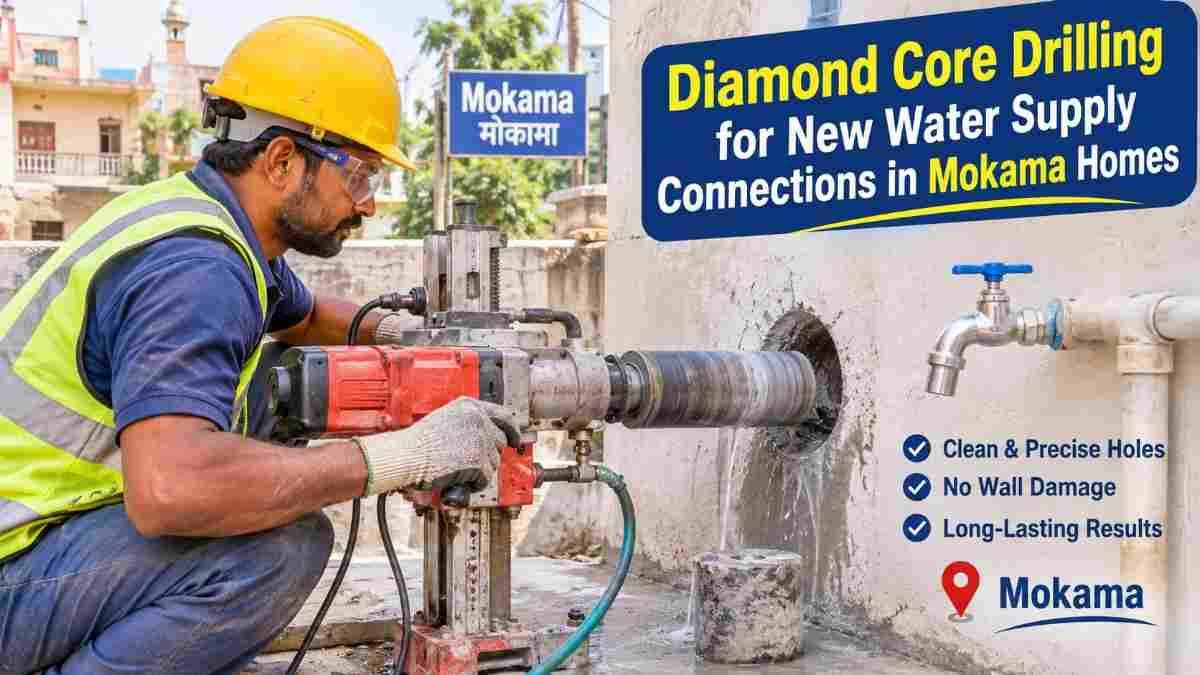
Getting a new water supply connection is one of the most important steps in building or upgrading a home. In growing towns like Mokama, in the Patna district of Bihar, more families are constructing RCC houses, adding bathrooms, installing overhead tanks and connecting to municipal or borewell supply lines. Each of these jobs shares the same hidden challenge: pipes must pass through thick concrete walls, floors, beams, and foundations, and the holes must be exact.
This is where diamond core drilling comes in. Instead of hammering and chiseling through your wall, a diamond-tipped hollow bit cuts a perfectly round, smooth hole in minutes. No cracks, no heavy vibration, and no mess spread across your new home.
In this guide, brought to you by Core Cutting India (https://corecuttingindia.com/), we explain how diamond core drilling works, why it is the best method for water supply connections in Mokama homes, what the process looks like, what affects the cost, and how to choose a reliable contractor. If you need help right away, call us on +91 70096 79903.
What Is Diamond Core Drilling?
Diamond core drilling is a precision method of making round holes in concrete, brick, stone, asphalt and reinforced cement concrete (RCC). The tool is a hollow, cylindrical drill bit with industrial diamond segments bonded to its cutting edge. As the bit rotates at high speed, usually with a steady flow of water, it grinds through the material and leaves behind a solid cylinder of concrete called a “core.” The hole it leaves is clean, straight and very close to the size you asked for.
Because diamond is the hardest known material, these bits cut through even heavily reinforced concrete, including the steel bars inside it, without the violent impact of a hammer drill or a manual chisel. The machine is usually mounted on a rigid stand that is anchored to the wall or floor, so the hole stays perfectly aligned from start to finish.
Common Hole Sizes
Core drilling bits come in a wide range of diameters. For household water supply work, typical sizes are:
|
Application |
Typical hole size |
|---|---|
|
½-inch and ¾-inch water lines |
25 mm to 50 mm |
|
1-inch main supply pipe |
50 mm to 75 mm |
|
Pipe sleeve for 1.5-inch to 2-inch lines |
75 mm to 110 mm |
|
Borewell or tank connection with insulation |
110 mm to 150 mm |
|
Larger service or drain pipes |
150 mm to 300 mm |
A professional operator will help you pick the right diameter so there is enough space for the pipe, a protective sleeve and sealing material.
Why New Water Connections in Mokama Need Precision Drilling
Mokama sits close to the Ganges plain, and homes in the area are mostly built with brick and RCC frames. As families add storeys, overhead tanks and attached bathrooms, plumbing layouts become more complicated. A new water supply connection might need to cross a boundary wall, pass through a load-bearing wall, go through a plinth beam, or run vertically through several floor slabs.
Each of these crossings affects the strength of the structure. A badly made hole can weaken a wall, cut a main reinforcement bar in the wrong place or allow water to seep into the building later. Because water pipes are under constant pressure, a small leak at a wall opening can cause dampness, peeling paint, rusting steel and costly repairs.
Precise core drilling reduces these risks. It lets you place each opening exactly where the plumber’s drawing says it should go, at the right angle and slope, with edges smooth enough to seal properly.
The Problem with Traditional Chiseling and Hammering
Many local contractors still use hand chisels, jackhammers or percussion drills to break through concrete for a pipe. This approach may look cheaper at first, but it creates problems that homeowners often discover too late.
- Cracks and structural damage. Repeated impact sends shock waves through the wall. Hairline cracks can spread across plaster, tiles and even the beam above.
- Uneven, oversized holes. Chiseling produces ragged openings that are much larger than the pipe. Filling these gaps takes extra cement, and the patch often fails.
- Noise and vibration. Hammering can last for hours, disturbing your family, neighbours and any freshly cured concrete nearby.
- Heavy dust and debris. Broken plaster and concrete spread everywhere, adding to cleaning costs.
- Slow progress. Cutting through thick RCC by hand takes a long time and can delay the entire plumbing schedule.
- Safety risks. Flying chips and tool kickback can injure workers.
For a new home in Mokama where you want the walls to stay intact, these drawbacks are hard to justify.
Key Benefits of Diamond Core Drilling for Water Supply Connections
1. Clean, Accurate Holes
A diamond bit cuts a hole with smooth, round walls that match the pipe or sleeve size almost exactly. This makes it easy to fit the pipe, add a sleeve and seal the gap with waterproof grout or a mechanical seal.
2. Minimal Vibration, No Cracks
Core drilling grinds the material away instead of smashing it. Your plaster, tiles and nearby walls stay undisturbed. This is especially valuable in finished homes where you cannot afford cosmetic or structural damage.
3. Fast Work
What might take half a day with a hammer can often be done in a matter of minutes with a diamond core machine. A typical home water connection job, with several openings, can usually be finished within a few hours.
4. Low Dust and Cleaner Sites
Wet core drilling uses water to cool the bit and capture the cutting dust as slurry. The slurry is easy to wipe or vacuum away, so the site remains clean and the air stays breathable.
5. Cutting Through Reinforcement
Most RCC walls and slabs contain steel bars. Diamond bits cut through concrete and steel together. A skilled operator will scan the area first, when needed, and plan the hole to avoid cutting main structural bars unless an engineer approves it.
6. Better Waterproofing and Longer Life
A smooth hole is far easier to seal properly. This protects against seepage and prolongs the life of both the pipeline and the surrounding structure.
7. Suitable for Old and New Buildings
Whether your house is newly built or twenty years old, core drilling works without disturbing the rest of the structure. It is ideal for retrofitting new water lines into existing Mokama homes.
Where Diamond Core Drilling Is Used in a Home Water Supply Project
A new water connection involves more drilling points than most people expect. Here are the most common ones.
Boundary wall and compound wall. The main supply line from the street or borewell often has to cross the compound wall. A 50 mm to 75 mm core hole gives the pipe a neat path.
External wall into the house. Pipes entering the building pass through brick or RCC walls. A core hole with a sleeve protects the pipe from movement and corrosion.
Plinth beams and foundation walls. Underground or low-level lines may cross beams or footings. Core drilling lets you do this without breaking more than necessary.
Floor slabs. Vertical risers that bring water to upper floors, overhead tanks or terrace taps need openings through each slab.
Bathroom and kitchen walls. Hot and cold lines, geyser connections and wash-basin supplies often cross partition walls.
Overhead tank and sump connections. Inlet, outlet and overflow pipes need accurate holes in tank walls and RCC sump structures.
Borewell and pump room walls. If you are connecting a motor or storage line, you may need a larger hole to take insulation and cable ducts as well.
Step-by-Step: How the Core Drilling Process Works
Here is what a professional service typically looks like when you hire Core Cutting India for your Mokama home.
Step 1: Site Visit and Marking
The team studies the plumbing layout, checks wall thickness and material, and marks each hole position, diameter and angle. If you do not have a plan, the plumber and drilling operator can mark the points together.
Step 2: Scanning and Safety Check
Where needed, the area is checked for hidden electrical conduits, existing pipes or heavy reinforcement. Marking these in advance avoids accidents and expensive repairs.
Step 3: Machine Setup
The core drilling rig is fixed to the surface using an anchor bolt or a vacuum base. A rigid mount is the secret to a straight, accurate hole. The operator selects a diamond bit of the correct diameter and connects the water supply.
Step 4: Drilling
The bit starts cutting at a steady pace. Water flows continuously to cool the bit and flush out debris. The operator adjusts speed and feed pressure depending on the hardness of the material.
Step 5: Core Removal
Once the bit passes through, the solid concrete core is removed. The hole is checked for diameter, alignment and smoothness.
Step 6: Cleaning
Slurry is wiped away, and the opening is cleaned so the plumber can fit the pipe or sleeve straight away.
Step 7: Sealing and Finishing
After the pipe is installed, the gap is sealed with non-shrink grout, waterproofing compound or a mechanical seal so that water cannot enter the wall.
How to Choose the Right Hole Size and Position
Getting the size right matters. A hole that is too tight makes installation difficult. One that is too large wastes grout and may weaken the wall.
Some simple rules of thumb:
- Add 10 mm to 25 mm to the outer diameter of the pipe if you plan to use a sleeve.
- Allow extra space if the pipe will be insulated or if it needs to expand and contract with temperature.
- Keep holes away from corners, window openings and the ends of beams whenever possible.
- Avoid placing several large holes close together in one wall. Leave enough solid concrete between them.
- For slopes in drainage or overflow lines, tell the operator the required angle in advance.
- When in doubt about a load-bearing wall or beam, ask a structural engineer before drilling.
Our team is happy to guide you, and the earlier you share your plumbing plan, the smoother the work will be.
What Affects the Cost of Core Drilling in Mokama?
Core drilling is typically priced per hole, and the rate varies depending on several factors. Instead of quoting a one-size-fits-all number, a good contractor will inspect your project and offer a fair estimate. The main factors are:
- Hole diameter. Larger bits cost more to run and wear faster.
- Wall or slab thickness. A deeper hole takes longer to cut.
- Material. Reinforced concrete is harder than brick or block work.
- Number of holes. Bulk jobs usually reduce the cost per hole.
- Access and height. Holes at awkward heights or in tight spaces need extra setup time.
- Location and logistics. Distance to your site and the availability of water and power for the machine also play a role.
Asking for a clear quote before the job starts avoids surprises. Call +91 70096 79903 to discuss your requirements.
Safety and Best Practices for Homeowners
Even though diamond core drilling is cleaner and safer than chiseling, it still demands skilled handling. Keep these points in mind:
- Hire trained operators. Experience helps avoid hitting reinforcement or hidden services.
- Switch off nearby electrical lines if there is any chance of contact with conduits.
- Keep children and pets away from the work area.
- Provide a steady water and power supply so the work goes smoothly.
- Protect floors and furniture with plastic sheets or covers, since slurry can stain.
- Do not stand directly below a hole being cut through an overhead slab.
- Inspect the hole afterward to make sure it is the right size before the team leaves.
Why Diamond Core Drilling Is Ideal for Mokama’s Growing Homes
Mokama’s housing scene is changing fast. New construction is rising, older houses are being renovated, and families increasingly expect reliable running water in every bathroom and kitchen. All of this calls for modern plumbing, which in turn calls for modern, precise methods of cutting concrete.
With core drilling you get:
- Structures that stay strong and crack-free
- Cleaner, quieter job sites
- Better pipe fitting and fewer leaks
- Lower long-term maintenance costs
- Faster project completion
For homeowners, builders and plumbers alike, it is the smarter choice.
Why Choose Core Cutting India?
Core Cutting India (https://corecuttingindia.com/) specialises in diamond core drilling and concrete cutting services for homes, apartments, commercial buildings and industrial sites. Here is what you can expect when you work with us:
- Modern diamond equipment for smooth, accurate holes
- Skilled and trained operators who respect your property
- Services for RCC, brick, stone and slab
- Dust-controlled, low-vibration working methods
- Transparent pricing with no hidden charges
- Quick response and flexible scheduling
- Support for plumbers and contractors on layout and sizing
Whether you need one hole for a single tap line or dozens for a full water supply network, we are ready to help.
Frequently Asked Questions (People Also Ask)
What is diamond core drilling used for in plumbing?
It is used to create precise openings in concrete and masonry so water pipes, drain lines, sleeves and conduits can pass through walls, beams and slabs without damaging the structure.
Is core drilling better than chiseling for a water connection?
Yes. Core drilling produces cleaner holes, avoids cracks, reduces noise and dust, and is far faster. Chiseling tends to leave oversized, uneven openings that are difficult to seal.
Can core drilling cut through reinforced concrete and steel bars?
Yes. Diamond bits can cut through concrete and the steel reinforcement inside it. Operators usually plan the hole position so main structural bars are not cut unnecessarily.
Does core drilling weaken the wall?
When it is planned and done correctly, the effect is very small. Problems usually arise from badly placed or oversized holes, which is why correct marking and professional drilling are so important.
How long does it take to drill a hole for a water pipe?
Most standard holes take only a few minutes, depending on diameter and wall thickness. Setup and marking may add some extra time.
How much does core drilling cost in Mokama?
The price depends on hole size, depth, material, number of holes and site conditions. Contact Core Cutting India at +91 70096 79903 for a clear, no-obligation quote.
Is core drilling messy?
Wet core drilling is much cleaner than traditional breaking. The water captures dust, and the slurry can be wiped or vacuumed up easily.
Can core drilling be done in an existing, fully finished house?
Yes. Because it creates little vibration and dust, it is ideal for adding new water connections to homes that are already built and occupied.
What size hole do I need for a water supply pipe?
For most household lines, 25 mm to 75 mm holes are common, with larger sizes if you are using sleeves or insulation. Share your pipe size with the operator and they will recommend the right bit.
Do I need permission before drilling a load-bearing wall or beam?
It is wise to consult a structural engineer before drilling load-bearing members. For standard walls and slabs, a careful plan and skilled operator are usually sufficient.
Conclusion
A reliable water supply is the lifeblood of every home, and doing it right begins with the very first hole. Diamond core drilling gives Mokama homeowners a faster, cleaner, safer and more accurate way to bring water lines through walls, beams and slabs. It protects your structure, keeps the site tidy, improves waterproofing and helps your plumbing last for years.
If you are planning a new water supply connection, renovating a bathroom, or building a new home in Mokama, let the professionals handle the drilling. Visit https://corecuttingindia.com/ to learn more about our services, or call Core Cutting India at +91 70096 79903 to book a site visit and get your free quote today.
Call now: +91 70096 79903 | Website: https://corecuttingindia.com/