
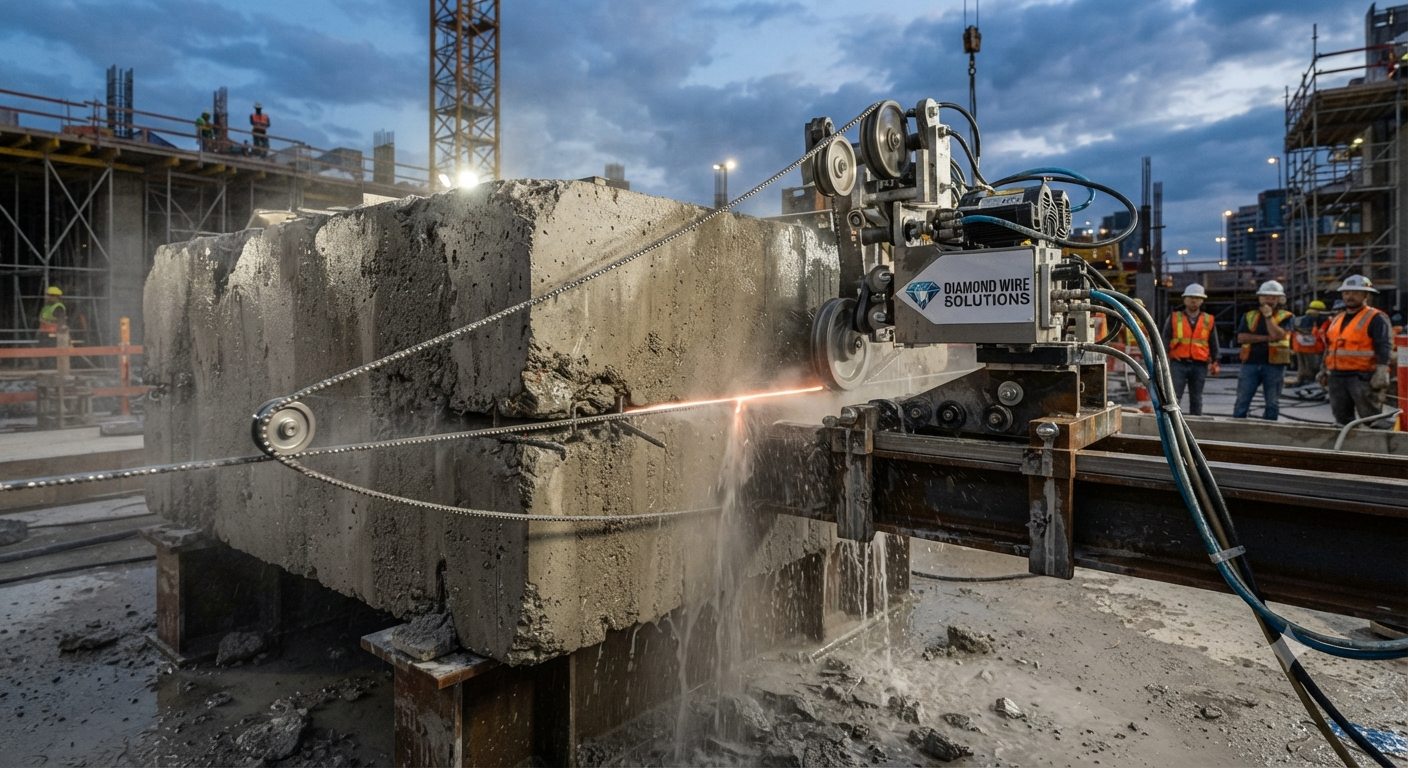
In the modern world of precision engineering, construction, and material fabrication, the demand for cleaner, faster, and more accurate cutting solutions has never been higher. Whether you are dealing with massive blocks of reinforced concrete, delicate semiconductor wafers, or intricate stone sculptures, the diamond wire saw has emerged as the gold standard for high-performance sectioning.
At [email protected], we understand that selecting the right cutting technology is not just about the tool—it is about the integrity of your project. This comprehensive guide explores the mechanics, benefits, and expert techniques required to master diamond wire saw cutting.
What is a Diamond Wire Saw?
A diamond wire saw is a sophisticated cutting system that utilizes a steel or tungsten cable impregnated with industrial-grade diamond abrasives. Unlike traditional blades that use mechanical tearing, diamond wire saws rely on micro-abrasion. The wire is pulled at high speeds through the workpiece, with the diamond particles acting as millions of tiny cutting teeth that grind away material with exceptional precision.
How It Works
The system operates on a simple yet highly effective principle:
-
The Loop/Spool: Depending on the application, the wire is either a continuous closed loop (for precision wafer/lab work) or a long spool (for construction and quarrying).
-
Motor and Drive: An electric or hydraulic motor drives the wire at controlled speeds.
-
Abrasive Friction: As the wire moves, it follows a path—either through pre-drilled holes or around the exterior of a workpiece—gradually slicing through the material.
-
Cooling: Water or specialized coolants are often used to flush away debris, maintain temperature, and prevent wire damage.
Target-Related Searches
-
Diamond wire saw machine price
-
How to cut reinforced concrete with wire saw
-
Benefits of wire sawing over diamond blade
-
Diamond wire vs. waterjet cutting
-
Industrial concrete cutting techniques
People Also Ask (PAA)
-
What materials can a diamond wire saw cut?
It can cut almost anything softer than diamonds, including reinforced concrete, granite, marble, silicon ingots, sapphire, glass, and steel.
-
Why is diamond wire sawing preferred for construction?
It creates minimal vibration, low noise, and allows for clean, deep cuts in massive structures without damaging the surrounding integrity.
-
Is diamond wire saw cutting environmentally friendly?
Yes, it produces less dust and noise than traditional demolition methods and often allows for water recycling in the cooling process.
The Advantages of Choosing Diamond Wire Sawing
Industries ranging from semiconductor manufacturing to heavy civil engineering favor diamond wire technology for several key reasons:
-
Precision and Surface Quality: Because the contact zone is distributed along a length of wire, there is reduced localized stress. The resulting finish is often near-polished, reducing the need for post-cut processing.
-
Minimal Waste: Diamond wires produce a very narrow "kerf" (the width of the cut), which is critical when working with expensive materials like silicon or rare natural stone.
-
Versatility: Whether you are cutting a 300mm block in a lab or a bridge pier in a demolition zone, the wire saw adapts to the size and shape of the work.
-
Low Vibration: In structural renovation, minimizing vibration is essential to prevent micro-cracks in the existing concrete. Wire sawing is the most "gentle" method for deep-section concrete removal.
Expert Cutting Techniques and Best Practices
Achieving a perfect cut requires more than just high-quality equipment; it requires an understanding of process variables.
1. The Golden Triangle: Speed, Feed, and Tension
Success is governed by three interconnected parameters:
-
Wire Speed: Higher speeds are generally better for harder materials, as they distribute the cutting load across more diamond particles.
-
Feed Rate: Start slow. Reducing the feed rate by 50% during the first 2–5mm of a cut minimizes impact shock and reduces the risk of edge chipping.
-
Tension: Proper tension keeps the wire straight. Too little tension leads to thickness variation; too much leads to wire breakage. A rule of thumb is to operate at 80–90% of the wire's elastic limit.
2. Coolant Management
Coolant is not just for temperature control; it is for debris removal. Ensure coolant nozzles are aimed directly at the entry point of the kerf. High-pressure delivery is often superior to high-volume delivery, as it effectively penetrates the "air barrier" surrounding the rapidly moving wire.
3. Monitoring the Process
Experienced operators rely on the "sound" of the machine:
-
Steady Hiss: Everything is running perfectly.
-
Pulsing/Thumping: Check for wire resonance or guide wheel defects.
-
Screeching: This is a red flag for coolant starvation or an excessive feed rate—stop and adjust immediately.
Safety Considerations
Safety is paramount in any cutting operation. At [email protected], we prioritize the following safety protocols:
-
PPE Essentials: Always wear appropriate headgear, safety glasses, gloves, and steel-toed footwear.
-
Equipment Inspection: Before starting, verify that the wire is free of twists and properly seated in the V-grooves of the guide wheels.
-
Structural Integrity: Ensure the workpiece is clamped firmly. Never attempt to tilt a blade or wire while it is under tension, as this can cause catastrophic wire failure.
-
Cooling Safety: If performing wet cutting, ensure the area is managed for water runoff and that electrical components are shielded from moisture.
Applications Across Industries
Construction and Demolition
Diamond wire saws are the primary tool for deconstructing large structures like nuclear power plants, bridges, and high-rise foundations. They allow for "plunge cuts" where the wire is fed directly into a slab, making it possible to remove large sections of reinforced concrete without the need for jackhammering.
Precision Manufacturing
In the semiconductor industry, silicon ingots are sliced into wafers using ultra-thin diamond wires. The ability to maintain flatness and minimize subsurface damage makes this technology irreplaceable for modern electronics.
Restoration and Art
Because wire saws offer high control and low impact, they are often used to salvage valuable stone pieces, large paintings on stone, or to perform delicate surgical cuts in historic restoration projects.
Conclusion
Diamond wire saw technology represents a significant leap forward in cutting efficiency, material utilization, and safety. By mastering the parameters of speed, tension, and feed, and by strictly adhering to safety protocols, operators can achieve results that were once considered impossible.
If you are looking for professional guidance or high-quality cutting services, reach out to the experts. Whether your project is a massive industrial demolition or a high-precision manufacturing task, [email protected] has the tools and expertise to help you achieve the perfect cut every time.
Contact us today to discuss your cutting requirements and discover how diamond wire technology can elevate your project standards.