
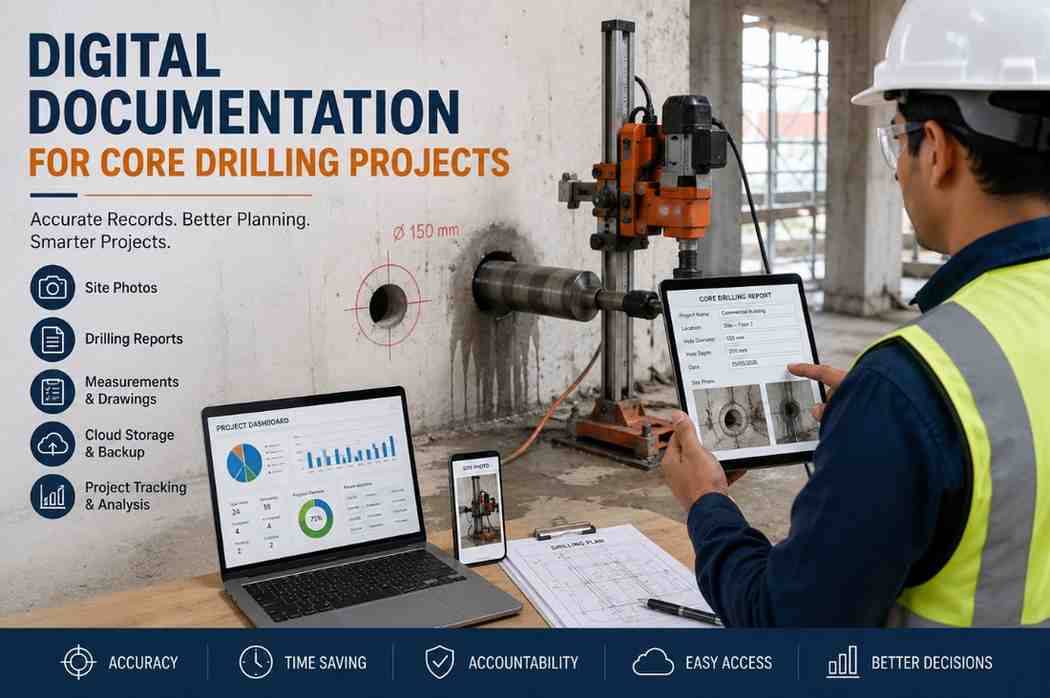
Core drilling is one of the most technical and safety-sensitive activities in the construction and infrastructure industry. Whether it's for structural inspections, geotechnical investigations, or utility installations, the accuracy of every core drilling project depends heavily on how well the associated data is recorded, stored, and shared. This is where digital documentation has become a game-changer.
At Core Cutting India ([email protected]), we have seen firsthand how the shift from paper-based logs to digital documentation systems has transformed the reliability, transparency, and efficiency of core drilling operations. In this blog, we'll explore what digital documentation means for core drilling projects, why it matters, and how it is reshaping the industry.
What Is Digital Documentation in Core Drilling?
Digital documentation refers to the process of capturing, storing, and managing all data related to a core drilling project using electronic tools instead of manual paperwork. This includes drilling logs, core sample details, site photographs, GPS coordinates, depth measurements, material composition notes, and inspection reports — all recorded and stored digitally.
Instead of technicians filling out paper forms on-site that later need to be transcribed into spreadsheets or reports, digital documentation allows real-time data entry using tablets, mobile apps, or specialized drilling software. This data is then automatically synced to cloud-based systems, making it instantly accessible to project managers, engineers, and clients.
For companies like Core Cutting India, this transition has meant fewer errors, faster turnaround times, and significantly improved client communication throughout the lifecycle of a drilling project.
Why Documentation Matters in Core Drilling Projects
Before diving deeper into the digital aspect, it's worth understanding why documentation itself is so critical in core drilling.
1. Structural Safety and Integrity
Core drilling is often performed on load-bearing structures — concrete slabs, walls, foundations, and beams. Every hole drilled has potential implications for structural integrity. Detailed documentation of drilling locations, depths, and diameters ensures that engineers can verify that drilling was performed within safe parameters and in compliance with structural drawings.
2. Regulatory and Compliance Requirements
Construction and infrastructure projects are subject to strict regulatory oversight. Authorities often require detailed records of core drilling activities, including permits, safety checks, and material testing results. Proper documentation ensures projects remain compliant and audit-ready at all times.
3. Quality Assurance
Core samples extracted during drilling are often sent for laboratory testing to assess material strength, composition, and durability. Accurate documentation of sample locations and conditions ensures that lab results can be correctly correlated back to specific points on-site.
4. Dispute Resolution
In the event of disputes — whether related to project delays, damage claims, or contractual disagreements — having a clear, timestamped digital record of drilling activities can serve as objective evidence, protecting both the drilling contractor and the client.
The Shift from Paper to Digital: Why It's Happening
Traditionally, core drilling documentation was handled manually. Site supervisors would fill out paper logs, sketch drilling locations on printed drawings, and later compile everything into a report back at the office. While this method worked for decades, it came with significant drawbacks:
- Human error in transcription and data entry
- Delays between fieldwork and final report delivery
- Loss or damage of physical documents
- Difficulty in cross-referencing historical data
- Limited accessibility for remote stakeholders
As construction projects have grown more complex and clients demand faster, more transparent reporting, the industry has increasingly adopted digital tools to overcome these limitations.
Key Components of Digital Documentation Systems
A robust digital documentation system for core drilling typically includes the following components:
1. Mobile Data Capture Tools
Field technicians use tablets or smartphones equipped with specialized apps to record drilling data directly at the site. This includes drilling depth, diameter, location coordinates (often GPS-tagged), time stamps, and notes on material encountered.
2. Photographic and Video Documentation
High-resolution photos and videos of drilling locations, core samples, and site conditions are captured digitally and linked directly to the corresponding data entry. This visual evidence is invaluable for quality checks and client reporting.
3. Cloud-Based Storage and Sharing
Once data is captured, it's automatically uploaded to cloud servers. This ensures that project stakeholders — including site engineers, project managers, and clients — can access up-to-date information from anywhere, at any time.
4. Automated Report Generation
Modern documentation platforms can automatically compile field data into structured reports, complete with charts, images, and summaries. This drastically reduces the time between fieldwork completion and final report delivery.
5. Digital Signatures and Approvals
Digital documentation systems often include e-signature capabilities, allowing supervisors and clients to approve reports and sign off on completed work without needing physical paperwork.
Benefits of Digital Documentation for Core Drilling Projects
Improved Accuracy
Manual data entry is prone to human error — misread measurements, illegible handwriting, or transcription mistakes. Digital tools reduce these risks by allowing direct, structured data entry with built-in validation checks.
Real-Time Access and Transparency
Clients and project managers no longer need to wait days or weeks for a final report. With digital documentation, data can be reviewed almost immediately after it's recorded on-site, improving transparency and trust.
Enhanced Collaboration
Multiple team members — from site engineers to lab technicians to project managers — can access the same centralized data repository, reducing miscommunication and ensuring everyone is working from the same information.
Better Compliance and Audit Trails
Digital systems automatically timestamp and log every entry, creating a clear audit trail. This is particularly valuable for regulatory compliance and for demonstrating due diligence in the event of an inspection or dispute.
Cost and Time Savings
While there is an initial investment in digital tools and training, the long-term savings in administrative time, paper costs, and error correction are substantial. Faster report turnaround also means faster decision-making and project progression.
Environmental Benefits
Reducing reliance on paper documentation also contributes to more sustainable business practices — a growing priority for many construction and infrastructure companies.
Challenges in Adopting Digital Documentation
Despite the clear advantages, transitioning to digital documentation isn't without its challenges:
- Initial Training: Field teams accustomed to paper-based methods may need training to adapt to new digital tools.
- Connectivity Issues: Remote drilling sites may have limited internet access, requiring offline data capture capabilities that sync once connectivity is restored.
- Data Security: As with any digital system, protecting sensitive project data from unauthorized access or loss is essential.
- Integration with Existing Systems: Companies with established workflows may need to integrate new digital tools with existing project management or client reporting systems.
At Core Cutting India, we've addressed these challenges through phased implementation, hands-on team training, and choosing tools designed for field reliability, including offline data capture options.
How Core Cutting India Approaches Digital Documentation
As a company deeply involved in core drilling services, Core Cutting India has integrated digital documentation into our standard project workflow. Here's how we approach it:
- On-Site Digital Logging: Our technicians record drilling data directly using digital devices, capturing precise measurements, GPS-tagged locations, and site conditions in real time.
- Photo and Video Evidence: Every drilling point is documented visually, providing clients with clear evidence of work completed.
- Centralized Data Management: All project data is stored securely in cloud-based systems, accessible to authorized stakeholders whenever needed.
- Timely Report Delivery: Using automated reporting tools, we significantly reduce the time between fieldwork completion and final report submission to clients.
- Client Communication: We keep clients informed with digital updates throughout the project, ensuring transparency from start to finish.
This approach has allowed us to serve clients across various sectors — construction, infrastructure, and geotechnical investigation — with greater efficiency and reliability.
The Future of Digital Documentation in Core Drilling
Looking ahead, we expect digital documentation in core drilling to continue evolving with advancements such as:
- AI-Assisted Data Analysis: Automated identification of anomalies or patterns in drilling data.
- Integration with Building Information Modeling (BIM): Linking drilling data directly to 3D structural models for enhanced visualization.
- IoT-Enabled Drilling Equipment: Sensors on drilling machines that automatically capture and transmit data without manual input.
- Blockchain for Data Integrity: Ensuring tamper-proof records for high-stakes projects requiring strict compliance verification.
These advancements will further reduce manual effort, improve data accuracy, and enhance collaboration across project teams.
Conclusion
Digital documentation has moved from being a "nice-to-have" to an essential component of modern core drilling projects. It improves accuracy, speeds up reporting, enhances compliance, and builds greater trust between drilling contractors and their clients.
At Core Cutting India, we remain committed to leveraging the latest digital tools and best practices to deliver reliable, transparent, and efficient core drilling services. Whether you're planning a construction project, a geotechnical survey, or a structural assessment, having a partner who values accurate, digitally-documented work can make all the difference.
For more information about our core drilling services and how we integrate digital documentation into every project, reach out to us at [email protected].
Frequently Asked Questions
1. What is digital documentation in core drilling? Digital documentation in core drilling refers to recording, storing, and managing all project data — including drilling logs, measurements, photos, and reports — using electronic tools rather than paper-based methods.
2. Why is documentation important in core drilling projects? Documentation ensures structural safety, regulatory compliance, quality assurance, and provides evidence in case of disputes or audits.
3. How does digital documentation improve accuracy in drilling projects? By reducing manual data entry and transcription, digital tools minimize human error and ensure more precise, real-time recording of drilling data.
4. What information should be included in a core drilling report? A comprehensive report typically includes drilling location, depth, diameter, material composition, GPS coordinates, timestamps, photographic evidence, and technician notes.
5. How is digital documentation different from traditional paper-based drilling records? Digital documentation allows real-time data capture, cloud storage, faster report generation, and easier accessibility compared to physical paper logs, which are prone to loss, damage, and delays.
6. What software is used for core drilling documentation? Various field data collection apps, project management platforms, and specialized construction documentation software are used, often customized to fit specific project requirements.
7. How does digital documentation help with compliance in construction projects? It creates a clear, timestamped audit trail of all drilling activities, making it easier to demonstrate compliance with safety standards and regulatory requirements during inspections.
Written by Core Cutting India — your trusted partner for professional core drilling and cutting services. Contact us at [email protected] for expert consultation and project support.