
Introduction: From Basic Shelter to Intelligent Ecosystems
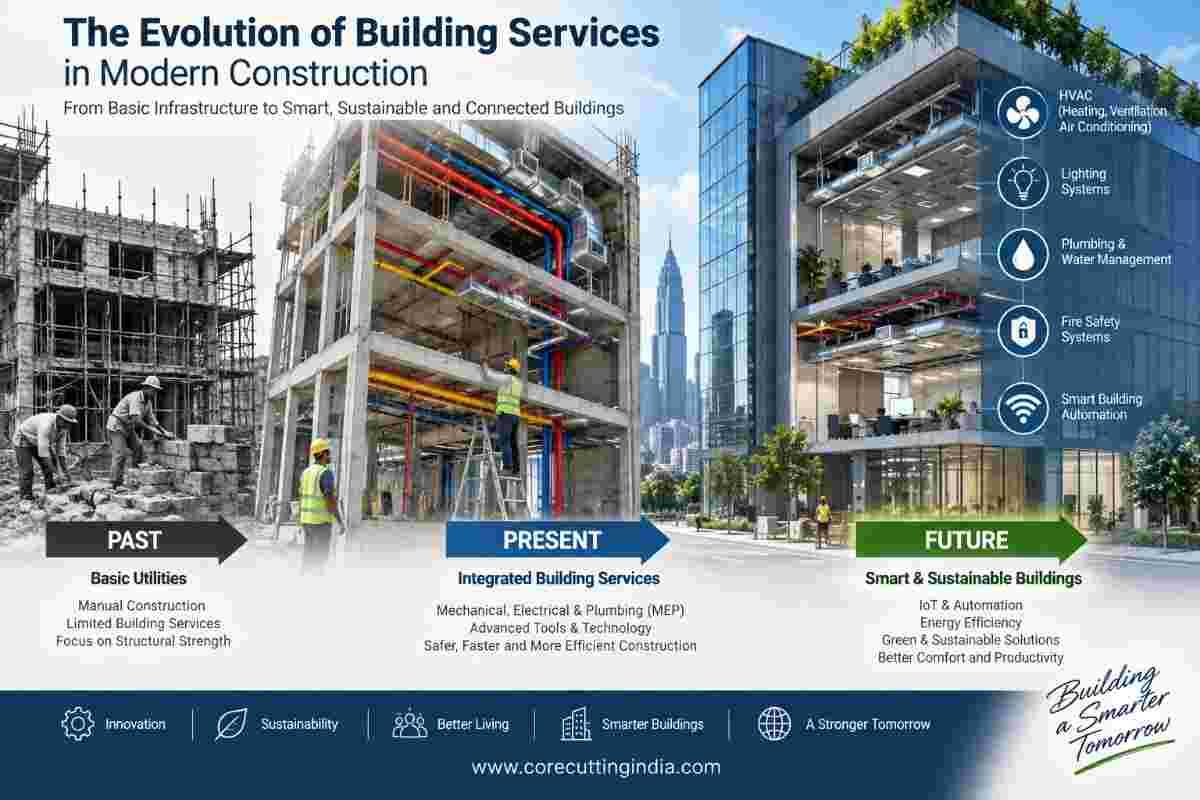
Architecture and construction have journeyed far beyond the days of piling stone and mortar to block out the elements. In contemporary civil engineering, structures are no longer viewed as static enclosures; rather, they function as dynamic, breathing ecosystems. At the core of this transformation lies the evolution of building services in modern construction.
Building services encompass the systems, engineering, and technologies installed within a building to make it comfortable, safe, efficient, and sustainable. From Mechanical, Electrical, and Plumbing (MEP) layouts to advanced fire safety and structural integrity protocols, these services dictate how well a building performs throughout its lifecycle. As urbanization accelerates and environmental demands tighten, the integration of cutting-edge building services has transitioned from a luxury to an absolute necessity.
Achieving seamless integration of modern utilities requires more than just blueprint design—it demands specialized structural execution. Providers like Core Cutting India play a crucial role in bridging the gap between architectural vision and physical execution, ensuring that modern infrastructure can accommodate complex utility networks safely and efficiently.
Phase 1: The Historical Context – Understanding the Roots of Building Services
To appreciate where modern construction stands today, one must look back at how building utilities were historically handled.
In early architectural traditions, structures relied on passive systems. Natural ventilation through high ceilings and courtyards, lighting via windows, and rudimentary gravity-fed water supply defined early human habitats. Heating was limited to central hearths or open fireplaces.
The Industrial Revolution served as a massive inflection point. The advent of iron, steel, and reinforced concrete enabled buildings to stretch upward into skyscrapers. This vertical expansion triggered an immediate crisis: how to pump water to the 20th floor, how to light expansive indoor spaces safely, and how to maintain breathable air inside sealed structures.
-
The 19th Century: Introduction of municipal piped water, gas lighting, and rudimentary steam heating.
-
The Mid-20th Century: Widespread adoption of commercial air conditioning, electrical grids, elevators, and centralized plumbing networks.
-
The Late 20th Century: Integration of structured cabling, early computer-aided design (CAD), and basic automated fire safety systems.
While these milestones revolutionized habitability, they also made buildings vastly more complex. Introducing heavy electrical trays, extensive ductwork, and plumbing channels into solid concrete frameworks required surgical precision, laying the groundwork for specialized structural interventions like diamond core drilling and concrete cutting.
Phase 2: The Modern Paradigm – Core Pillars of Contemporary Building Services
Today, building services represent up to 40% to 50% of the total cost of a modern commercial construction project. They are broadly categorized into several core domains that ensure a building functions smoothly:
1. Advanced MEP (Mechanical, Electrical, and Plumbing) Systems
MEP engineering is the nervous system of any structure. Modern mechanical systems focus on energy recovery ventilation (ERV) and variable refrigerant flow (VRF) HVAC systems that dramatically cut down carbon emissions. Electrical grids are now designed to handle heavy loads while integrating renewable energy inputs like rooftop solar panels. Plumbing has evolved into smart water management systems that recycle greywater and monitor leaks in real time.
2. Structural Modifications and Utility Routing
As buildings evolve, routing these massive MEP networks through reinforced cement concrete (RCC) structures becomes a formidable engineering task. Traditional hammering and manual chiseling are obsolete; they cause micro-fractures, compromise structural integrity, and create massive delays. This is where high-precision techniques like diamond core cutting and wall sawing become indispensable. Professionals utilize specialized machinery to drill clean, vibration-free openings for pipes, ducts, and cables without destabilizing the surrounding framework.
3. Fire Safety and Life Protection
Modern building codes mandate rigorous life-safety services. Smoke extraction systems, automated sprinkler grids, fire-rated compartmentalization, and intelligent evacuation alarms are deeply synchronized with the building’s central management system.
4. Acoustics and Thermal Insulation
With modern urban densification, noise control and thermal performance are critical building services. High-performance insulation materials and acoustic dampening configurations ensure that interior environments remain serene and energy-efficient despite external weather and noise extremes.
Phase 3: The Digital Revolution – BIM, Smart Tech, and Automation
The 21st century has introduced a digital renaissance to construction, drastically changing how building services are planned, installed, and maintained.
Building Information Modeling (BIM)
Gone are the days of 2D blueprints prone to spatial clashes. BIM provides a comprehensive 3D digital representation of a building’s physical and functional characteristics. Engineers can simulate how electrical trays intersect with plumbing lines long before breaking ground. This virtual coordination minimizes on-site errors, reduces waste, and optimizes material allocation.
IoT and Smart Building Automation
Modern building services are increasingly autonomous. Internet of Things (IoT) sensors monitor indoor air quality, occupancy patterns, and lighting requirements dynamically. If a room is empty, smart HVAC and lighting systems automatically dial back power consumption, contributing to net-zero energy targets.
Precision Execution on Site
Digital designs require physical perfection. When a BIM model dictates an exact core-drilled opening for a high-capacity ventilation pipe through a thick RCC shear wall, execution must match millimeter-level tolerances. Specialized technical service providers ensure that these intricate digital specifications are translated accurately into physical structures, preserving load-bearing capacities while embedding advanced utility lines.
Phase 4: Sustainability and Green Building Services
The construction industry is one of the largest global consumers of energy and natural resources. Consequently, the evolution of building services is heavily steered by green building certifications (such as LEED, GRIHA, and IGBC).
-
Energy Efficiency: Modern lighting uses smart LED networks tied to daylight harvesting sensors. Elevators capture and regenerate kinetic energy back into the building’s grid.
-
Water Conservation: Vacuum drainage, rainwater harvesting systems, and smart metering reduce a building’s water footprint.
-
Eco-Friendly Structural Intervention: Sustainable construction is not just about what goes into a building, but how it is modified or demolished. Techniques like wet diamond core cutting use water suppression to eliminate airborne silica dust, protecting worker health and minimizing environmental pollution on site.
Challenges in Modern Building Services Integration
Despite technological leaps, integrating state-of-the-art building services comes with hurdles:
-
Retrofitting Older Structures: Upgrading historical or existing buildings with modern HVAC and fire-fighting systems requires careful core drilling and structural scanning to avoid severing hidden rebar or post-tension cables.
-
Skilled Labor Shortages: Operating advanced laser-guided cutting equipment and automated MEP systems demands highly trained technicians.
-
Regulatory Compliance: Navigating strict local zoning laws, environmental clearances, and safety standards requires tight collaboration between architects, MEP consultants, and specialized contractors.
The Future Horizon: What Lies Ahead?
As we look toward the future of construction, several groundbreaking trends are set to redefine building services even further:
-
Artificial Intelligence (AI) in Facility Management: AI will predict equipment failures before they happen, scheduling maintenance autonomously.
-
Modular and Prefabricated Services: Entire MEP modules and pre-drilled structural panels will be manufactured off-site, reducing construction timelines significantly.
-
Advanced Robotics: Autonomous robots will handle repetitive tasks like drilling, core cutting, and wiring with zero margin for error.
Conclusion
The evolution of building services in modern construction mirrors humanity's relentless pursuit of comfort, efficiency, and safety. What began as basic shelter has transformed into an intelligent, sustainable machine capable of supporting complex human activities.
However, high-tech engineering concepts remain blueprints on paper without meticulous physical execution. Whether it is a towering commercial skyscraper, a sprawling industrial plant, or a modern residential complex, the success of modern building services depends heavily on precision, safety, and technical expertise.
For projects requiring flawless structural modifications, accurate utility channels, and professional execution, partnering with industry experts is vital. To learn more about specialized structural drilling and cutting solutions that empower modern infrastructure, visit Core Cutting India.