
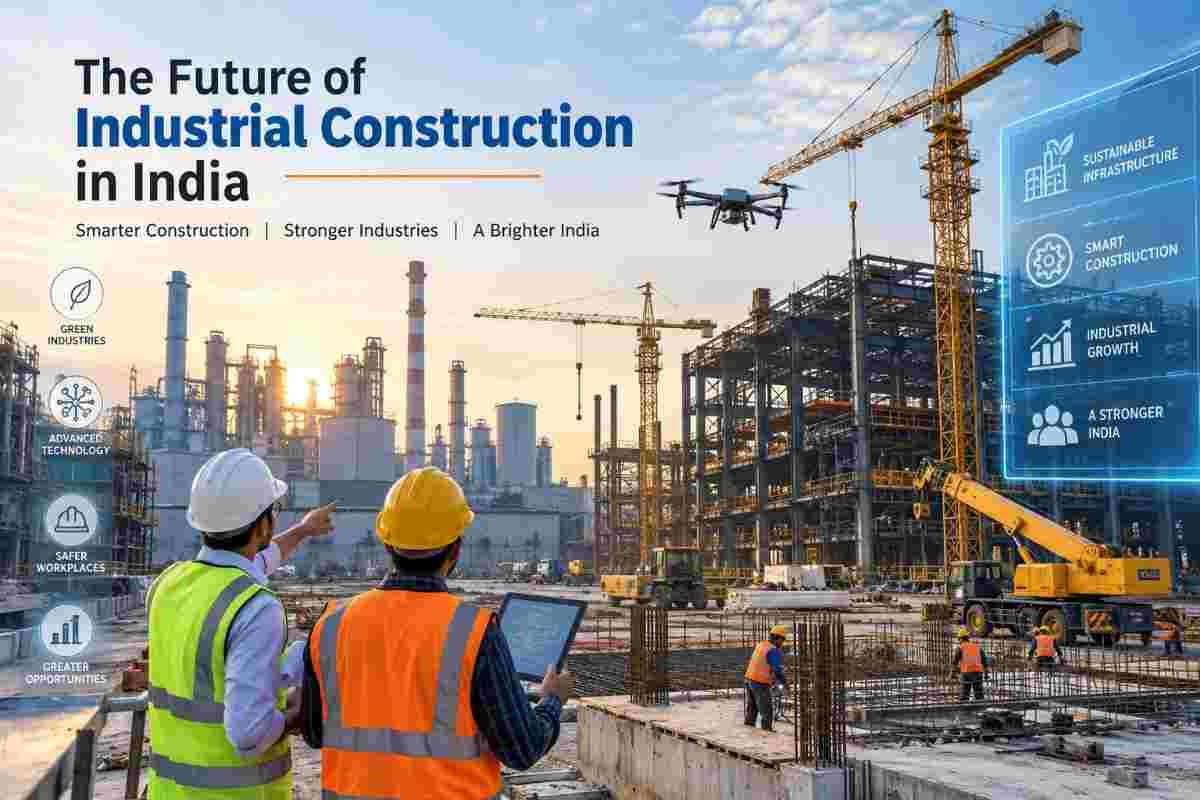
India's industrial construction sector is standing at a defining moment. Fuelled by government infrastructure spending, rapid urbanisation, a booming manufacturing base under the "Make in India" initiative, and rising demand from sectors like logistics, energy, and data centres, industrial construction in India is no longer just about laying bricks and pouring concrete. It is evolving into a technology-driven, precision-led, and sustainability-focused industry. At CoreCuttingIndia, we work at the intersection of this transformation, providing specialised concrete cutting, core drilling, and demolition services that support the industrial projects shaping India's future. In this article, we take a closer look at where the industry is headed and why the next decade will look very different from the last.
A Snapshot of India's Industrial Construction Landscape
India's construction industry is one of the largest contributors to the national economy, and industrial construction — factories, warehouses, power plants, refineries, ports, and manufacturing hubs — forms a significant share of this growth. With initiatives like the National Infrastructure Pipeline, PM Gati Shakti, and dedicated freight corridors, the government has signalled a long-term commitment to building world-class industrial infrastructure. Add to this the rapid rise of e-commerce warehousing, semiconductor fabrication units, electric vehicle manufacturing plants, and renewable energy installations, and it becomes clear why industrial construction is entering a period of sustained, structural growth rather than a short-term boom.
This growth, however, comes with new expectations. Clients today want faster project timelines, tighter safety standards, better quality control, and construction methods that reduce environmental impact. This is exactly what is reshaping the future of the industry.
1. Smart Construction Technology Is Becoming the Norm
One of the clearest signs of change is the adoption of digital tools across industrial construction sites. Building Information Modelling (BIM) is increasingly used to plan industrial facilities before a single foundation is poured, allowing engineers to detect design clashes, optimise material usage, and reduce costly on-site errors. Drones are being used for site surveys and progress monitoring, while IoT-enabled sensors track everything from concrete curing temperatures to equipment performance in real time.
Robotics and semi-automated machinery are also making their way onto Indian industrial sites — particularly for repetitive, high-precision tasks such as rebar tying, surface finishing, and material handling. While full automation is still some years away for most Indian contractors, the direction of travel is unmistakable: technology is moving from being an add-on to becoming a core part of how industrial projects are planned and executed.
2. Precision Techniques Like Core Cutting and Drilling Are in Higher Demand
As industrial structures become more complex — with intricate utility layouts, post-tensioned slabs, and dense reinforcement — the demand for precision-based construction and renovation techniques is rising sharply. Diamond core drilling and concrete cutting have become essential services in modern industrial projects, used for everything from installing pipelines, cables, and HVAC ducts to creating openings for machinery foundations and structural modifications.
Unlike traditional breaking methods, core cutting and drilling offer vibration-free, dust-controlled, and highly accurate results, which is critical in operational industrial facilities where downtime is expensive and structural integrity cannot be compromised. As more factories and plants look to retrofit, expand, or upgrade existing structures rather than build entirely new ones, specialised services like those offered by CoreCuttingIndia are set to play an increasingly important role in the industry's future — enabling safer, cleaner, and more efficient modifications to concrete and structural elements.
3. Prefabrication and Modular Construction Are Gaining Ground
Speed of execution is one of the biggest differentiators in industrial construction today, and prefabrication is emerging as a key solution. Instead of building every component on-site, manufacturers are increasingly producing structural steel frameworks, precast concrete panels, and modular building sections in controlled factory environments before transporting and assembling them on-site.
This shift offers multiple benefits: shorter project timelines, better quality control, reduced material wastage, and less dependency on weather conditions. For large-scale industrial parks, warehouses, and manufacturing units where time-to-operation directly impacts business revenue, prefabrication is quickly becoming the preferred approach rather than the exception.
4. Sustainability Is No Longer Optional
Environmental regulations and corporate sustainability commitments are pushing industrial construction toward greener practices. Green building certifications such as IGBC and GRIHA are increasingly sought after for industrial facilities, not just commercial and residential ones. This includes the use of energy-efficient designs, rainwater harvesting systems, solar integration, and construction materials with lower embodied carbon.
Even in specialised processes like concrete cutting and demolition, sustainability plays a role. Techniques that reduce dust emissions, control noise pollution, and allow for the recycling of demolished concrete are becoming standard expectations rather than value additions. As India works toward its net-zero commitments, industrial construction companies that build sustainability into their processes — from design to execution — will be better positioned for long-term growth.
5. Skilled Labour and Workforce Training Will Shape Project Quality
As construction methods become more sophisticated, the skill gap in India's construction workforce is becoming a pressing concern. Operating BIM software, handling diamond core drilling equipment, managing prefabricated component assembly, and working with automated machinery all require specialised training that traditional labour models don't always provide.
Going forward, the industry's growth will depend heavily on structured skill development programs, certifications, and partnerships between construction companies, technical institutes, and government skilling missions. Companies that invest in training their teams on modern equipment and safety protocols — much like specialised service providers do for niche work such as core cutting and structural drilling — will have a clear competitive advantage in execution quality and safety compliance.
6. Infrastructure Push Will Continue to Drive Demand
India's ambition to become a global manufacturing and logistics hub is directly fuelling industrial construction demand. Sectors such as electronics manufacturing, electric vehicles, renewable energy, pharmaceuticals, and data centres are all expanding their physical infrastructure footprint across the country. Dedicated industrial corridors, special economic zones, and logistics parks are being developed at a scale India hasn't seen before.
This sustained pipeline of industrial projects means steady work not just for large construction contractors, but also for specialised service providers involved in structural modifications, utility installations, concrete cutting, and core drilling — work that is often essential during both the construction and operational phases of a facility's lifecycle.
7. Safety Standards Are Becoming Stricter
With larger and more complex industrial projects come higher safety expectations. Regulatory bodies and private developers alike are placing greater emphasis on structural safety audits, controlled demolition practices, and non-invasive construction techniques that minimise risk to workers and existing structures.
This is another area where precision techniques are proving valuable. Traditional concrete breaking methods can cause unpredictable cracking, vibration damage, and safety hazards, especially in occupied or operational industrial buildings. Controlled methods such as diamond core drilling and wire sawing reduce these risks considerably, which is why they are increasingly specified in project safety plans for industrial renovations, retrofits, and expansions.
What This Means for Industrial Businesses in India
For businesses planning industrial facilities — whether a new manufacturing plant, a warehouse expansion, or a retrofit of an existing structure — the message is clear: the construction approach you choose today will directly impact your project timelines, costs, and long-term operational efficiency. Partnering with experienced, technically capable contractors and specialised service providers is no longer just a preference; it is becoming a necessity in a market that is moving faster and demanding higher precision than ever before.
This is where companies like CoreCuttingIndia fit into the bigger picture. As industrial construction across India becomes more technical, more time-sensitive, and more safety-conscious, specialised services such as diamond core drilling, concrete cutting, wall sawing, and controlled demolition are becoming integral — not peripheral — to how industrial projects get built, modified, and maintained.
Final Thoughts
The future of industrial construction in India is being shaped by a combination of forces: government-backed infrastructure growth, rising manufacturing investment, digital transformation, sustainability mandates, and a growing emphasis on precision and safety. Companies that adapt early — by adopting smart technologies, investing in skilled labour, embracing prefabrication, and partnering with specialised service providers — will be best placed to capitalise on this next phase of growth.
As India continues to build the factories, warehouses, and industrial hubs that will power its economy for decades to come, the demand for precise, safe, and efficient construction and modification techniques will only increase. If your organisation is planning an industrial project and needs expert concrete cutting or core drilling support, visit CoreCuttingIndia.com to learn how our team can help bring your project to life safely and efficiently.
People Also Ask
What is the future of the construction industry in India? The future of India's construction industry looks strong, driven by government infrastructure spending, manufacturing growth, and rising demand for warehouses, factories, and industrial parks. Technology adoption, sustainability, and prefabrication are expected to define the next phase of growth.
Which construction technologies are trending in India right now? Building Information Modelling (BIM), drone surveying, IoT-based site monitoring, prefabrication, modular construction, and precision techniques like diamond core drilling and concrete cutting are among the leading trends in Indian construction today.
How is technology changing industrial construction in India? Technology is improving planning accuracy, reducing project timelines, and enhancing safety on industrial sites. Tools like BIM software, automated machinery, and precision cutting equipment are helping contractors deliver higher-quality projects faster and with fewer errors.
What are the biggest challenges facing India's construction industry? Key challenges include a shortage of skilled labour, rising material costs, regulatory delays, and the need to balance rapid construction timelines with sustainability and safety requirements.
Is core cutting and drilling important in modern industrial construction? Yes. Core cutting and drilling allow for precise, vibration-free modifications to concrete structures, making them essential for installing utilities, retrofitting facilities, and expanding industrial buildings without compromising structural safety.
Is construction a good career choice in India for the future? Yes, with sustained infrastructure investment and industrial growth, the construction sector is expected to generate significant employment opportunities, particularly for professionals skilled in modern construction technologies and specialised techniques.