
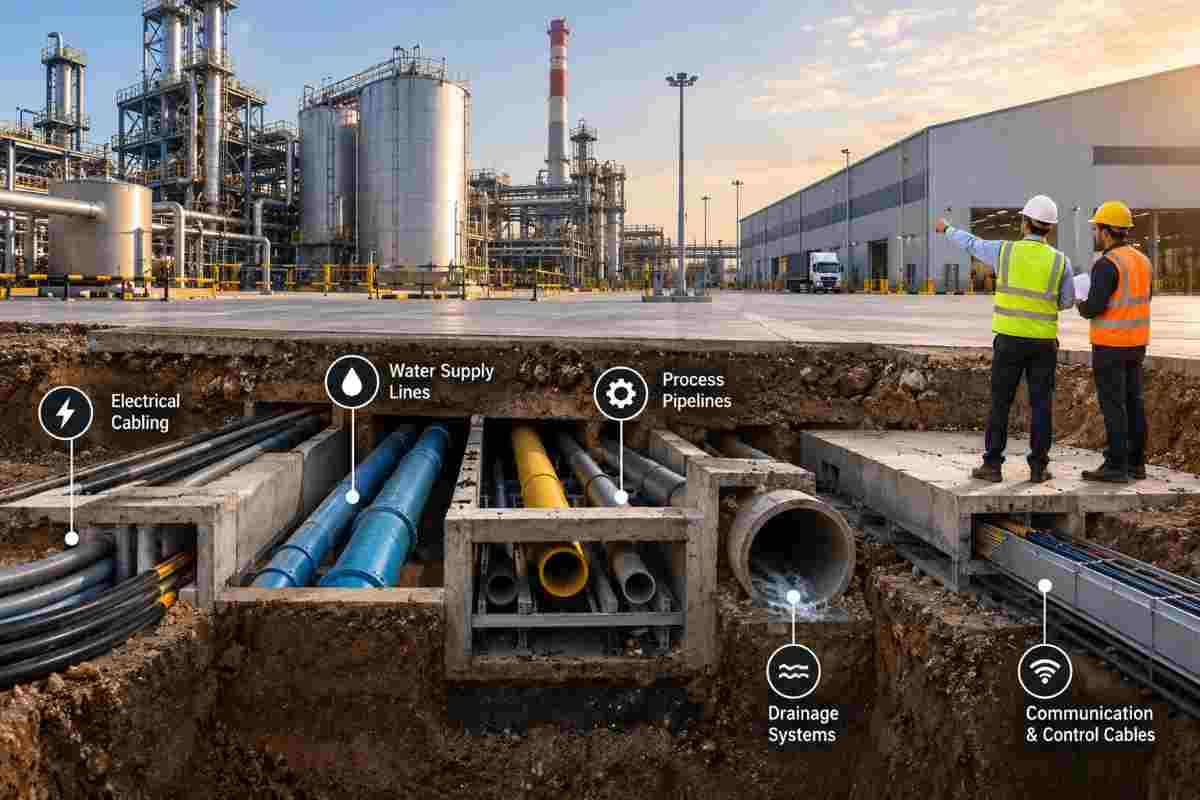
Walk through any large industrial site — a manufacturing plant, a warehouse complex, a power facility, or a processing unit — and what you notice first is the visible machinery: conveyor belts, cranes, storage tanks, and rows of equipment humming along the production line. But beneath the concrete floors, behind the walls, and running through the ceilings lies an entirely different world of infrastructure that most people never think about. This is the hidden infrastructure that keeps an industrial site alive — the cabling, piping, ventilation ducts, drainage systems, and structural openings that make every visible process possible.
This invisible network is arguably more important than the machinery itself. Without properly planned and executed hidden infrastructure, no industrial facility can function safely, efficiently, or in compliance with engineering standards. And at the heart of creating and maintaining this infrastructure is a specialized process that rarely gets the attention it deserves: precision core cutting and concrete drilling.
In this article, we'll explore what hidden infrastructure actually consists of, why it matters so much for large industrial operations, and how professional core cutting services — like those offered by Core Cutting India — form the backbone of building and maintaining these critical systems.
What Exactly Is "Hidden Infrastructure"?
Hidden infrastructure refers to all the systems embedded within the physical structure of a building or facility that are not immediately visible but are essential to its operation. In an industrial context, this typically includes:
- Electrical cabling and conduits that distribute power to machinery, control panels, and lighting throughout the site
- Plumbing and water supply lines for production processes, sanitation, and fire safety
- HVAC ductwork that manages temperature, humidity, and air quality across large production floors
- Drainage and wastewater systems that handle industrial effluents and stormwater
- Fire suppression networks, including sprinkler piping and hydrant lines
- Data and communication cabling for automation, sensors, and industrial control systems
- Structural reinforcements and load-bearing elements that support heavy machinery and multi-level structures
None of these systems are visible once installation is complete, yet every one of them runs through concrete slabs, walls, beams, and foundations. Getting them in — and later maintaining or upgrading them — requires precise, controlled openings in solid concrete and masonry. That's where core cutting comes in.
Why Hidden Infrastructure Matters More Than You'd Think
1. It Determines Operational Efficiency
An industrial site's productivity is directly tied to how well its hidden systems are designed. Poorly planned cable routing or inadequate ventilation can lead to equipment overheating, power fluctuations, or workflow bottlenecks. When infrastructure is planned and installed correctly from the start, a facility can scale operations without constantly retrofitting or shutting down production lines for repairs.
2. It Impacts Worker Safety
Electrical faults, blocked drainage, poor ventilation, and inadequate fire suppression are among the leading causes of industrial accidents. Hidden infrastructure, when installed with precision, minimizes these risks. A core-cut opening for cabling, for instance, is clean, exact, and doesn't compromise the structural integrity of the surrounding concrete — unlike traditional jackhammering, which can create cracks, weak points, and long-term structural vulnerabilities.
3. It Supports Compliance and Certification
Large industrial facilities are subject to strict building codes, fire safety regulations, and environmental standards. Proper installation of drainage, ventilation, and electrical systems is often a prerequisite for certification and continued operation. Non-compliant infrastructure can result in fines, forced shutdowns, or insurance complications.
4. It Enables Future Expansion
Industrial sites rarely stay static. As businesses grow, they need to add new machinery, expand production lines, or integrate new technology. Flexible, well-documented hidden infrastructure — including accessible cable routes and modular ducting — makes future expansion faster and cheaper. Retrofitting a facility with poorly mapped infrastructure, on the other hand, can be an expensive and time-consuming nightmare.
The Role of Core Cutting in Building Hidden Infrastructure
Every pipe, cable, and duct that passes through a concrete wall, floor, or ceiling needs an opening — and that opening has to be precise. This is where core cutting, a specialized construction technique, becomes indispensable to industrial infrastructure projects.
What Is Core Cutting?
Core cutting is the process of creating clean, cylindrical (or sometimes rectangular) openings in concrete, brick, stone, or asphalt using diamond-tipped drilling equipment. Unlike traditional demolition methods such as jackhammering or manual chiseling, core cutting is a controlled, low-vibration process that produces smooth, accurate openings without damaging the surrounding structure.
How Core Cutting Supports Industrial Infrastructure
- Electrical and Data Cabling Installation Industrial plants rely on extensive electrical networks and, increasingly, data cabling for automation and IoT-enabled machinery. Core cutting allows technicians to create precise pathways through walls and floors for this cabling without disturbing structural reinforcements.
- HVAC and Ventilation Systems Large industrial buildings often require complex ductwork to manage air circulation, especially in facilities dealing with heat-generating machinery or sensitive materials. Core cutting creates accurately sized openings for ducts, ensuring proper airflow without oversized or misaligned gaps that compromise efficiency.
- Plumbing and Drainage Networks Manufacturing and processing plants generate wastewater and require water supply lines throughout the facility. Core-cut openings allow pipes to pass cleanly through multiple floors and walls, supporting both operational plumbing and industrial drainage requirements.
- Fire Safety Systems Sprinkler lines and fire suppression piping must run through the entire facility, often across multiple levels. Precision core cutting ensures these critical safety systems are installed without weakening structural elements.
- Structural Testing and Analysis Beyond installation, core cutting is also used to extract core samples from concrete structures. These samples are tested for strength, durability, and compliance, helping engineers assess whether a structure can support additional infrastructure or machinery loads.
- Retrofitting and Upgrades As industrial facilities modernize, new infrastructure often needs to be added to existing structures. Core cutting makes it possible to introduce new utility pathways into aging buildings without extensive demolition, saving time and reducing operational downtime.
Why Precision Matters: The Risks of Poor-Quality Cutting
Not all cutting methods are created equal, and the difference matters enormously in an industrial setting. Traditional drilling or manual breaking methods can:
- Cause micro-cracks in concrete that weaken structural integrity over time
- Create uneven openings that require additional patching and sealing work
- Generate excessive dust and debris, posing health hazards to workers
- Produce vibrations that can damage nearby sensitive equipment or ongoing operations
- Lead to misaligned openings that don't properly accommodate pipes or cables, causing installation delays
Professional diamond core drilling avoids these issues by using specialized machinery that cuts with minimal vibration, controlled precision, and water-cooling systems that suppress dust. This is particularly critical in industrial environments where operations often cannot be paused for extended repairs, and where structural failures can have serious safety and financial consequences.
Planning Hidden Infrastructure: A Collaborative Process
Building the hidden infrastructure of a large industrial site isn't something that happens in isolation. It requires close coordination between architects, structural engineers, electrical and plumbing contractors, and specialized service providers like core cutting professionals. Key steps typically include:
- Site assessment and structural mapping — Understanding load-bearing walls, existing utility routes, and reinforcement placement before any cutting begins.
- Utility routing design — Planning the most efficient and safe pathways for cabling, plumbing, and ventilation.
- Precision core cutting execution — Creating the necessary openings based on approved engineering plans.
- Installation of utilities — Running cables, pipes, and ducts through the prepared openings.
- Sealing and finishing — Ensuring openings are properly sealed for fire safety, moisture protection, and structural stability.
- Documentation — Recording the exact location of hidden infrastructure for future maintenance or expansion needs.
This structured approach ensures that hidden infrastructure isn't just functional on day one, but remains safe, accessible, and adaptable for years of industrial operation.
Maintenance: The Infrastructure Nobody Sees Until Something Breaks
One of the biggest challenges with hidden infrastructure is that it's easy to forget about — until something goes wrong. A blocked drainage line, a failing cable route, or an outdated ventilation duct can bring an entire production process to a halt. Regular inspection and proactive maintenance are essential, and when repairs or upgrades are needed, the same precision core cutting techniques used during construction are just as valuable during maintenance work.
Because core cutting is a targeted, low-impact process, it allows maintenance teams to access specific sections of hidden infrastructure without tearing up entire floors or walls. This significantly reduces downtime and repair costs compared to more invasive methods.
How Core Cutting India Supports Industrial Infrastructure Projects
At Core Cutting India, the focus is on providing precise, reliable, and safe core cutting and concrete cutting services tailored to the demanding needs of industrial sites. Whether it's creating openings for electrical and plumbing installations, preparing pathways for HVAC systems, or conducting structural core sampling for engineering analysis, the goal is always the same: clean, accurate results that protect the integrity of the structure while supporting the infrastructure that keeps industrial operations running smoothly.
Industrial facilities can't afford structural compromises, unnecessary downtime, or safety risks. That's why professional-grade equipment, experienced technicians, and a deep understanding of engineering standards are non-negotiable when it comes to building or maintaining the hidden systems that power large-scale operations.
Conclusion
The next time you walk through a large industrial facility, take a moment to consider everything happening beneath the surface — the cables powering the machinery, the pipes carrying water and waste, the ducts regulating air quality, and the fire safety systems standing ready in case of emergency. None of this hidden infrastructure would exist without precise, professional construction work, and core cutting sits at the very foundation of that process.
Investing in quality core cutting services isn't just about drilling holes in concrete — it's about ensuring the long-term safety, efficiency, and adaptability of an entire industrial operation. For businesses planning new facilities, expanding existing ones, or maintaining aging infrastructure, partnering with experienced professionals is the difference between a site that runs smoothly for decades and one plagued by recurring structural and operational issues.
To learn more about professional core cutting and concrete cutting services for industrial, commercial, and residential projects, visit Core Cutting India.