
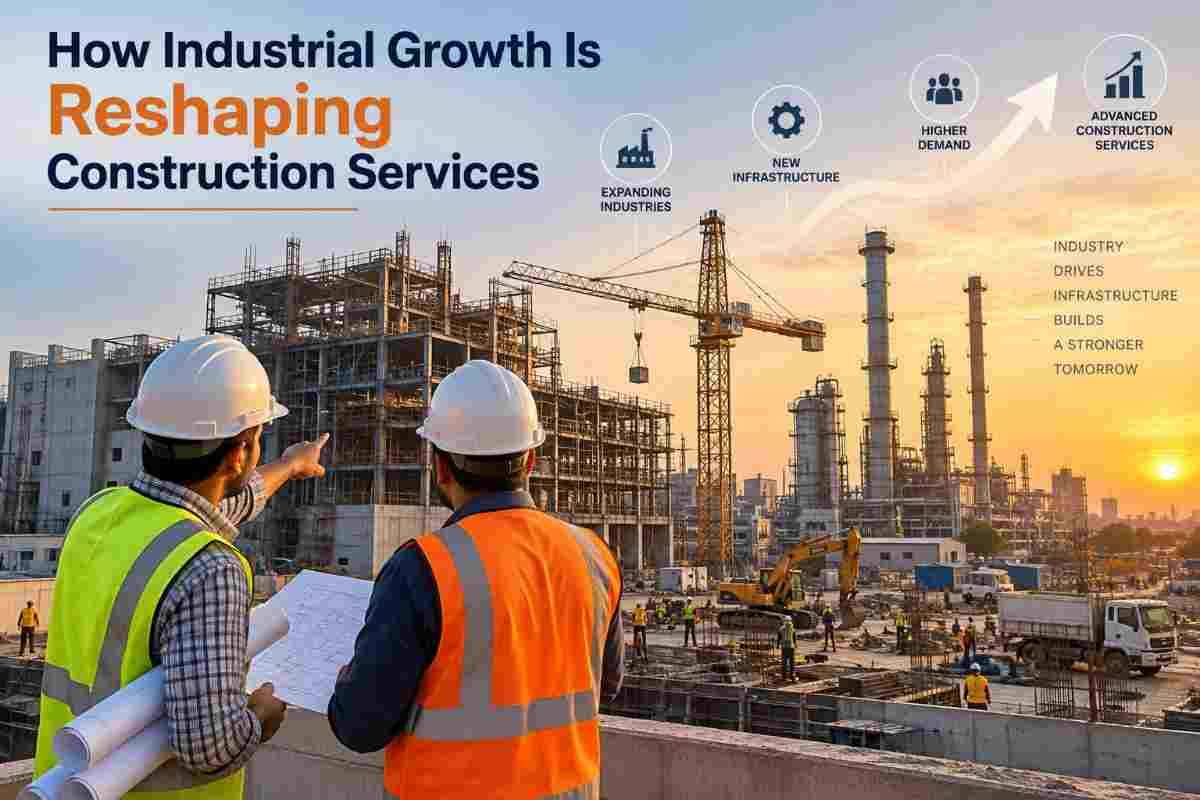
India's industrial sector is expanding at a pace that few could have predicted a decade ago. New manufacturing hubs, logistics parks, data centers, and energy facilities are rising across the country, and with them comes an entirely new set of demands on the construction industry. What used to be a fairly standardized process — pour the foundation, raise the structure, finish the interiors — has evolved into a highly specialized discipline that depends on precision, speed, and technical expertise. At CoreCutting India, we've had a front-row seat to this transformation, and it's changing not just what gets built, but how it gets built.
This shift is especially visible in specialized trades like concrete core cutting, core drilling, and structural modification services — work that was once considered a niche add-on but is now central to how industrial projects get delivered on time and within budget. In this article, we'll look at the forces driving industrial growth, how they are reshaping construction services across India, and what this means for contractors, developers, and facility owners going forward.
The Link Between Industrial Growth and Construction Demand
Industrial growth and construction activity have always moved together, but the relationship has become tighter and more complex in recent years. As manufacturing output increases, as global supply chains reroute through India, and as the government continues to push initiatives around industrial corridors and special economic zones, the built environment has to keep pace.
This isn't simply about building more. It's about building differently. Factories today need reinforced flooring capable of supporting heavy machinery. Warehouses need clear-span structures with minimal interior obstruction. Data centers need precise cable routing through concrete slabs. Power plants and processing units need structural modifications made without compromising the integrity of surrounding structures. Each of these requirements pulls construction further away from generalized building practices and toward specialized, technically demanding services.
The result is a construction industry that increasingly resembles an ecosystem of specialists rather than a single trade. Structural engineers, MEP (mechanical, electrical, plumbing) contractors, and specialized cutting and drilling teams now work in close coordination from the earliest stages of a project, rather than being brought in as an afterthought.
Rise of Specialized Construction Services
One of the clearest signs of this shift is the growing demand for services like core cutting, core drilling, and concrete scanning. These aren't new techniques, but their role in industrial construction has expanded significantly.
Core drilling allows contractors to create precise circular openings in concrete, brick, or masonry for utilities such as plumbing, electrical conduits, HVAC ducts, and structural anchors — all without the vibration and collateral damage associated with traditional demolition methods. Core cutting, meanwhile, is used for larger structural openings: doorways, elevator shafts, floor openings for equipment installation, or entire wall sections that need to be removed for retrofitting.
In an industrial context, these techniques matter enormously. A manufacturing facility retrofitting its floor plan to accommodate new machinery cannot afford the downtime, dust, and structural risk of conventional demolition. A logistics facility installing new conveyor systems needs openings cut with millimeter precision to avoid disturbing load-bearing elements. As industrial projects become more complex, the margin for error shrinks, and those who can deliver clean, precise, engineered openings become indispensable partners rather than subcontractors.
This is also why concrete scanning — using ground-penetrating radar or similar technology to map rebar, post-tension cables, and existing utilities before any cutting begins — has become a standard part of the process rather than an optional extra. Industrial clients simply cannot risk cutting into a live electrical conduit or a structural tendon, and the cost of getting it wrong is far higher than the cost of scanning first.
Technology and Precision: How Core Cutting Fits Into the Bigger Picture
Industrial growth doesn't just increase the volume of construction work — it raises the technical bar for everyone involved. Diamond core drilling equipment, wire saw cutting systems, and wall saws with dust suppression technology have become standard tools rather than specialized rarities. Contractors who once relied on manual demolition are now expected to offer engineered, low-vibration, low-dust alternatives that keep adjacent operations running.
This shift toward precision-based methods brings several advantages that matter directly to industrial clients:
- Reduced structural risk. Controlled cutting methods avoid the micro-cracking and stress propagation that can occur with jackhammering or manual demolition, protecting the long-term integrity of the structure.
- Minimal disruption to operations. Many industrial facilities cannot afford to shut down during renovation or expansion. Precision cutting techniques allow work to happen in occupied or partially operational environments.
- Faster turnaround. Diamond-tipped tools cut through reinforced concrete significantly faster than traditional methods, which matters enormously when industrial downtime is measured in lakhs of rupees per hour.
- Cleaner, safer job sites. Dust suppression and controlled cutting reduce the health and safety risks associated with airborne particulates and flying debris, which is increasingly important given tightening workplace safety regulations.
As industrial projects scale up, this level of precision stops being a value-add and starts being a baseline expectation.
Infrastructure Development Trends Driving the Shift
India's broader infrastructure push — highways, metro rail expansion, industrial corridors, ports, and renewable energy installations — is compounding the pressure on construction services. These projects don't exist in isolation. They require supporting infrastructure: substations, pumping stations, maintenance facilities, and logistics hubs, each of which needs the same specialized construction expertise as the flagship project itself.
A few trends stand out:
- Growth of industrial corridors and SEZs, which cluster manufacturing, warehousing, and logistics facilities in concentrated zones, driving simultaneous demand for specialized construction services across multiple sites at once.
- Expansion of data center capacity, as India becomes a regional hub for cloud infrastructure — a sector where precision concrete work for cable trays, cooling systems, and raised flooring is essential.
- Renewable energy build-out, including solar farms and battery storage facilities, which require foundation work and structural modifications suited to equipment that didn't exist in the Indian market a few years ago.
- Retrofitting of older industrial facilities to accommodate automation, robotics, and modern safety standards, often requiring structural openings and modifications in buildings that were never designed with these systems in mind.
Each of these trends points in the same direction: construction services are being asked to do more technically demanding, tightly scheduled, and precision-driven work than ever before.
Challenges Industrial Growth Brings to Construction Firms
Growth of this kind doesn't come without friction. Construction firms across India are contending with a few consistent challenges as industrial demand accelerates.
Skilled labor shortages are perhaps the most pressing. Specialized techniques like diamond core drilling and wire saw cutting require trained operators, and the pool of workers with this expertise hasn't grown as quickly as demand has. Firms that invest in training and certification are increasingly winning contracts that firms relying on generalist labor cannot execute safely.
Equipment costs are another factor. Modern cutting and drilling equipment represents a significant capital investment, and firms need a steady pipeline of industrial work to justify it. This is pushing smaller contractors toward specialization or partnership models rather than trying to offer every service in-house.
Compliance and safety standards have also tightened, particularly around dust control, noise limits, and structural safety documentation. Industrial clients — especially multinational manufacturers — often bring their own safety expectations that exceed local minimums, and construction partners need to be able to meet them.
Scheduling pressure rounds out the list. Industrial clients operate on production timelines, not construction timelines, and delays translate directly into lost revenue. This has made reliability and speed just as important as technical skill when clients choose a construction partner.
How Specialized Firms Are Adapting
The firms thriving in this environment share a few common traits. They've invested in modern equipment rather than relying on legacy demolition methods. They've built teams with certified, trained operators rather than treating cutting and drilling as unskilled labor. They've adopted scanning and mapping technology as a standard pre-construction step rather than an optional service. And critically, they've positioned themselves as technical partners who get involved early in project planning, rather than subcontractors brought in only once problems arise.
At CoreCutting India, this is the model we've built around — combining precision core cutting and core drilling capabilities with the kind of planning and coordination that industrial clients now expect as standard. As facilities become more complex and timelines tighten further, this early involvement often makes the difference between a smooth retrofit and a costly delay.
Sustainability's Growing Role in Industrial Construction
Sustainability considerations are also reshaping how construction services operate within industrial growth. Precision cutting methods generate far less waste than traditional demolition, since only the material that needs to be removed is removed — there's no over-break, no excess debris, and less need for structural repair afterward. Dust suppression systems reduce both environmental impact and health risk on site. And because these methods extend the usable life of existing structures through targeted retrofitting rather than full demolition and rebuild, they align well with the growing emphasis on reducing embodied carbon in construction.
For industrial clients pursuing green building certifications or corporate sustainability targets, working with contractors who can demonstrate lower-waste, lower-emission construction methods is becoming a genuine differentiator rather than a nice-to-have.
The Road Ahead
Looking forward, the relationship between industrial growth and construction services is only going to deepen. As automation increases within factories, as data infrastructure expands, and as India continues to position itself as a global manufacturing alternative, the construction services supporting that growth will need to keep becoming more specialized, more precise, and more responsive to tight operational timelines.
Firms that treat core cutting, core drilling, and related structural services as a core competency — rather than an outsourced afterthought — will be the ones best positioned to support this next wave of industrial expansion. The projects of the next decade won't just need builders. They'll need technical partners who understand the structural, operational, and scheduling realities of modern industry.
Conclusion
Industrial growth is fundamentally reshaping what construction services look like in India. The demand for precision, speed, and technical expertise has turned specialized trades like core cutting and core drilling from niche offerings into essential components of industrial project delivery. As infrastructure development accelerates and industrial facilities become more complex, the construction firms that invest in the right equipment, training, and early-stage planning will be the ones driving this transformation forward — not just responding to it.
To learn more about precision core cutting, core drilling, and structural concrete services for industrial and commercial projects, visit CoreCutting India.
Target-Related Keywords
- industrial growth and construction industry
- construction services India
- core cutting services India
- concrete core drilling services
- structural concrete cutting
- diamond core drilling
- industrial construction trends India
- concrete scanning services
- infrastructure development India
- specialized construction contractors
People Also Ask
1. What is core cutting in construction? Core cutting is a precision concrete-cutting technique used to create structural openings — such as doorways, floor openings, or wall sections — using diamond-tipped saws or drills, allowing clean, controlled removal of concrete without heavy vibration or collateral damage.
2. How does industrial growth affect the construction industry? Industrial growth increases demand for specialized, precise, and fast-turnaround construction services, pushing the industry toward technical trades like core drilling, structural retrofitting, and concrete scanning to support complex facilities such as factories, warehouses, and data centers.
3. Why is core drilling important for industrial projects? Core drilling allows contractors to install utilities, anchors, and equipment openings with minimal disruption to existing structures, which is critical for industrial facilities that cannot afford extended downtime or structural risk.
4. What equipment is used for core cutting and core drilling? Common equipment includes diamond core drills, wire saws, wall saws, and ground-penetrating radar or concrete scanners used to map rebar and utilities before cutting begins.
5. What are the latest trends in industrial construction services in India? Key trends include growth in industrial corridors and SEZs, expansion of data center construction, renewable energy infrastructure, and retrofitting of older industrial facilities for automation and modern safety standards.
6. How does precision cutting support sustainable construction? Precision cutting methods reduce material waste, minimize structural damage, and extend the usable life of existing buildings through targeted retrofitting instead of full demolition, supporting lower-waste, lower-emission construction practices.