
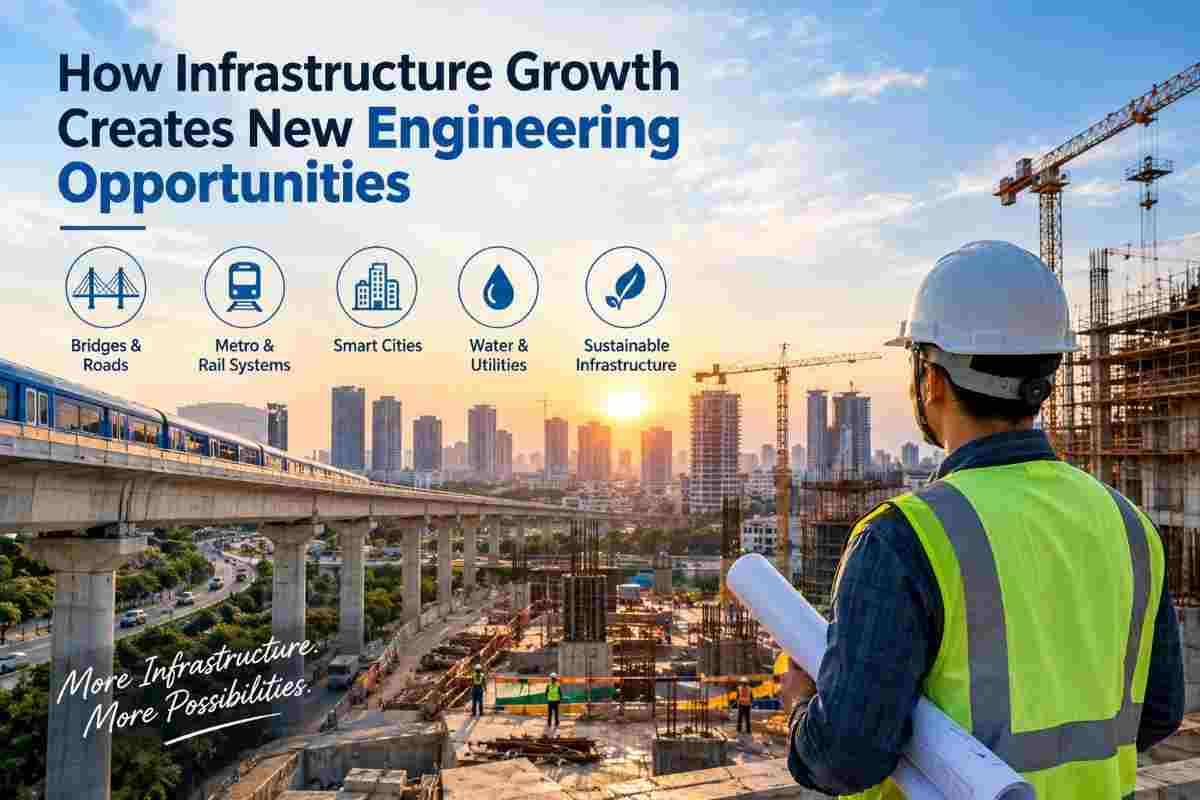
Every new highway, metro line, airport terminal, bridge or industrial park begins as a drawing and ends as a structure that changes how people live and work. In between are thousands of engineers, technicians and specialists solving problems that did not exist a decade ago. As India invests in roads, railways, ports, power, water and urban transit, the effect reaches well beyond the construction site. It creates new roles, new skills and new specialties across the engineering profession.
At Core Cutting India, we see this from the ground level. Modern infrastructure is not only about pouring concrete. It is also about cutting, opening, modifying, retrofitting, and sometimes removing it with precision. This article looks at how infrastructure growth creates engineering opportunities, which fields are expanding, and what the next generation of engineers should know.
Why Infrastructure Growth Matters for Engineers
Infrastructure is the backbone of economic activity. When governments and private developers invest in it, the effects compound:
- Construction demand rises, which needs civil, structural, mechanical and electrical engineers.
- Supply chains expand, creating roles in materials engineering, logistics and quality control.
- Technology adoption accelerates, since large projects increasingly rely on digital design, automation and monitoring.
- Maintenance needs grow, because every asset built today needs inspection, repair and upgrades for decades.
Large national programs, expanding metro networks, expressways, dedicated freight corridors, smart cities and industrial corridors have moved infrastructure from a background concern to a central engineering theme. Each of these programs runs on engineering talent, and the demand goes well beyond traditional design roles.
The Ripple Effect: From One Project to Many Careers
A single infrastructure project supports an entire ecosystem of engineering work. Take a metro rail project:
- Planners and surveyors map alignments and assess ground conditions.
- Geotechnical engineers study soil and design foundations.
- Structural engineers design viaducts, stations and tunnels.
- Electrical and mechanical engineers handle traction, signaling, ventilation and lifts.
- Project managers coordinate schedules, budgets and contractors.
- Quality and safety engineers ensure compliance with codes and standards.
- Specialist contractors handle precision tasks such as concrete cutting, drilling and controlled demolition.
Each layer includes people who did not exist in that form a generation ago. The ecosystem also outlives construction. Once a project is operational, a second wave of opportunities begins in operations, maintenance, upgrades and eventual rehabilitation.
Key Engineering Fields Expanding with Infrastructure Growth
Civil and Structural Engineering
Civil engineering remains the most direct beneficiary. Bridges, flyovers, tunnels, high-rises and industrial buildings all need structural designers, site engineers and supervisors. The complexity has increased too. Engineers now work on longer spans, deeper foundations, seismic-resistant designs and structures that must be built quickly in congested cities.
Geotechnical and Tunnelling Engineering
Underground metro lines, road tunnels and utility corridors have created demand for geotechnical specialists and tunnelling engineers. These roles combine soil mechanics, rock engineering and advanced monitoring, and they are among the most specialized and best-paid in the sector.
Transportation and Highway Engineering
Expressways, ring roads, rail corridors and airports need transportation planners, pavement designers and traffic engineers. The focus is shifting toward safety, durability and intelligent transport systems, which brings data analysis into a traditionally physical discipline.
Environmental and Sustainability Engineering
Large projects now face stricter environmental requirements. Engineers who can manage waste, reduce emissions, recycle construction debris and design for energy efficiency are increasingly valuable. Sustainable practices, such as reusing demolished concrete and minimizing dust and noise, are now part of project planning.
Construction Technology and Digital Engineering
Building Information Modelling (BIM), drone surveys, digital twins and sensor-based monitoring have created roles that blend engineering with software. Engineers who can read a structure through data as well as drawings are shaping how projects are planned and maintained.
Mechanical, Electrical and MEP Engineering
Every modern structure needs power, cooling, water, fire protection and communication systems. Growth in commercial buildings, data centers, hospitals and factories drives demand for MEP engineers, and their work often intersects with civil work in ways that need careful coordination.
The Rise of Specialized Construction Services
One of the least discussed effects of infrastructure growth is the rise of specialist services that support main construction work. As projects become more complex, general contractors rely on specialists for tasks that demand precision, safety and specific equipment.
Concrete cutting is a clear example. Once a structure is built, it often needs to be modified. Openings are required for ducts, pipes, cables, lifts and staircases. Old sections must be removed without damaging the rest of the structure. Slabs, walls and pavements need to be cut cleanly to make room for new systems.
This is where techniques such as core drilling, wall sawing, wire sawing, slab sawing and flat sawing come in. They allow engineers to modify reinforced concrete with accuracy, low vibration and minimal disruption to surrounding structures. Each of these techniques involves its own equipment, planning and technical judgment, and each has created skilled roles for operators, technicians and supervising engineers.
Why Precision Concrete Cutting Is Becoming Essential
Infrastructure growth means more buildings and roads, but it also means more modification of existing structures. Three trends are driving demand for precision cutting.
1. Retrofitting and Upgrades
Many structures need upgrades to meet new safety codes, add capacity or accommodate new technology. Adding openings, strengthening elements or replacing sections requires cutting that does not compromise structural integrity. Engineers must understand load paths, reinforcement layout and the sequence of work.
2. Urban Congestion
In dense cities, construction happens next to occupied buildings, live roads and sensitive infrastructure. Traditional demolition methods that create heavy vibration, dust and noise are often unsuitable. Precision cutting reduces impact on the surroundings and allows work to continue safely nearby.
3. Speed and Schedule Pressure
Infrastructure projects run on tight timelines. Clean, accurate cutting reduces rework, prevents damage to adjacent elements and helps keep schedules on track. Engineers who plan cutting operations early save both time and cost.
For anyone planning such work, an experienced team such as Core Cutting India can support projects that require accurate, safe and efficient concrete cutting.
New Skills Engineers Need in a Growing Infrastructure Landscape
The opportunities are large, but they favor engineers who keep building their skills. The most valuable ones include:
- Technical depth: a strong grasp of structural behavior, materials and construction methods.
- Digital fluency: comfort with BIM, CAD, GIS, project management software and data analysis.
- Safety and compliance knowledge: understanding of codes, risk assessment and site safety practices.
- Specialized methods: familiarity with techniques such as core drilling, controlled cutting and non-destructive testing.
- Project management: the ability to coordinate teams, budgets and timelines across multiple disciplines.
- Communication: infrastructure projects involve many stakeholders, and engineers who can explain technical issues clearly are in demand.
- Sustainability awareness: knowledge of green construction, recycling and low-impact methods.
Engineers who combine solid fundamentals with one or two specialized skills tend to advance faster than those who rely on general knowledge alone.
Opportunities Beyond Traditional Engineering Roles
Infrastructure growth also creates opportunities for people who may not hold a formal engineering degree but work alongside engineers:
- Skilled technicians and operators for cutting, drilling and heavy equipment.
- Site supervisors and safety officers who make sure work is carried out correctly.
- Quality inspectors who verify materials and workmanship.
- Estimators and planners who convert designs into schedules and budgets.
- Entrepreneurs who build specialized service businesses around a niche need.
This last group is worth noting. Many successful companies in the construction sector began by mastering one specialized service and then expanding as infrastructure demand grew. Specialization, done well, builds a reputation that general services rarely match.
The Role of Technology in Creating New Opportunities
Technology is changing what engineers do and how they do it.
Automation and robotics. Remote-controlled cutting equipment, robotic demolition machines and automated surveying tools reduce risk and improve accuracy. They also create roles for people who can operate, program and maintain them.
Data and monitoring. Sensors embedded in bridges, tunnels and buildings feed real-time data about stress, movement and wear. Engineers who can interpret this data help extend the life of infrastructure and predict problems before they become failures.
Modular and prefabricated construction. More components are made off-site and assembled on-site. This shifts some engineering work into factories and increases demand for people who can manage precision manufacturing and installation.
Advanced materials. High-performance concrete, fiber-reinforced materials and new composites are changing how structures are built and how they must be cut, drilled or repaired. Engineers who understand these materials are ahead of the curve.
Challenges That Also Create Opportunities
Growth brings challenges, and each one is also an opening for engineers.
- Aging structures need assessment, repair and sometimes safe removal, which drives demand for rehabilitation specialists.
- Skill shortages mean that trained professionals command strong opportunities and rewards.
- Safety concerns create roles for safety engineers and trainers.
- Environmental pressure pushes innovation in low-impact and recyclable construction methods.
- Cost and time pressure rewards engineers who find smarter, faster and more economical ways to deliver results.
Engineers who treat these challenges as problems to solve, rather than obstacles, find the most rewarding careers.
How Students and Young Engineers Can Prepare
If you are starting your career, a few practical steps can help you benefit from infrastructure growth:
- Get hands-on experience early. Internships and site exposure teach lessons that classrooms cannot.
- Choose a specialization. Structural, geotechnical, transportation, environmental or construction technology, pick an area and build depth.
- Learn the tools. Become proficient in design software, project management platforms and emerging digital tools.
- Understand the full lifecycle. Knowing how structures are designed, built, maintained, modified and demolished makes you a stronger engineer.
- Stay current. Codes, materials and methods change, so continuous learning is part of the job.
- Build a network. Relationships with contractors, specialists and fellow engineers open doors throughout your career.
The Long-Term Outlook
Infrastructure development is not a short-term trend. Urbanization, population growth, industrial expansion and the need to replace aging assets mean that demand for engineering talent will remain strong for decades. As projects grow in scale and complexity, the value of specialization, precision and safety will only increase.
For engineers, contractors and specialist service providers, the opportunity lies in being ready. That means having the right skills, the right equipment and the right mindset to deliver quality work under real-world conditions.
Conclusion
Infrastructure growth is one of the most powerful engines of engineering opportunity. It creates jobs across design, construction, technology, sustainability and maintenance, and it gives rise to specialized services that make modern projects possible. From the structural engineer designing a viaduct to the technician making a precise cut in reinforced concrete, each role contributes to the finished result.
Precision concrete cutting, in particular, has moved from a niche activity to an essential part of modern construction, supporting retrofitting, urban development and safe, efficient project delivery. If your project needs reliable, accurate and professionally executed concrete cutting, visit Core Cutting India to learn how our team can help.
Frequently Asked Questions (People Also Ask)
How does infrastructure development create job opportunities?
Infrastructure projects need many professionals, including engineers, planners, technicians, supervisors and specialist contractors. They also create indirect jobs in materials, transport, equipment and services, and long-term jobs in operations and maintenance.
Which engineering field has the most scope in infrastructure?
Civil and structural engineering have the most direct scope, but geotechnical, transportation, environmental, MEP and construction technology roles are also growing quickly. The best field depends on your interests and strengths.
What is concrete core cutting used for?
Core cutting, or core drilling, creates precise round holes in concrete for pipes, cables, ducts, anchor bolts and inspection. It is used in buildings, bridges, roads, industrial plants and other structures.
What is the difference between wall sawing and wire sawing?
Wall sawing uses a track-mounted circular blade to cut openings in walls and slabs. Wire sawing uses a diamond-embedded wire to cut very thick or irregular concrete sections that a blade cannot reach.
Why is precision cutting better than traditional demolition?
Precision cutting produces less vibration, dust and noise, protects surrounding structures and gives cleaner edges. That makes it suitable for occupied buildings, dense urban areas and retrofitting projects.
What skills do engineers need for infrastructure projects?
Key skills include technical knowledge, digital tools such as BIM and CAD, project management, safety awareness, communication and familiarity with specialized construction methods.
Is infrastructure a good career for young engineers?
Yes. Sustained investment, growing project complexity and skill shortages make infrastructure a strong long-term field, especially for those who build specialized expertise.