
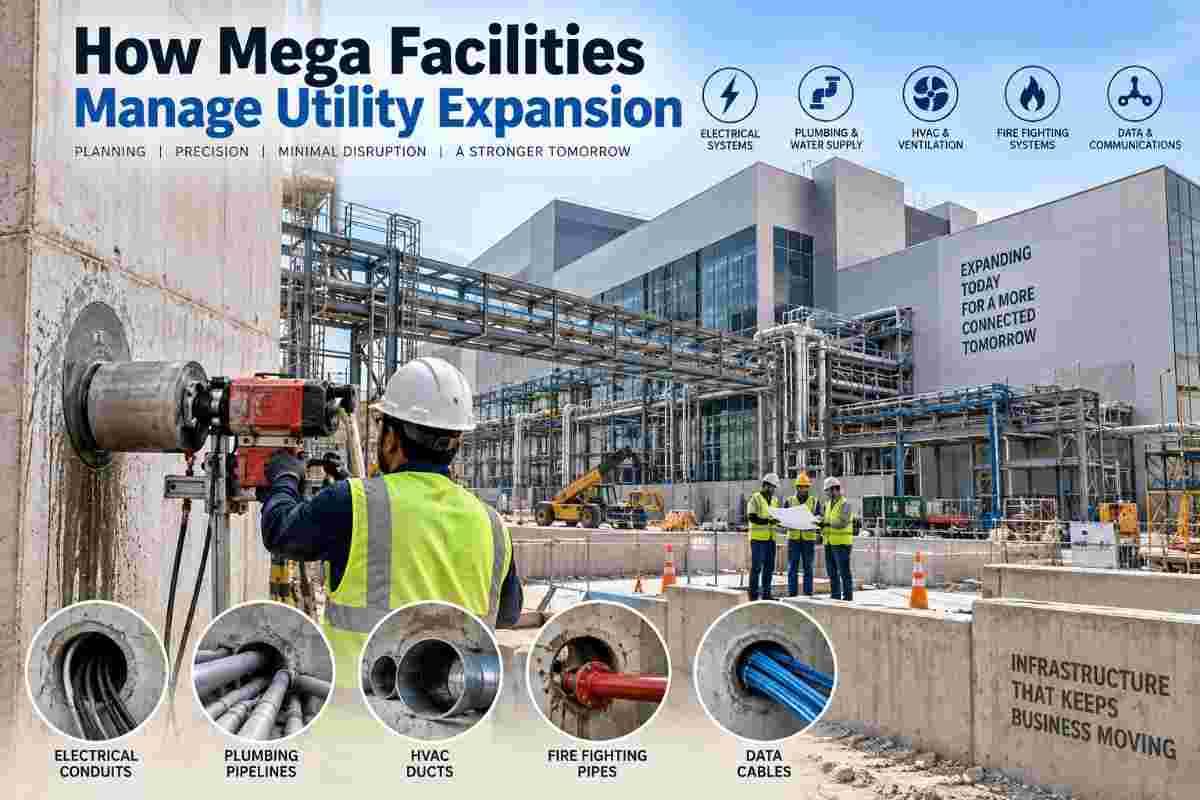
Mega facilities — data centers, automotive plants, pharmaceutical units, warehousing hubs, hospitals, and large commercial campuses — are built to last for decades. But the way these facilities operate rarely stays static. Production lines grow, server racks multiply, cooling demands increase, and new compliance requirements emerge. Every one of these changes comes back to a single, unavoidable question: how do you expand the utility backbone of a facility that is already running, without shutting it down or compromising its structure?
This is the challenge of utility expansion — the process of adding, upgrading, or rerouting electrical systems, plumbing, HVAC, fire safety lines, data cabling, and compressed air or gas networks inside an existing structure. For mega facilities, this isn't a one-time event. It's a continuous, carefully managed process that blends engineering precision with operational discipline. In this article, we'll break down exactly how large facilities plan, execute, and safeguard utility expansion, and where specialized services like precision concrete core cutting fit into that process.
What Is Utility Expansion in a Mega Facility?
Utility expansion refers to the planned increase or modification of a building's core service infrastructure — power distribution, water and drainage, HVAC ductwork, fire suppression, telecom and data cabling, and sometimes gas or compressed air lines. In a mega facility, this isn't just about adding a new pipe or cable. It usually means:
- Increasing electrical load capacity to support new machinery or server racks
- Adding new plumbing lines for expanded sanitation, process water, or cooling systems
- Installing additional HVAC ducts and vents to manage larger conditioned floor areas
- Running new structured cabling for IT, automation, or security systems
- Upgrading fire suppression and life-safety systems to match a larger footprint
Because these facilities are often operating 24/7, utility expansion has to happen with minimal disruption. That's very different from utility installation in a new building, where everything is planned before the concrete is even poured.
Why Utility Expansion Is So Complex in Large Facilities
Expanding utilities inside an existing mega facility is fundamentally harder than doing it in new construction. A few reasons stand out:
1. The Structure Is Already Built and Occupied
Walls, floors, and slabs are already in place — often reinforced concrete designed to carry heavy structural or equipment loads. Every new pipe, cable tray, or duct has to pass through this existing structure, which means precise openings need to be created without weakening the building or disturbing operations nearby.
2. Operations Can't Stop
A factory floor, hospital wing, or data center rarely has the luxury of shutting down for weeks. Utility expansion has to be sequenced around production schedules, patient care, or server uptime requirements, often happening in tightly controlled maintenance windows.
3. Multiple Systems Interact
Electrical, plumbing, HVAC, and data systems are rarely isolated. A single utility expansion project might require coordinated cutting and routing across several trades at once, all while avoiding existing conduits, rebar, or load-bearing elements hidden inside the concrete.
4. Compliance and Safety Standards Keep Evolving
Fire codes, electrical standards, and environmental regulations change over time. Facilities expanding their utilities often need to retrofit not just for new capacity, but for updated compliance — adding fire-rated penetrations, better cable management, or improved drainage.
The Planning Phase: Where Utility Expansion Really Begins
Before any cutting, drilling, or installation happens, mega facilities invest heavily in planning. This phase typically includes:
Facility Audits and Load Assessments Engineers assess current utility capacity against projected future demand — how much more power, water, or airflow the expansion will require, and whether existing infrastructure (transformers, pumps, chillers) needs upgrading too.
Structural Scanning Ground-penetrating radar (GPR) and rebar detection scans are used to map what's inside walls, floors, and slabs before any physical work begins. This step is critical to avoid cutting into electrical conduits, post-tension cables, or structural steel.
Utility Routing Design Engineers design the most efficient path for new lines, minimizing the number of penetrations needed and routing around existing critical infrastructure.
Coordination With Facility Operations Because mega facilities rarely pause operations, planners work closely with facility managers to identify safe work windows, isolate zones, and put interim safety measures in place.
Core Cutting: The Backbone of Physical Utility Expansion
Once the planning is done, the physical work begins — and this is where precision core cutting becomes essential. Unlike traditional demolition, which breaks concrete in an uncontrolled way, core cutting uses diamond-tipped drill bits to create smooth, accurately sized cylindrical or rectangular openings exactly where utility lines need to pass through.
Why Mega Facilities Rely on Core Cutting for Utility Expansion
Precision Without Structural Compromise Core cutting creates clean, exact openings for pipes, conduits, and cable trays without the vibration and cracking associated with jackhammering or hand demolition. This is especially important in facilities with reinforced or post-tensioned concrete, where uncontrolled breaking could compromise structural integrity.
Minimal Disruption to Ongoing Operations Diamond core drilling produces significantly less noise, dust, and vibration than conventional demolition. Many core cutting operations use wet-cutting techniques with water-cooled bits, which suppress dust and keep the surrounding environment cleaner — a critical factor in facilities like data centers or pharmaceutical units where dust contamination isn't an option.
Speed and Efficiency Because the process is controlled and doesn't require extensive breaking and re-patching, core cutting is faster than traditional methods, helping facilities meet tight maintenance windows.
Accuracy for Multi-Trade Coordination When electrical, plumbing, and HVAC contractors all need openings in the same wall or slab, precise, pre-planned core cutting ensures every trade gets exactly the opening size and location it needs — no oversized holes, no wasted structural material, no rework.
Applications in Utility Expansion
- Electrical: Openings for new conduits, cable trays, and switchgear connections
- Plumbing: Penetrations for expanded water supply, drainage, or process piping
- HVAC: Precise openings for new ductwork, vents, and exhaust systems
- Fire Safety: Fire-rated penetrations for sprinkler lines and suppression system upgrades
- Telecom/IT: Clean pathways for structured cabling and fiber runs
Step-by-Step: How a Typical Utility Expansion Project Unfolds
- Assessment and Scanning — Structural scanning identifies safe cutting zones and flags any hidden rebar, conduits, or post-tension cables.
- Engineering Sign-Off — Structural engineers approve the exact locations, sizes, and depths of planned penetrations.
- Scheduling Around Operations — Facility managers coordinate cutting work with production schedules or off-peak hours to minimize disruption.
- Precision Core Cutting — Diamond core drilling machines create the exact openings needed, using wet-cutting methods to control dust and vibration.
- Utility Installation — Electrical, plumbing, and HVAC teams route their new lines through the freshly cut openings.
- Sealing and Fire-Stopping — Penetrations are sealed and fire-stopped according to code, restoring the fire-rating and structural integrity of the wall or slab.
- Testing and Commissioning — New utility systems are tested for capacity, pressure, and safety compliance before going live.
Safety and Compliance Considerations
Utility expansion in a mega facility isn't just an engineering challenge — it's a regulatory one. Facilities typically need to account for:
- Fire Codes: Any penetration through a fire-rated wall or floor must be properly sealed with fire-stopping materials to maintain its rating.
- Structural Codes: Engineers must verify that new openings don't exceed allowable limits for load-bearing elements.
- Electrical Safety Standards: New wiring and conduit routing must meet updated electrical codes, especially in facilities with high-density power loads like data centers.
- Environmental Controls: Dust and debris control is essential in facilities with clean-room requirements or sensitive electronic equipment.
- Worker Safety: Cutting near live utilities requires lockout/tagout procedures, proper scanning, and trained operators to avoid accidental strikes on existing lines.
Mega facilities generally work with specialized contractors who understand both the technical cutting requirements and the compliance landscape, rather than relying on general demolition crews for this kind of precision work.
Planning for Future Growth: A Continuous Process
The smartest mega facilities don't treat utility expansion as a one-off project — they build it into their long-term facility strategy. This often includes:
- Modular Infrastructure Design: Leaving accessible chases, sleeves, or knockout panels during original construction so future expansions require less structural intervention.
- Capacity Buffers: Installing slightly oversized electrical panels, HVAC trunks, or plumbing mains upfront to accommodate moderate growth without a full expansion project.
- Digital Facility Mapping: Keeping updated BIM (Building Information Modeling) records so future utility expansion teams know exactly what's inside every wall and slab before they plan new work.
- Phased Expansion Planning: Breaking large campuses into zones that can be upgraded independently, so one section can expand its utilities while the rest of the facility keeps running normally.
This proactive approach turns utility expansion from a disruptive emergency into a predictable, manageable part of facility operations.
Why the Right Cutting Partner Matters
The success of a utility expansion project often comes down to the quality of the physical execution — and that's where experienced core cutting professionals make the difference. Poorly planned or executed cutting can lead to structural cracks, damaged existing utilities, costly rework, or even safety hazards. A skilled core cutting team brings:
- Accurate structural scanning before any cutting begins
- Diamond-tipped, water-cooled equipment for clean, low-vibration cuts
- Experience working around live utilities and occupied facilities
- Coordination with multiple trades to avoid rework and delays
- Compliance-aware execution, including fire-stopping and sealing
At Core Cutting India, this is exactly the kind of precision work we specialize in — supporting industrial, commercial, and mega facility projects with accurate, low-disruption core cutting for electrical, plumbing, HVAC, and structural utility expansion needs.
Conclusion
Managing utility expansion in a mega facility is a balancing act between growth and continuity. Facilities need more power, more cooling, more data capacity, and more plumbing to keep pace with demand — but they need to add all of it without stopping operations or compromising the building's structural integrity. That balance is achieved through careful planning, structural scanning, and precision execution, with core cutting playing a central role in turning engineering designs into safe, accurate physical openings.
Whether you're managing a growing data center, an expanding manufacturing plant, or a large commercial campus, the right approach to utility expansion — backed by the right cutting expertise — can mean the difference between a smooth upgrade and a costly, disruptive project.
For facilities across India looking for reliable, precise core cutting support for utility expansion projects, Core Cutting India (https://corecuttingindia.com/) offers the technical expertise and equipment needed to get it done safely and efficiently.
People Also Ask
1. What does "utility expansion" mean in a mega facility? Utility expansion refers to increasing or upgrading a facility's core infrastructure — electrical, plumbing, HVAC, fire safety, and data systems — to support growth in operations, equipment, or occupancy, often while the facility continues running.
2. How is core cutting used in utility expansion projects? Core cutting creates precise, clean openings in concrete walls, floors, and slabs so new pipes, conduits, cables, and ducts can be routed through the structure without extensive demolition or structural damage.
3. What are the biggest challenges in expanding utilities in a running facility? The main challenges are maintaining continuous operations, avoiding damage to existing structural elements and utilities, coordinating multiple trades, and meeting updated fire, electrical, and structural codes.
4. How long does utility expansion take in a large industrial facility? Timelines vary widely based on scope, but planning and scanning can take days to weeks, while the physical cutting and installation phase is often scheduled in short, controlled windows to minimize disruption.
5. Is core cutting safe for load-bearing walls and slabs? Yes, when performed by trained professionals using structural scanning and engineering approval beforehand. Core cutting is specifically designed to be more controlled and less damaging than traditional demolition methods.
6. What is the difference between core cutting and traditional demolition? Core cutting uses diamond-tipped drilling equipment to create precise, smooth openings with minimal vibration and dust, while traditional demolition (like jackhammering) breaks concrete in a less controlled way, often causing cracks and more debris.
7. How do data centers and factories plan for future utility growth? Many facilities build in capacity buffers, accessible chases or sleeves, and detailed digital facility maps (BIM) during original construction, so future utility expansions require less structural work and can be executed faster.